Insights
What “Supply Chain as a Service” Means for Enterprise Operating Models
Introduction
The emergence of “Supply Chain as a Service” (SCaaS) reflects a broader shift toward platform-based operating models and ecosystem-driven value creation. Organizations are increasingly accessing logistics, planning, and fulfillment capabilities through specialized service providers rather than building and owning all capabilities internally. Understanding the strategic implications of SCaaS is critical for leaders designing future-ready enterprise operating models.
The SCaaS Concept
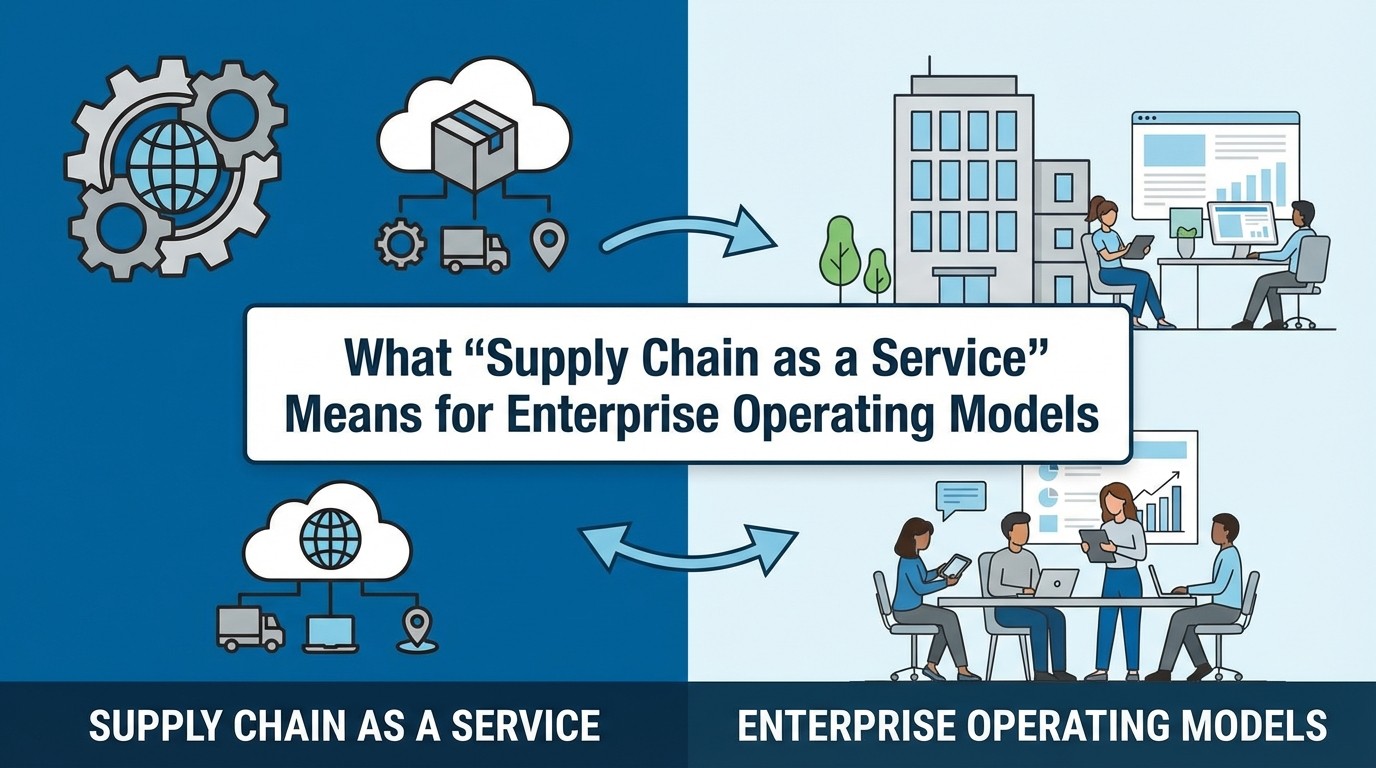
Supply Chain as a Service encompasses:
On-demand logistics and fulfillment platforms
Cloud-based planning, visibility, and orchestration services
Shared warehousing and transportation networks
Technology-enabled coordination layers connecting multiple partners
This model enables organizations to scale capabilities flexibly, reduce capital intensity, and accelerate time-to-market.
Operating Model Implications
SCaaS adoption affects:
Asset ownership and capital allocation strategies
Internal capability requirements and organizational design
Vendor and partner governance models
Cost structures, scalability, and variable cost exposure
Risk management and dependency profiles
Strategic Considerations
Leaders should evaluate SCaaS through:
Core vs non-core capability assessments
Total cost of ownership and value realization analysis
Risk, resilience, and dependency evaluation
Integration with enterprise architecture and data platforms
Governance frameworks for service performance and accountability
Conclusion
Supply Chain as a Service represents a structural shift in how organizations design operating models. When adopted strategically, SCaaS can enhance flexibility and speed. However, leaders must actively manage dependency, integration, and governance risks to sustain long-term operational performance.
#SupplyChainAsAService #SCaaS #OperatingModel #LogisticsPlatforms #DigitalSupplyChain #BusinessTransformation
More to Discover


Insights
What “Supply Chain as a Service” Means for Enterprise Operating Models
Introduction
The emergence of “Supply Chain as a Service” (SCaaS) reflects a broader shift toward platform-based operating models and ecosystem-driven value creation. Organizations are increasingly accessing logistics, planning, and fulfillment capabilities through specialized service providers rather than building and owning all capabilities internally. Understanding the strategic implications of SCaaS is critical for leaders designing future-ready enterprise operating models.
The SCaaS Concept
Supply Chain as a Service encompasses:
On-demand logistics and fulfillment platforms
Cloud-based planning, visibility, and orchestration services
Shared warehousing and transportation networks
Technology-enabled coordination layers connecting multiple partners
This model enables organizations to scale capabilities flexibly, reduce capital intensity, and accelerate time-to-market.
Operating Model Implications
SCaaS adoption affects:
Asset ownership and capital allocation strategies
Internal capability requirements and organizational design
Vendor and partner governance models
Cost structures, scalability, and variable cost exposure
Risk management and dependency profiles
Strategic Considerations
Leaders should evaluate SCaaS through:
Core vs non-core capability assessments
Total cost of ownership and value realization analysis
Risk, resilience, and dependency evaluation
Integration with enterprise architecture and data platforms
Governance frameworks for service performance and accountability
Conclusion
Supply Chain as a Service represents a structural shift in how organizations design operating models. When adopted strategically, SCaaS can enhance flexibility and speed. However, leaders must actively manage dependency, integration, and governance risks to sustain long-term operational performance.
#SupplyChainAsAService #SCaaS #OperatingModel #LogisticsPlatforms #DigitalSupplyChain #BusinessTransformation
More to Discover
Insights
What “Supply Chain as a Service” Means for Enterprise Operating Models
Introduction
The emergence of “Supply Chain as a Service” (SCaaS) reflects a broader shift toward platform-based operating models and ecosystem-driven value creation. Organizations are increasingly accessing logistics, planning, and fulfillment capabilities through specialized service providers rather than building and owning all capabilities internally. Understanding the strategic implications of SCaaS is critical for leaders designing future-ready enterprise operating models.
The SCaaS Concept
Supply Chain as a Service encompasses:
On-demand logistics and fulfillment platforms
Cloud-based planning, visibility, and orchestration services
Shared warehousing and transportation networks
Technology-enabled coordination layers connecting multiple partners
This model enables organizations to scale capabilities flexibly, reduce capital intensity, and accelerate time-to-market.
Operating Model Implications
SCaaS adoption affects:
Asset ownership and capital allocation strategies
Internal capability requirements and organizational design
Vendor and partner governance models
Cost structures, scalability, and variable cost exposure
Risk management and dependency profiles
Strategic Considerations
Leaders should evaluate SCaaS through:
Core vs non-core capability assessments
Total cost of ownership and value realization analysis
Risk, resilience, and dependency evaluation
Integration with enterprise architecture and data platforms
Governance frameworks for service performance and accountability
Conclusion
Supply Chain as a Service represents a structural shift in how organizations design operating models. When adopted strategically, SCaaS can enhance flexibility and speed. However, leaders must actively manage dependency, integration, and governance risks to sustain long-term operational performance.
#SupplyChainAsAService #SCaaS #OperatingModel #LogisticsPlatforms #DigitalSupplyChain #BusinessTransformation