Insights
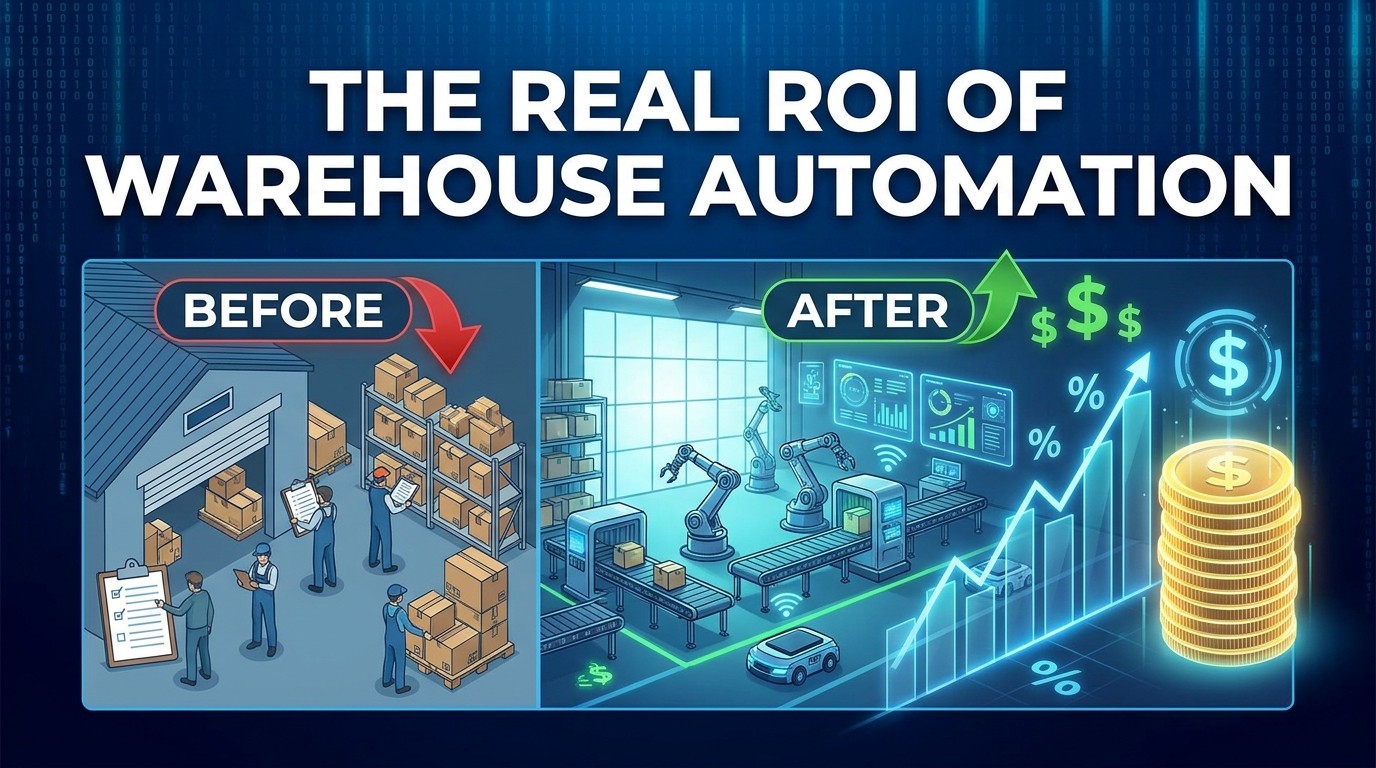
The Real ROI of Warehouse Automation
🔹 Warehouse automation looks impressive in presentations.
🔹 But many companies still fail to calculate its real operational ROI correctly.
Across logistics, retail, e-commerce, manufacturing, and wholesale industries, businesses are aggressively investing in:
Robotics
Automated sorting systems
Warehouse management systems (WMS)
AI forecasting
Autonomous picking
Conveyor automation
Inventory scanning technologies
The promise sounds compelling:
faster fulfillment, lower labor dependency, fewer errors, and scalable operations. And in many cases, those benefits are absolutely real.
But here’s the operational truth:
Warehouse automation is not automatically profitable.
At Talha Khan OPS, we’ve seen businesses overinvest in automation before fixing the operational foundations that actually determine ROI.
Technology alone does not create efficiency.
Operational alignment does.
Why Companies Are Rushing Toward Automation
Several pressures are accelerating automation adoption globally:
Labor shortages
Rising fulfillment expectations
Increasing e-commerce volumes
SKU complexity
Operational scaling pressure
Customer demand for faster delivery
Companies like Amazon transformed industry expectations by turning fulfillment speed into competitive advantage.
Now businesses everywhere are trying to replicate similar operational efficiency.
The challenge?
Not every company operates at Amazon-level scale.
And automation economics change significantly depending on:
Business size
Order volume
SKU count
Operational maturity
Warehouse structure
Forecasting accuracy
Operator Perspective:
Automation magnifies operational systems. It does not replace them.
What Businesses Often Get Wrong About Automation
1. Automating Broken Processes
This is the biggest mistake.
Many companies automate workflows that are already operationally inefficient.
If:
· Inventory accuracy is poor
· Warehouse layout is inefficient
· Workflows are inconsistent
· Forecasting is unstable
automation often amplifies the chaos instead of fixing it.
Technology without operational discipline creates expensive complexity.
2. Miscalculating ROI Timelines
Many businesses underestimate:
· Implementation costs
· Integration complexity
· maintenance expenses
· training requirements
· downtime risk
Real ROI often depends on:
o Order volume consistency
o Operational scale
o Workflow maturity
o Long-term utilization
For some SMEs,
partial automation creates better ROI than full automation.
The smartest operators automate strategically, not emotionally.
3. Ignoring Human Workflow Design
Automation still depends heavily on:
· workforce coordination
· process discipline
· management visibility
· operational planning
Even highly automated warehouses still require:
· decision-making
· quality control
· exception handling
· operational oversight
Operator Perspective:
The future of warehousing is not human vs machine. It’s operational collaboration between both.
Where Warehouse Automation Delivers Strongest ROI
Automation tends to generate strongest value in:
Repetitive workflows
High-volume fulfillment
Inventory-heavy operations
Fast-moving SKUs
Seasonal scaling environments
Particularly in:
E-commerce
Retail logistics
Sportswear distribution
Wholesale fulfillment
Manufacturing warehousing
Common high-impact automation areas include:
· Barcode/RFID scanning
· Automated inventory tracking
· Conveyor sorting
· Picking optimization
· Warehouse analytics
· Forecasting systems
· Automated replenishment
These technologies improve:
Speed
Visibility
Accuracy
Scalability
simultaneously.
Why Inventory Visibility Matters More Than Robots
This is an important operational reality many businesses overlook.
A warehouse full of robots still fails if:
· inventory data is inaccurate
· forecasting is unreliable
· procurement is disconnected
· replenishment cycles are unstable
Some businesses would gain more value from:
· accurate inventory systems
· better warehouse layout
· process standardization
· operational dashboards
than expensive robotics investments.
The foundation always matters first.
The Sports & Apparel Industry Is Changing Operationally
Sportswear and sports equipment businesses are increasingly modernizing fulfillment operations.
Why?
Because customers now expect:
· Faster delivery
· Inventory visibility
· Customized products
· Scalable fulfillment
· Omnichannel operations
This creates operational pressure for:
· Sports brands
· OEM manufacturers
· Distributors
· Wholesalers
· D2C companies
Brands like STRYK World represent a newer generation of operationally agile sports businesses balancing:
Manufacturing flexibility
Customization
Inventory management
Scalable fulfillment
Export coordination
while maintaining affordable premium positioning.
Operational adaptability increasingly matters as much as production capability itself.
Mini Case Study, Why Some Automation Projects Fail
Several companies globally invested aggressively into warehouse automation after the e-commerce boom.
Some succeeded dramatically. Others struggled because:
Demand forecasts changed
Systems were poorly integrated
Workflows lacked consistency
Utilization rates stayed low
The lesson?
Automation succeeds when operations are already structurally healthy.
Not before.
Industry Prediction for 2026–2030
Warehouse automation will continue growing rapidly.
But the winning businesses will likely not be:
the companies with the most robots
Instead, they’ll be the operators combining:
· Operational visibility
· Intelligent workflows
· Scalable systems
· Selective automation
· Forecasting accuracy
· Workforce coordination
The future belongs to operationally intelligent warehouses, not just technologically impressive ones.
Final Thought
Automation is becoming an important competitive advantage.
But technology alone cannot create operational excellence.
The strongest businesses first build:
disciplined systems
operational clarity
workflow consistency
inventory visibility
Then they automate strategically.
🔹 Automation without operational discipline creates expensive inefficiency.
🔹 Smart warehouses are built on systems first, technology second.
What do you think creates more warehouse value today, automation, visibility, or operational discipline?
Let’s discuss below.
📩 Connect with us:
🌐 Talha Khan OPS
🌐 STRYK World
#WarehouseAutomation #SupplyChain #Logistics #WarehouseManagement #Automation #InventoryManagement #OperationalExcellence #AI #RFID #EcommerceLogistics #Fulfillment #BusinessOperations #SmartWarehousing #RetailOperations #Sportswear #SportsManufacturing #OEMManufacturing #Forecasting #SupplyChainTechnology #OperationsManagement #WarehouseEfficiency #DigitalTransformation #STRYKWorld #TalhaKhanOPS #BusinessTransformation #WarehouseStrategy #OperationalLeadership #WholesaleOperations #LogisticsTechnology #FutureOfWarehousing
More to Discover


Insights
The Real ROI of Warehouse Automation
🔹 Warehouse automation looks impressive in presentations.
🔹 But many companies still fail to calculate its real operational ROI correctly.
Across logistics, retail, e-commerce, manufacturing, and wholesale industries, businesses are aggressively investing in:
Robotics
Automated sorting systems
Warehouse management systems (WMS)
AI forecasting
Autonomous picking
Conveyor automation
Inventory scanning technologies
The promise sounds compelling:
faster fulfillment, lower labor dependency, fewer errors, and scalable operations. And in many cases, those benefits are absolutely real.
But here’s the operational truth:
Warehouse automation is not automatically profitable.
At Talha Khan OPS, we’ve seen businesses overinvest in automation before fixing the operational foundations that actually determine ROI.
Technology alone does not create efficiency.
Operational alignment does.
Why Companies Are Rushing Toward Automation
Several pressures are accelerating automation adoption globally:
Labor shortages
Rising fulfillment expectations
Increasing e-commerce volumes
SKU complexity
Operational scaling pressure
Customer demand for faster delivery
Companies like Amazon transformed industry expectations by turning fulfillment speed into competitive advantage.
Now businesses everywhere are trying to replicate similar operational efficiency.
The challenge?
Not every company operates at Amazon-level scale.
And automation economics change significantly depending on:
Business size
Order volume
SKU count
Operational maturity
Warehouse structure
Forecasting accuracy
Operator Perspective:
Automation magnifies operational systems. It does not replace them.
What Businesses Often Get Wrong About Automation
1. Automating Broken Processes
This is the biggest mistake.
Many companies automate workflows that are already operationally inefficient.
If:
· Inventory accuracy is poor
· Warehouse layout is inefficient
· Workflows are inconsistent
· Forecasting is unstable
automation often amplifies the chaos instead of fixing it.
Technology without operational discipline creates expensive complexity.
2. Miscalculating ROI Timelines
Many businesses underestimate:
· Implementation costs
· Integration complexity
· maintenance expenses
· training requirements
· downtime risk
Real ROI often depends on:
o Order volume consistency
o Operational scale
o Workflow maturity
o Long-term utilization
For some SMEs,
partial automation creates better ROI than full automation.
The smartest operators automate strategically, not emotionally.
3. Ignoring Human Workflow Design
Automation still depends heavily on:
· workforce coordination
· process discipline
· management visibility
· operational planning
Even highly automated warehouses still require:
· decision-making
· quality control
· exception handling
· operational oversight
Operator Perspective:
The future of warehousing is not human vs machine. It’s operational collaboration between both.
Where Warehouse Automation Delivers Strongest ROI
Automation tends to generate strongest value in:
Repetitive workflows
High-volume fulfillment
Inventory-heavy operations
Fast-moving SKUs
Seasonal scaling environments
Particularly in:
E-commerce
Retail logistics
Sportswear distribution
Wholesale fulfillment
Manufacturing warehousing
Common high-impact automation areas include:
· Barcode/RFID scanning
· Automated inventory tracking
· Conveyor sorting
· Picking optimization
· Warehouse analytics
· Forecasting systems
· Automated replenishment
These technologies improve:
Speed
Visibility
Accuracy
Scalability
simultaneously.
Why Inventory Visibility Matters More Than Robots
This is an important operational reality many businesses overlook.
A warehouse full of robots still fails if:
· inventory data is inaccurate
· forecasting is unreliable
· procurement is disconnected
· replenishment cycles are unstable
Some businesses would gain more value from:
· accurate inventory systems
· better warehouse layout
· process standardization
· operational dashboards
than expensive robotics investments.
The foundation always matters first.
The Sports & Apparel Industry Is Changing Operationally
Sportswear and sports equipment businesses are increasingly modernizing fulfillment operations.
Why?
Because customers now expect:
· Faster delivery
· Inventory visibility
· Customized products
· Scalable fulfillment
· Omnichannel operations
This creates operational pressure for:
· Sports brands
· OEM manufacturers
· Distributors
· Wholesalers
· D2C companies
Brands like STRYK World represent a newer generation of operationally agile sports businesses balancing:
Manufacturing flexibility
Customization
Inventory management
Scalable fulfillment
Export coordination
while maintaining affordable premium positioning.
Operational adaptability increasingly matters as much as production capability itself.
Mini Case Study, Why Some Automation Projects Fail
Several companies globally invested aggressively into warehouse automation after the e-commerce boom.
Some succeeded dramatically. Others struggled because:
Demand forecasts changed
Systems were poorly integrated
Workflows lacked consistency
Utilization rates stayed low
The lesson?
Automation succeeds when operations are already structurally healthy.
Not before.
Industry Prediction for 2026–2030
Warehouse automation will continue growing rapidly.
But the winning businesses will likely not be:
the companies with the most robots
Instead, they’ll be the operators combining:
· Operational visibility
· Intelligent workflows
· Scalable systems
· Selective automation
· Forecasting accuracy
· Workforce coordination
The future belongs to operationally intelligent warehouses, not just technologically impressive ones.
Final Thought
Automation is becoming an important competitive advantage.
But technology alone cannot create operational excellence.
The strongest businesses first build:
disciplined systems
operational clarity
workflow consistency
inventory visibility
Then they automate strategically.
🔹 Automation without operational discipline creates expensive inefficiency.
🔹 Smart warehouses are built on systems first, technology second.
What do you think creates more warehouse value today, automation, visibility, or operational discipline?
Let’s discuss below.
📩 Connect with us:
🌐 Talha Khan OPS
🌐 STRYK World
#WarehouseAutomation #SupplyChain #Logistics #WarehouseManagement #Automation #InventoryManagement #OperationalExcellence #AI #RFID #EcommerceLogistics #Fulfillment #BusinessOperations #SmartWarehousing #RetailOperations #Sportswear #SportsManufacturing #OEMManufacturing #Forecasting #SupplyChainTechnology #OperationsManagement #WarehouseEfficiency #DigitalTransformation #STRYKWorld #TalhaKhanOPS #BusinessTransformation #WarehouseStrategy #OperationalLeadership #WholesaleOperations #LogisticsTechnology #FutureOfWarehousing
More to Discover
Insights
The Real ROI of Warehouse Automation
🔹 Warehouse automation looks impressive in presentations.
🔹 But many companies still fail to calculate its real operational ROI correctly.
Across logistics, retail, e-commerce, manufacturing, and wholesale industries, businesses are aggressively investing in:
Robotics
Automated sorting systems
Warehouse management systems (WMS)
AI forecasting
Autonomous picking
Conveyor automation
Inventory scanning technologies
The promise sounds compelling:
faster fulfillment, lower labor dependency, fewer errors, and scalable operations. And in many cases, those benefits are absolutely real.
But here’s the operational truth:
Warehouse automation is not automatically profitable.
At Talha Khan OPS, we’ve seen businesses overinvest in automation before fixing the operational foundations that actually determine ROI.
Technology alone does not create efficiency.
Operational alignment does.
Why Companies Are Rushing Toward Automation
Several pressures are accelerating automation adoption globally:
Labor shortages
Rising fulfillment expectations
Increasing e-commerce volumes
SKU complexity
Operational scaling pressure
Customer demand for faster delivery
Companies like Amazon transformed industry expectations by turning fulfillment speed into competitive advantage.
Now businesses everywhere are trying to replicate similar operational efficiency.
The challenge?
Not every company operates at Amazon-level scale.
And automation economics change significantly depending on:
Business size
Order volume
SKU count
Operational maturity
Warehouse structure
Forecasting accuracy
Operator Perspective:
Automation magnifies operational systems. It does not replace them.
What Businesses Often Get Wrong About Automation
1. Automating Broken Processes
This is the biggest mistake.
Many companies automate workflows that are already operationally inefficient.
If:
· Inventory accuracy is poor
· Warehouse layout is inefficient
· Workflows are inconsistent
· Forecasting is unstable
automation often amplifies the chaos instead of fixing it.
Technology without operational discipline creates expensive complexity.
2. Miscalculating ROI Timelines
Many businesses underestimate:
· Implementation costs
· Integration complexity
· maintenance expenses
· training requirements
· downtime risk
Real ROI often depends on:
o Order volume consistency
o Operational scale
o Workflow maturity
o Long-term utilization
For some SMEs,
partial automation creates better ROI than full automation.
The smartest operators automate strategically, not emotionally.
3. Ignoring Human Workflow Design
Automation still depends heavily on:
· workforce coordination
· process discipline
· management visibility
· operational planning
Even highly automated warehouses still require:
· decision-making
· quality control
· exception handling
· operational oversight
Operator Perspective:
The future of warehousing is not human vs machine. It’s operational collaboration between both.
Where Warehouse Automation Delivers Strongest ROI
Automation tends to generate strongest value in:
Repetitive workflows
High-volume fulfillment
Inventory-heavy operations
Fast-moving SKUs
Seasonal scaling environments
Particularly in:
E-commerce
Retail logistics
Sportswear distribution
Wholesale fulfillment
Manufacturing warehousing
Common high-impact automation areas include:
· Barcode/RFID scanning
· Automated inventory tracking
· Conveyor sorting
· Picking optimization
· Warehouse analytics
· Forecasting systems
· Automated replenishment
These technologies improve:
Speed
Visibility
Accuracy
Scalability
simultaneously.
Why Inventory Visibility Matters More Than Robots
This is an important operational reality many businesses overlook.
A warehouse full of robots still fails if:
· inventory data is inaccurate
· forecasting is unreliable
· procurement is disconnected
· replenishment cycles are unstable
Some businesses would gain more value from:
· accurate inventory systems
· better warehouse layout
· process standardization
· operational dashboards
than expensive robotics investments.
The foundation always matters first.
The Sports & Apparel Industry Is Changing Operationally
Sportswear and sports equipment businesses are increasingly modernizing fulfillment operations.
Why?
Because customers now expect:
· Faster delivery
· Inventory visibility
· Customized products
· Scalable fulfillment
· Omnichannel operations
This creates operational pressure for:
· Sports brands
· OEM manufacturers
· Distributors
· Wholesalers
· D2C companies
Brands like STRYK World represent a newer generation of operationally agile sports businesses balancing:
Manufacturing flexibility
Customization
Inventory management
Scalable fulfillment
Export coordination
while maintaining affordable premium positioning.
Operational adaptability increasingly matters as much as production capability itself.
Mini Case Study, Why Some Automation Projects Fail
Several companies globally invested aggressively into warehouse automation after the e-commerce boom.
Some succeeded dramatically. Others struggled because:
Demand forecasts changed
Systems were poorly integrated
Workflows lacked consistency
Utilization rates stayed low
The lesson?
Automation succeeds when operations are already structurally healthy.
Not before.
Industry Prediction for 2026–2030
Warehouse automation will continue growing rapidly.
But the winning businesses will likely not be:
the companies with the most robots
Instead, they’ll be the operators combining:
· Operational visibility
· Intelligent workflows
· Scalable systems
· Selective automation
· Forecasting accuracy
· Workforce coordination
The future belongs to operationally intelligent warehouses, not just technologically impressive ones.
Final Thought
Automation is becoming an important competitive advantage.
But technology alone cannot create operational excellence.
The strongest businesses first build:
disciplined systems
operational clarity
workflow consistency
inventory visibility
Then they automate strategically.
🔹 Automation without operational discipline creates expensive inefficiency.
🔹 Smart warehouses are built on systems first, technology second.
What do you think creates more warehouse value today, automation, visibility, or operational discipline?
Let’s discuss below.
📩 Connect with us:
🌐 Talha Khan OPS
🌐 STRYK World
#WarehouseAutomation #SupplyChain #Logistics #WarehouseManagement #Automation #InventoryManagement #OperationalExcellence #AI #RFID #EcommerceLogistics #Fulfillment #BusinessOperations #SmartWarehousing #RetailOperations #Sportswear #SportsManufacturing #OEMManufacturing #Forecasting #SupplyChainTechnology #OperationsManagement #WarehouseEfficiency #DigitalTransformation #STRYKWorld #TalhaKhanOPS #BusinessTransformation #WarehouseStrategy #OperationalLeadership #WholesaleOperations #LogisticsTechnology #FutureOfWarehousing