Insights
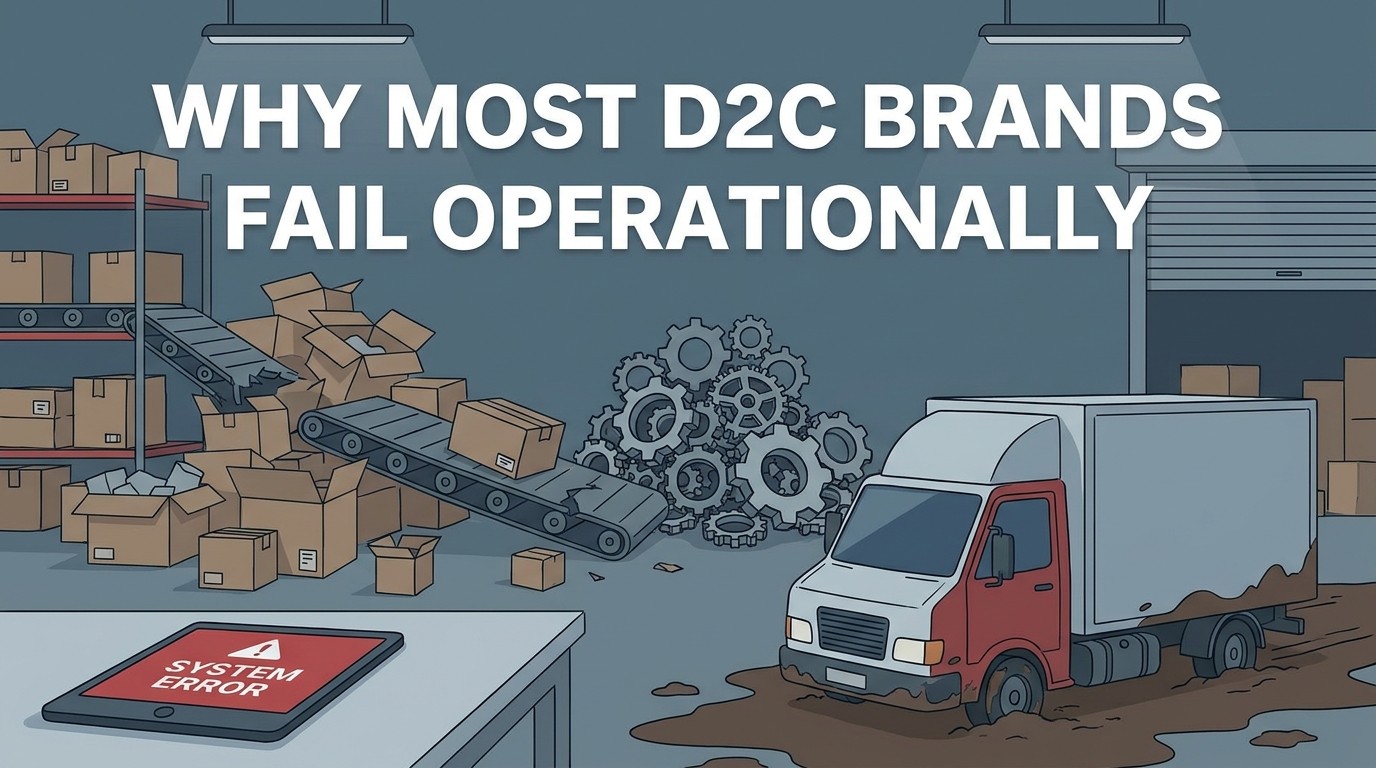
Why Most D2C Brands Fail Operationally
🔹 Most D2C brands don’t fail because of bad marketing.
🔹 They fail because operations collapse behind the scenes.
The rise of direct-to-consumer brands completely transformed modern commerce.
Today, almost anyone can:
Launch a Shopify store
Run Meta ads
Build a social audience
Create influencer partnerships
Sell globally
But here’s the problem:
building demand is now easier than sustaining operations.
And that’s where most D2C brands struggle.
At Talha Khan OPS, we’ve observed that operational weakness remains one of the biggest hidden threats to growing D2C businesses, especially in:
Sportswear
Apparel
Fitness products
Accessories
Custom merchandise
Sports equipment
The market is full of brands that look successful online…
while internally dealing with:
Fulfillment chaos
Delayed orders
Inaccurate inventory
Supplier issues
Return management problems
Customer dissatisfaction
Operator Perspective:
Viral growth exposes operational weakness faster than slow growth ever will.
The Biggest Operational Mistakes D2C Brands Make
1. Scaling Marketing Before Infrastructure
This is probably the most common D2C mistake.
A brand runs successful campaigns…
sales spike…
orders flood in…
and suddenly:
· Inventory runs out
· Warehouses become overwhelmed
· Delivery timelines fail
· Customer support collapses
The business grows faster than its operational systems.
Growth without infrastructure creates operational stress instead of scalability.
2. Weak Inventory Management
Inventory is where many D2C brands quietly lose profitability.
Without strong inventory visibility:
· Stockouts increase
· Dead inventory accumulates
· Cash flow gets trapped
· Forecasting becomes reactive
This becomes even more difficult in:
· Seasonal industries
· Sportswear
· Custom products
· Multi-channel retail
Brands like Zara built operational advantage by aligning inventory closely with consumer demand and fast replenishment cycles.
Inventory management today is no longer a backend task.
It’s a strategic growth function.
3. Overcomplicated Product Expansion
Many D2C brands expand SKUs too quickly.
At first, adding products seems exciting.
But operationally,
more products create:
· Forecasting complexity
· Warehousing pressure
· Fulfillment inefficiencies
· Supplier coordination challenges
This is especially dangerous for young brands without mature operational systems.
Sometimes:
fewer products with stronger execution outperform larger catalogs with operational chaos.
4. Poor Supplier Relationships
Many D2C founders focus heavily on branding…
while treating suppliers as transactional vendors.
That approach eventually creates problems.
Strong suppliers directly impact:
· Quality consistency
· Lead times
· Scalability
· Product reliability
· Fulfillment speed
The strongest D2C brands build operational partnerships, not just purchasing relationships.
This is increasingly important in sports manufacturing and custom apparel industries where:
· Customization
· Quality control
· Production timelines
· Packaging
· Private labeling
all require close operational coordination.
5. Ignoring Fulfillment Experience
Many brands obsess over acquisition…
while underestimating fulfillment experience.
But customers remember:
· Delivery speed
· Packaging quality
· Order accuracy
· Communication
· Returns handling
more than advertising.
This is why companies like Amazon turned operational efficiency into competitive advantage.
Modern customer loyalty is operationally influenced.
The Rise of Operationally Intelligent D2C Brands
The next generation of D2C businesses is becoming much more operations-focused.
Winning brands increasingly prioritize:
· Supply chain visibility
· Reliable manufacturing
· Fulfillment scalability
· Inventory forecasting
· Operational automation
· Supplier collaboration
· Packaging quality
· Customer experience systems
because operational maturity now directly impacts brand reputation.
The Sports & Apparel Industry Is Becoming More Competitive
The sportswear and sports products industries are evolving rapidly.
Consumers now expect:
· Premium quality
· Fast shipping
· Customization
· Branded packaging
· Product consistency
· Affordable pricing
all at the same time.
That creates operational pressure on growing brands.
This is why many sports businesses are shifting toward:
· OEM partnerships
· Private-label manufacturing
· Direct sourcing relationships
· Agile manufacturing ecosystems
Brands like STRYK World reflect this shift by combining:
· Affordable premium positioning
· OEM capabilities
· Private labeling
· Custom sports products
· Export-ready operations
for clubs, distributors, retailers, and emerging sports brands.
The businesses succeeding today are often the ones building operational flexibility early.
What Successful D2C Operators Do Differently
Strong operators understand:
marketing creates attention,
but operations sustain growth.
That’s why scalable D2C businesses focus heavily on:
· Operational systems
· Inventory visibility
· Supplier coordination
· Fulfillment consistency
· Forecasting accuracy
· Customer experience
before problems become expensive.
Operator Perspective:
Most D2C brands do not fail because demand disappears. They fail because execution becomes unstable.
Industry Prediction for 2026–2030
Over the next few years, D2C competition will intensify significantly.
The winners will not necessarily be:
· The loudest brands
· The most viral brands
· or the brands spending the most on ads
They’ll be the businesses with:
· Reliable operations
· Strong fulfillment
· Manufacturing flexibility
· Operational visibility
· Inventory intelligence
· Scalable systems
Because as acquisition costs rise…
operational efficiency becomes increasingly profitable.
Final Thought
Modern D2C success is no longer just about branding.
It’s about operational execution at scale.
The brands that survive long-term are the ones that treat operations as part of the customer experience, not just backend administration.
🔹 Marketing may create growth.
🔹 But operations determine whether growth survives.
What operational challenge has been hardest for your business while scaling, inventory, fulfillment, suppliers, or forecasting?
Let’s discuss below.
📩 Connect with us:
🌐 Talha Khan OPS
🌐 STRYK World
#D2C #Ecommerce #BusinessOperations #SupplyChain #OperationsManagement #InventoryManagement #Fulfillment #Sportswear #PrivateLabel #OEMManufacturing #SportsBusiness #RetailOperations #WarehouseManagement #CustomerExperience #BrandScaling #OperationalExcellence #SportsManufacturing #Shopify #DirectToConsumer #Forecasting #BusinessGrowth #ManufacturingStrategy #OperationalLeadership #STRYKWorld #TalhaKhanOPS #SportsIndustry #CustomApparel #WholesaleSports #EcommerceOperations #BusinessTransformation
More to Discover


Insights
Why Most D2C Brands Fail Operationally
🔹 Most D2C brands don’t fail because of bad marketing.
🔹 They fail because operations collapse behind the scenes.
The rise of direct-to-consumer brands completely transformed modern commerce.
Today, almost anyone can:
Launch a Shopify store
Run Meta ads
Build a social audience
Create influencer partnerships
Sell globally
But here’s the problem:
building demand is now easier than sustaining operations.
And that’s where most D2C brands struggle.
At Talha Khan OPS, we’ve observed that operational weakness remains one of the biggest hidden threats to growing D2C businesses, especially in:
Sportswear
Apparel
Fitness products
Accessories
Custom merchandise
Sports equipment
The market is full of brands that look successful online…
while internally dealing with:
Fulfillment chaos
Delayed orders
Inaccurate inventory
Supplier issues
Return management problems
Customer dissatisfaction
Operator Perspective:
Viral growth exposes operational weakness faster than slow growth ever will.
The Biggest Operational Mistakes D2C Brands Make
1. Scaling Marketing Before Infrastructure
This is probably the most common D2C mistake.
A brand runs successful campaigns…
sales spike…
orders flood in…
and suddenly:
· Inventory runs out
· Warehouses become overwhelmed
· Delivery timelines fail
· Customer support collapses
The business grows faster than its operational systems.
Growth without infrastructure creates operational stress instead of scalability.
2. Weak Inventory Management
Inventory is where many D2C brands quietly lose profitability.
Without strong inventory visibility:
· Stockouts increase
· Dead inventory accumulates
· Cash flow gets trapped
· Forecasting becomes reactive
This becomes even more difficult in:
· Seasonal industries
· Sportswear
· Custom products
· Multi-channel retail
Brands like Zara built operational advantage by aligning inventory closely with consumer demand and fast replenishment cycles.
Inventory management today is no longer a backend task.
It’s a strategic growth function.
3. Overcomplicated Product Expansion
Many D2C brands expand SKUs too quickly.
At first, adding products seems exciting.
But operationally,
more products create:
· Forecasting complexity
· Warehousing pressure
· Fulfillment inefficiencies
· Supplier coordination challenges
This is especially dangerous for young brands without mature operational systems.
Sometimes:
fewer products with stronger execution outperform larger catalogs with operational chaos.
4. Poor Supplier Relationships
Many D2C founders focus heavily on branding…
while treating suppliers as transactional vendors.
That approach eventually creates problems.
Strong suppliers directly impact:
· Quality consistency
· Lead times
· Scalability
· Product reliability
· Fulfillment speed
The strongest D2C brands build operational partnerships, not just purchasing relationships.
This is increasingly important in sports manufacturing and custom apparel industries where:
· Customization
· Quality control
· Production timelines
· Packaging
· Private labeling
all require close operational coordination.
5. Ignoring Fulfillment Experience
Many brands obsess over acquisition…
while underestimating fulfillment experience.
But customers remember:
· Delivery speed
· Packaging quality
· Order accuracy
· Communication
· Returns handling
more than advertising.
This is why companies like Amazon turned operational efficiency into competitive advantage.
Modern customer loyalty is operationally influenced.
The Rise of Operationally Intelligent D2C Brands
The next generation of D2C businesses is becoming much more operations-focused.
Winning brands increasingly prioritize:
· Supply chain visibility
· Reliable manufacturing
· Fulfillment scalability
· Inventory forecasting
· Operational automation
· Supplier collaboration
· Packaging quality
· Customer experience systems
because operational maturity now directly impacts brand reputation.
The Sports & Apparel Industry Is Becoming More Competitive
The sportswear and sports products industries are evolving rapidly.
Consumers now expect:
· Premium quality
· Fast shipping
· Customization
· Branded packaging
· Product consistency
· Affordable pricing
all at the same time.
That creates operational pressure on growing brands.
This is why many sports businesses are shifting toward:
· OEM partnerships
· Private-label manufacturing
· Direct sourcing relationships
· Agile manufacturing ecosystems
Brands like STRYK World reflect this shift by combining:
· Affordable premium positioning
· OEM capabilities
· Private labeling
· Custom sports products
· Export-ready operations
for clubs, distributors, retailers, and emerging sports brands.
The businesses succeeding today are often the ones building operational flexibility early.
What Successful D2C Operators Do Differently
Strong operators understand:
marketing creates attention,
but operations sustain growth.
That’s why scalable D2C businesses focus heavily on:
· Operational systems
· Inventory visibility
· Supplier coordination
· Fulfillment consistency
· Forecasting accuracy
· Customer experience
before problems become expensive.
Operator Perspective:
Most D2C brands do not fail because demand disappears. They fail because execution becomes unstable.
Industry Prediction for 2026–2030
Over the next few years, D2C competition will intensify significantly.
The winners will not necessarily be:
· The loudest brands
· The most viral brands
· or the brands spending the most on ads
They’ll be the businesses with:
· Reliable operations
· Strong fulfillment
· Manufacturing flexibility
· Operational visibility
· Inventory intelligence
· Scalable systems
Because as acquisition costs rise…
operational efficiency becomes increasingly profitable.
Final Thought
Modern D2C success is no longer just about branding.
It’s about operational execution at scale.
The brands that survive long-term are the ones that treat operations as part of the customer experience, not just backend administration.
🔹 Marketing may create growth.
🔹 But operations determine whether growth survives.
What operational challenge has been hardest for your business while scaling, inventory, fulfillment, suppliers, or forecasting?
Let’s discuss below.
📩 Connect with us:
🌐 Talha Khan OPS
🌐 STRYK World
#D2C #Ecommerce #BusinessOperations #SupplyChain #OperationsManagement #InventoryManagement #Fulfillment #Sportswear #PrivateLabel #OEMManufacturing #SportsBusiness #RetailOperations #WarehouseManagement #CustomerExperience #BrandScaling #OperationalExcellence #SportsManufacturing #Shopify #DirectToConsumer #Forecasting #BusinessGrowth #ManufacturingStrategy #OperationalLeadership #STRYKWorld #TalhaKhanOPS #SportsIndustry #CustomApparel #WholesaleSports #EcommerceOperations #BusinessTransformation
More to Discover
Insights
Why Most D2C Brands Fail Operationally
🔹 Most D2C brands don’t fail because of bad marketing.
🔹 They fail because operations collapse behind the scenes.
The rise of direct-to-consumer brands completely transformed modern commerce.
Today, almost anyone can:
Launch a Shopify store
Run Meta ads
Build a social audience
Create influencer partnerships
Sell globally
But here’s the problem:
building demand is now easier than sustaining operations.
And that’s where most D2C brands struggle.
At Talha Khan OPS, we’ve observed that operational weakness remains one of the biggest hidden threats to growing D2C businesses, especially in:
Sportswear
Apparel
Fitness products
Accessories
Custom merchandise
Sports equipment
The market is full of brands that look successful online…
while internally dealing with:
Fulfillment chaos
Delayed orders
Inaccurate inventory
Supplier issues
Return management problems
Customer dissatisfaction
Operator Perspective:
Viral growth exposes operational weakness faster than slow growth ever will.
The Biggest Operational Mistakes D2C Brands Make
1. Scaling Marketing Before Infrastructure
This is probably the most common D2C mistake.
A brand runs successful campaigns…
sales spike…
orders flood in…
and suddenly:
· Inventory runs out
· Warehouses become overwhelmed
· Delivery timelines fail
· Customer support collapses
The business grows faster than its operational systems.
Growth without infrastructure creates operational stress instead of scalability.
2. Weak Inventory Management
Inventory is where many D2C brands quietly lose profitability.
Without strong inventory visibility:
· Stockouts increase
· Dead inventory accumulates
· Cash flow gets trapped
· Forecasting becomes reactive
This becomes even more difficult in:
· Seasonal industries
· Sportswear
· Custom products
· Multi-channel retail
Brands like Zara built operational advantage by aligning inventory closely with consumer demand and fast replenishment cycles.
Inventory management today is no longer a backend task.
It’s a strategic growth function.
3. Overcomplicated Product Expansion
Many D2C brands expand SKUs too quickly.
At first, adding products seems exciting.
But operationally,
more products create:
· Forecasting complexity
· Warehousing pressure
· Fulfillment inefficiencies
· Supplier coordination challenges
This is especially dangerous for young brands without mature operational systems.
Sometimes:
fewer products with stronger execution outperform larger catalogs with operational chaos.
4. Poor Supplier Relationships
Many D2C founders focus heavily on branding…
while treating suppliers as transactional vendors.
That approach eventually creates problems.
Strong suppliers directly impact:
· Quality consistency
· Lead times
· Scalability
· Product reliability
· Fulfillment speed
The strongest D2C brands build operational partnerships, not just purchasing relationships.
This is increasingly important in sports manufacturing and custom apparel industries where:
· Customization
· Quality control
· Production timelines
· Packaging
· Private labeling
all require close operational coordination.
5. Ignoring Fulfillment Experience
Many brands obsess over acquisition…
while underestimating fulfillment experience.
But customers remember:
· Delivery speed
· Packaging quality
· Order accuracy
· Communication
· Returns handling
more than advertising.
This is why companies like Amazon turned operational efficiency into competitive advantage.
Modern customer loyalty is operationally influenced.
The Rise of Operationally Intelligent D2C Brands
The next generation of D2C businesses is becoming much more operations-focused.
Winning brands increasingly prioritize:
· Supply chain visibility
· Reliable manufacturing
· Fulfillment scalability
· Inventory forecasting
· Operational automation
· Supplier collaboration
· Packaging quality
· Customer experience systems
because operational maturity now directly impacts brand reputation.
The Sports & Apparel Industry Is Becoming More Competitive
The sportswear and sports products industries are evolving rapidly.
Consumers now expect:
· Premium quality
· Fast shipping
· Customization
· Branded packaging
· Product consistency
· Affordable pricing
all at the same time.
That creates operational pressure on growing brands.
This is why many sports businesses are shifting toward:
· OEM partnerships
· Private-label manufacturing
· Direct sourcing relationships
· Agile manufacturing ecosystems
Brands like STRYK World reflect this shift by combining:
· Affordable premium positioning
· OEM capabilities
· Private labeling
· Custom sports products
· Export-ready operations
for clubs, distributors, retailers, and emerging sports brands.
The businesses succeeding today are often the ones building operational flexibility early.
What Successful D2C Operators Do Differently
Strong operators understand:
marketing creates attention,
but operations sustain growth.
That’s why scalable D2C businesses focus heavily on:
· Operational systems
· Inventory visibility
· Supplier coordination
· Fulfillment consistency
· Forecasting accuracy
· Customer experience
before problems become expensive.
Operator Perspective:
Most D2C brands do not fail because demand disappears. They fail because execution becomes unstable.
Industry Prediction for 2026–2030
Over the next few years, D2C competition will intensify significantly.
The winners will not necessarily be:
· The loudest brands
· The most viral brands
· or the brands spending the most on ads
They’ll be the businesses with:
· Reliable operations
· Strong fulfillment
· Manufacturing flexibility
· Operational visibility
· Inventory intelligence
· Scalable systems
Because as acquisition costs rise…
operational efficiency becomes increasingly profitable.
Final Thought
Modern D2C success is no longer just about branding.
It’s about operational execution at scale.
The brands that survive long-term are the ones that treat operations as part of the customer experience, not just backend administration.
🔹 Marketing may create growth.
🔹 But operations determine whether growth survives.
What operational challenge has been hardest for your business while scaling, inventory, fulfillment, suppliers, or forecasting?
Let’s discuss below.
📩 Connect with us:
🌐 Talha Khan OPS
🌐 STRYK World
#D2C #Ecommerce #BusinessOperations #SupplyChain #OperationsManagement #InventoryManagement #Fulfillment #Sportswear #PrivateLabel #OEMManufacturing #SportsBusiness #RetailOperations #WarehouseManagement #CustomerExperience #BrandScaling #OperationalExcellence #SportsManufacturing #Shopify #DirectToConsumer #Forecasting #BusinessGrowth #ManufacturingStrategy #OperationalLeadership #STRYKWorld #TalhaKhanOPS #SportsIndustry #CustomApparel #WholesaleSports #EcommerceOperations #BusinessTransformation