Insights
Cloud-Based vs On-Premise SCM Systems: Pros & Cons
Introduction
As supply chains digitize, organizations face critical decisions regarding their technology infrastructure. One of the most consequential choices involves selecting between cloud-based and on-premise supply chain management (SCM) systems. Each model offers distinct advantages and trade-offs that directly influence scalability, security, cost structure, and operational agility.
Key Differences Between Deployment Models
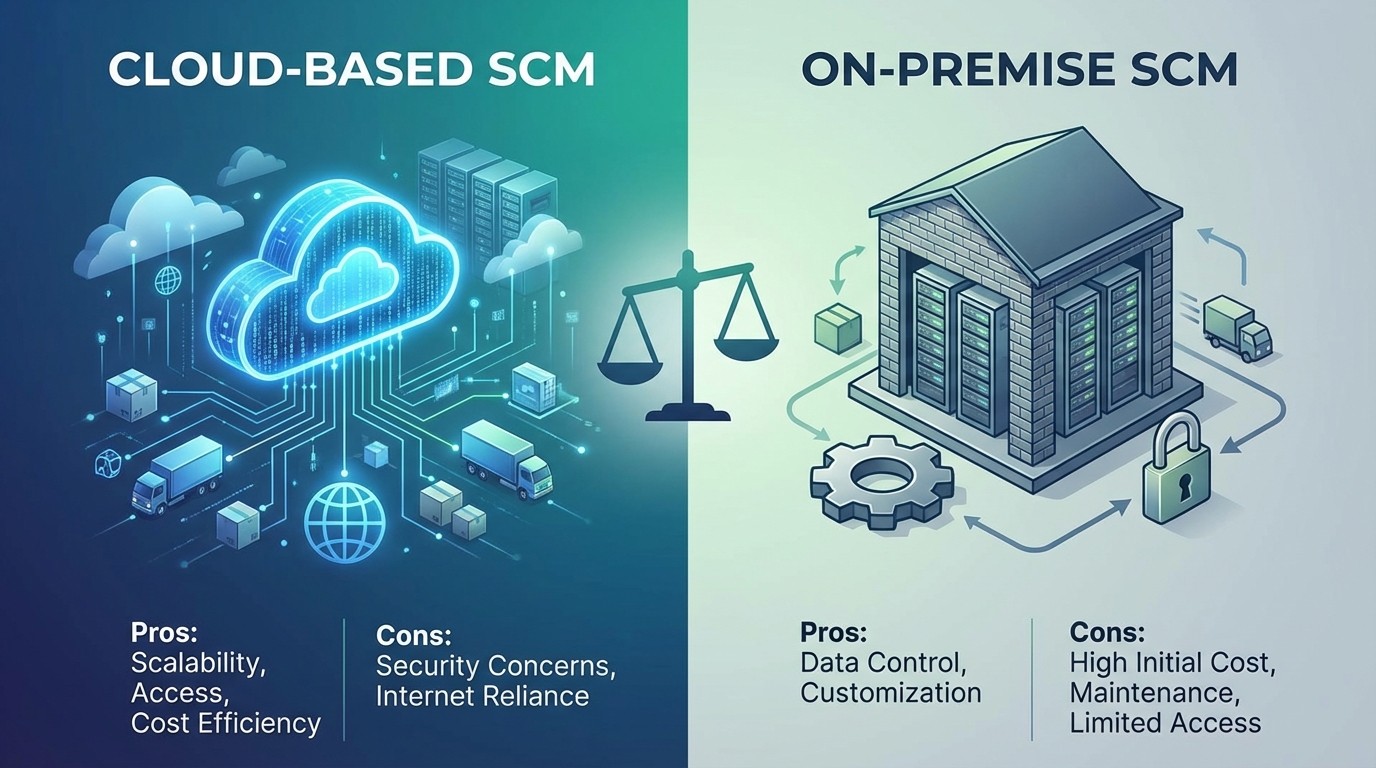
Cloud-Based SCM Systems:
· Rapid deployment and scalability
· Lower upfront capital investment
· Continuous feature updates
· Dependency on vendor infrastructure
· Shared responsibility for security and compliance
On-Premise SCM Systems:
· Greater control over infrastructure and data
· Customization flexibility
· Higher upfront capital expenditure
· Longer implementation cycles
· Increased responsibility for maintenance and upgrades
Operational Implications
Deployment choices affect several operational dimensions:
Scalability: Cloud platforms support rapid expansion and seasonal demand fluctuations.
Security & Compliance: Regulated industries may require tighter control over data environments.
Cost Structure: Cloud shifts spending from capital expenditure to operating expenditure.
Innovation Velocity: Cloud vendors typically deliver faster innovation cycles.
Strategic Decision Framework
Organizations should evaluate deployment options based on:
Regulatory and data sovereignty requirements
Integration complexity with legacy systems
Total cost of ownership over system lifecycle
Business growth projections
Internal IT capability maturity
Conclusion
The cloud vs on-premise decision is not purely technical, it is strategic. Organizations must align SCM deployment models with long-term operational objectives, regulatory constraints, and digital maturity. Hybrid approaches may offer a pragmatic middle ground for organizations transitioning toward cloud-enabled supply chain ecosystems.
#SupplyChainSystems #CloudComputing #SCMTechnology #DigitalTransformation #ITStrategy #OperationsManagement
More to Discover


Insights
Cloud-Based vs On-Premise SCM Systems: Pros & Cons
Introduction
As supply chains digitize, organizations face critical decisions regarding their technology infrastructure. One of the most consequential choices involves selecting between cloud-based and on-premise supply chain management (SCM) systems. Each model offers distinct advantages and trade-offs that directly influence scalability, security, cost structure, and operational agility.
Key Differences Between Deployment Models
Cloud-Based SCM Systems:
· Rapid deployment and scalability
· Lower upfront capital investment
· Continuous feature updates
· Dependency on vendor infrastructure
· Shared responsibility for security and compliance
On-Premise SCM Systems:
· Greater control over infrastructure and data
· Customization flexibility
· Higher upfront capital expenditure
· Longer implementation cycles
· Increased responsibility for maintenance and upgrades
Operational Implications
Deployment choices affect several operational dimensions:
Scalability: Cloud platforms support rapid expansion and seasonal demand fluctuations.
Security & Compliance: Regulated industries may require tighter control over data environments.
Cost Structure: Cloud shifts spending from capital expenditure to operating expenditure.
Innovation Velocity: Cloud vendors typically deliver faster innovation cycles.
Strategic Decision Framework
Organizations should evaluate deployment options based on:
Regulatory and data sovereignty requirements
Integration complexity with legacy systems
Total cost of ownership over system lifecycle
Business growth projections
Internal IT capability maturity
Conclusion
The cloud vs on-premise decision is not purely technical, it is strategic. Organizations must align SCM deployment models with long-term operational objectives, regulatory constraints, and digital maturity. Hybrid approaches may offer a pragmatic middle ground for organizations transitioning toward cloud-enabled supply chain ecosystems.
#SupplyChainSystems #CloudComputing #SCMTechnology #DigitalTransformation #ITStrategy #OperationsManagement
More to Discover
Insights
Cloud-Based vs On-Premise SCM Systems: Pros & Cons
Introduction
As supply chains digitize, organizations face critical decisions regarding their technology infrastructure. One of the most consequential choices involves selecting between cloud-based and on-premise supply chain management (SCM) systems. Each model offers distinct advantages and trade-offs that directly influence scalability, security, cost structure, and operational agility.
Key Differences Between Deployment Models
Cloud-Based SCM Systems:
· Rapid deployment and scalability
· Lower upfront capital investment
· Continuous feature updates
· Dependency on vendor infrastructure
· Shared responsibility for security and compliance
On-Premise SCM Systems:
· Greater control over infrastructure and data
· Customization flexibility
· Higher upfront capital expenditure
· Longer implementation cycles
· Increased responsibility for maintenance and upgrades
Operational Implications
Deployment choices affect several operational dimensions:
Scalability: Cloud platforms support rapid expansion and seasonal demand fluctuations.
Security & Compliance: Regulated industries may require tighter control over data environments.
Cost Structure: Cloud shifts spending from capital expenditure to operating expenditure.
Innovation Velocity: Cloud vendors typically deliver faster innovation cycles.
Strategic Decision Framework
Organizations should evaluate deployment options based on:
Regulatory and data sovereignty requirements
Integration complexity with legacy systems
Total cost of ownership over system lifecycle
Business growth projections
Internal IT capability maturity
Conclusion
The cloud vs on-premise decision is not purely technical, it is strategic. Organizations must align SCM deployment models with long-term operational objectives, regulatory constraints, and digital maturity. Hybrid approaches may offer a pragmatic middle ground for organizations transitioning toward cloud-enabled supply chain ecosystems.
#SupplyChainSystems #CloudComputing #SCMTechnology #DigitalTransformation #ITStrategy #OperationsManagement