Insights
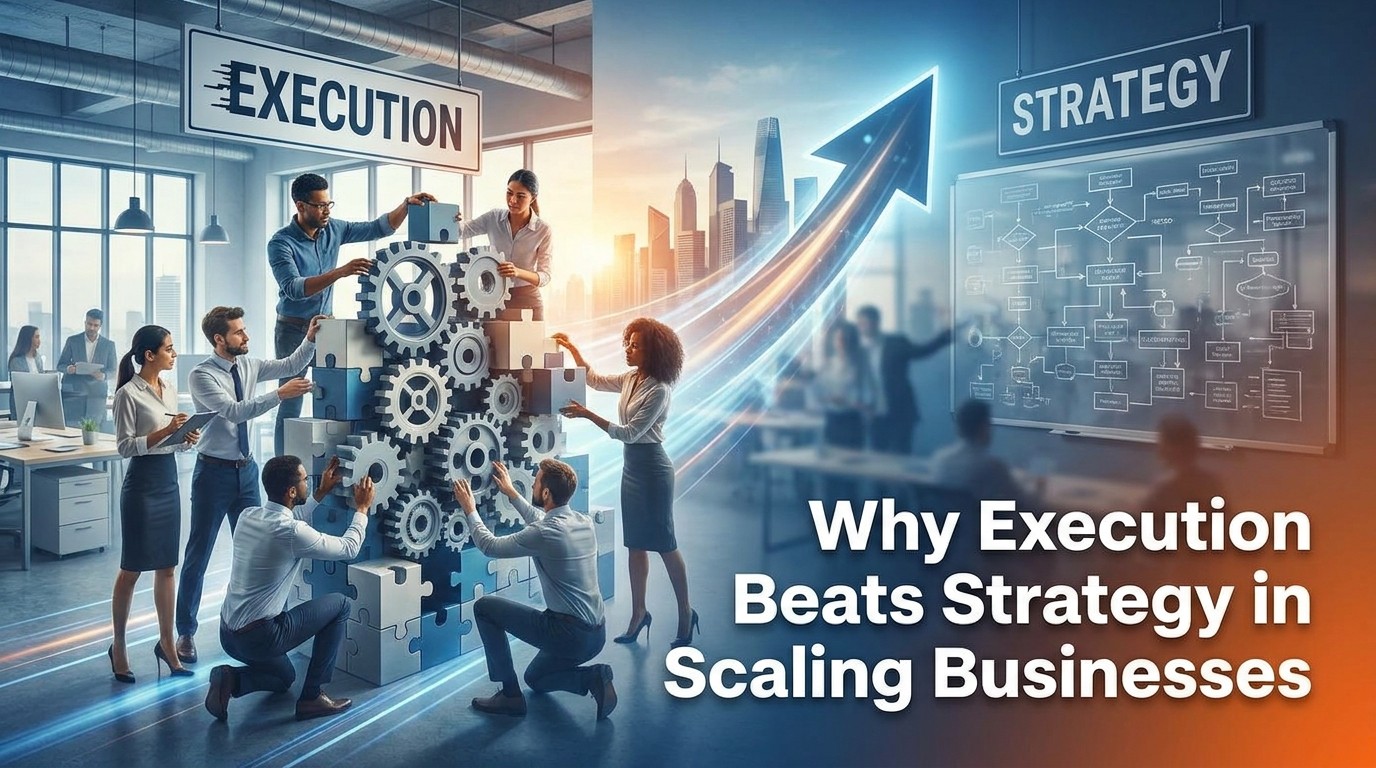
Why Execution Beats Strategy in Scaling Businesses
Why Execution Beats Strategy in Scaling Businesses
🔹 Most businesses don’t fail because they lack ideas.
🔹 They fail because execution breaks before strategy delivers results.
In today’s business world, strategy gets most of the attention.
Growth plans.
Brand vision.
Expansion models.
Digital transformation.
AI adoption.
Market positioning.
And while strategy absolutely matters…
there’s an uncomfortable operational truth many companies eventually discover:
execution is what determines whether strategy survives reality.
At Talha Khan OPS, we’ve observed this repeatedly across:
Supply chains
Retail businesses
D2C brands
Sports manufacturing
E-commerce operations
Wholesale distribution
Many businesses know what they WANT to achieve.
Far fewer know how to operationally execute consistently at scale.
Operator Perspective:
Strategy creates direction. Execution creates outcomes.
Why Execution Is Becoming a Competitive Advantage
Modern business environments move extremely fast.
Markets now change through:
Consumer behavior shifts
Inventory volatility
Logistics disruptions
Technology evolution
Fulfillment expectations
Operational complexity
In unstable environments,
execution discipline becomes increasingly valuable.
Because businesses that execute consistently can:
· Adapt faster
· Scale more reliably
· Recover quicker
· Fulfill better
· Retain customers longer
while competitors remain stuck in planning cycles.
The Most Common Execution Problems Businesses Face
1. Overplanning, Under executing
Some companies spend enormous time:
· Discussing strategy
· Creating presentations
· Redesigning systems
· Planning transformations
while operational execution remains weak.
The result?
Ideas increase…
but measurable operational improvement never fully happens.
Operator Perspective:
Businesses rarely scale through meetings alone.
2. Operational Misalignment
Execution suffers when departments operate independently.
For example:
· Sales pushes unrealistic timelines
· Procurement lacks forecasting visibility
· Warehousing struggles with inventory flow
· Fulfillment teams become overloaded
Without operational alignment,
even strong strategies create friction internally.
This is why scalable companies focus heavily on:
· Workflow coordination
· Visibility
· Communication
· Accountability
not just strategic planning.
3. Inconsistent Operational Discipline
Many businesses execute well temporarily…
but inconsistently over time.
That inconsistency eventually affects:
· Customer experience
· Supplier relationships
· Inventory flow
· Fulfillment speed
· Operational trust
The strongest companies create systems that support repeatable execution, not temporary motivation.
4. Scaling Faster Than Infrastructure
This happens constantly in:
· E-commerce
· Sportswear
· D2C brands
· Retail startups
Demand grows faster than:
· Fulfillment capability
· Supplier coordination
· Inventory systems
· Customer support
· Operational visibility
At that point,
growth itself becomes operational pressure.
Operator Perspective:
Scaling exposes operational weakness faster than failure does.
What High-Execution Companies Do Differently
Companies known for operational excellence, such as Amazon, Toyota, and Nike, share several operational traits:
They prioritize:
· Process clarity
· Operational visibility
· Accountability
· Execution speed
· Continuous improvement
· Scalable systems
· Supplier coordination
· Inventory discipline
because operational consistency compounds over time.
Execution is not random.
It’s engineered.
Why Sports & Manufacturing Businesses Depend on Execution
The sports products and apparel industries are highly execution-sensitive.
Small operational failures can immediately impact:
· Tournament timelines
· Retail launches
· Customization orders
· Club deliveries
· Seasonal inventory
· Customer trust
This becomes especially important in:
· OEM manufacturing
· Private labeling
· Wholesale fulfillment
· Custom sports production
because operational coordination directly affects delivery reliability.
Manufacturing ecosystems like Sialkot became globally respected not simply because of production capability, but because consistent execution built long-term buyer trust.
Brands like STRYK World operate within this evolving environment where balancing:
Customization
Operational flexibility
Production quality
Fulfillment consistency
becomes increasingly important for serving:
Soccer clubs
Distributors
Sports retailers
Private-label buyers
Global wholesale clients
Why Modern Businesses Overestimate Strategy
One major problem today:
many companies romanticize strategy while underestimating operations.
But customers experience businesses operationally.
They remember:
· Delivery speed
· Product quality
· Communication
· Reliability
· Consistency
far more than strategic presentations.
Execution creates reputation.
Operator Perspective:
Great execution quietly builds trust while competitors focus only on visibility.
Mini Industry Observation, The Rise of Operational Brands
One major shift happening globally:
operationally disciplined brands are increasingly outperforming purely marketing-driven brands.
Why?
Because:
Customer acquisition costs are rising
Fulfillment expectations are increasing
Online competition is intensifying
Operational mistakes spread publicly faster
This means execution quality now directly affects:
Retention
Reviews
Partnerships
Wholesale relationships
Brand credibility
Operational excellence is becoming part of brand identity itself.
Industry Prediction for 2026–2030
Over the next few years, execution capability will likely become one of the strongest competitive differentiators across:
D2C
Retail
Logistics
Sports manufacturing
E-commerce
Wholesale operations
The businesses winning long-term will likely combine:
· Strategic clarity
· Operational discipline
· Fulfillment reliability
· Scalable systems
· Supplier coordination
· Execution consistency
because sustainable growth increasingly depends on operational maturity.
Final Thought
Ideas are important.
Strategy matters.
But execution is what converts vision into operational reality.
The businesses that scale successfully are rarely the ones with the loudest strategy.
They’re the ones executing consistently while others remain stuck in planning mode.
🔹 Strategy creates possibility.
🔹 Execution creates results.
What do you think matters more in modern business, strategy, execution, or operational adaptability?
Let’s discuss below.
📩 Connect with us:
🌐 Talha Khan OPS
🌐 STRYK World
#Execution #BusinessOperations #OperationalExcellence #Leadership #SupplyChain #OperationsManagement #BusinessGrowth #RetailOperations #D2C #SportsManufacturing #OEMManufacturing #PrivateLabel #Ecommerce #WarehouseManagement #OperationalLeadership #BusinessTransformation #InventoryManagement #Fulfillment #Manufacturing #SportsBusiness #ScalingBusiness #OperationalDiscipline #BusinessStrategy #STRYKWorld #TalhaKhanOPS #Sialkot #Sportswear #WholesaleOperations #SupplyChainManagement #GrowthStrategy
More to Discover


Insights
Why Execution Beats Strategy in Scaling Businesses
Why Execution Beats Strategy in Scaling Businesses
🔹 Most businesses don’t fail because they lack ideas.
🔹 They fail because execution breaks before strategy delivers results.
In today’s business world, strategy gets most of the attention.
Growth plans.
Brand vision.
Expansion models.
Digital transformation.
AI adoption.
Market positioning.
And while strategy absolutely matters…
there’s an uncomfortable operational truth many companies eventually discover:
execution is what determines whether strategy survives reality.
At Talha Khan OPS, we’ve observed this repeatedly across:
Supply chains
Retail businesses
D2C brands
Sports manufacturing
E-commerce operations
Wholesale distribution
Many businesses know what they WANT to achieve.
Far fewer know how to operationally execute consistently at scale.
Operator Perspective:
Strategy creates direction. Execution creates outcomes.
Why Execution Is Becoming a Competitive Advantage
Modern business environments move extremely fast.
Markets now change through:
Consumer behavior shifts
Inventory volatility
Logistics disruptions
Technology evolution
Fulfillment expectations
Operational complexity
In unstable environments,
execution discipline becomes increasingly valuable.
Because businesses that execute consistently can:
· Adapt faster
· Scale more reliably
· Recover quicker
· Fulfill better
· Retain customers longer
while competitors remain stuck in planning cycles.
The Most Common Execution Problems Businesses Face
1. Overplanning, Under executing
Some companies spend enormous time:
· Discussing strategy
· Creating presentations
· Redesigning systems
· Planning transformations
while operational execution remains weak.
The result?
Ideas increase…
but measurable operational improvement never fully happens.
Operator Perspective:
Businesses rarely scale through meetings alone.
2. Operational Misalignment
Execution suffers when departments operate independently.
For example:
· Sales pushes unrealistic timelines
· Procurement lacks forecasting visibility
· Warehousing struggles with inventory flow
· Fulfillment teams become overloaded
Without operational alignment,
even strong strategies create friction internally.
This is why scalable companies focus heavily on:
· Workflow coordination
· Visibility
· Communication
· Accountability
not just strategic planning.
3. Inconsistent Operational Discipline
Many businesses execute well temporarily…
but inconsistently over time.
That inconsistency eventually affects:
· Customer experience
· Supplier relationships
· Inventory flow
· Fulfillment speed
· Operational trust
The strongest companies create systems that support repeatable execution, not temporary motivation.
4. Scaling Faster Than Infrastructure
This happens constantly in:
· E-commerce
· Sportswear
· D2C brands
· Retail startups
Demand grows faster than:
· Fulfillment capability
· Supplier coordination
· Inventory systems
· Customer support
· Operational visibility
At that point,
growth itself becomes operational pressure.
Operator Perspective:
Scaling exposes operational weakness faster than failure does.
What High-Execution Companies Do Differently
Companies known for operational excellence, such as Amazon, Toyota, and Nike, share several operational traits:
They prioritize:
· Process clarity
· Operational visibility
· Accountability
· Execution speed
· Continuous improvement
· Scalable systems
· Supplier coordination
· Inventory discipline
because operational consistency compounds over time.
Execution is not random.
It’s engineered.
Why Sports & Manufacturing Businesses Depend on Execution
The sports products and apparel industries are highly execution-sensitive.
Small operational failures can immediately impact:
· Tournament timelines
· Retail launches
· Customization orders
· Club deliveries
· Seasonal inventory
· Customer trust
This becomes especially important in:
· OEM manufacturing
· Private labeling
· Wholesale fulfillment
· Custom sports production
because operational coordination directly affects delivery reliability.
Manufacturing ecosystems like Sialkot became globally respected not simply because of production capability, but because consistent execution built long-term buyer trust.
Brands like STRYK World operate within this evolving environment where balancing:
Customization
Operational flexibility
Production quality
Fulfillment consistency
becomes increasingly important for serving:
Soccer clubs
Distributors
Sports retailers
Private-label buyers
Global wholesale clients
Why Modern Businesses Overestimate Strategy
One major problem today:
many companies romanticize strategy while underestimating operations.
But customers experience businesses operationally.
They remember:
· Delivery speed
· Product quality
· Communication
· Reliability
· Consistency
far more than strategic presentations.
Execution creates reputation.
Operator Perspective:
Great execution quietly builds trust while competitors focus only on visibility.
Mini Industry Observation, The Rise of Operational Brands
One major shift happening globally:
operationally disciplined brands are increasingly outperforming purely marketing-driven brands.
Why?
Because:
Customer acquisition costs are rising
Fulfillment expectations are increasing
Online competition is intensifying
Operational mistakes spread publicly faster
This means execution quality now directly affects:
Retention
Reviews
Partnerships
Wholesale relationships
Brand credibility
Operational excellence is becoming part of brand identity itself.
Industry Prediction for 2026–2030
Over the next few years, execution capability will likely become one of the strongest competitive differentiators across:
D2C
Retail
Logistics
Sports manufacturing
E-commerce
Wholesale operations
The businesses winning long-term will likely combine:
· Strategic clarity
· Operational discipline
· Fulfillment reliability
· Scalable systems
· Supplier coordination
· Execution consistency
because sustainable growth increasingly depends on operational maturity.
Final Thought
Ideas are important.
Strategy matters.
But execution is what converts vision into operational reality.
The businesses that scale successfully are rarely the ones with the loudest strategy.
They’re the ones executing consistently while others remain stuck in planning mode.
🔹 Strategy creates possibility.
🔹 Execution creates results.
What do you think matters more in modern business, strategy, execution, or operational adaptability?
Let’s discuss below.
📩 Connect with us:
🌐 Talha Khan OPS
🌐 STRYK World
#Execution #BusinessOperations #OperationalExcellence #Leadership #SupplyChain #OperationsManagement #BusinessGrowth #RetailOperations #D2C #SportsManufacturing #OEMManufacturing #PrivateLabel #Ecommerce #WarehouseManagement #OperationalLeadership #BusinessTransformation #InventoryManagement #Fulfillment #Manufacturing #SportsBusiness #ScalingBusiness #OperationalDiscipline #BusinessStrategy #STRYKWorld #TalhaKhanOPS #Sialkot #Sportswear #WholesaleOperations #SupplyChainManagement #GrowthStrategy
More to Discover
Insights
Why Execution Beats Strategy in Scaling Businesses
Why Execution Beats Strategy in Scaling Businesses
🔹 Most businesses don’t fail because they lack ideas.
🔹 They fail because execution breaks before strategy delivers results.
In today’s business world, strategy gets most of the attention.
Growth plans.
Brand vision.
Expansion models.
Digital transformation.
AI adoption.
Market positioning.
And while strategy absolutely matters…
there’s an uncomfortable operational truth many companies eventually discover:
execution is what determines whether strategy survives reality.
At Talha Khan OPS, we’ve observed this repeatedly across:
Supply chains
Retail businesses
D2C brands
Sports manufacturing
E-commerce operations
Wholesale distribution
Many businesses know what they WANT to achieve.
Far fewer know how to operationally execute consistently at scale.
Operator Perspective:
Strategy creates direction. Execution creates outcomes.
Why Execution Is Becoming a Competitive Advantage
Modern business environments move extremely fast.
Markets now change through:
Consumer behavior shifts
Inventory volatility
Logistics disruptions
Technology evolution
Fulfillment expectations
Operational complexity
In unstable environments,
execution discipline becomes increasingly valuable.
Because businesses that execute consistently can:
· Adapt faster
· Scale more reliably
· Recover quicker
· Fulfill better
· Retain customers longer
while competitors remain stuck in planning cycles.
The Most Common Execution Problems Businesses Face
1. Overplanning, Under executing
Some companies spend enormous time:
· Discussing strategy
· Creating presentations
· Redesigning systems
· Planning transformations
while operational execution remains weak.
The result?
Ideas increase…
but measurable operational improvement never fully happens.
Operator Perspective:
Businesses rarely scale through meetings alone.
2. Operational Misalignment
Execution suffers when departments operate independently.
For example:
· Sales pushes unrealistic timelines
· Procurement lacks forecasting visibility
· Warehousing struggles with inventory flow
· Fulfillment teams become overloaded
Without operational alignment,
even strong strategies create friction internally.
This is why scalable companies focus heavily on:
· Workflow coordination
· Visibility
· Communication
· Accountability
not just strategic planning.
3. Inconsistent Operational Discipline
Many businesses execute well temporarily…
but inconsistently over time.
That inconsistency eventually affects:
· Customer experience
· Supplier relationships
· Inventory flow
· Fulfillment speed
· Operational trust
The strongest companies create systems that support repeatable execution, not temporary motivation.
4. Scaling Faster Than Infrastructure
This happens constantly in:
· E-commerce
· Sportswear
· D2C brands
· Retail startups
Demand grows faster than:
· Fulfillment capability
· Supplier coordination
· Inventory systems
· Customer support
· Operational visibility
At that point,
growth itself becomes operational pressure.
Operator Perspective:
Scaling exposes operational weakness faster than failure does.
What High-Execution Companies Do Differently
Companies known for operational excellence, such as Amazon, Toyota, and Nike, share several operational traits:
They prioritize:
· Process clarity
· Operational visibility
· Accountability
· Execution speed
· Continuous improvement
· Scalable systems
· Supplier coordination
· Inventory discipline
because operational consistency compounds over time.
Execution is not random.
It’s engineered.
Why Sports & Manufacturing Businesses Depend on Execution
The sports products and apparel industries are highly execution-sensitive.
Small operational failures can immediately impact:
· Tournament timelines
· Retail launches
· Customization orders
· Club deliveries
· Seasonal inventory
· Customer trust
This becomes especially important in:
· OEM manufacturing
· Private labeling
· Wholesale fulfillment
· Custom sports production
because operational coordination directly affects delivery reliability.
Manufacturing ecosystems like Sialkot became globally respected not simply because of production capability, but because consistent execution built long-term buyer trust.
Brands like STRYK World operate within this evolving environment where balancing:
Customization
Operational flexibility
Production quality
Fulfillment consistency
becomes increasingly important for serving:
Soccer clubs
Distributors
Sports retailers
Private-label buyers
Global wholesale clients
Why Modern Businesses Overestimate Strategy
One major problem today:
many companies romanticize strategy while underestimating operations.
But customers experience businesses operationally.
They remember:
· Delivery speed
· Product quality
· Communication
· Reliability
· Consistency
far more than strategic presentations.
Execution creates reputation.
Operator Perspective:
Great execution quietly builds trust while competitors focus only on visibility.
Mini Industry Observation, The Rise of Operational Brands
One major shift happening globally:
operationally disciplined brands are increasingly outperforming purely marketing-driven brands.
Why?
Because:
Customer acquisition costs are rising
Fulfillment expectations are increasing
Online competition is intensifying
Operational mistakes spread publicly faster
This means execution quality now directly affects:
Retention
Reviews
Partnerships
Wholesale relationships
Brand credibility
Operational excellence is becoming part of brand identity itself.
Industry Prediction for 2026–2030
Over the next few years, execution capability will likely become one of the strongest competitive differentiators across:
D2C
Retail
Logistics
Sports manufacturing
E-commerce
Wholesale operations
The businesses winning long-term will likely combine:
· Strategic clarity
· Operational discipline
· Fulfillment reliability
· Scalable systems
· Supplier coordination
· Execution consistency
because sustainable growth increasingly depends on operational maturity.
Final Thought
Ideas are important.
Strategy matters.
But execution is what converts vision into operational reality.
The businesses that scale successfully are rarely the ones with the loudest strategy.
They’re the ones executing consistently while others remain stuck in planning mode.
🔹 Strategy creates possibility.
🔹 Execution creates results.
What do you think matters more in modern business, strategy, execution, or operational adaptability?
Let’s discuss below.
📩 Connect with us:
🌐 Talha Khan OPS
🌐 STRYK World
#Execution #BusinessOperations #OperationalExcellence #Leadership #SupplyChain #OperationsManagement #BusinessGrowth #RetailOperations #D2C #SportsManufacturing #OEMManufacturing #PrivateLabel #Ecommerce #WarehouseManagement #OperationalLeadership #BusinessTransformation #InventoryManagement #Fulfillment #Manufacturing #SportsBusiness #ScalingBusiness #OperationalDiscipline #BusinessStrategy #STRYKWorld #TalhaKhanOPS #Sialkot #Sportswear #WholesaleOperations #SupplyChainManagement #GrowthStrategy