Insights
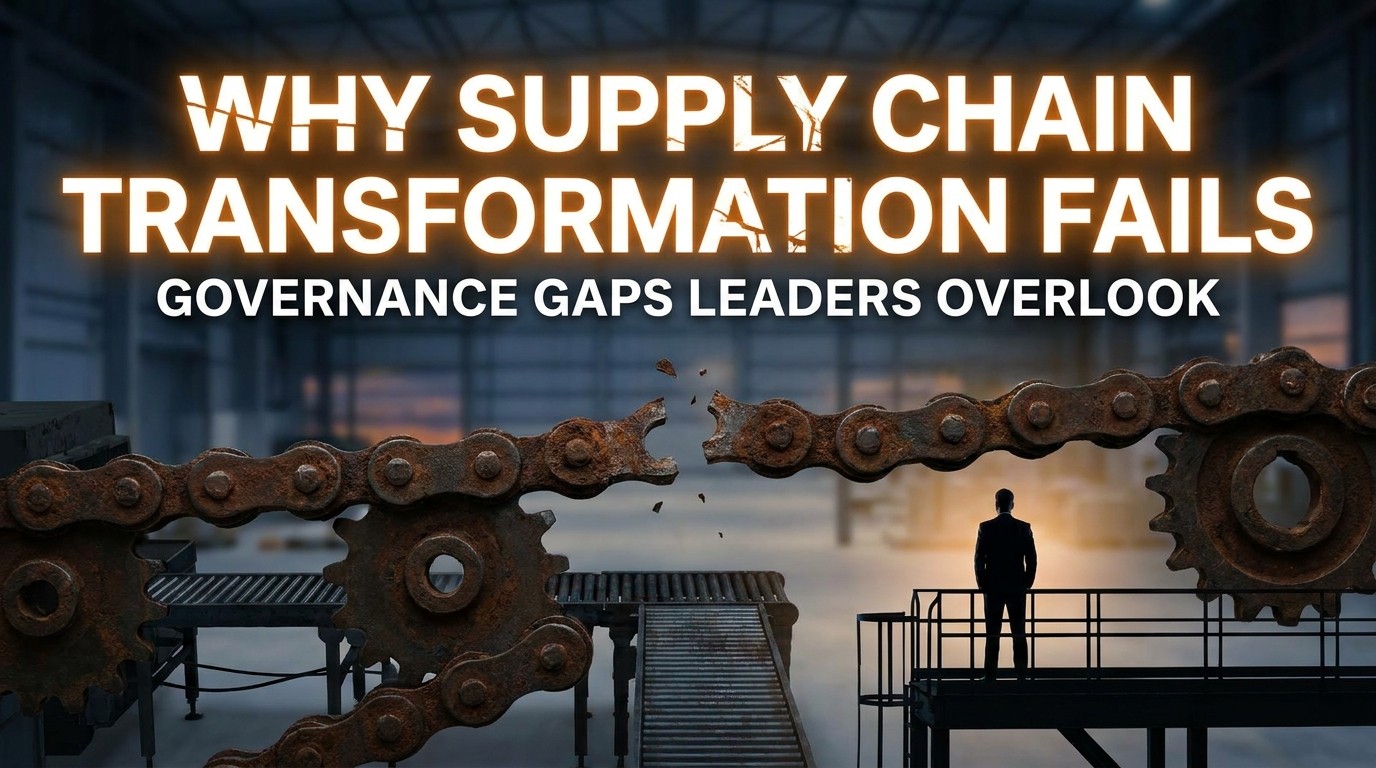
Why Supply Chain Transformation Fails: Governance Gaps Leaders Overlook
Introduction
Supply chain transformation programs promise improved agility, resilience, and cost efficiency. Yet many initiatives fail to deliver sustained value, despite significant investment in technology and process redesign. A recurring root cause is weak governance. Without clear decision rights, accountability structures, and value realization mechanisms, transformation efforts fragment into disconnected projects that struggle to scale and sustain impact.
Common Governance Gaps
Transformation initiatives often falter due to:
Unclear ownership of end-to-end outcomes
Fragmented sponsorship across functions and regions
Ambiguous decision rights between global and local teams
Lack of value realization tracking post-implementation
Insufficient change management and adoption governance
These gaps create execution drift and dilute strategic intent.
Designing Transformation Governance
Effective governance models should include:
Clear executive sponsorship with cross-functional authority
Defined decision rights across planning, procurement, logistics, and IT
Value realization frameworks with measurable benefits tracking
Integrated change management and adoption accountability
Regular steering forums to resolve trade-offs and reprioritize initiatives
Strategic Recommendations
Leaders should:
Establish a transformation office with end-to-end mandate
Align incentives with transformation outcomes rather than project delivery
Codify decision rights and escalation paths
Track benefits realization beyond go-live milestones
Periodically reassess governance as transformation scope evolves
Conclusion
Supply chain transformation fails less due to technology limitations and more due to governance breakdowns. Organizations that design robust governance frameworks can translate transformation ambition into sustained operational impact.
#SupplyChainTransformation #Governance #ChangeManagement #OperationalExcellence #DigitalTransformation #Leadership
More to Discover


Insights
Why Supply Chain Transformation Fails: Governance Gaps Leaders Overlook
Introduction
Supply chain transformation programs promise improved agility, resilience, and cost efficiency. Yet many initiatives fail to deliver sustained value, despite significant investment in technology and process redesign. A recurring root cause is weak governance. Without clear decision rights, accountability structures, and value realization mechanisms, transformation efforts fragment into disconnected projects that struggle to scale and sustain impact.
Common Governance Gaps
Transformation initiatives often falter due to:
Unclear ownership of end-to-end outcomes
Fragmented sponsorship across functions and regions
Ambiguous decision rights between global and local teams
Lack of value realization tracking post-implementation
Insufficient change management and adoption governance
These gaps create execution drift and dilute strategic intent.
Designing Transformation Governance
Effective governance models should include:
Clear executive sponsorship with cross-functional authority
Defined decision rights across planning, procurement, logistics, and IT
Value realization frameworks with measurable benefits tracking
Integrated change management and adoption accountability
Regular steering forums to resolve trade-offs and reprioritize initiatives
Strategic Recommendations
Leaders should:
Establish a transformation office with end-to-end mandate
Align incentives with transformation outcomes rather than project delivery
Codify decision rights and escalation paths
Track benefits realization beyond go-live milestones
Periodically reassess governance as transformation scope evolves
Conclusion
Supply chain transformation fails less due to technology limitations and more due to governance breakdowns. Organizations that design robust governance frameworks can translate transformation ambition into sustained operational impact.
#SupplyChainTransformation #Governance #ChangeManagement #OperationalExcellence #DigitalTransformation #Leadership
More to Discover
Insights
Why Supply Chain Transformation Fails: Governance Gaps Leaders Overlook
Introduction
Supply chain transformation programs promise improved agility, resilience, and cost efficiency. Yet many initiatives fail to deliver sustained value, despite significant investment in technology and process redesign. A recurring root cause is weak governance. Without clear decision rights, accountability structures, and value realization mechanisms, transformation efforts fragment into disconnected projects that struggle to scale and sustain impact.
Common Governance Gaps
Transformation initiatives often falter due to:
Unclear ownership of end-to-end outcomes
Fragmented sponsorship across functions and regions
Ambiguous decision rights between global and local teams
Lack of value realization tracking post-implementation
Insufficient change management and adoption governance
These gaps create execution drift and dilute strategic intent.
Designing Transformation Governance
Effective governance models should include:
Clear executive sponsorship with cross-functional authority
Defined decision rights across planning, procurement, logistics, and IT
Value realization frameworks with measurable benefits tracking
Integrated change management and adoption accountability
Regular steering forums to resolve trade-offs and reprioritize initiatives
Strategic Recommendations
Leaders should:
Establish a transformation office with end-to-end mandate
Align incentives with transformation outcomes rather than project delivery
Codify decision rights and escalation paths
Track benefits realization beyond go-live milestones
Periodically reassess governance as transformation scope evolves
Conclusion
Supply chain transformation fails less due to technology limitations and more due to governance breakdowns. Organizations that design robust governance frameworks can translate transformation ambition into sustained operational impact.
#SupplyChainTransformation #Governance #ChangeManagement #OperationalExcellence #DigitalTransformation #Leadership