Insights
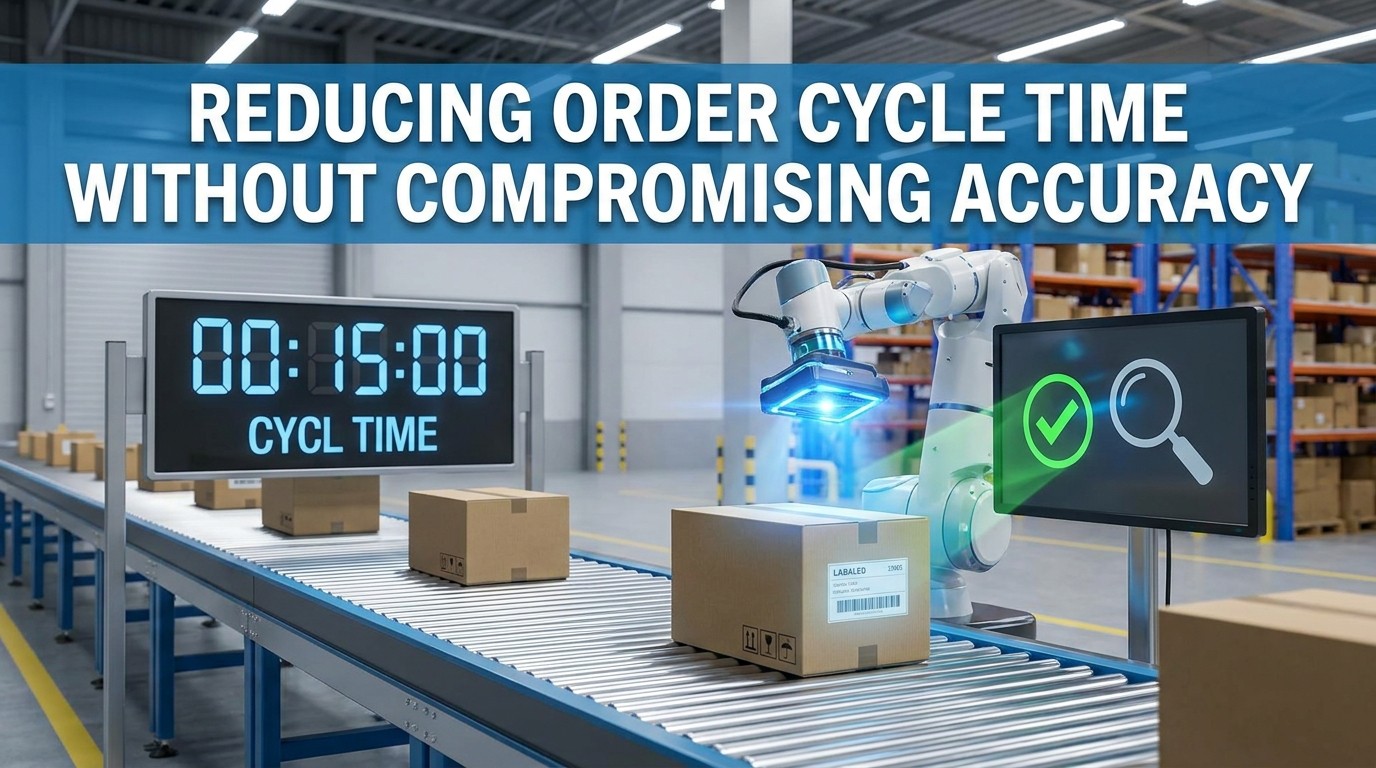
Reducing Order Cycle Time Without Compromising Accuracy
Introduction
Shortening order cycle time is a common objective in customer-centric supply chains. However, aggressive cycle time reduction initiatives can inadvertently compromise order accuracy, leading to returns, rework, and customer dissatisfaction. The challenge for operations leaders is to accelerate fulfillment while preserving accuracy and reliability.
The Speed–Accuracy Trade-Off
Cycle time reduction efforts often introduce:
Increased error rates under time pressure
Insufficient quality checks
Process shortcuts that bypass controls
Workforce fatigue during peak periods
These trade-offs can erode the benefits of faster fulfillment.
Designing for Speed with Accuracy
Organizations can reduce cycle time while maintaining accuracy by:
Standardizing workflows and reducing handoffs
Implementing error-proofing (poka-yoke) mechanisms
Leveraging automation for high-variability tasks
Aligning performance incentives with both speed and accuracy
Using real-time quality feedback loops
Measurement and Governance
Effective governance includes:
Balanced KPIs for speed, accuracy, and customer satisfaction
Root-cause analysis of cycle time and error drivers
Continuous improvement programs targeting process friction
Conclusion
Reducing order cycle time should not come at the expense of accuracy. Organizations that design processes with built-in quality controls and balanced incentives can achieve faster fulfillment while sustaining service reliability.
#OrderCycleTime #FulfillmentOperations #ProcessOptimization #CustomerExperience #OperationalExcellence #LogisticsPerformance
More to Discover


Insights
Reducing Order Cycle Time Without Compromising Accuracy
Introduction
Shortening order cycle time is a common objective in customer-centric supply chains. However, aggressive cycle time reduction initiatives can inadvertently compromise order accuracy, leading to returns, rework, and customer dissatisfaction. The challenge for operations leaders is to accelerate fulfillment while preserving accuracy and reliability.
The Speed–Accuracy Trade-Off
Cycle time reduction efforts often introduce:
Increased error rates under time pressure
Insufficient quality checks
Process shortcuts that bypass controls
Workforce fatigue during peak periods
These trade-offs can erode the benefits of faster fulfillment.
Designing for Speed with Accuracy
Organizations can reduce cycle time while maintaining accuracy by:
Standardizing workflows and reducing handoffs
Implementing error-proofing (poka-yoke) mechanisms
Leveraging automation for high-variability tasks
Aligning performance incentives with both speed and accuracy
Using real-time quality feedback loops
Measurement and Governance
Effective governance includes:
Balanced KPIs for speed, accuracy, and customer satisfaction
Root-cause analysis of cycle time and error drivers
Continuous improvement programs targeting process friction
Conclusion
Reducing order cycle time should not come at the expense of accuracy. Organizations that design processes with built-in quality controls and balanced incentives can achieve faster fulfillment while sustaining service reliability.
#OrderCycleTime #FulfillmentOperations #ProcessOptimization #CustomerExperience #OperationalExcellence #LogisticsPerformance
More to Discover
Insights
Reducing Order Cycle Time Without Compromising Accuracy
Introduction
Shortening order cycle time is a common objective in customer-centric supply chains. However, aggressive cycle time reduction initiatives can inadvertently compromise order accuracy, leading to returns, rework, and customer dissatisfaction. The challenge for operations leaders is to accelerate fulfillment while preserving accuracy and reliability.
The Speed–Accuracy Trade-Off
Cycle time reduction efforts often introduce:
Increased error rates under time pressure
Insufficient quality checks
Process shortcuts that bypass controls
Workforce fatigue during peak periods
These trade-offs can erode the benefits of faster fulfillment.
Designing for Speed with Accuracy
Organizations can reduce cycle time while maintaining accuracy by:
Standardizing workflows and reducing handoffs
Implementing error-proofing (poka-yoke) mechanisms
Leveraging automation for high-variability tasks
Aligning performance incentives with both speed and accuracy
Using real-time quality feedback loops
Measurement and Governance
Effective governance includes:
Balanced KPIs for speed, accuracy, and customer satisfaction
Root-cause analysis of cycle time and error drivers
Continuous improvement programs targeting process friction
Conclusion
Reducing order cycle time should not come at the expense of accuracy. Organizations that design processes with built-in quality controls and balanced incentives can achieve faster fulfillment while sustaining service reliability.
#OrderCycleTime #FulfillmentOperations #ProcessOptimization #CustomerExperience #OperationalExcellence #LogisticsPerformance