Insights
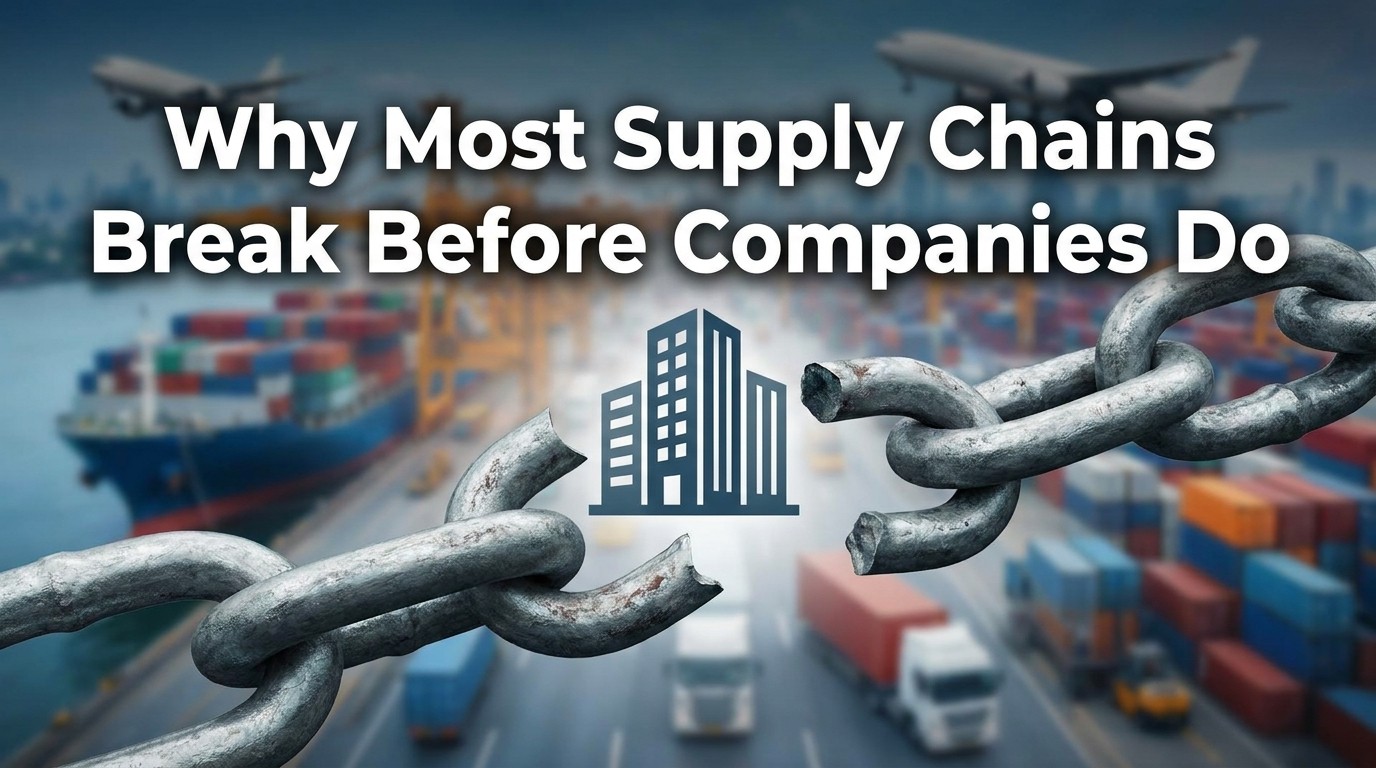
Why Most Supply Chains Break Before Companies Do
🔹 Most companies think they have a sales problem.
🔹 In reality, they have an operations problem waiting to explode.
A business rarely collapses overnight because demand disappears. More often, it breaks slowly, through delayed shipments, inventory chaos, supplier issues, poor forecasting, operational blind spots, and disconnected systems.
The truth is simple:
Most supply chains fail long before the business itself realizes it.
And in 2026, this problem is becoming even more dangerous.
At Talha Khan OPS, we’ve observed a recurring pattern across industries, from e-commerce and sports manufacturing to retail and D2C brands:
Companies scale marketing faster than they scale operations.
The result?
Growth becomes operational pressure instead of competitive advantage.
Why Modern Supply Chains Are Under Pressure
Global supply chains today are no longer linear systems.
They are interconnected ecosystems involving:
Suppliers
Manufacturers
Warehouses
Freight partners
Distributors
Retailers
Digital platforms
Customer expectations
One weak link affects everything downstream.
This is exactly why even major companies like Nike, Amazon, and Adidas continuously invest billions into operational resilience, forecasting, supplier diversification, and logistics optimization.
Because they understand something many growing businesses ignore:
Revenue growth without operational maturity creates fragility.
The Hidden Reasons Supply Chains Collapse
1. Businesses Scale Sales Before Systems
One viral product.
One successful campaign.
One major wholesale order.
And suddenly:
· Inventory becomes inaccurate
· Fulfillment slows down
· Suppliers miss deadlines
· Quality drops
· Customer complaints increase
The business grows faster than the infrastructure supporting it.
This is extremely common among:
· D2C brands
· Sportswear startups
· Apparel companies
· E-commerce businesses
· Wholesale distributors
Operator Perspective:
Most scaling problems are actually operations problems disguised as growth opportunities.
2. Poor Visibility Creates Expensive Decisions
Many businesses still operate with:
· Disconnected spreadsheets
· Manual tracking
· Fragmented supplier communication
· Delayed reporting
Without real-time operational visibility:
· Forecasting becomes inaccurate
· Procurement becomes reactive
· Stockouts increase
· Dead inventory accumulates
Modern supply chains run on visibility.
Companies like Zara built competitive advantage by reducing the time between market demand and operational response.
Speed today is not just logistics speed.
It’s decision-making speed.
3. Overdependence on Single Suppliers
COVID-19, port congestion, geopolitical tensions, and freight disruptions exposed a brutal reality:
Many businesses rely too heavily on single-source supply chains.
When one supplier fails:
· Production stops
· Timelines collapse
· Retail commitments suffer
That’s why global brands increasingly adopt:
· Multi-country sourcing
· Nearshoring
· Backup supplier ecosystems
· Regional manufacturing strategies
This is particularly important in sports manufacturing, where seasonal demand spikes create additional pressure.
Manufacturing hubs like Sialkot continue to play a critical role globally because of their deep specialization in:
· Football manufacturing
· Sports apparel
· Gloves
· Training equipment
· OEM production
Brands that diversify intelligently tend to survive disruptions better.
4. Forecasting Failures Destroy Profitability
Many companies still forecast based on intuition instead of operational intelligence.
But inaccurate forecasting creates chain reactions:
· Overproduction
· Stock shortages
· Warehousing inefficiencies
· Discount dependency
· Cash flow pressure
Companies like Amazon and Costco heavily invest in predictive analytics because inventory mistakes become extremely expensive at scale.
The businesses winning today are not necessarily producing more.
They’re forecasting better.
5. Operational Complexity Increases Faster Than Revenue
This is where many founders get surprised.
At small scale:
operations feel manageable.
But growth introduces:
· SKU complexity
· Multi-channel fulfillment
· International shipping
· Returns management
· Supplier coordination
· Packaging requirements
· Compliance issues
Without operational discipline, complexity eventually slows the business itself.
This is why operational leadership is becoming one of the most valuable competitive advantages in modern business.
What High-Performance Brands Do Differently
Leading brands focus on operational resilience early.
They prioritize:
* Supply chain visibility
* Supplier diversification
* Inventory accuracy
* Forecasting systems
* Logistics partnerships
* Quality control
* Scalable fulfillment
* Operational automation
Most importantly:
they treat operations as a strategic asset, not a backend function.
The Sports Industry Is Changing Fast
The sports manufacturing and sports retail sectors are evolving rapidly.
Soccer clubs, academies, sports retailers, and private-label brands increasingly demand:
Faster lead times
Customization
Premium quality
Lower MOQs
Reliable fulfillment
OEM flexibility
This is creating opportunities for agile manufacturers and operationally mature suppliers.
Brands like STRYK World are part of this emerging shift, combining affordable premium positioning with OEM manufacturing, private labeling, custom sports products, and export-ready operations from Pakistan’s globally recognized sports manufacturing ecosystem.
The future belongs to brands that can balance:
Quality
Speed
Customization
Operational reliability
simultaneously.
Industry Prediction for 2026–2028
Over the next few years, supply chain maturity will become a major market differentiator.
The strongest businesses will not necessarily be:
The cheapest
The biggest
or even the most visible
They’ll be the ones with:
Resilient operations
Intelligent sourcing
Scalable fulfillment
Operational visibility
Manufacturing flexibility
Because in uncertain markets:
operational stability becomes commercial power.
Final Thought
Most companies don’t collapse because customers stop buying.
They collapse because operations fail under pressure.
The brands that survive long-term are the ones that build operational strength before chaos forces them to.
🔹 Growth without operational structure is temporary.
🔹 Sustainable businesses are built on resilient systems, not just strong sales.
What’s the biggest operational challenge your business has faced while scaling?
Let’s discuss below.
📩 Connect with us:
🌐 Talha Khan OPS
🌐 STRYK World
#SupplyChain #OperationsManagement #Logistics #BusinessGrowth #SupplyChainStrategy #D2C #SportsManufacturing #Sialkot #OEMManufacturing #PrivateLabel #InventoryManagement #OperationalExcellence #BusinessTransformation #SportsIndustry #RetailOperations #EcommerceLogistics #Forecasting #WarehouseManagement #Leadership #SupplyChainResilience #TalhaKhanOPS #STRYKWorld #WholesaleSports #FootballManufacturing #Sportswear #GlobalSourcing #OperationalLeadership #ManufacturingStrategy #BusinessOperations #SoccerIndustry
More to Discover


Insights
Why Most Supply Chains Break Before Companies Do
🔹 Most companies think they have a sales problem.
🔹 In reality, they have an operations problem waiting to explode.
A business rarely collapses overnight because demand disappears. More often, it breaks slowly, through delayed shipments, inventory chaos, supplier issues, poor forecasting, operational blind spots, and disconnected systems.
The truth is simple:
Most supply chains fail long before the business itself realizes it.
And in 2026, this problem is becoming even more dangerous.
At Talha Khan OPS, we’ve observed a recurring pattern across industries, from e-commerce and sports manufacturing to retail and D2C brands:
Companies scale marketing faster than they scale operations.
The result?
Growth becomes operational pressure instead of competitive advantage.
Why Modern Supply Chains Are Under Pressure
Global supply chains today are no longer linear systems.
They are interconnected ecosystems involving:
Suppliers
Manufacturers
Warehouses
Freight partners
Distributors
Retailers
Digital platforms
Customer expectations
One weak link affects everything downstream.
This is exactly why even major companies like Nike, Amazon, and Adidas continuously invest billions into operational resilience, forecasting, supplier diversification, and logistics optimization.
Because they understand something many growing businesses ignore:
Revenue growth without operational maturity creates fragility.
The Hidden Reasons Supply Chains Collapse
1. Businesses Scale Sales Before Systems
One viral product.
One successful campaign.
One major wholesale order.
And suddenly:
· Inventory becomes inaccurate
· Fulfillment slows down
· Suppliers miss deadlines
· Quality drops
· Customer complaints increase
The business grows faster than the infrastructure supporting it.
This is extremely common among:
· D2C brands
· Sportswear startups
· Apparel companies
· E-commerce businesses
· Wholesale distributors
Operator Perspective:
Most scaling problems are actually operations problems disguised as growth opportunities.
2. Poor Visibility Creates Expensive Decisions
Many businesses still operate with:
· Disconnected spreadsheets
· Manual tracking
· Fragmented supplier communication
· Delayed reporting
Without real-time operational visibility:
· Forecasting becomes inaccurate
· Procurement becomes reactive
· Stockouts increase
· Dead inventory accumulates
Modern supply chains run on visibility.
Companies like Zara built competitive advantage by reducing the time between market demand and operational response.
Speed today is not just logistics speed.
It’s decision-making speed.
3. Overdependence on Single Suppliers
COVID-19, port congestion, geopolitical tensions, and freight disruptions exposed a brutal reality:
Many businesses rely too heavily on single-source supply chains.
When one supplier fails:
· Production stops
· Timelines collapse
· Retail commitments suffer
That’s why global brands increasingly adopt:
· Multi-country sourcing
· Nearshoring
· Backup supplier ecosystems
· Regional manufacturing strategies
This is particularly important in sports manufacturing, where seasonal demand spikes create additional pressure.
Manufacturing hubs like Sialkot continue to play a critical role globally because of their deep specialization in:
· Football manufacturing
· Sports apparel
· Gloves
· Training equipment
· OEM production
Brands that diversify intelligently tend to survive disruptions better.
4. Forecasting Failures Destroy Profitability
Many companies still forecast based on intuition instead of operational intelligence.
But inaccurate forecasting creates chain reactions:
· Overproduction
· Stock shortages
· Warehousing inefficiencies
· Discount dependency
· Cash flow pressure
Companies like Amazon and Costco heavily invest in predictive analytics because inventory mistakes become extremely expensive at scale.
The businesses winning today are not necessarily producing more.
They’re forecasting better.
5. Operational Complexity Increases Faster Than Revenue
This is where many founders get surprised.
At small scale:
operations feel manageable.
But growth introduces:
· SKU complexity
· Multi-channel fulfillment
· International shipping
· Returns management
· Supplier coordination
· Packaging requirements
· Compliance issues
Without operational discipline, complexity eventually slows the business itself.
This is why operational leadership is becoming one of the most valuable competitive advantages in modern business.
What High-Performance Brands Do Differently
Leading brands focus on operational resilience early.
They prioritize:
* Supply chain visibility
* Supplier diversification
* Inventory accuracy
* Forecasting systems
* Logistics partnerships
* Quality control
* Scalable fulfillment
* Operational automation
Most importantly:
they treat operations as a strategic asset, not a backend function.
The Sports Industry Is Changing Fast
The sports manufacturing and sports retail sectors are evolving rapidly.
Soccer clubs, academies, sports retailers, and private-label brands increasingly demand:
Faster lead times
Customization
Premium quality
Lower MOQs
Reliable fulfillment
OEM flexibility
This is creating opportunities for agile manufacturers and operationally mature suppliers.
Brands like STRYK World are part of this emerging shift, combining affordable premium positioning with OEM manufacturing, private labeling, custom sports products, and export-ready operations from Pakistan’s globally recognized sports manufacturing ecosystem.
The future belongs to brands that can balance:
Quality
Speed
Customization
Operational reliability
simultaneously.
Industry Prediction for 2026–2028
Over the next few years, supply chain maturity will become a major market differentiator.
The strongest businesses will not necessarily be:
The cheapest
The biggest
or even the most visible
They’ll be the ones with:
Resilient operations
Intelligent sourcing
Scalable fulfillment
Operational visibility
Manufacturing flexibility
Because in uncertain markets:
operational stability becomes commercial power.
Final Thought
Most companies don’t collapse because customers stop buying.
They collapse because operations fail under pressure.
The brands that survive long-term are the ones that build operational strength before chaos forces them to.
🔹 Growth without operational structure is temporary.
🔹 Sustainable businesses are built on resilient systems, not just strong sales.
What’s the biggest operational challenge your business has faced while scaling?
Let’s discuss below.
📩 Connect with us:
🌐 Talha Khan OPS
🌐 STRYK World
#SupplyChain #OperationsManagement #Logistics #BusinessGrowth #SupplyChainStrategy #D2C #SportsManufacturing #Sialkot #OEMManufacturing #PrivateLabel #InventoryManagement #OperationalExcellence #BusinessTransformation #SportsIndustry #RetailOperations #EcommerceLogistics #Forecasting #WarehouseManagement #Leadership #SupplyChainResilience #TalhaKhanOPS #STRYKWorld #WholesaleSports #FootballManufacturing #Sportswear #GlobalSourcing #OperationalLeadership #ManufacturingStrategy #BusinessOperations #SoccerIndustry
More to Discover
Insights
Why Most Supply Chains Break Before Companies Do
🔹 Most companies think they have a sales problem.
🔹 In reality, they have an operations problem waiting to explode.
A business rarely collapses overnight because demand disappears. More often, it breaks slowly, through delayed shipments, inventory chaos, supplier issues, poor forecasting, operational blind spots, and disconnected systems.
The truth is simple:
Most supply chains fail long before the business itself realizes it.
And in 2026, this problem is becoming even more dangerous.
At Talha Khan OPS, we’ve observed a recurring pattern across industries, from e-commerce and sports manufacturing to retail and D2C brands:
Companies scale marketing faster than they scale operations.
The result?
Growth becomes operational pressure instead of competitive advantage.
Why Modern Supply Chains Are Under Pressure
Global supply chains today are no longer linear systems.
They are interconnected ecosystems involving:
Suppliers
Manufacturers
Warehouses
Freight partners
Distributors
Retailers
Digital platforms
Customer expectations
One weak link affects everything downstream.
This is exactly why even major companies like Nike, Amazon, and Adidas continuously invest billions into operational resilience, forecasting, supplier diversification, and logistics optimization.
Because they understand something many growing businesses ignore:
Revenue growth without operational maturity creates fragility.
The Hidden Reasons Supply Chains Collapse
1. Businesses Scale Sales Before Systems
One viral product.
One successful campaign.
One major wholesale order.
And suddenly:
· Inventory becomes inaccurate
· Fulfillment slows down
· Suppliers miss deadlines
· Quality drops
· Customer complaints increase
The business grows faster than the infrastructure supporting it.
This is extremely common among:
· D2C brands
· Sportswear startups
· Apparel companies
· E-commerce businesses
· Wholesale distributors
Operator Perspective:
Most scaling problems are actually operations problems disguised as growth opportunities.
2. Poor Visibility Creates Expensive Decisions
Many businesses still operate with:
· Disconnected spreadsheets
· Manual tracking
· Fragmented supplier communication
· Delayed reporting
Without real-time operational visibility:
· Forecasting becomes inaccurate
· Procurement becomes reactive
· Stockouts increase
· Dead inventory accumulates
Modern supply chains run on visibility.
Companies like Zara built competitive advantage by reducing the time between market demand and operational response.
Speed today is not just logistics speed.
It’s decision-making speed.
3. Overdependence on Single Suppliers
COVID-19, port congestion, geopolitical tensions, and freight disruptions exposed a brutal reality:
Many businesses rely too heavily on single-source supply chains.
When one supplier fails:
· Production stops
· Timelines collapse
· Retail commitments suffer
That’s why global brands increasingly adopt:
· Multi-country sourcing
· Nearshoring
· Backup supplier ecosystems
· Regional manufacturing strategies
This is particularly important in sports manufacturing, where seasonal demand spikes create additional pressure.
Manufacturing hubs like Sialkot continue to play a critical role globally because of their deep specialization in:
· Football manufacturing
· Sports apparel
· Gloves
· Training equipment
· OEM production
Brands that diversify intelligently tend to survive disruptions better.
4. Forecasting Failures Destroy Profitability
Many companies still forecast based on intuition instead of operational intelligence.
But inaccurate forecasting creates chain reactions:
· Overproduction
· Stock shortages
· Warehousing inefficiencies
· Discount dependency
· Cash flow pressure
Companies like Amazon and Costco heavily invest in predictive analytics because inventory mistakes become extremely expensive at scale.
The businesses winning today are not necessarily producing more.
They’re forecasting better.
5. Operational Complexity Increases Faster Than Revenue
This is where many founders get surprised.
At small scale:
operations feel manageable.
But growth introduces:
· SKU complexity
· Multi-channel fulfillment
· International shipping
· Returns management
· Supplier coordination
· Packaging requirements
· Compliance issues
Without operational discipline, complexity eventually slows the business itself.
This is why operational leadership is becoming one of the most valuable competitive advantages in modern business.
What High-Performance Brands Do Differently
Leading brands focus on operational resilience early.
They prioritize:
* Supply chain visibility
* Supplier diversification
* Inventory accuracy
* Forecasting systems
* Logistics partnerships
* Quality control
* Scalable fulfillment
* Operational automation
Most importantly:
they treat operations as a strategic asset, not a backend function.
The Sports Industry Is Changing Fast
The sports manufacturing and sports retail sectors are evolving rapidly.
Soccer clubs, academies, sports retailers, and private-label brands increasingly demand:
Faster lead times
Customization
Premium quality
Lower MOQs
Reliable fulfillment
OEM flexibility
This is creating opportunities for agile manufacturers and operationally mature suppliers.
Brands like STRYK World are part of this emerging shift, combining affordable premium positioning with OEM manufacturing, private labeling, custom sports products, and export-ready operations from Pakistan’s globally recognized sports manufacturing ecosystem.
The future belongs to brands that can balance:
Quality
Speed
Customization
Operational reliability
simultaneously.
Industry Prediction for 2026–2028
Over the next few years, supply chain maturity will become a major market differentiator.
The strongest businesses will not necessarily be:
The cheapest
The biggest
or even the most visible
They’ll be the ones with:
Resilient operations
Intelligent sourcing
Scalable fulfillment
Operational visibility
Manufacturing flexibility
Because in uncertain markets:
operational stability becomes commercial power.
Final Thought
Most companies don’t collapse because customers stop buying.
They collapse because operations fail under pressure.
The brands that survive long-term are the ones that build operational strength before chaos forces them to.
🔹 Growth without operational structure is temporary.
🔹 Sustainable businesses are built on resilient systems, not just strong sales.
What’s the biggest operational challenge your business has faced while scaling?
Let’s discuss below.
📩 Connect with us:
🌐 Talha Khan OPS
🌐 STRYK World
#SupplyChain #OperationsManagement #Logistics #BusinessGrowth #SupplyChainStrategy #D2C #SportsManufacturing #Sialkot #OEMManufacturing #PrivateLabel #InventoryManagement #OperationalExcellence #BusinessTransformation #SportsIndustry #RetailOperations #EcommerceLogistics #Forecasting #WarehouseManagement #Leadership #SupplyChainResilience #TalhaKhanOPS #STRYKWorld #WholesaleSports #FootballManufacturing #Sportswear #GlobalSourcing #OperationalLeadership #ManufacturingStrategy #BusinessOperations #SoccerIndustry