Insights
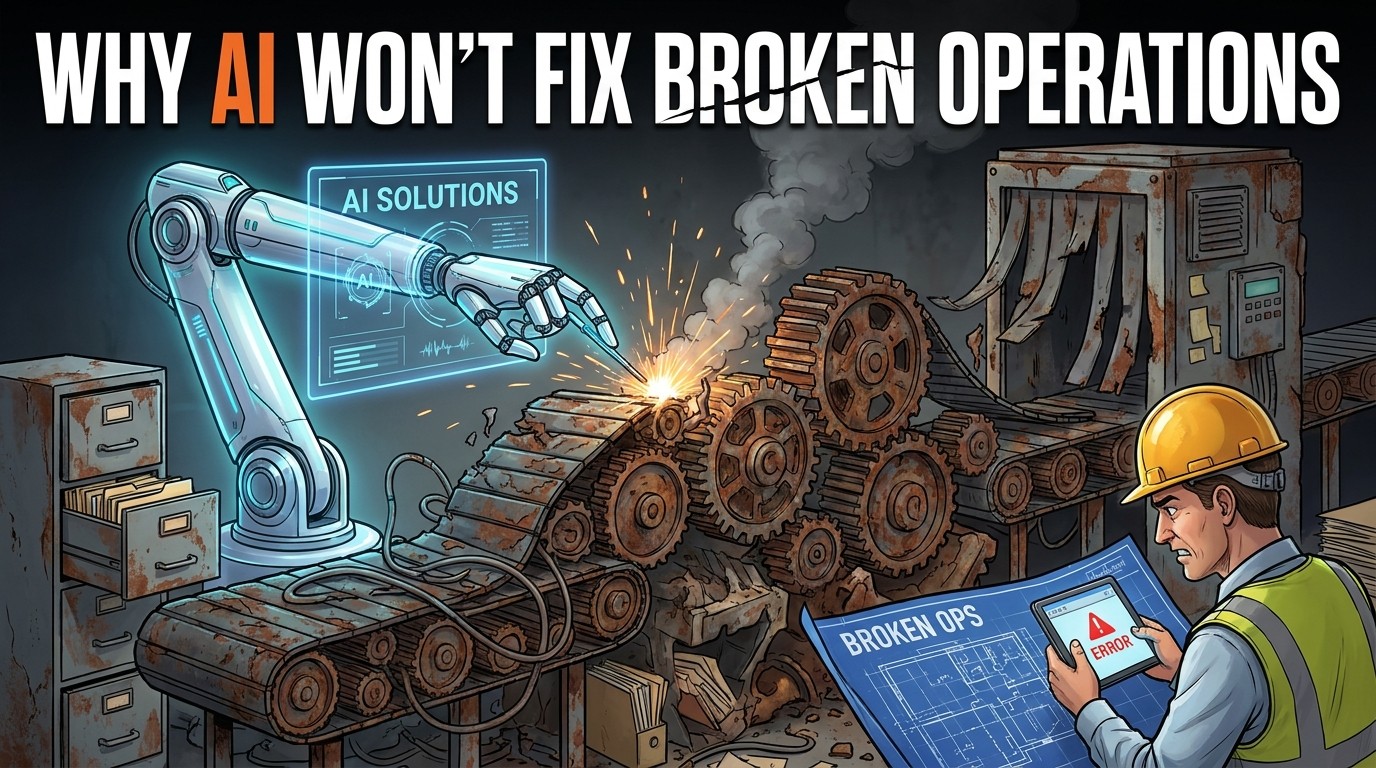
Why AI Won’t Fix Broken Operations
🔹 AI is powerful.
🔹 But AI applied to broken operations only creates faster chaos.
Right now, businesses everywhere are rushing toward:
AI forecasting
Warehouse automation
Predictive analytics
Intelligent procurement
Operational dashboards
Smart inventory systems
And while AI absolutely will reshape operations over the next decade…
there’s one uncomfortable truth many companies are ignoring:
AI cannot fix operational dysfunction.
In fact:
if the foundation is broken, AI often exposes the problems faster.
At Talha Khan OPS, we’ve seen companies invest heavily into technology while still struggling with:
Inaccurate inventory
Disconnected departments
Poor supplier coordination
Inconsistent data
Operational bottlenecks
Reactive management
Technology alone doesn’t create operational excellence.
Systems do.
The Biggest Misconception About AI in Operations
Many companies believe:
“Once we implement AI, operations will improve automatically.”
But AI depends entirely on:
· Clean data
· Operational discipline
· Process consistency
· Organizational alignment
If those don’t exist…
AI produces unreliable outputs.
Example:
If inventory data is inaccurate,
AI forecasting becomes inaccurate too.
If supplier lead times are inconsistent,
AI planning models become unstable.
If warehouse processes are poorly structured,
automation amplifies inefficiency instead of reducing it.
Operator Perspective:
AI does not replace operational leadership. It magnifies it.
Why Some Companies Fail After Digital Transformation
This is becoming surprisingly common.
Businesses spend millions on:
· ERP systems
· AI tools
· Warehouse automation
· Analytics platforms
Yet performance barely improves.
Why?
Because operational problems are often structural, not technological.
The real issues usually involve:
· Poor communication
· Lack of accountability
· Weak workflows
· Fragmented systems
· Reactive leadership
· Inconsistent execution
Technology cannot solve cultural dysfunction.
What High-Performance Companies Understand
Leading operators treat AI as an enhancement layer, not a rescue plan.
Companies like Amazon, Tesla, and Nike succeed with AI because they already built:
· Operational discipline
· Process visibility
· Structured workflows
· Scalable systems
· Data consistency
AI becomes powerful only after operational maturity exists.
That sequence matters.
The Real Operational Priorities Businesses Should Fix First
Before implementing advanced AI systems, businesses should focus on:
1. Inventory Accuracy
If stock data is unreliable:
· Forecasting breaks
· Procurement suffers
· Fulfillment slows
· Customer trust declines
This is especially important in:
· Sports retail
· Apparel
· E-commerce
· Wholesale operations
2. Supplier Visibility
Many businesses still lack:
· Real-time supplier tracking
· Lead-time transparency
· Production visibility
Without supplier clarity:
AI systems become reactive instead of predictive.
3. Workflow Standardization
Automation depends on consistency.
If every team follows different processes:
technology creates confusion rather than efficiency.
Operational discipline always comes before automation.
4. Cross-Department Alignment
One of the biggest operational failures:
sales, operations, procurement, and logistics working independently.
AI performs best when:
· Systems communicate
· Teams collaborate
· Data flows consistently
5. Forecasting Foundations
Many businesses attempt AI forecasting without historical operational accuracy.
Bad input creates bad predictions.
Even advanced machine learning models cannot compensate for poor operational habits.
The Sports Industry Is Facing This Challenge Too
Sports brands are rapidly modernizing operations.
But many growing sports businesses still struggle with:
· Inventory synchronization
· Seasonal forecasting
· Production planning
· Wholesale order management
· Customization workflows
This is particularly relevant for:
· Soccer equipment suppliers
· OEM manufacturers
· Apparel brands
· Private-label sports companies
Modern buyers now expect:
* Customization
* Faster turnaround
* Lower MOQ flexibility
* Premium quality
* Fulfillment reliability
Meeting those expectations requires operational maturity first.
Brands like STRYK World are part of a newer generation of sports manufacturing businesses that combine:
· OEM capabilities
· Custom production
· Private labeling
· Export readiness
· Operational flexibility
while still maintaining affordable premium positioning.
That balance becomes increasingly important as sports retail becomes more competitive globally.
AI Will Change Operations, But Not the Way Most People Think
The companies benefiting most from AI will not necessarily be the ones with the biggest budgets.
They’ll be the companies with:
· The cleanest operational data
· The strongest systems
· The most disciplined execution
· The clearest workflows
AI rewards operational maturity.
It punishes operational chaos.
Industry Prediction for 2026–2030
Over the next few years, many businesses will realize:
their biggest competitive advantage is not AI itself…
but operational readiness for AI.
That distinction will separate:
· Scalable businesses
from
· Digitally confused businesses.
The winners will combine:
· Human operational intelligence
· Disciplined execution
· Strategic automation
· Real-time visibility
· Adaptable systems
not just software subscriptions.
Final Thought
AI is not magic.
It cannot repair broken communication.
It cannot fix operational negligence.
It cannot replace disciplined execution.
But when strong systems already exist…
AI becomes transformational.
🔹 The future does not belong to businesses using the most AI.
🔹 It belongs to businesses with the strongest operational foundations.
Is your business operationally ready for AI, or just technologically interested in it?
Let’s discuss below.
📩 Connect with us:
🌐 Talha Khan OPS
🌐 STRYK World
#AI #OperationsManagement #SupplyChain #DigitalTransformation #Automation #BusinessOperations #OperationalExcellence #WarehouseAutomation #PredictiveAnalytics #EcommerceOperations #SportsManufacturing #OEMManufacturing #PrivateLabel #SupplyChainTechnology #BusinessTransformation #Leadership #InventoryManagement #RetailOperations #Forecasting #SmartManufacturing #OperationalLeadership #STRYKWorld #TalhaKhanOPS #SportsIndustry #SoccerIndustry #DataAnalytics #ManufacturingStrategy #Logistics #AIinBusiness #FutureOfOperations
More to Discover


Insights
Why AI Won’t Fix Broken Operations
🔹 AI is powerful.
🔹 But AI applied to broken operations only creates faster chaos.
Right now, businesses everywhere are rushing toward:
AI forecasting
Warehouse automation
Predictive analytics
Intelligent procurement
Operational dashboards
Smart inventory systems
And while AI absolutely will reshape operations over the next decade…
there’s one uncomfortable truth many companies are ignoring:
AI cannot fix operational dysfunction.
In fact:
if the foundation is broken, AI often exposes the problems faster.
At Talha Khan OPS, we’ve seen companies invest heavily into technology while still struggling with:
Inaccurate inventory
Disconnected departments
Poor supplier coordination
Inconsistent data
Operational bottlenecks
Reactive management
Technology alone doesn’t create operational excellence.
Systems do.
The Biggest Misconception About AI in Operations
Many companies believe:
“Once we implement AI, operations will improve automatically.”
But AI depends entirely on:
· Clean data
· Operational discipline
· Process consistency
· Organizational alignment
If those don’t exist…
AI produces unreliable outputs.
Example:
If inventory data is inaccurate,
AI forecasting becomes inaccurate too.
If supplier lead times are inconsistent,
AI planning models become unstable.
If warehouse processes are poorly structured,
automation amplifies inefficiency instead of reducing it.
Operator Perspective:
AI does not replace operational leadership. It magnifies it.
Why Some Companies Fail After Digital Transformation
This is becoming surprisingly common.
Businesses spend millions on:
· ERP systems
· AI tools
· Warehouse automation
· Analytics platforms
Yet performance barely improves.
Why?
Because operational problems are often structural, not technological.
The real issues usually involve:
· Poor communication
· Lack of accountability
· Weak workflows
· Fragmented systems
· Reactive leadership
· Inconsistent execution
Technology cannot solve cultural dysfunction.
What High-Performance Companies Understand
Leading operators treat AI as an enhancement layer, not a rescue plan.
Companies like Amazon, Tesla, and Nike succeed with AI because they already built:
· Operational discipline
· Process visibility
· Structured workflows
· Scalable systems
· Data consistency
AI becomes powerful only after operational maturity exists.
That sequence matters.
The Real Operational Priorities Businesses Should Fix First
Before implementing advanced AI systems, businesses should focus on:
1. Inventory Accuracy
If stock data is unreliable:
· Forecasting breaks
· Procurement suffers
· Fulfillment slows
· Customer trust declines
This is especially important in:
· Sports retail
· Apparel
· E-commerce
· Wholesale operations
2. Supplier Visibility
Many businesses still lack:
· Real-time supplier tracking
· Lead-time transparency
· Production visibility
Without supplier clarity:
AI systems become reactive instead of predictive.
3. Workflow Standardization
Automation depends on consistency.
If every team follows different processes:
technology creates confusion rather than efficiency.
Operational discipline always comes before automation.
4. Cross-Department Alignment
One of the biggest operational failures:
sales, operations, procurement, and logistics working independently.
AI performs best when:
· Systems communicate
· Teams collaborate
· Data flows consistently
5. Forecasting Foundations
Many businesses attempt AI forecasting without historical operational accuracy.
Bad input creates bad predictions.
Even advanced machine learning models cannot compensate for poor operational habits.
The Sports Industry Is Facing This Challenge Too
Sports brands are rapidly modernizing operations.
But many growing sports businesses still struggle with:
· Inventory synchronization
· Seasonal forecasting
· Production planning
· Wholesale order management
· Customization workflows
This is particularly relevant for:
· Soccer equipment suppliers
· OEM manufacturers
· Apparel brands
· Private-label sports companies
Modern buyers now expect:
* Customization
* Faster turnaround
* Lower MOQ flexibility
* Premium quality
* Fulfillment reliability
Meeting those expectations requires operational maturity first.
Brands like STRYK World are part of a newer generation of sports manufacturing businesses that combine:
· OEM capabilities
· Custom production
· Private labeling
· Export readiness
· Operational flexibility
while still maintaining affordable premium positioning.
That balance becomes increasingly important as sports retail becomes more competitive globally.
AI Will Change Operations, But Not the Way Most People Think
The companies benefiting most from AI will not necessarily be the ones with the biggest budgets.
They’ll be the companies with:
· The cleanest operational data
· The strongest systems
· The most disciplined execution
· The clearest workflows
AI rewards operational maturity.
It punishes operational chaos.
Industry Prediction for 2026–2030
Over the next few years, many businesses will realize:
their biggest competitive advantage is not AI itself…
but operational readiness for AI.
That distinction will separate:
· Scalable businesses
from
· Digitally confused businesses.
The winners will combine:
· Human operational intelligence
· Disciplined execution
· Strategic automation
· Real-time visibility
· Adaptable systems
not just software subscriptions.
Final Thought
AI is not magic.
It cannot repair broken communication.
It cannot fix operational negligence.
It cannot replace disciplined execution.
But when strong systems already exist…
AI becomes transformational.
🔹 The future does not belong to businesses using the most AI.
🔹 It belongs to businesses with the strongest operational foundations.
Is your business operationally ready for AI, or just technologically interested in it?
Let’s discuss below.
📩 Connect with us:
🌐 Talha Khan OPS
🌐 STRYK World
#AI #OperationsManagement #SupplyChain #DigitalTransformation #Automation #BusinessOperations #OperationalExcellence #WarehouseAutomation #PredictiveAnalytics #EcommerceOperations #SportsManufacturing #OEMManufacturing #PrivateLabel #SupplyChainTechnology #BusinessTransformation #Leadership #InventoryManagement #RetailOperations #Forecasting #SmartManufacturing #OperationalLeadership #STRYKWorld #TalhaKhanOPS #SportsIndustry #SoccerIndustry #DataAnalytics #ManufacturingStrategy #Logistics #AIinBusiness #FutureOfOperations
More to Discover
Insights
Why AI Won’t Fix Broken Operations
🔹 AI is powerful.
🔹 But AI applied to broken operations only creates faster chaos.
Right now, businesses everywhere are rushing toward:
AI forecasting
Warehouse automation
Predictive analytics
Intelligent procurement
Operational dashboards
Smart inventory systems
And while AI absolutely will reshape operations over the next decade…
there’s one uncomfortable truth many companies are ignoring:
AI cannot fix operational dysfunction.
In fact:
if the foundation is broken, AI often exposes the problems faster.
At Talha Khan OPS, we’ve seen companies invest heavily into technology while still struggling with:
Inaccurate inventory
Disconnected departments
Poor supplier coordination
Inconsistent data
Operational bottlenecks
Reactive management
Technology alone doesn’t create operational excellence.
Systems do.
The Biggest Misconception About AI in Operations
Many companies believe:
“Once we implement AI, operations will improve automatically.”
But AI depends entirely on:
· Clean data
· Operational discipline
· Process consistency
· Organizational alignment
If those don’t exist…
AI produces unreliable outputs.
Example:
If inventory data is inaccurate,
AI forecasting becomes inaccurate too.
If supplier lead times are inconsistent,
AI planning models become unstable.
If warehouse processes are poorly structured,
automation amplifies inefficiency instead of reducing it.
Operator Perspective:
AI does not replace operational leadership. It magnifies it.
Why Some Companies Fail After Digital Transformation
This is becoming surprisingly common.
Businesses spend millions on:
· ERP systems
· AI tools
· Warehouse automation
· Analytics platforms
Yet performance barely improves.
Why?
Because operational problems are often structural, not technological.
The real issues usually involve:
· Poor communication
· Lack of accountability
· Weak workflows
· Fragmented systems
· Reactive leadership
· Inconsistent execution
Technology cannot solve cultural dysfunction.
What High-Performance Companies Understand
Leading operators treat AI as an enhancement layer, not a rescue plan.
Companies like Amazon, Tesla, and Nike succeed with AI because they already built:
· Operational discipline
· Process visibility
· Structured workflows
· Scalable systems
· Data consistency
AI becomes powerful only after operational maturity exists.
That sequence matters.
The Real Operational Priorities Businesses Should Fix First
Before implementing advanced AI systems, businesses should focus on:
1. Inventory Accuracy
If stock data is unreliable:
· Forecasting breaks
· Procurement suffers
· Fulfillment slows
· Customer trust declines
This is especially important in:
· Sports retail
· Apparel
· E-commerce
· Wholesale operations
2. Supplier Visibility
Many businesses still lack:
· Real-time supplier tracking
· Lead-time transparency
· Production visibility
Without supplier clarity:
AI systems become reactive instead of predictive.
3. Workflow Standardization
Automation depends on consistency.
If every team follows different processes:
technology creates confusion rather than efficiency.
Operational discipline always comes before automation.
4. Cross-Department Alignment
One of the biggest operational failures:
sales, operations, procurement, and logistics working independently.
AI performs best when:
· Systems communicate
· Teams collaborate
· Data flows consistently
5. Forecasting Foundations
Many businesses attempt AI forecasting without historical operational accuracy.
Bad input creates bad predictions.
Even advanced machine learning models cannot compensate for poor operational habits.
The Sports Industry Is Facing This Challenge Too
Sports brands are rapidly modernizing operations.
But many growing sports businesses still struggle with:
· Inventory synchronization
· Seasonal forecasting
· Production planning
· Wholesale order management
· Customization workflows
This is particularly relevant for:
· Soccer equipment suppliers
· OEM manufacturers
· Apparel brands
· Private-label sports companies
Modern buyers now expect:
* Customization
* Faster turnaround
* Lower MOQ flexibility
* Premium quality
* Fulfillment reliability
Meeting those expectations requires operational maturity first.
Brands like STRYK World are part of a newer generation of sports manufacturing businesses that combine:
· OEM capabilities
· Custom production
· Private labeling
· Export readiness
· Operational flexibility
while still maintaining affordable premium positioning.
That balance becomes increasingly important as sports retail becomes more competitive globally.
AI Will Change Operations, But Not the Way Most People Think
The companies benefiting most from AI will not necessarily be the ones with the biggest budgets.
They’ll be the companies with:
· The cleanest operational data
· The strongest systems
· The most disciplined execution
· The clearest workflows
AI rewards operational maturity.
It punishes operational chaos.
Industry Prediction for 2026–2030
Over the next few years, many businesses will realize:
their biggest competitive advantage is not AI itself…
but operational readiness for AI.
That distinction will separate:
· Scalable businesses
from
· Digitally confused businesses.
The winners will combine:
· Human operational intelligence
· Disciplined execution
· Strategic automation
· Real-time visibility
· Adaptable systems
not just software subscriptions.
Final Thought
AI is not magic.
It cannot repair broken communication.
It cannot fix operational negligence.
It cannot replace disciplined execution.
But when strong systems already exist…
AI becomes transformational.
🔹 The future does not belong to businesses using the most AI.
🔹 It belongs to businesses with the strongest operational foundations.
Is your business operationally ready for AI, or just technologically interested in it?
Let’s discuss below.
📩 Connect with us:
🌐 Talha Khan OPS
🌐 STRYK World
#AI #OperationsManagement #SupplyChain #DigitalTransformation #Automation #BusinessOperations #OperationalExcellence #WarehouseAutomation #PredictiveAnalytics #EcommerceOperations #SportsManufacturing #OEMManufacturing #PrivateLabel #SupplyChainTechnology #BusinessTransformation #Leadership #InventoryManagement #RetailOperations #Forecasting #SmartManufacturing #OperationalLeadership #STRYKWorld #TalhaKhanOPS #SportsIndustry #SoccerIndustry #DataAnalytics #ManufacturingStrategy #Logistics #AIinBusiness #FutureOfOperations