Insights
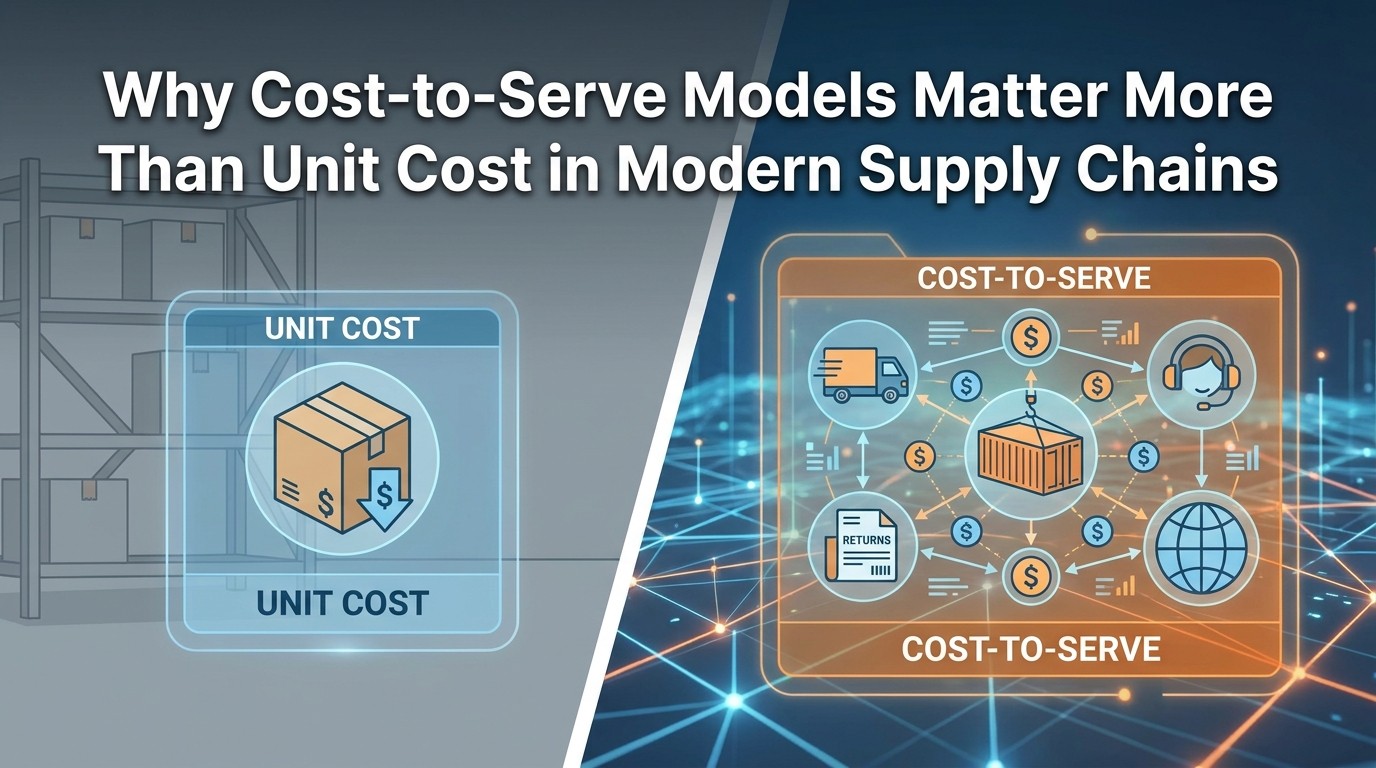
Why Cost-to-Serve Models Matter More Than Unit Cost in Modern Supply Chains
Introduction
Traditional supply chain cost management has focused heavily on unit cost reduction. While unit cost remains an important metric, it provides an incomplete picture of true profitability and operational performance in today’s multi-channel, service-driven environments. Cost-to-serve (CTS) models offer a more nuanced view by capturing the full cost of fulfilling customer demand across channels, geographies, and service levels. As service differentiation becomes a competitive lever, CTS models are increasingly critical for informed decision-making.
The Limitations of Unit Cost Thinking
Unit cost-centric models often obscure key cost drivers, including:
Channel-specific fulfillment costs
Service-level commitments and variability
Returns and reverse logistics expenses
Last-mile delivery complexity
Customer-specific handling and customization requirements
As a result, organizations may optimize for low unit cost while inadvertently eroding margins in high-cost service segments.
Building Effective Cost-to-Serve Models
Robust CTS frameworks allocate costs across:
Order processing and customer service activities
Warehousing and handling
Transportation and last-mile delivery
Returns, rework, and exceptions
Channel-specific overhead
Activity-based costing approaches provide greater transparency into cost drivers and enable targeted optimization.
Strategic Applications
CTS insights enable leaders to:
Design differentiated service offerings aligned with profitability
Reprice or renegotiate service-level agreements
Optimize network design for high-cost customer segments
Improve channel strategy and fulfillment models
Align commercial strategy with operational economics
Conclusion
Cost-to-serve models provide a more accurate lens on supply chain economics than unit cost alone. Organizations that embed CTS into strategic planning can improve margin management while aligning service offerings with sustainable cost structures.
#CostToServe #SupplyChainCosts #OperationalProfitability #LogisticsStrategy #ServiceDifferentiation #SupplyChainAnalytics
More to Discover


Insights
Why Cost-to-Serve Models Matter More Than Unit Cost in Modern Supply Chains
Introduction
Traditional supply chain cost management has focused heavily on unit cost reduction. While unit cost remains an important metric, it provides an incomplete picture of true profitability and operational performance in today’s multi-channel, service-driven environments. Cost-to-serve (CTS) models offer a more nuanced view by capturing the full cost of fulfilling customer demand across channels, geographies, and service levels. As service differentiation becomes a competitive lever, CTS models are increasingly critical for informed decision-making.
The Limitations of Unit Cost Thinking
Unit cost-centric models often obscure key cost drivers, including:
Channel-specific fulfillment costs
Service-level commitments and variability
Returns and reverse logistics expenses
Last-mile delivery complexity
Customer-specific handling and customization requirements
As a result, organizations may optimize for low unit cost while inadvertently eroding margins in high-cost service segments.
Building Effective Cost-to-Serve Models
Robust CTS frameworks allocate costs across:
Order processing and customer service activities
Warehousing and handling
Transportation and last-mile delivery
Returns, rework, and exceptions
Channel-specific overhead
Activity-based costing approaches provide greater transparency into cost drivers and enable targeted optimization.
Strategic Applications
CTS insights enable leaders to:
Design differentiated service offerings aligned with profitability
Reprice or renegotiate service-level agreements
Optimize network design for high-cost customer segments
Improve channel strategy and fulfillment models
Align commercial strategy with operational economics
Conclusion
Cost-to-serve models provide a more accurate lens on supply chain economics than unit cost alone. Organizations that embed CTS into strategic planning can improve margin management while aligning service offerings with sustainable cost structures.
#CostToServe #SupplyChainCosts #OperationalProfitability #LogisticsStrategy #ServiceDifferentiation #SupplyChainAnalytics
More to Discover
Insights
Why Cost-to-Serve Models Matter More Than Unit Cost in Modern Supply Chains
Introduction
Traditional supply chain cost management has focused heavily on unit cost reduction. While unit cost remains an important metric, it provides an incomplete picture of true profitability and operational performance in today’s multi-channel, service-driven environments. Cost-to-serve (CTS) models offer a more nuanced view by capturing the full cost of fulfilling customer demand across channels, geographies, and service levels. As service differentiation becomes a competitive lever, CTS models are increasingly critical for informed decision-making.
The Limitations of Unit Cost Thinking
Unit cost-centric models often obscure key cost drivers, including:
Channel-specific fulfillment costs
Service-level commitments and variability
Returns and reverse logistics expenses
Last-mile delivery complexity
Customer-specific handling and customization requirements
As a result, organizations may optimize for low unit cost while inadvertently eroding margins in high-cost service segments.
Building Effective Cost-to-Serve Models
Robust CTS frameworks allocate costs across:
Order processing and customer service activities
Warehousing and handling
Transportation and last-mile delivery
Returns, rework, and exceptions
Channel-specific overhead
Activity-based costing approaches provide greater transparency into cost drivers and enable targeted optimization.
Strategic Applications
CTS insights enable leaders to:
Design differentiated service offerings aligned with profitability
Reprice or renegotiate service-level agreements
Optimize network design for high-cost customer segments
Improve channel strategy and fulfillment models
Align commercial strategy with operational economics
Conclusion
Cost-to-serve models provide a more accurate lens on supply chain economics than unit cost alone. Organizations that embed CTS into strategic planning can improve margin management while aligning service offerings with sustainable cost structures.
#CostToServe #SupplyChainCosts #OperationalProfitability #LogisticsStrategy #ServiceDifferentiation #SupplyChainAnalytics