Insights
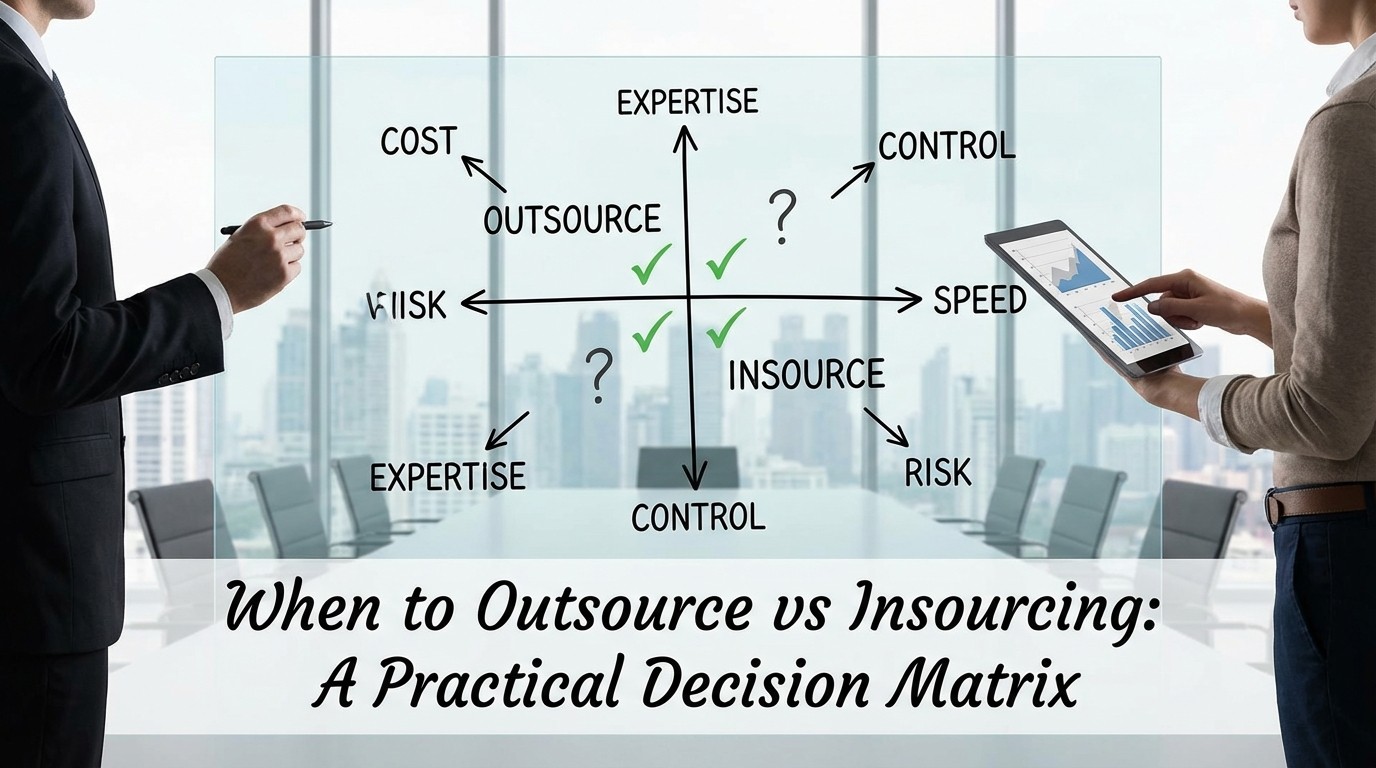
When to Outsource vs Insourcing: A Practical Decision Matrix
Introduction
Outsourcing and insourcing decisions shape supply chain structure, cost profiles, and operational control. While outsourcing offers flexibility and access to specialized capabilities, insourcing provides tighter control, stronger integration, and protection of strategic knowledge. The challenge lies in determining which activities should remain core and which can be entrusted to external partners.
Key Decision Factors
Outsourcing vs insourcing decisions should account for:
Strategic importance of the activity to competitive differentiation
Impact on customer experience and service reliability
Cost competitiveness and scalability requirements
Risk exposure related to dependency on third parties
Availability and maturity of internal capabilities
A Practical Decision Matrix
Organizations can apply a decision matrix assessing:
Core vs Non-Core Activities: Core capabilities warrant internal ownership
Performance Variability: High-variability activities benefit from tighter internal control
Scale & Standardization: High-volume, standardized activities may suit outsourcing
Risk Sensitivity: Activities with high regulatory or operational risk require stronger governance
Governance Considerations
Effective outsourcing governance includes:
Clearly defined service level agreements (SLAs)
Performance dashboards with transparent accountability
Escalation protocols and dispute resolution mechanisms
Periodic strategic reviews of partner alignment
Conclusion
Outsourcing vs insourcing should be treated as a dynamic portfolio strategy rather than a one-time decision. Applying structured decision matrices enables organizations to balance cost efficiency, flexibility, and strategic control as operating models evolve.
#OutsourcingStrategy #MakeVsBuy #SupplyChainGovernance #OperationsStrategy #LogisticsManagement #BusinessStrategy #StrategicSourcing
More to Discover


Insights
When to Outsource vs Insourcing: A Practical Decision Matrix
Introduction
Outsourcing and insourcing decisions shape supply chain structure, cost profiles, and operational control. While outsourcing offers flexibility and access to specialized capabilities, insourcing provides tighter control, stronger integration, and protection of strategic knowledge. The challenge lies in determining which activities should remain core and which can be entrusted to external partners.
Key Decision Factors
Outsourcing vs insourcing decisions should account for:
Strategic importance of the activity to competitive differentiation
Impact on customer experience and service reliability
Cost competitiveness and scalability requirements
Risk exposure related to dependency on third parties
Availability and maturity of internal capabilities
A Practical Decision Matrix
Organizations can apply a decision matrix assessing:
Core vs Non-Core Activities: Core capabilities warrant internal ownership
Performance Variability: High-variability activities benefit from tighter internal control
Scale & Standardization: High-volume, standardized activities may suit outsourcing
Risk Sensitivity: Activities with high regulatory or operational risk require stronger governance
Governance Considerations
Effective outsourcing governance includes:
Clearly defined service level agreements (SLAs)
Performance dashboards with transparent accountability
Escalation protocols and dispute resolution mechanisms
Periodic strategic reviews of partner alignment
Conclusion
Outsourcing vs insourcing should be treated as a dynamic portfolio strategy rather than a one-time decision. Applying structured decision matrices enables organizations to balance cost efficiency, flexibility, and strategic control as operating models evolve.
#OutsourcingStrategy #MakeVsBuy #SupplyChainGovernance #OperationsStrategy #LogisticsManagement #BusinessStrategy #StrategicSourcing
More to Discover
Insights
When to Outsource vs Insourcing: A Practical Decision Matrix
Introduction
Outsourcing and insourcing decisions shape supply chain structure, cost profiles, and operational control. While outsourcing offers flexibility and access to specialized capabilities, insourcing provides tighter control, stronger integration, and protection of strategic knowledge. The challenge lies in determining which activities should remain core and which can be entrusted to external partners.
Key Decision Factors
Outsourcing vs insourcing decisions should account for:
Strategic importance of the activity to competitive differentiation
Impact on customer experience and service reliability
Cost competitiveness and scalability requirements
Risk exposure related to dependency on third parties
Availability and maturity of internal capabilities
A Practical Decision Matrix
Organizations can apply a decision matrix assessing:
Core vs Non-Core Activities: Core capabilities warrant internal ownership
Performance Variability: High-variability activities benefit from tighter internal control
Scale & Standardization: High-volume, standardized activities may suit outsourcing
Risk Sensitivity: Activities with high regulatory or operational risk require stronger governance
Governance Considerations
Effective outsourcing governance includes:
Clearly defined service level agreements (SLAs)
Performance dashboards with transparent accountability
Escalation protocols and dispute resolution mechanisms
Periodic strategic reviews of partner alignment
Conclusion
Outsourcing vs insourcing should be treated as a dynamic portfolio strategy rather than a one-time decision. Applying structured decision matrices enables organizations to balance cost efficiency, flexibility, and strategic control as operating models evolve.
#OutsourcingStrategy #MakeVsBuy #SupplyChainGovernance #OperationsStrategy #LogisticsManagement #BusinessStrategy #StrategicSourcing