Insights
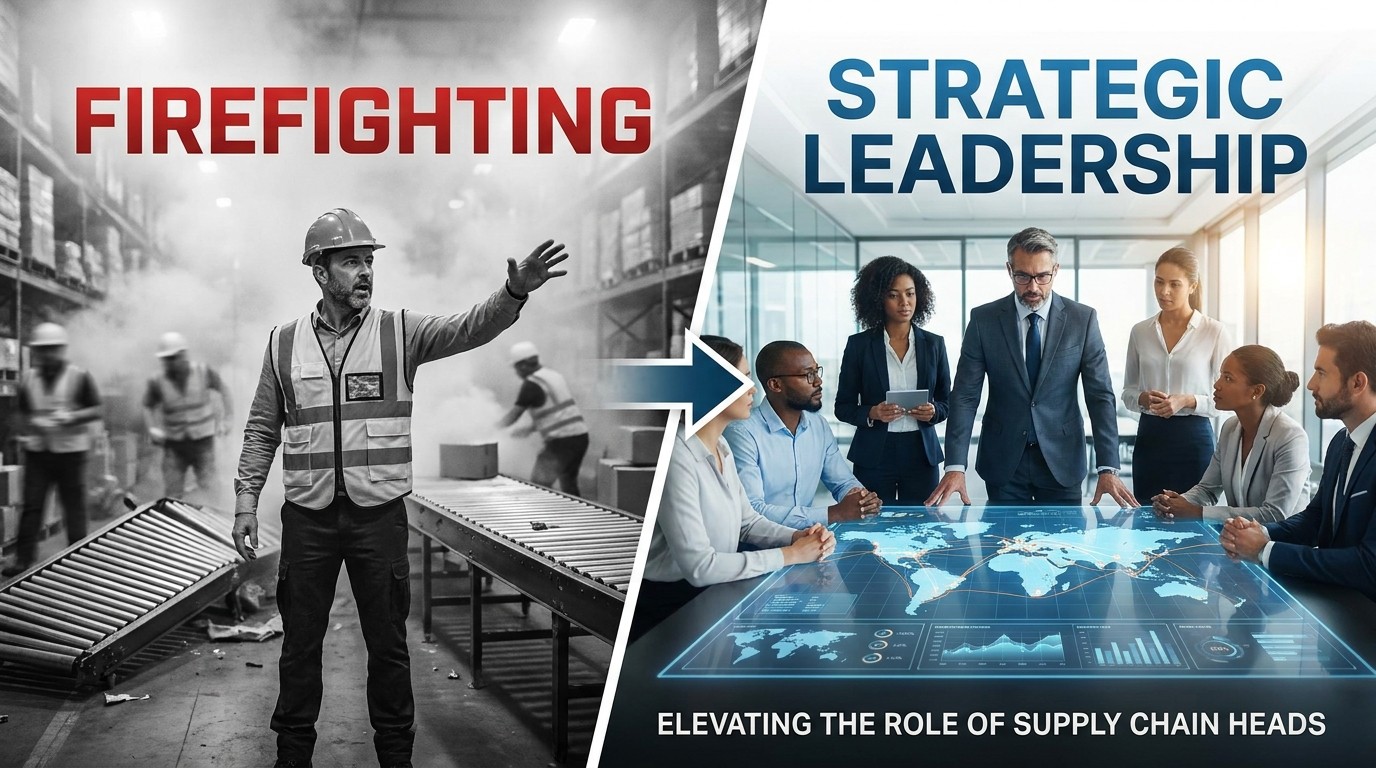
From Firefighting to Strategic Leadership: Elevating the Role of Supply Chain Heads
Introduction
Supply chain leaders are often consumed by day-to-day operational firefighting, leaving limited capacity for strategic leadership. While operational execution is critical, the increasing complexity of supply chains demands a shift toward proactive, strategic leadership that shapes long-term network design, digital transformation, and resilience planning.
The Firefighting Trap
Persistent firefighting arises from:
Reactive operating models
Insufficient process standardization
Limited early warning systems
Fragmented governance
Underinvestment in capability building
This limits leaders’ ability to focus on strategic priorities.
Enablers of Strategic Leadership
To elevate the role of supply chain heads, organizations should:
Institutionalize proactive risk sensing and scenario planning
Strengthen operating cadences and governance routines
Invest in leadership capability development
Delegate operational execution through empowered management layers
Align leadership incentives with long-term value creation
Strategic Outcomes
Strategic leadership enables:
More deliberate network and sourcing design
Stronger alignment with enterprise strategy
Improved transformation execution
Greater organizational resilience
Conclusion
Elevating supply chain leadership from firefighting to strategic stewardship requires deliberate operating model and governance redesign. Organizations that enable strategic focus can unlock greater long-term value from their supply chain leadership teams.
#SupplyChainLeadership #StrategicOperations #OperationalExcellence #LeadershipDevelopment #TransformationLeadership #ResilientSupplyChains
More to Discover


Insights
From Firefighting to Strategic Leadership: Elevating the Role of Supply Chain Heads
Introduction
Supply chain leaders are often consumed by day-to-day operational firefighting, leaving limited capacity for strategic leadership. While operational execution is critical, the increasing complexity of supply chains demands a shift toward proactive, strategic leadership that shapes long-term network design, digital transformation, and resilience planning.
The Firefighting Trap
Persistent firefighting arises from:
Reactive operating models
Insufficient process standardization
Limited early warning systems
Fragmented governance
Underinvestment in capability building
This limits leaders’ ability to focus on strategic priorities.
Enablers of Strategic Leadership
To elevate the role of supply chain heads, organizations should:
Institutionalize proactive risk sensing and scenario planning
Strengthen operating cadences and governance routines
Invest in leadership capability development
Delegate operational execution through empowered management layers
Align leadership incentives with long-term value creation
Strategic Outcomes
Strategic leadership enables:
More deliberate network and sourcing design
Stronger alignment with enterprise strategy
Improved transformation execution
Greater organizational resilience
Conclusion
Elevating supply chain leadership from firefighting to strategic stewardship requires deliberate operating model and governance redesign. Organizations that enable strategic focus can unlock greater long-term value from their supply chain leadership teams.
#SupplyChainLeadership #StrategicOperations #OperationalExcellence #LeadershipDevelopment #TransformationLeadership #ResilientSupplyChains
More to Discover
Insights
From Firefighting to Strategic Leadership: Elevating the Role of Supply Chain Heads
Introduction
Supply chain leaders are often consumed by day-to-day operational firefighting, leaving limited capacity for strategic leadership. While operational execution is critical, the increasing complexity of supply chains demands a shift toward proactive, strategic leadership that shapes long-term network design, digital transformation, and resilience planning.
The Firefighting Trap
Persistent firefighting arises from:
Reactive operating models
Insufficient process standardization
Limited early warning systems
Fragmented governance
Underinvestment in capability building
This limits leaders’ ability to focus on strategic priorities.
Enablers of Strategic Leadership
To elevate the role of supply chain heads, organizations should:
Institutionalize proactive risk sensing and scenario planning
Strengthen operating cadences and governance routines
Invest in leadership capability development
Delegate operational execution through empowered management layers
Align leadership incentives with long-term value creation
Strategic Outcomes
Strategic leadership enables:
More deliberate network and sourcing design
Stronger alignment with enterprise strategy
Improved transformation execution
Greater organizational resilience
Conclusion
Elevating supply chain leadership from firefighting to strategic stewardship requires deliberate operating model and governance redesign. Organizations that enable strategic focus can unlock greater long-term value from their supply chain leadership teams.
#SupplyChainLeadership #StrategicOperations #OperationalExcellence #LeadershipDevelopment #TransformationLeadership #ResilientSupplyChains