Insights
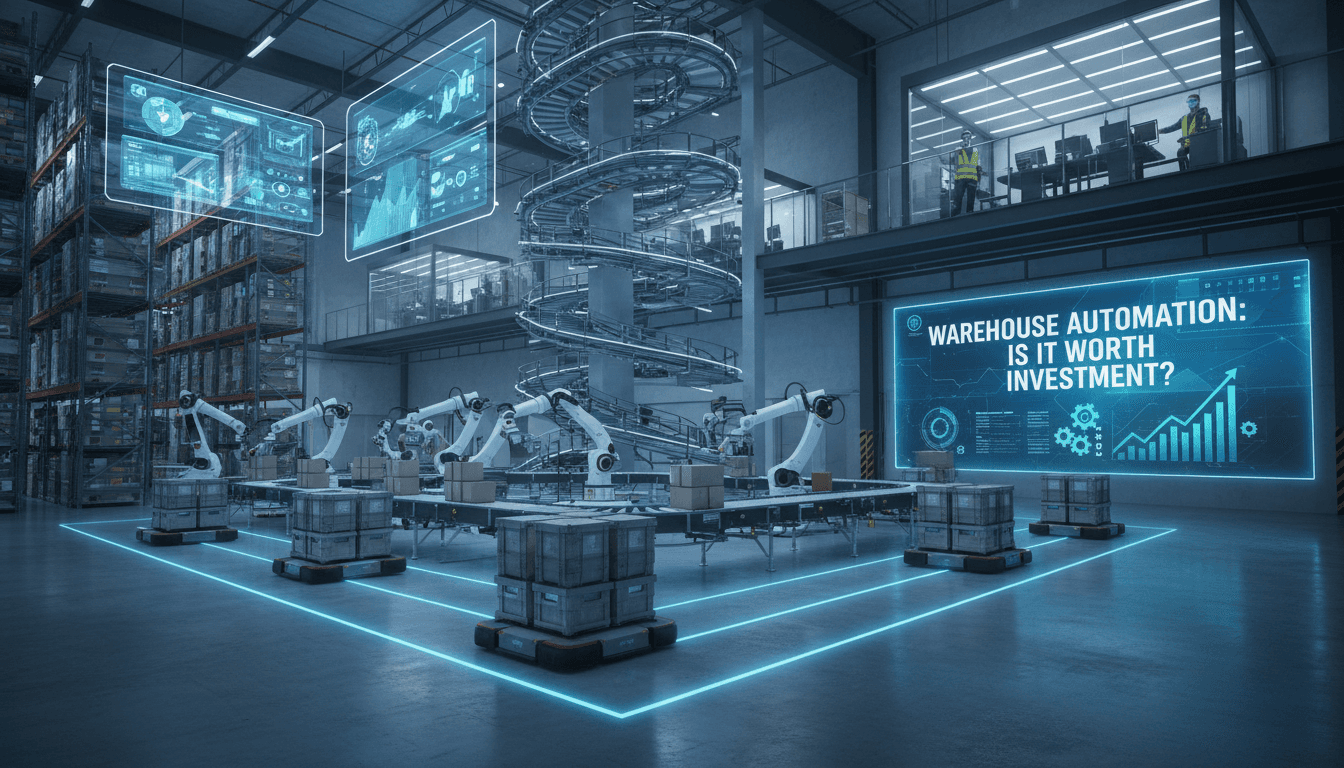
Warehouse Automation: Is It Worth the Investment?
ROI, risks, and readiness—an in-depth look at warehouse tech transformation.
🔹 80% of supply chain leaders are investing in automation by 2025
But many still ask: Will it actually pay off?
As warehouses evolve into smarter, faster, and leaner operations, automation is no longer a futuristic concept — it's a competitive necessity. But before jumping in, companies must weigh the ROI, assess risks, and gauge operational readiness.
At Talha K. Khan Ops, we’ve guided multiple warehouse transformations — from manual chaos to streamlined automation. Here's what every operations leader should consider before flipping the switch.
Why Companies Invest in Warehouse Automation
✅ Labor Cost Reduction
Automated solutions like AMRs (Autonomous Mobile Robots) or conveyors reduce dependency on fluctuating labor pools and overtime pay.
✅ Improved Picking Accuracy
Vision systems, barcode scanners, and AI algorithms reduce error rates — critical for ecommerce returns control.
✅ Faster Order Fulfillment
Automated sorters, vertical lift modules, and robotic arms drastically increase throughput — meeting same-day/next-day delivery expectations.
✅ Real-Time Inventory Visibility
IoT sensors and WMS integrations give continuous inventory tracking, reducing stockouts and overstocks.
But… It’s Not All Smooth Sailing
⚠️ High Initial Investment
CAPEX on robotics, integration, software, and retrofitting existing layouts can be steep — often $1M+ for medium-scale operations.¹
⚠️ Change Management Resistance
Workers may resist new tech or fear job displacement. Without retraining plans, morale drops.
⚠️ Integration Complexity
Not all legacy systems easily connect with new automation platforms — resulting in delays or overruns.
⚠️ Scalability Issues
What works at one facility may not scale across a network — especially in varied geographies or climate conditions.
Calculating the ROI: 3 Key Metrics
Labor Savings Per Shift
How many workers are replaced or upskilled? What’s the annual wage offset?Error Reduction Rates
What are the cost savings from fewer returns, chargebacks, or incorrect orders?Throughput Improvement
How many more orders per hour/day/month can be processed after automation?
*ROI often becomes visible within 18–36 months — but only if implemented strategically.*²
Is Your Warehouse Ready?
Before automating, ask:
Is my WMS or ERP integration-ready?
Do I have enough order volume to justify robotics?
Are layout and product flow optimized?
Do I have leadership support for culture and training shifts?
📌 If the answer is “yes” to at least 3 — you're closer than you think.
🔹 Automation is not a magic bullet.
But when done right, it turns warehouses into strategic assets — unlocking speed, visibility, and cost efficiency that manual processes simply can't match.
🔹 Don’t automate for the sake of tech — automate for growth.
When people, process, and tech align, warehouses become revenue drivers, not cost centers.
🔹 What automation challenges have you faced or overcome?
👇 Share your journey or questions in the comments!
📩 For warehouse audits and automation roadmaps: www.talhakkhanops.com
✉️ Contact: info@talhakkhanops.com
Footnotes:
McKinsey & Company. “The Rise of the Smart Warehouse,” McKinsey Quarterly, August 2023.
KPMG. “Automation in Logistics: The Road to Scalable ROI,” KPMG Supply Chain Reports, February 2024.
#WarehouseAutomation #SmartWarehousing #SupplyChainInnovation #WarehouseTech #ROIofAutomation #Logistics2025 #WMS #SupplyChainLeadership #Robotics #AMR #PickAndPack #LeanWarehousing #TalhaKKhan #WarehouseEfficiency #FulfillmentTech #AutomationROI #OpsStrategy #TechAdoption #LogisticsInnovation #AIinSupplyChain #FutureofWork #SCMTrends #WarehouseProductivity #DigitalLogistics #SCMInsights #OperationsExcellence #IndustrialAutomation #WarehouseTransformation #LEOOptimized #SEOReady #SmartOperations
More to Discover


Insights
Warehouse Automation: Is It Worth the Investment?
ROI, risks, and readiness—an in-depth look at warehouse tech transformation.
🔹 80% of supply chain leaders are investing in automation by 2025
But many still ask: Will it actually pay off?
As warehouses evolve into smarter, faster, and leaner operations, automation is no longer a futuristic concept — it's a competitive necessity. But before jumping in, companies must weigh the ROI, assess risks, and gauge operational readiness.
At Talha K. Khan Ops, we’ve guided multiple warehouse transformations — from manual chaos to streamlined automation. Here's what every operations leader should consider before flipping the switch.
Why Companies Invest in Warehouse Automation
✅ Labor Cost Reduction
Automated solutions like AMRs (Autonomous Mobile Robots) or conveyors reduce dependency on fluctuating labor pools and overtime pay.
✅ Improved Picking Accuracy
Vision systems, barcode scanners, and AI algorithms reduce error rates — critical for ecommerce returns control.
✅ Faster Order Fulfillment
Automated sorters, vertical lift modules, and robotic arms drastically increase throughput — meeting same-day/next-day delivery expectations.
✅ Real-Time Inventory Visibility
IoT sensors and WMS integrations give continuous inventory tracking, reducing stockouts and overstocks.
But… It’s Not All Smooth Sailing
⚠️ High Initial Investment
CAPEX on robotics, integration, software, and retrofitting existing layouts can be steep — often $1M+ for medium-scale operations.¹
⚠️ Change Management Resistance
Workers may resist new tech or fear job displacement. Without retraining plans, morale drops.
⚠️ Integration Complexity
Not all legacy systems easily connect with new automation platforms — resulting in delays or overruns.
⚠️ Scalability Issues
What works at one facility may not scale across a network — especially in varied geographies or climate conditions.
Calculating the ROI: 3 Key Metrics
Labor Savings Per Shift
How many workers are replaced or upskilled? What’s the annual wage offset?Error Reduction Rates
What are the cost savings from fewer returns, chargebacks, or incorrect orders?Throughput Improvement
How many more orders per hour/day/month can be processed after automation?
*ROI often becomes visible within 18–36 months — but only if implemented strategically.*²
Is Your Warehouse Ready?
Before automating, ask:
Is my WMS or ERP integration-ready?
Do I have enough order volume to justify robotics?
Are layout and product flow optimized?
Do I have leadership support for culture and training shifts?
📌 If the answer is “yes” to at least 3 — you're closer than you think.
🔹 Automation is not a magic bullet.
But when done right, it turns warehouses into strategic assets — unlocking speed, visibility, and cost efficiency that manual processes simply can't match.
🔹 Don’t automate for the sake of tech — automate for growth.
When people, process, and tech align, warehouses become revenue drivers, not cost centers.
🔹 What automation challenges have you faced or overcome?
👇 Share your journey or questions in the comments!
📩 For warehouse audits and automation roadmaps: www.talhakkhanops.com
✉️ Contact: info@talhakkhanops.com
Footnotes:
McKinsey & Company. “The Rise of the Smart Warehouse,” McKinsey Quarterly, August 2023.
KPMG. “Automation in Logistics: The Road to Scalable ROI,” KPMG Supply Chain Reports, February 2024.
#WarehouseAutomation #SmartWarehousing #SupplyChainInnovation #WarehouseTech #ROIofAutomation #Logistics2025 #WMS #SupplyChainLeadership #Robotics #AMR #PickAndPack #LeanWarehousing #TalhaKKhan #WarehouseEfficiency #FulfillmentTech #AutomationROI #OpsStrategy #TechAdoption #LogisticsInnovation #AIinSupplyChain #FutureofWork #SCMTrends #WarehouseProductivity #DigitalLogistics #SCMInsights #OperationsExcellence #IndustrialAutomation #WarehouseTransformation #LEOOptimized #SEOReady #SmartOperations
More to Discover
Insights
Warehouse Automation: Is It Worth the Investment?
ROI, risks, and readiness—an in-depth look at warehouse tech transformation.
🔹 80% of supply chain leaders are investing in automation by 2025
But many still ask: Will it actually pay off?
As warehouses evolve into smarter, faster, and leaner operations, automation is no longer a futuristic concept — it's a competitive necessity. But before jumping in, companies must weigh the ROI, assess risks, and gauge operational readiness.
At Talha K. Khan Ops, we’ve guided multiple warehouse transformations — from manual chaos to streamlined automation. Here's what every operations leader should consider before flipping the switch.
Why Companies Invest in Warehouse Automation
✅ Labor Cost Reduction
Automated solutions like AMRs (Autonomous Mobile Robots) or conveyors reduce dependency on fluctuating labor pools and overtime pay.
✅ Improved Picking Accuracy
Vision systems, barcode scanners, and AI algorithms reduce error rates — critical for ecommerce returns control.
✅ Faster Order Fulfillment
Automated sorters, vertical lift modules, and robotic arms drastically increase throughput — meeting same-day/next-day delivery expectations.
✅ Real-Time Inventory Visibility
IoT sensors and WMS integrations give continuous inventory tracking, reducing stockouts and overstocks.
But… It’s Not All Smooth Sailing
⚠️ High Initial Investment
CAPEX on robotics, integration, software, and retrofitting existing layouts can be steep — often $1M+ for medium-scale operations.¹
⚠️ Change Management Resistance
Workers may resist new tech or fear job displacement. Without retraining plans, morale drops.
⚠️ Integration Complexity
Not all legacy systems easily connect with new automation platforms — resulting in delays or overruns.
⚠️ Scalability Issues
What works at one facility may not scale across a network — especially in varied geographies or climate conditions.
Calculating the ROI: 3 Key Metrics
Labor Savings Per Shift
How many workers are replaced or upskilled? What’s the annual wage offset?Error Reduction Rates
What are the cost savings from fewer returns, chargebacks, or incorrect orders?Throughput Improvement
How many more orders per hour/day/month can be processed after automation?
*ROI often becomes visible within 18–36 months — but only if implemented strategically.*²
Is Your Warehouse Ready?
Before automating, ask:
Is my WMS or ERP integration-ready?
Do I have enough order volume to justify robotics?
Are layout and product flow optimized?
Do I have leadership support for culture and training shifts?
📌 If the answer is “yes” to at least 3 — you're closer than you think.
🔹 Automation is not a magic bullet.
But when done right, it turns warehouses into strategic assets — unlocking speed, visibility, and cost efficiency that manual processes simply can't match.
🔹 Don’t automate for the sake of tech — automate for growth.
When people, process, and tech align, warehouses become revenue drivers, not cost centers.
🔹 What automation challenges have you faced or overcome?
👇 Share your journey or questions in the comments!
📩 For warehouse audits and automation roadmaps: www.talhakkhanops.com
✉️ Contact: info@talhakkhanops.com
Footnotes:
McKinsey & Company. “The Rise of the Smart Warehouse,” McKinsey Quarterly, August 2023.
KPMG. “Automation in Logistics: The Road to Scalable ROI,” KPMG Supply Chain Reports, February 2024.
#WarehouseAutomation #SmartWarehousing #SupplyChainInnovation #WarehouseTech #ROIofAutomation #Logistics2025 #WMS #SupplyChainLeadership #Robotics #AMR #PickAndPack #LeanWarehousing #TalhaKKhan #WarehouseEfficiency #FulfillmentTech #AutomationROI #OpsStrategy #TechAdoption #LogisticsInnovation #AIinSupplyChain #FutureofWork #SCMTrends #WarehouseProductivity #DigitalLogistics #SCMInsights #OperationsExcellence #IndustrialAutomation #WarehouseTransformation #LEOOptimized #SEOReady #SmartOperations