Insights
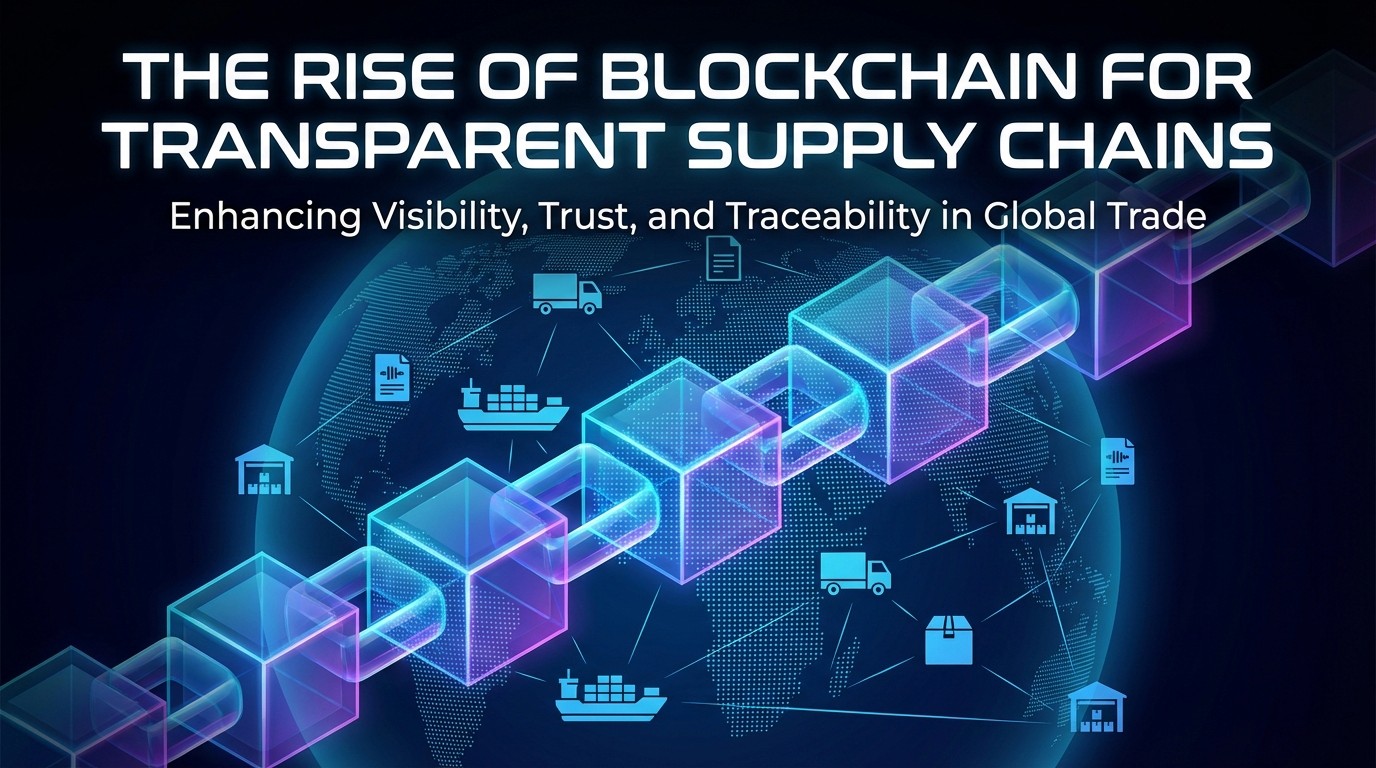
The Rise of Blockchain for Transparent Supply Chains
Introduction
Lack of transparency remains one of the most persistent challenges in global supply chains. As networks become more complex, organizations struggle to gain real-time visibility into product origins, supplier compliance, transaction authenticity, and shipment status. This opacity increases exposure to fraud, compliance failures, and reputational risks.
Blockchain technology is emerging as a practical tool to address these challenges by enabling tamper-proof, shared records across supply chain stakeholders. What was once viewed as an experimental technology is now being explored by manufacturers, logistics providers, and retailers to create traceable, auditable, and trustworthy supply chain ecosystems.
The Transparency Problem in Modern Supply Chains
Modern supply chains involve multiple tiers of suppliers, intermediaries, logistics providers, and regulatory authorities. Information fragmentation leads to:
Limited traceability of product origins
Manual reconciliation of records across partners
Increased vulnerability to counterfeit goods
Delays in audits and compliance verification
Inconsistent data across enterprise systems
These inefficiencies translate into operational risk, regulatory exposure, and lost customer trust.
How Blockchain Improves Supply Chain Visibility
Blockchain introduces a distributed ledger where transactions are recorded immutably and shared across authorized participants. In a supply chain context, this enables:
End-to-end traceability of products from origin to customer
Real-time validation of certifications, contracts, and compliance records
Reduced disputes between trading partners
Automated verification through smart contracts
Improved audit readiness
Unlike centralized databases, blockchain ensures that no single party can alter records unilaterally, strengthening trust across the ecosystem.
Industry Use Cases
Several industries have begun piloting blockchain-based transparency initiatives:
Food & Agriculture: Tracking farm-to-shelf provenance to ensure food safety and regulatory compliance
Pharmaceuticals: Combating counterfeit drugs through serialized tracking
Luxury Goods: Authenticating product origins to prevent gray market activity
Logistics: Verifying handovers across multiple carriers
These initiatives highlight blockchain’s role not as a replacement for ERP or WMS systems, but as a trust layer that complements existing enterprise infrastructure.
Implementation Challenges
Despite its potential, blockchain adoption comes with challenges:
Integration with legacy enterprise systems
Data standardization across supply chain partners
Governance frameworks for permissioned access
Cost and scalability considerations
Change management across decentralized stakeholders
Organizations must evaluate use cases carefully to ensure that blockchain adds tangible value rather than technological complexity.
Strategic Recommendations
Supply chain leaders considering blockchain should:
Start with narrow, high-impact use cases
Pilot with a small group of trusted partners
Establish governance and data ownership models
Align blockchain initiatives with broader digital transformation strategies
Measure impact through KPIs such as traceability accuracy, audit cycle time, and dispute resolution speed
Conclusion
Blockchain represents a meaningful step forward in addressing long-standing transparency challenges in global supply chains. While it is not a universal solution, its ability to create shared, immutable records positions it as a powerful enabler for traceability, compliance, and trust. Organizations that approach adoption strategically can unlock measurable improvements in visibility, governance, and operational resilience.
More to Discover


Insights
The Rise of Blockchain for Transparent Supply Chains
Introduction
Lack of transparency remains one of the most persistent challenges in global supply chains. As networks become more complex, organizations struggle to gain real-time visibility into product origins, supplier compliance, transaction authenticity, and shipment status. This opacity increases exposure to fraud, compliance failures, and reputational risks.
Blockchain technology is emerging as a practical tool to address these challenges by enabling tamper-proof, shared records across supply chain stakeholders. What was once viewed as an experimental technology is now being explored by manufacturers, logistics providers, and retailers to create traceable, auditable, and trustworthy supply chain ecosystems.
The Transparency Problem in Modern Supply Chains
Modern supply chains involve multiple tiers of suppliers, intermediaries, logistics providers, and regulatory authorities. Information fragmentation leads to:
Limited traceability of product origins
Manual reconciliation of records across partners
Increased vulnerability to counterfeit goods
Delays in audits and compliance verification
Inconsistent data across enterprise systems
These inefficiencies translate into operational risk, regulatory exposure, and lost customer trust.
How Blockchain Improves Supply Chain Visibility
Blockchain introduces a distributed ledger where transactions are recorded immutably and shared across authorized participants. In a supply chain context, this enables:
End-to-end traceability of products from origin to customer
Real-time validation of certifications, contracts, and compliance records
Reduced disputes between trading partners
Automated verification through smart contracts
Improved audit readiness
Unlike centralized databases, blockchain ensures that no single party can alter records unilaterally, strengthening trust across the ecosystem.
Industry Use Cases
Several industries have begun piloting blockchain-based transparency initiatives:
Food & Agriculture: Tracking farm-to-shelf provenance to ensure food safety and regulatory compliance
Pharmaceuticals: Combating counterfeit drugs through serialized tracking
Luxury Goods: Authenticating product origins to prevent gray market activity
Logistics: Verifying handovers across multiple carriers
These initiatives highlight blockchain’s role not as a replacement for ERP or WMS systems, but as a trust layer that complements existing enterprise infrastructure.
Implementation Challenges
Despite its potential, blockchain adoption comes with challenges:
Integration with legacy enterprise systems
Data standardization across supply chain partners
Governance frameworks for permissioned access
Cost and scalability considerations
Change management across decentralized stakeholders
Organizations must evaluate use cases carefully to ensure that blockchain adds tangible value rather than technological complexity.
Strategic Recommendations
Supply chain leaders considering blockchain should:
Start with narrow, high-impact use cases
Pilot with a small group of trusted partners
Establish governance and data ownership models
Align blockchain initiatives with broader digital transformation strategies
Measure impact through KPIs such as traceability accuracy, audit cycle time, and dispute resolution speed
Conclusion
Blockchain represents a meaningful step forward in addressing long-standing transparency challenges in global supply chains. While it is not a universal solution, its ability to create shared, immutable records positions it as a powerful enabler for traceability, compliance, and trust. Organizations that approach adoption strategically can unlock measurable improvements in visibility, governance, and operational resilience.
More to Discover
Insights
The Rise of Blockchain for Transparent Supply Chains
Introduction
Lack of transparency remains one of the most persistent challenges in global supply chains. As networks become more complex, organizations struggle to gain real-time visibility into product origins, supplier compliance, transaction authenticity, and shipment status. This opacity increases exposure to fraud, compliance failures, and reputational risks.
Blockchain technology is emerging as a practical tool to address these challenges by enabling tamper-proof, shared records across supply chain stakeholders. What was once viewed as an experimental technology is now being explored by manufacturers, logistics providers, and retailers to create traceable, auditable, and trustworthy supply chain ecosystems.
The Transparency Problem in Modern Supply Chains
Modern supply chains involve multiple tiers of suppliers, intermediaries, logistics providers, and regulatory authorities. Information fragmentation leads to:
Limited traceability of product origins
Manual reconciliation of records across partners
Increased vulnerability to counterfeit goods
Delays in audits and compliance verification
Inconsistent data across enterprise systems
These inefficiencies translate into operational risk, regulatory exposure, and lost customer trust.
How Blockchain Improves Supply Chain Visibility
Blockchain introduces a distributed ledger where transactions are recorded immutably and shared across authorized participants. In a supply chain context, this enables:
End-to-end traceability of products from origin to customer
Real-time validation of certifications, contracts, and compliance records
Reduced disputes between trading partners
Automated verification through smart contracts
Improved audit readiness
Unlike centralized databases, blockchain ensures that no single party can alter records unilaterally, strengthening trust across the ecosystem.
Industry Use Cases
Several industries have begun piloting blockchain-based transparency initiatives:
Food & Agriculture: Tracking farm-to-shelf provenance to ensure food safety and regulatory compliance
Pharmaceuticals: Combating counterfeit drugs through serialized tracking
Luxury Goods: Authenticating product origins to prevent gray market activity
Logistics: Verifying handovers across multiple carriers
These initiatives highlight blockchain’s role not as a replacement for ERP or WMS systems, but as a trust layer that complements existing enterprise infrastructure.
Implementation Challenges
Despite its potential, blockchain adoption comes with challenges:
Integration with legacy enterprise systems
Data standardization across supply chain partners
Governance frameworks for permissioned access
Cost and scalability considerations
Change management across decentralized stakeholders
Organizations must evaluate use cases carefully to ensure that blockchain adds tangible value rather than technological complexity.
Strategic Recommendations
Supply chain leaders considering blockchain should:
Start with narrow, high-impact use cases
Pilot with a small group of trusted partners
Establish governance and data ownership models
Align blockchain initiatives with broader digital transformation strategies
Measure impact through KPIs such as traceability accuracy, audit cycle time, and dispute resolution speed
Conclusion
Blockchain represents a meaningful step forward in addressing long-standing transparency challenges in global supply chains. While it is not a universal solution, its ability to create shared, immutable records positions it as a powerful enabler for traceability, compliance, and trust. Organizations that approach adoption strategically can unlock measurable improvements in visibility, governance, and operational resilience.