Insights
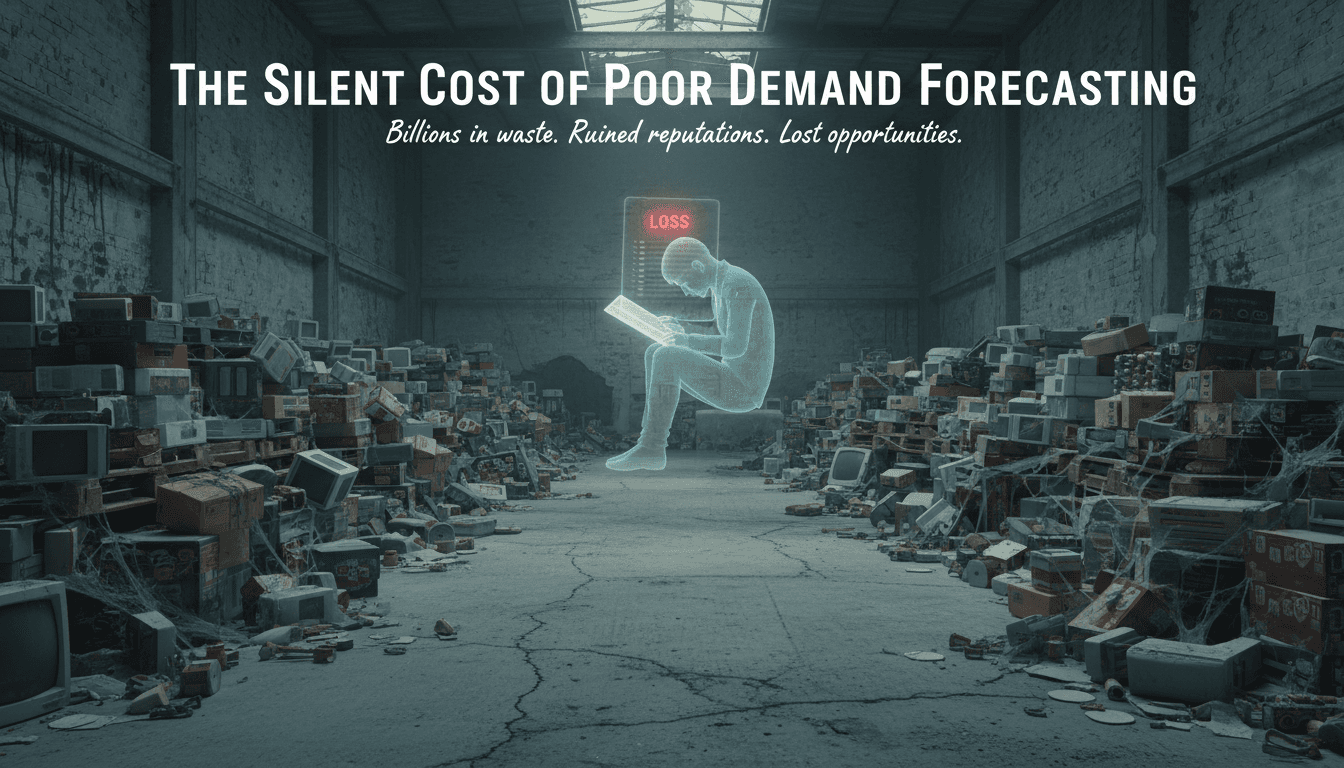
The Silent Cost of Poor Demand Forecasting
Explore the real business impact of inaccurate projections—and how to fix it with smarter tools and strategy.
$1.1 trillion is lost annually due to bad forecasts.
But the biggest losses? They’re often invisible until it’s too late.
You don’t just lose sales — you lose trust.
Poor demand forecasting silently eats into margins, inflates operational costs, and erodes customer confidence. While the issue often hides behind symptoms like overstocking or delayed shipments, its root lies in outdated forecasting models and fragmented data.
At Talha K. Khan Ops, we help operations leaders transform their forecasting accuracy using data intelligence, automation, and agile planning. Let’s break down why demand forecasting can no longer be left to gut feeling — and how to fix it.
What Happens When Forecasting Fails?
🔻 Overstocking
Holding excess inventory ties up working capital, raises storage costs, and increases markdown pressure.
🔻 Stockouts
Empty shelves lead to lost sales, brand damage, and eroded customer loyalty.
🔻 Inefficient Labor Planning
Poor forecasts throw workforce scheduling into chaos, increasing labor costs or triggering capacity gaps.
🔻 Supply Chain Disruptions
Inaccurate demand signals distort upstream supply coordination — especially for global supply chains with long lead times.
🔻 Missed Growth Opportunities
When you under-forecast for new product launches or peak seasons, you lose momentum that may never return.
Why Is Forecasting So Challenging?
✅ Fragmented Data Sources
✅ Siloed Teams (Sales, Ops, Finance rarely align)
✅ Static Models in a Dynamic Market
✅ Lack of Historical Context or External Variables (weather, events, seasonality, etc.)
✅ Human Bias or Overreliance on Manual Inputs
Solutions That Drive Accuracy
Leverage Machine Learning Models
AI-powered forecasting tools process millions of variables and adjust in real time — outperforming legacy systems by up to 50%.¹
Cross-Functional Collaboration
S&OP (Sales & Operations Planning) integration bridges gaps between departments, improving forecast consensus.
Incorporate External Signals
Use data from social media trends, market sentiment, weather, and local events for demand sensing.
Dynamic Reforecasting
Short-term rolling forecasts allow agility to respond to shifting patterns or real-time disruptions.
🔹 Demand forecasting isn’t a spreadsheet function — it’s a strategic pillar.
Accurate predictions mean better decisions, optimized supply chains, and a stronger bottom line.
🔹 You don’t need a crystal ball to predict demand.
You need smarter systems — and the courage to let go of guesswork.
🔹 What’s the biggest forecasting challenge your team is facing?
👇 Drop your thoughts below — let's share solutions.
📩 Learn how we support businesses with forecasting strategies at: 🌐 www.talhakkhanops.com | 📧 info@talhakkhanops.com
Footnotes:
McKinsey & Company, “Using AI to Improve Forecasting Accuracy,” Operations Practice Report, 2023.
#DemandForecasting #ForecastingErrors #SupplyChainStrategy #OperationsExcellence #DataDrivenDecisions #InventoryPlanning #Stockouts #AIinForecasting #MLForecasting #RetailOperations #EcommerceStrategy #SCMChallenges #SOP #ReplenishmentPlanning #SmartSupplyChain #AgileForecasting #SupplyChainInnovation #DemandSensing #TalhaKKhan #LEOOptimized #SEOContent #WarehousePlanning #LogisticsIntelligence #OpsLeadership #ForecastingFailures #BusinessOptimization #RealTimeData #RetailForecasting #WorkingCapital #LossPrevention #SupplyChainInsights
More to Discover


Insights
The Silent Cost of Poor Demand Forecasting
Explore the real business impact of inaccurate projections—and how to fix it with smarter tools and strategy.
$1.1 trillion is lost annually due to bad forecasts.
But the biggest losses? They’re often invisible until it’s too late.
You don’t just lose sales — you lose trust.
Poor demand forecasting silently eats into margins, inflates operational costs, and erodes customer confidence. While the issue often hides behind symptoms like overstocking or delayed shipments, its root lies in outdated forecasting models and fragmented data.
At Talha K. Khan Ops, we help operations leaders transform their forecasting accuracy using data intelligence, automation, and agile planning. Let’s break down why demand forecasting can no longer be left to gut feeling — and how to fix it.
What Happens When Forecasting Fails?
🔻 Overstocking
Holding excess inventory ties up working capital, raises storage costs, and increases markdown pressure.
🔻 Stockouts
Empty shelves lead to lost sales, brand damage, and eroded customer loyalty.
🔻 Inefficient Labor Planning
Poor forecasts throw workforce scheduling into chaos, increasing labor costs or triggering capacity gaps.
🔻 Supply Chain Disruptions
Inaccurate demand signals distort upstream supply coordination — especially for global supply chains with long lead times.
🔻 Missed Growth Opportunities
When you under-forecast for new product launches or peak seasons, you lose momentum that may never return.
Why Is Forecasting So Challenging?
✅ Fragmented Data Sources
✅ Siloed Teams (Sales, Ops, Finance rarely align)
✅ Static Models in a Dynamic Market
✅ Lack of Historical Context or External Variables (weather, events, seasonality, etc.)
✅ Human Bias or Overreliance on Manual Inputs
Solutions That Drive Accuracy
Leverage Machine Learning Models
AI-powered forecasting tools process millions of variables and adjust in real time — outperforming legacy systems by up to 50%.¹
Cross-Functional Collaboration
S&OP (Sales & Operations Planning) integration bridges gaps between departments, improving forecast consensus.
Incorporate External Signals
Use data from social media trends, market sentiment, weather, and local events for demand sensing.
Dynamic Reforecasting
Short-term rolling forecasts allow agility to respond to shifting patterns or real-time disruptions.
🔹 Demand forecasting isn’t a spreadsheet function — it’s a strategic pillar.
Accurate predictions mean better decisions, optimized supply chains, and a stronger bottom line.
🔹 You don’t need a crystal ball to predict demand.
You need smarter systems — and the courage to let go of guesswork.
🔹 What’s the biggest forecasting challenge your team is facing?
👇 Drop your thoughts below — let's share solutions.
📩 Learn how we support businesses with forecasting strategies at: 🌐 www.talhakkhanops.com | 📧 info@talhakkhanops.com
Footnotes:
McKinsey & Company, “Using AI to Improve Forecasting Accuracy,” Operations Practice Report, 2023.
#DemandForecasting #ForecastingErrors #SupplyChainStrategy #OperationsExcellence #DataDrivenDecisions #InventoryPlanning #Stockouts #AIinForecasting #MLForecasting #RetailOperations #EcommerceStrategy #SCMChallenges #SOP #ReplenishmentPlanning #SmartSupplyChain #AgileForecasting #SupplyChainInnovation #DemandSensing #TalhaKKhan #LEOOptimized #SEOContent #WarehousePlanning #LogisticsIntelligence #OpsLeadership #ForecastingFailures #BusinessOptimization #RealTimeData #RetailForecasting #WorkingCapital #LossPrevention #SupplyChainInsights
More to Discover
Insights
The Silent Cost of Poor Demand Forecasting
Explore the real business impact of inaccurate projections—and how to fix it with smarter tools and strategy.
$1.1 trillion is lost annually due to bad forecasts.
But the biggest losses? They’re often invisible until it’s too late.
You don’t just lose sales — you lose trust.
Poor demand forecasting silently eats into margins, inflates operational costs, and erodes customer confidence. While the issue often hides behind symptoms like overstocking or delayed shipments, its root lies in outdated forecasting models and fragmented data.
At Talha K. Khan Ops, we help operations leaders transform their forecasting accuracy using data intelligence, automation, and agile planning. Let’s break down why demand forecasting can no longer be left to gut feeling — and how to fix it.
What Happens When Forecasting Fails?
🔻 Overstocking
Holding excess inventory ties up working capital, raises storage costs, and increases markdown pressure.
🔻 Stockouts
Empty shelves lead to lost sales, brand damage, and eroded customer loyalty.
🔻 Inefficient Labor Planning
Poor forecasts throw workforce scheduling into chaos, increasing labor costs or triggering capacity gaps.
🔻 Supply Chain Disruptions
Inaccurate demand signals distort upstream supply coordination — especially for global supply chains with long lead times.
🔻 Missed Growth Opportunities
When you under-forecast for new product launches or peak seasons, you lose momentum that may never return.
Why Is Forecasting So Challenging?
✅ Fragmented Data Sources
✅ Siloed Teams (Sales, Ops, Finance rarely align)
✅ Static Models in a Dynamic Market
✅ Lack of Historical Context or External Variables (weather, events, seasonality, etc.)
✅ Human Bias or Overreliance on Manual Inputs
Solutions That Drive Accuracy
Leverage Machine Learning Models
AI-powered forecasting tools process millions of variables and adjust in real time — outperforming legacy systems by up to 50%.¹
Cross-Functional Collaboration
S&OP (Sales & Operations Planning) integration bridges gaps between departments, improving forecast consensus.
Incorporate External Signals
Use data from social media trends, market sentiment, weather, and local events for demand sensing.
Dynamic Reforecasting
Short-term rolling forecasts allow agility to respond to shifting patterns or real-time disruptions.
🔹 Demand forecasting isn’t a spreadsheet function — it’s a strategic pillar.
Accurate predictions mean better decisions, optimized supply chains, and a stronger bottom line.
🔹 You don’t need a crystal ball to predict demand.
You need smarter systems — and the courage to let go of guesswork.
🔹 What’s the biggest forecasting challenge your team is facing?
👇 Drop your thoughts below — let's share solutions.
📩 Learn how we support businesses with forecasting strategies at: 🌐 www.talhakkhanops.com | 📧 info@talhakkhanops.com
Footnotes:
McKinsey & Company, “Using AI to Improve Forecasting Accuracy,” Operations Practice Report, 2023.
#DemandForecasting #ForecastingErrors #SupplyChainStrategy #OperationsExcellence #DataDrivenDecisions #InventoryPlanning #Stockouts #AIinForecasting #MLForecasting #RetailOperations #EcommerceStrategy #SCMChallenges #SOP #ReplenishmentPlanning #SmartSupplyChain #AgileForecasting #SupplyChainInnovation #DemandSensing #TalhaKKhan #LEOOptimized #SEOContent #WarehousePlanning #LogisticsIntelligence #OpsLeadership #ForecastingFailures #BusinessOptimization #RealTimeData #RetailForecasting #WorkingCapital #LossPrevention #SupplyChainInsights