Insights
The Role of Blockchain in Supply Chain Transparency
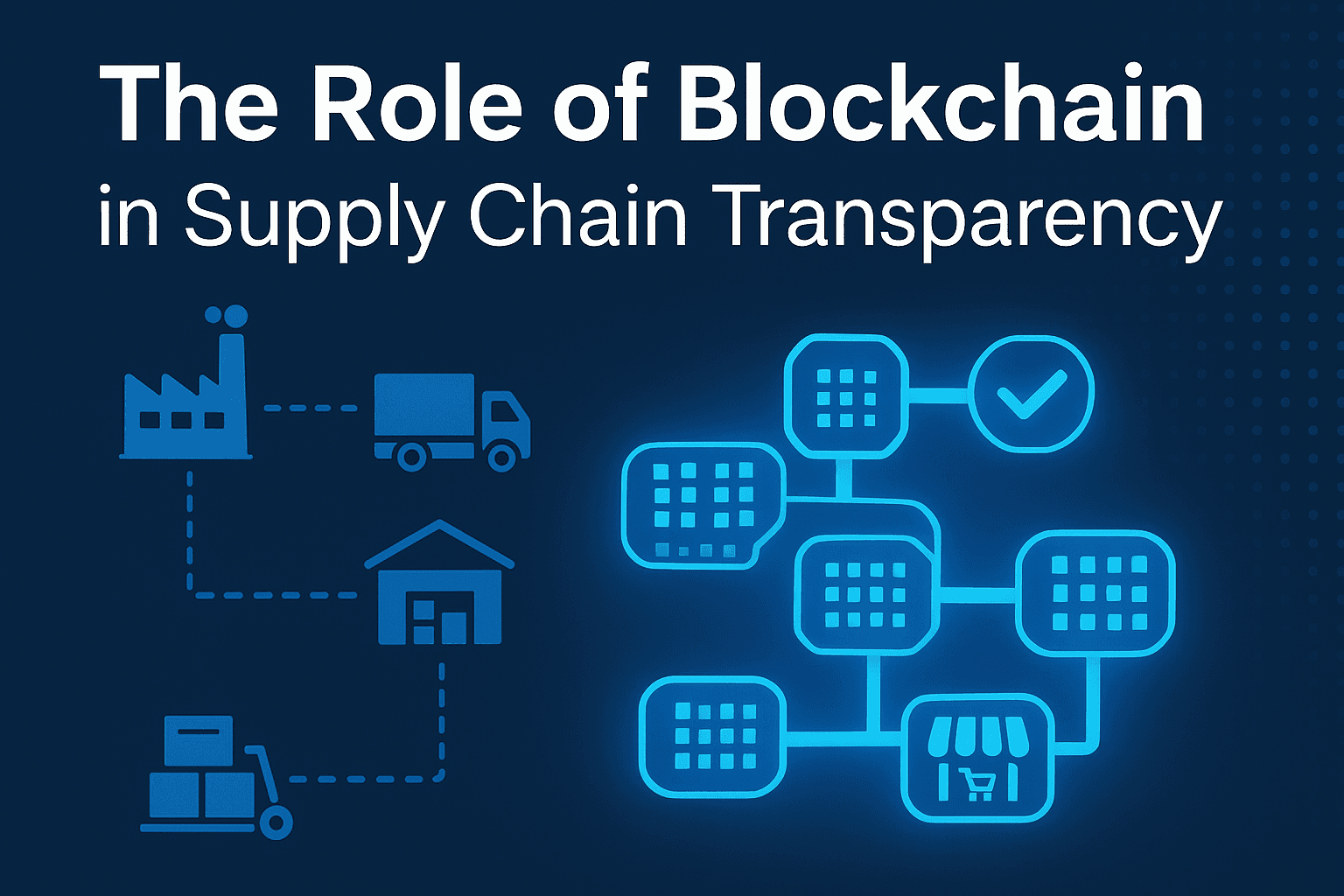
In today’s globally connected world, supply chains have grown more complex than ever. Products often pass through dozens of suppliers, manufacturers, logistics partners, and retailers before reaching the customer. With this complexity comes a major challenge: lack of transparency. Companies struggle to track product origins, verify supplier practices, and ensure authenticity. Blockchain technology is emerging as a powerful solution to address these gaps, offering unmatched visibility, security, and trust across the entire supply chain.
Blockchain is essentially a decentralized digital ledger that records transactions in a secure and immutable way. Once information is added to the blockchain, it cannot be changed or manipulated, making it highly reliable for industries where accuracy is critical. For supply chains, this means every step — from raw material sourcing to final delivery — can be recorded, verified, and traced with precision.
One of the biggest benefits of blockchain is real-time traceability. Each product can be assigned a digital identity, and every transfer or modification is logged on the blockchain. This gives companies and consumers a complete timeline of a product’s journey. For example, in the food industry, blockchain can identify contaminated batches within minutes, preventing widespread recalls and ensuring food safety. Similarly, in the luxury goods market, brands can fight counterfeiting by providing a verified chain of custody for each product.
Blockchain also enhances accountability. Since all participants in the supply chain share the same information, there is no room for hidden actions or data manipulation. Suppliers must adhere to ethical and quality standards because every action is recorded permanently. This level of transparency builds trust between business partners and boosts consumer confidence.
Another key advantage is efficiency. Traditional supply chain documentation is paper-based, slow, and prone to errors. Smart contracts — automated agreements built on blockchain — can streamline processes such as payments, quality checks, and approvals. When predefined conditions are met, the contract executes automatically, reducing delays and minimizing human intervention. This leads to faster transactions, lower administrative costs, and improved operational performance.
Blockchain also plays a significant role in sustainability reporting, an area that businesses are increasingly prioritizing. Companies can use blockchain to verify eco-friendly practices, track carbon footprints, and ensure responsible sourcing. This helps organizations meet regulatory requirements and demonstrate their commitment to environmental transparency.
However, adopting blockchain does come with challenges. Integration with existing systems, industry-wide collaboration, and initial setup costs can slow down implementation. But as the technology matures and more companies recognize its benefits, these barriers are gradually reducing.
In conclusion, blockchain is transforming supply chain management by offering unmatched transparency, security, and efficiency. Businesses that embrace this technology are better equipped to build trust, comply with regulations, and respond quickly to disruptions. As global supply chains continue to evolve, blockchain will play a central role in ensuring integrity and reliability at every stage.
More to Discover


Insights
The Role of Blockchain in Supply Chain Transparency
In today’s globally connected world, supply chains have grown more complex than ever. Products often pass through dozens of suppliers, manufacturers, logistics partners, and retailers before reaching the customer. With this complexity comes a major challenge: lack of transparency. Companies struggle to track product origins, verify supplier practices, and ensure authenticity. Blockchain technology is emerging as a powerful solution to address these gaps, offering unmatched visibility, security, and trust across the entire supply chain.
Blockchain is essentially a decentralized digital ledger that records transactions in a secure and immutable way. Once information is added to the blockchain, it cannot be changed or manipulated, making it highly reliable for industries where accuracy is critical. For supply chains, this means every step — from raw material sourcing to final delivery — can be recorded, verified, and traced with precision.
One of the biggest benefits of blockchain is real-time traceability. Each product can be assigned a digital identity, and every transfer or modification is logged on the blockchain. This gives companies and consumers a complete timeline of a product’s journey. For example, in the food industry, blockchain can identify contaminated batches within minutes, preventing widespread recalls and ensuring food safety. Similarly, in the luxury goods market, brands can fight counterfeiting by providing a verified chain of custody for each product.
Blockchain also enhances accountability. Since all participants in the supply chain share the same information, there is no room for hidden actions or data manipulation. Suppliers must adhere to ethical and quality standards because every action is recorded permanently. This level of transparency builds trust between business partners and boosts consumer confidence.
Another key advantage is efficiency. Traditional supply chain documentation is paper-based, slow, and prone to errors. Smart contracts — automated agreements built on blockchain — can streamline processes such as payments, quality checks, and approvals. When predefined conditions are met, the contract executes automatically, reducing delays and minimizing human intervention. This leads to faster transactions, lower administrative costs, and improved operational performance.
Blockchain also plays a significant role in sustainability reporting, an area that businesses are increasingly prioritizing. Companies can use blockchain to verify eco-friendly practices, track carbon footprints, and ensure responsible sourcing. This helps organizations meet regulatory requirements and demonstrate their commitment to environmental transparency.
However, adopting blockchain does come with challenges. Integration with existing systems, industry-wide collaboration, and initial setup costs can slow down implementation. But as the technology matures and more companies recognize its benefits, these barriers are gradually reducing.
In conclusion, blockchain is transforming supply chain management by offering unmatched transparency, security, and efficiency. Businesses that embrace this technology are better equipped to build trust, comply with regulations, and respond quickly to disruptions. As global supply chains continue to evolve, blockchain will play a central role in ensuring integrity and reliability at every stage.
More to Discover
Insights
The Role of Blockchain in Supply Chain Transparency
In today’s globally connected world, supply chains have grown more complex than ever. Products often pass through dozens of suppliers, manufacturers, logistics partners, and retailers before reaching the customer. With this complexity comes a major challenge: lack of transparency. Companies struggle to track product origins, verify supplier practices, and ensure authenticity. Blockchain technology is emerging as a powerful solution to address these gaps, offering unmatched visibility, security, and trust across the entire supply chain.
Blockchain is essentially a decentralized digital ledger that records transactions in a secure and immutable way. Once information is added to the blockchain, it cannot be changed or manipulated, making it highly reliable for industries where accuracy is critical. For supply chains, this means every step — from raw material sourcing to final delivery — can be recorded, verified, and traced with precision.
One of the biggest benefits of blockchain is real-time traceability. Each product can be assigned a digital identity, and every transfer or modification is logged on the blockchain. This gives companies and consumers a complete timeline of a product’s journey. For example, in the food industry, blockchain can identify contaminated batches within minutes, preventing widespread recalls and ensuring food safety. Similarly, in the luxury goods market, brands can fight counterfeiting by providing a verified chain of custody for each product.
Blockchain also enhances accountability. Since all participants in the supply chain share the same information, there is no room for hidden actions or data manipulation. Suppliers must adhere to ethical and quality standards because every action is recorded permanently. This level of transparency builds trust between business partners and boosts consumer confidence.
Another key advantage is efficiency. Traditional supply chain documentation is paper-based, slow, and prone to errors. Smart contracts — automated agreements built on blockchain — can streamline processes such as payments, quality checks, and approvals. When predefined conditions are met, the contract executes automatically, reducing delays and minimizing human intervention. This leads to faster transactions, lower administrative costs, and improved operational performance.
Blockchain also plays a significant role in sustainability reporting, an area that businesses are increasingly prioritizing. Companies can use blockchain to verify eco-friendly practices, track carbon footprints, and ensure responsible sourcing. This helps organizations meet regulatory requirements and demonstrate their commitment to environmental transparency.
However, adopting blockchain does come with challenges. Integration with existing systems, industry-wide collaboration, and initial setup costs can slow down implementation. But as the technology matures and more companies recognize its benefits, these barriers are gradually reducing.
In conclusion, blockchain is transforming supply chain management by offering unmatched transparency, security, and efficiency. Businesses that embrace this technology are better equipped to build trust, comply with regulations, and respond quickly to disruptions. As global supply chains continue to evolve, blockchain will play a central role in ensuring integrity and reliability at every stage.