Insights
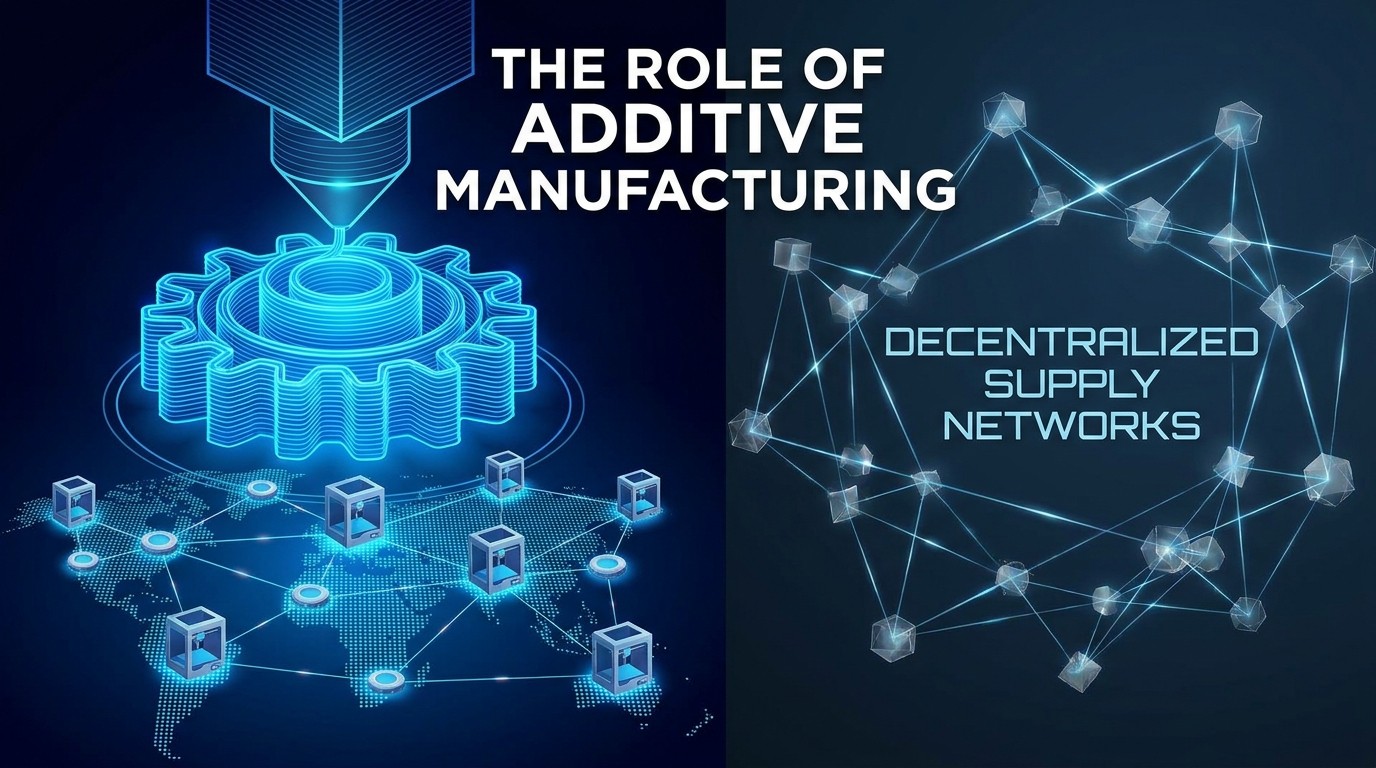
The Role of Additive Manufacturing in Decentralized Supply Networks
Introduction
Additive manufacturing (3D printing) is reshaping traditional manufacturing and supply chain paradigms by enabling localized, on-demand production. As organizations seek to decentralize production to improve responsiveness and resilience, additive manufacturing offers a complementary capability to traditional centralized manufacturing models. Understanding where and how additive manufacturing adds value is critical for strategic network design.
Drivers of Decentralized Production
Decentralization is driven by:
Demand for faster lead times and customization
Disruption risk in centralized manufacturing hubs
High logistics costs for low-volume, high-variability parts
The need for localized production near end markets
Supply Chain Use Cases for Additive Manufacturing
High-impact use cases include:
On-demand production of spare parts
Rapid prototyping and product iteration
Low-volume, high-mix production
Emergency production during disruptions
Localization of production for remote markets
Strategic Considerations
Leaders should evaluate additive manufacturing through:
Total cost and responsiveness trade-offs
Quality and certification requirements
Integration with traditional manufacturing workflows
IP protection and digital asset governance
Workforce capability and process integration
Conclusion
Additive manufacturing enables more decentralized, responsive supply networks when applied strategically. Organizations that integrate 3D printing into network design can enhance resilience and agility without replacing core manufacturing capabilities.
#AdditiveManufacturing #3DPrinting #DecentralizedSupplyChains #ManufacturingInnovation #SupplyChainResilience #DigitalManufacturing
More to Discover


Insights
The Role of Additive Manufacturing in Decentralized Supply Networks
Introduction
Additive manufacturing (3D printing) is reshaping traditional manufacturing and supply chain paradigms by enabling localized, on-demand production. As organizations seek to decentralize production to improve responsiveness and resilience, additive manufacturing offers a complementary capability to traditional centralized manufacturing models. Understanding where and how additive manufacturing adds value is critical for strategic network design.
Drivers of Decentralized Production
Decentralization is driven by:
Demand for faster lead times and customization
Disruption risk in centralized manufacturing hubs
High logistics costs for low-volume, high-variability parts
The need for localized production near end markets
Supply Chain Use Cases for Additive Manufacturing
High-impact use cases include:
On-demand production of spare parts
Rapid prototyping and product iteration
Low-volume, high-mix production
Emergency production during disruptions
Localization of production for remote markets
Strategic Considerations
Leaders should evaluate additive manufacturing through:
Total cost and responsiveness trade-offs
Quality and certification requirements
Integration with traditional manufacturing workflows
IP protection and digital asset governance
Workforce capability and process integration
Conclusion
Additive manufacturing enables more decentralized, responsive supply networks when applied strategically. Organizations that integrate 3D printing into network design can enhance resilience and agility without replacing core manufacturing capabilities.
#AdditiveManufacturing #3DPrinting #DecentralizedSupplyChains #ManufacturingInnovation #SupplyChainResilience #DigitalManufacturing
More to Discover
Insights
The Role of Additive Manufacturing in Decentralized Supply Networks
Introduction
Additive manufacturing (3D printing) is reshaping traditional manufacturing and supply chain paradigms by enabling localized, on-demand production. As organizations seek to decentralize production to improve responsiveness and resilience, additive manufacturing offers a complementary capability to traditional centralized manufacturing models. Understanding where and how additive manufacturing adds value is critical for strategic network design.
Drivers of Decentralized Production
Decentralization is driven by:
Demand for faster lead times and customization
Disruption risk in centralized manufacturing hubs
High logistics costs for low-volume, high-variability parts
The need for localized production near end markets
Supply Chain Use Cases for Additive Manufacturing
High-impact use cases include:
On-demand production of spare parts
Rapid prototyping and product iteration
Low-volume, high-mix production
Emergency production during disruptions
Localization of production for remote markets
Strategic Considerations
Leaders should evaluate additive manufacturing through:
Total cost and responsiveness trade-offs
Quality and certification requirements
Integration with traditional manufacturing workflows
IP protection and digital asset governance
Workforce capability and process integration
Conclusion
Additive manufacturing enables more decentralized, responsive supply networks when applied strategically. Organizations that integrate 3D printing into network design can enhance resilience and agility without replacing core manufacturing capabilities.
#AdditiveManufacturing #3DPrinting #DecentralizedSupplyChains #ManufacturingInnovation #SupplyChainResilience #DigitalManufacturing