Insights
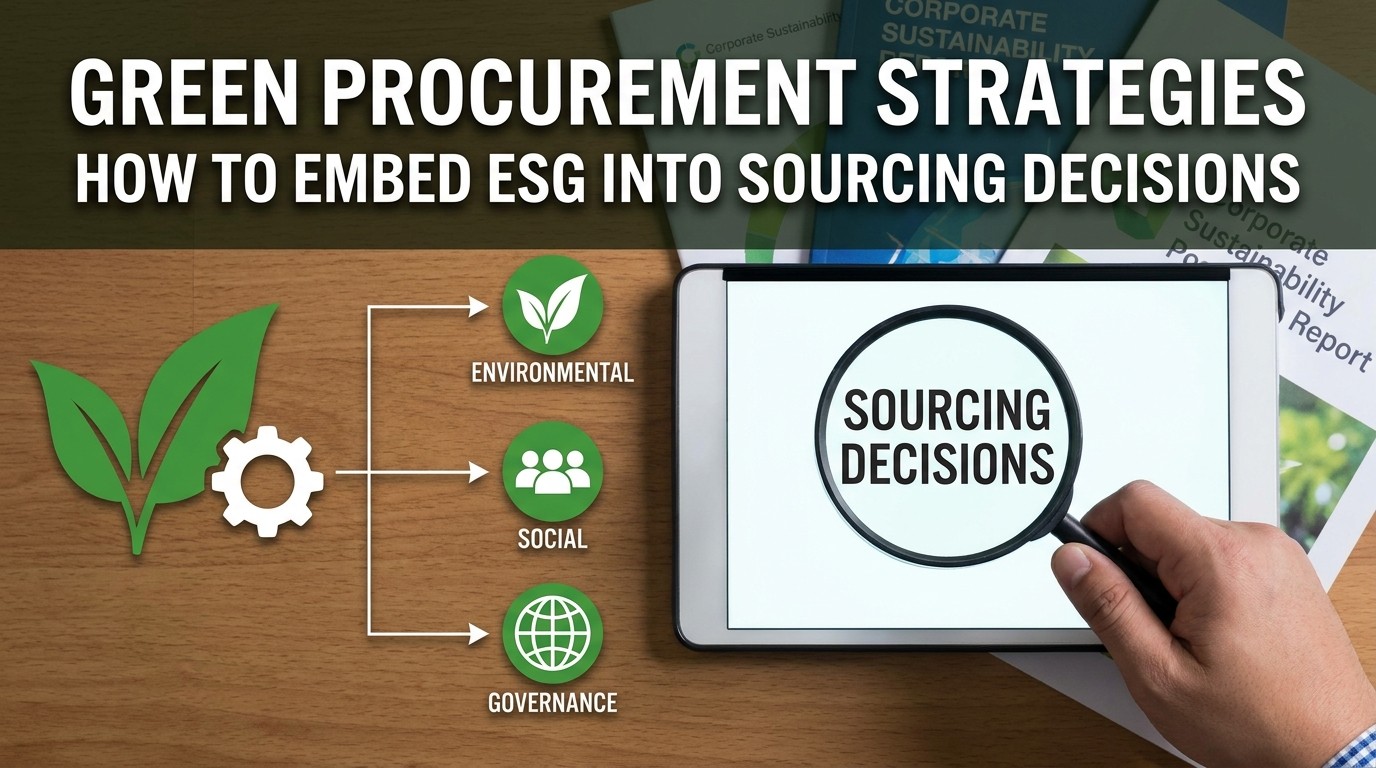
Green Procurement Strategies: How to Embed ESG into Sourcing Decisions
Introduction
Green procurement has evolved from a niche sustainability initiative into a strategic lever for managing environmental, social, and governance (ESG) performance across supply chains. As regulatory scrutiny increases and customers demand greater transparency, procurement leaders are expected to embed ESG considerations directly into sourcing decisions rather than treating sustainability as an add-on. Doing so requires structured frameworks that align ESG objectives with commercial and operational priorities.
The ESG Challenge in Procurement
Procurement functions face several challenges when embedding ESG:
Limited visibility into supplier sustainability practices
Inconsistent ESG standards across regions and categories
Trade-offs between cost, lead time, and sustainability criteria
Fragmented data and reporting frameworks
Limited leverage over sub-tier supplier practices
These challenges complicate the integration of ESG into day-to-day sourcing decisions.
Embedding ESG into Sourcing Processes
Organizations can operationalize green procurement by:
Defining clear ESG criteria within supplier selection and evaluation frameworks
Integrating ESG scoring into RFQs and contract award decisions
Collaborating with suppliers on sustainability improvement roadmaps
Leveraging digital tools for ESG data collection and monitoring
Aligning procurement incentives with sustainability performance
Strategic Benefits
Embedding ESG into sourcing decisions enables:
Reduced regulatory and compliance risk
Improved supply chain resilience through responsible sourcing
Enhanced brand credibility and customer trust
Better alignment with investor expectations and reporting requirements
Conclusion
Green procurement is most effective when ESG considerations are embedded into core sourcing processes rather than managed as parallel initiatives. Organizations that integrate ESG into procurement governance can advance sustainability objectives while maintaining commercial discipline.
#GreenProcurement #ESGInSupplyChain #SustainableSourcing #ProcurementStrategy #ResponsibleSupplyChains #SustainabilityGovernance
More to Discover


Insights
Green Procurement Strategies: How to Embed ESG into Sourcing Decisions
Introduction
Green procurement has evolved from a niche sustainability initiative into a strategic lever for managing environmental, social, and governance (ESG) performance across supply chains. As regulatory scrutiny increases and customers demand greater transparency, procurement leaders are expected to embed ESG considerations directly into sourcing decisions rather than treating sustainability as an add-on. Doing so requires structured frameworks that align ESG objectives with commercial and operational priorities.
The ESG Challenge in Procurement
Procurement functions face several challenges when embedding ESG:
Limited visibility into supplier sustainability practices
Inconsistent ESG standards across regions and categories
Trade-offs between cost, lead time, and sustainability criteria
Fragmented data and reporting frameworks
Limited leverage over sub-tier supplier practices
These challenges complicate the integration of ESG into day-to-day sourcing decisions.
Embedding ESG into Sourcing Processes
Organizations can operationalize green procurement by:
Defining clear ESG criteria within supplier selection and evaluation frameworks
Integrating ESG scoring into RFQs and contract award decisions
Collaborating with suppliers on sustainability improvement roadmaps
Leveraging digital tools for ESG data collection and monitoring
Aligning procurement incentives with sustainability performance
Strategic Benefits
Embedding ESG into sourcing decisions enables:
Reduced regulatory and compliance risk
Improved supply chain resilience through responsible sourcing
Enhanced brand credibility and customer trust
Better alignment with investor expectations and reporting requirements
Conclusion
Green procurement is most effective when ESG considerations are embedded into core sourcing processes rather than managed as parallel initiatives. Organizations that integrate ESG into procurement governance can advance sustainability objectives while maintaining commercial discipline.
#GreenProcurement #ESGInSupplyChain #SustainableSourcing #ProcurementStrategy #ResponsibleSupplyChains #SustainabilityGovernance
More to Discover
Insights
Green Procurement Strategies: How to Embed ESG into Sourcing Decisions
Introduction
Green procurement has evolved from a niche sustainability initiative into a strategic lever for managing environmental, social, and governance (ESG) performance across supply chains. As regulatory scrutiny increases and customers demand greater transparency, procurement leaders are expected to embed ESG considerations directly into sourcing decisions rather than treating sustainability as an add-on. Doing so requires structured frameworks that align ESG objectives with commercial and operational priorities.
The ESG Challenge in Procurement
Procurement functions face several challenges when embedding ESG:
Limited visibility into supplier sustainability practices
Inconsistent ESG standards across regions and categories
Trade-offs between cost, lead time, and sustainability criteria
Fragmented data and reporting frameworks
Limited leverage over sub-tier supplier practices
These challenges complicate the integration of ESG into day-to-day sourcing decisions.
Embedding ESG into Sourcing Processes
Organizations can operationalize green procurement by:
Defining clear ESG criteria within supplier selection and evaluation frameworks
Integrating ESG scoring into RFQs and contract award decisions
Collaborating with suppliers on sustainability improvement roadmaps
Leveraging digital tools for ESG data collection and monitoring
Aligning procurement incentives with sustainability performance
Strategic Benefits
Embedding ESG into sourcing decisions enables:
Reduced regulatory and compliance risk
Improved supply chain resilience through responsible sourcing
Enhanced brand credibility and customer trust
Better alignment with investor expectations and reporting requirements
Conclusion
Green procurement is most effective when ESG considerations are embedded into core sourcing processes rather than managed as parallel initiatives. Organizations that integrate ESG into procurement governance can advance sustainability objectives while maintaining commercial discipline.
#GreenProcurement #ESGInSupplyChain #SustainableSourcing #ProcurementStrategy #ResponsibleSupplyChains #SustainabilityGovernance