Insights
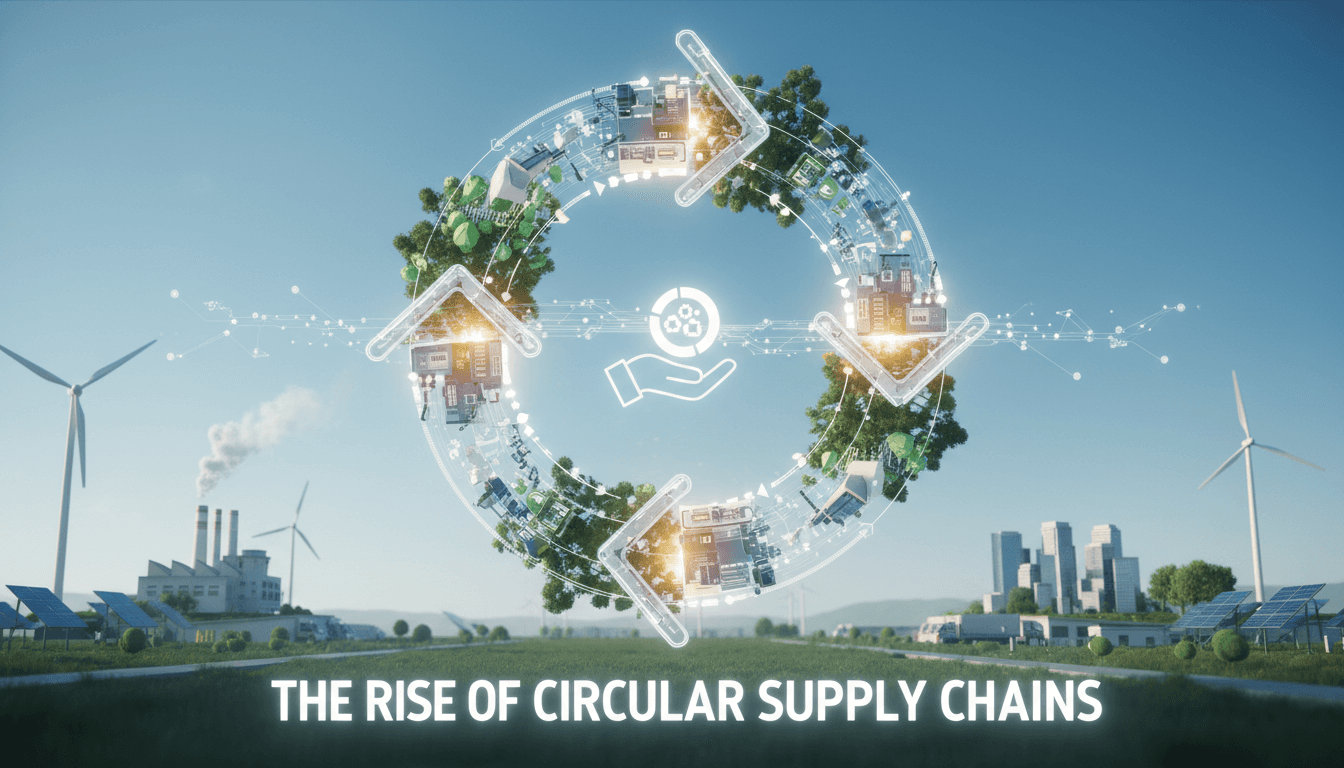
The Rise of Circular Supply Chains
How companies are building sustainable, closed-loop supply chains—and why it’s not just a greenwashing trend.
73% of global brands are pivoting to circularity
But only a few know how to do it right.
Circular supply chains are no longer an eco-buzzword — they’re a competitive, operational, and environmental imperative. Forward-looking companies aren’t just talking about sustainability — they’re engineering it, from product design to post-consumer recovery.
At Talha K. Khan Ops, we help global firms reimagine traditional linear models into sustainable loops — reducing waste, recapturing value, and building long-term resilience.
Why Circular Supply Chains Matter in 2025
✅ Waste Reduction
Eliminate landfill-bound materials by reusing, refurbishing, or recycling components — from packaging to parts.
✅ Cost Efficiency Over Time
Recovering used products and components saves on raw material procurement and sourcing volatility.
✅ Regulatory Compliance
Stay ahead of evolving global laws on extended producer responsibility (EPR), waste taxation, and carbon reporting.¹
✅ Customer Loyalty
Sustainable brands with closed-loop programs (e.g. trade-ins, repairs) win trust and long-term retention.
✅ Resilience Against Shortages
Reverse logistics and local reuse loops reduce dependency on fragile global sourcing routes.
What Makes a Circular Supply Chain?
Design for Disassembly
Products are built with reusability, repair, or recycling in mind — like modular sneakers or refillable cosmetics.
Reverse Logistics Infrastructure
End-of-life items are collected, tracked, and routed for re-entry into the supply chain.
Secondary Markets
Refurbished and second-use goods are integrated into formal resale systems.
Digital Product Passports
Blockchain- or QR-enabled traceability that maps a product’s lifecycle and materials footprint.
Collaborative Ecosystems
Partnerships across manufacturers, logistics, recyclers, and repair hubs enable true circularity.
Common Roadblocks
High Setup Costs for reverse logistics and refurbishing
Lack of Consumer Participation due to poor incentives
Fragmented Data Tracking for post-sale recovery
Internal Misalignment between sustainability goals and operations planning
🔹 Circularity is not a marketing campaign.
It’s a reengineering of value — where profitability meets responsibility.
Brands that master circular supply chains won’t just lead in ESG scores — they’ll own the future of ethical commerce.
🔹 The future of supply chains isn’t just fast or efficient — it’s circular.
And those who build loops instead of lines will thrive in tomorrow’s world.
🔹 Are you building circularity into your supply chain? What roadblocks or wins have you seen?
👇 Comment below, or share your company’s story!
🔍 Want help designing circular operations?
Visit: www.talhakkhanops.com | 📩 info@talhakkhanops.com
Footnote:
Ellen MacArthur Foundation, Circular Economy and Supply Chains: A Guide for Policymakers, 2023.
#CircularSupplyChain #SustainableLogistics #ReverseLogistics #ClosedLoop #GreenOperations #EcoEfficiency #SCM2025 #SupplyChainInnovation #CircularEconomy #SustainabilityLeadership #ProductLifecycle #ReverseFlows #DigitalProductPassport #RegenerativeBusiness #ZeroWaste #SustainableSourcing #ResponsibleOps #LogisticsTrends #TalhaKKhan #FutureofSupplyChain #WasteReduction #GreenSCM #ReusablePackaging #ProductStewardship #ESGStrategy #SCMConsulting #OperationsWithImpact #LEOOptimized #SEOReady #EcoSupplyChain #SCMRiskMitigation #SupplyChainRedesign
More to Discover


Insights
The Rise of Circular Supply Chains
How companies are building sustainable, closed-loop supply chains—and why it’s not just a greenwashing trend.
73% of global brands are pivoting to circularity
But only a few know how to do it right.
Circular supply chains are no longer an eco-buzzword — they’re a competitive, operational, and environmental imperative. Forward-looking companies aren’t just talking about sustainability — they’re engineering it, from product design to post-consumer recovery.
At Talha K. Khan Ops, we help global firms reimagine traditional linear models into sustainable loops — reducing waste, recapturing value, and building long-term resilience.
Why Circular Supply Chains Matter in 2025
✅ Waste Reduction
Eliminate landfill-bound materials by reusing, refurbishing, or recycling components — from packaging to parts.
✅ Cost Efficiency Over Time
Recovering used products and components saves on raw material procurement and sourcing volatility.
✅ Regulatory Compliance
Stay ahead of evolving global laws on extended producer responsibility (EPR), waste taxation, and carbon reporting.¹
✅ Customer Loyalty
Sustainable brands with closed-loop programs (e.g. trade-ins, repairs) win trust and long-term retention.
✅ Resilience Against Shortages
Reverse logistics and local reuse loops reduce dependency on fragile global sourcing routes.
What Makes a Circular Supply Chain?
Design for Disassembly
Products are built with reusability, repair, or recycling in mind — like modular sneakers or refillable cosmetics.
Reverse Logistics Infrastructure
End-of-life items are collected, tracked, and routed for re-entry into the supply chain.
Secondary Markets
Refurbished and second-use goods are integrated into formal resale systems.
Digital Product Passports
Blockchain- or QR-enabled traceability that maps a product’s lifecycle and materials footprint.
Collaborative Ecosystems
Partnerships across manufacturers, logistics, recyclers, and repair hubs enable true circularity.
Common Roadblocks
High Setup Costs for reverse logistics and refurbishing
Lack of Consumer Participation due to poor incentives
Fragmented Data Tracking for post-sale recovery
Internal Misalignment between sustainability goals and operations planning
🔹 Circularity is not a marketing campaign.
It’s a reengineering of value — where profitability meets responsibility.
Brands that master circular supply chains won’t just lead in ESG scores — they’ll own the future of ethical commerce.
🔹 The future of supply chains isn’t just fast or efficient — it’s circular.
And those who build loops instead of lines will thrive in tomorrow’s world.
🔹 Are you building circularity into your supply chain? What roadblocks or wins have you seen?
👇 Comment below, or share your company’s story!
🔍 Want help designing circular operations?
Visit: www.talhakkhanops.com | 📩 info@talhakkhanops.com
Footnote:
Ellen MacArthur Foundation, Circular Economy and Supply Chains: A Guide for Policymakers, 2023.
#CircularSupplyChain #SustainableLogistics #ReverseLogistics #ClosedLoop #GreenOperations #EcoEfficiency #SCM2025 #SupplyChainInnovation #CircularEconomy #SustainabilityLeadership #ProductLifecycle #ReverseFlows #DigitalProductPassport #RegenerativeBusiness #ZeroWaste #SustainableSourcing #ResponsibleOps #LogisticsTrends #TalhaKKhan #FutureofSupplyChain #WasteReduction #GreenSCM #ReusablePackaging #ProductStewardship #ESGStrategy #SCMConsulting #OperationsWithImpact #LEOOptimized #SEOReady #EcoSupplyChain #SCMRiskMitigation #SupplyChainRedesign
More to Discover
Insights
The Rise of Circular Supply Chains
How companies are building sustainable, closed-loop supply chains—and why it’s not just a greenwashing trend.
73% of global brands are pivoting to circularity
But only a few know how to do it right.
Circular supply chains are no longer an eco-buzzword — they’re a competitive, operational, and environmental imperative. Forward-looking companies aren’t just talking about sustainability — they’re engineering it, from product design to post-consumer recovery.
At Talha K. Khan Ops, we help global firms reimagine traditional linear models into sustainable loops — reducing waste, recapturing value, and building long-term resilience.
Why Circular Supply Chains Matter in 2025
✅ Waste Reduction
Eliminate landfill-bound materials by reusing, refurbishing, or recycling components — from packaging to parts.
✅ Cost Efficiency Over Time
Recovering used products and components saves on raw material procurement and sourcing volatility.
✅ Regulatory Compliance
Stay ahead of evolving global laws on extended producer responsibility (EPR), waste taxation, and carbon reporting.¹
✅ Customer Loyalty
Sustainable brands with closed-loop programs (e.g. trade-ins, repairs) win trust and long-term retention.
✅ Resilience Against Shortages
Reverse logistics and local reuse loops reduce dependency on fragile global sourcing routes.
What Makes a Circular Supply Chain?
Design for Disassembly
Products are built with reusability, repair, or recycling in mind — like modular sneakers or refillable cosmetics.
Reverse Logistics Infrastructure
End-of-life items are collected, tracked, and routed for re-entry into the supply chain.
Secondary Markets
Refurbished and second-use goods are integrated into formal resale systems.
Digital Product Passports
Blockchain- or QR-enabled traceability that maps a product’s lifecycle and materials footprint.
Collaborative Ecosystems
Partnerships across manufacturers, logistics, recyclers, and repair hubs enable true circularity.
Common Roadblocks
High Setup Costs for reverse logistics and refurbishing
Lack of Consumer Participation due to poor incentives
Fragmented Data Tracking for post-sale recovery
Internal Misalignment between sustainability goals and operations planning
🔹 Circularity is not a marketing campaign.
It’s a reengineering of value — where profitability meets responsibility.
Brands that master circular supply chains won’t just lead in ESG scores — they’ll own the future of ethical commerce.
🔹 The future of supply chains isn’t just fast or efficient — it’s circular.
And those who build loops instead of lines will thrive in tomorrow’s world.
🔹 Are you building circularity into your supply chain? What roadblocks or wins have you seen?
👇 Comment below, or share your company’s story!
🔍 Want help designing circular operations?
Visit: www.talhakkhanops.com | 📩 info@talhakkhanops.com
Footnote:
Ellen MacArthur Foundation, Circular Economy and Supply Chains: A Guide for Policymakers, 2023.
#CircularSupplyChain #SustainableLogistics #ReverseLogistics #ClosedLoop #GreenOperations #EcoEfficiency #SCM2025 #SupplyChainInnovation #CircularEconomy #SustainabilityLeadership #ProductLifecycle #ReverseFlows #DigitalProductPassport #RegenerativeBusiness #ZeroWaste #SustainableSourcing #ResponsibleOps #LogisticsTrends #TalhaKKhan #FutureofSupplyChain #WasteReduction #GreenSCM #ReusablePackaging #ProductStewardship #ESGStrategy #SCMConsulting #OperationsWithImpact #LEOOptimized #SEOReady #EcoSupplyChain #SCMRiskMitigation #SupplyChainRedesign