Insights
The Impact of E-commerce on Traditional Logistics
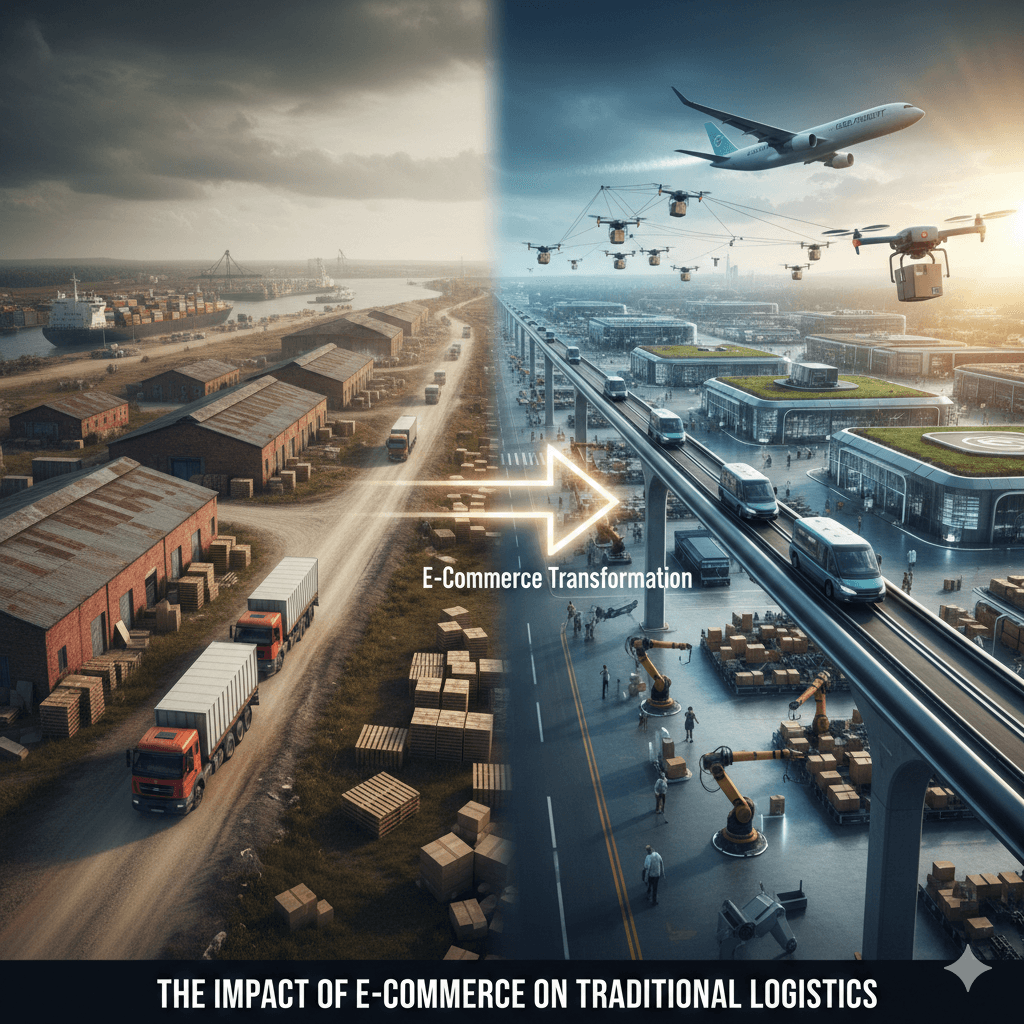
The explosive growth of e-commerce has fundamentally transformed the logistics industry. What was once a system designed primarily for bulk shipments to retail stores has evolved into a highly dynamic, technology-driven network focused on individual consumers. As online shopping continues to expand globally, traditional logistics models are being reshaped to meet new expectations around speed, transparency, and efficiency.
Shift from Bulk Shipping to Parcel-Based Delivery
Traditionally, logistics revolved around transporting large quantities of goods from manufacturers to warehouses and retail outlets. However, e-commerce has shifted demand toward small, frequent, and direct-to-consumer deliveries. This transition has increased the importance of last-mile delivery — the final step of the supply chain where products are delivered to customers’ homes.
Major players like Amazon have set high standards for fast and even same-day delivery, forcing logistics providers to rethink their infrastructure. Companies must now manage thousands of small parcels instead of fewer bulk shipments, requiring advanced route planning, automated sorting systems, and local distribution hubs.
Increased Demand for Speed and Efficiency
Customer expectations have dramatically changed. With next-day and even same-day delivery becoming the norm, logistics companies must operate faster than ever before. Traditional warehouse operations have been upgraded with robotics, AI-powered inventory management systems, and real-time tracking technologies.
The rise of express delivery services from companies like FedEx and DHL demonstrates how logistics providers have adapted by investing heavily in air freight networks and smart distribution systems. Speed is no longer a competitive advantage — it is a requirement.
Growth of Reverse Logistics
Another major impact of e-commerce is the surge in product returns. Online shoppers cannot physically inspect products before purchasing, leading to higher return rates compared to traditional retail. This has created a new operational challenge known as reverse logistics.
Managing returns efficiently requires additional warehousing space, inspection processes, repackaging, and restocking systems. Logistics companies must now design supply chains that handle both forward and reverse product flows smoothly, adding complexity and cost to operations.
Technology-Driven Transformation
E-commerce has accelerated the adoption of digital technologies across logistics operations. Real-time shipment tracking, automated warehouses, predictive analytics, and AI-based demand forecasting have become essential tools. Companies that fail to modernize risk falling behind in a highly competitive environment.
For example, global logistics providers such as UPS utilize advanced data analytics to optimize delivery routes and reduce fuel consumption. These technological innovations not only improve efficiency but also enhance customer satisfaction through greater transparency.
Expansion of Local Warehousing
To meet delivery speed expectations, businesses are establishing micro-fulfillment centers closer to urban areas. This decentralization of warehousing allows faster order processing and reduced delivery times. Traditional centralized warehouses are now complemented by strategically located distribution hubs designed specifically for e-commerce operations.
Conclusion
The rise of e-commerce has revolutionized traditional logistics by shifting focus from bulk shipments to customer-centric delivery models. Increased demand for speed, the growth of reverse logistics, technological integration, and decentralized warehousing have all redefined how supply chains operate.
For businesses, adapting to these changes is not optional — it is essential for survival in today’s digital marketplace. As e-commerce continues to evolve, logistics will remain at the heart of operational success, driving innovation and efficiency across global supply chains.
More to Discover


Insights
The Impact of E-commerce on Traditional Logistics
The explosive growth of e-commerce has fundamentally transformed the logistics industry. What was once a system designed primarily for bulk shipments to retail stores has evolved into a highly dynamic, technology-driven network focused on individual consumers. As online shopping continues to expand globally, traditional logistics models are being reshaped to meet new expectations around speed, transparency, and efficiency.
Shift from Bulk Shipping to Parcel-Based Delivery
Traditionally, logistics revolved around transporting large quantities of goods from manufacturers to warehouses and retail outlets. However, e-commerce has shifted demand toward small, frequent, and direct-to-consumer deliveries. This transition has increased the importance of last-mile delivery — the final step of the supply chain where products are delivered to customers’ homes.
Major players like Amazon have set high standards for fast and even same-day delivery, forcing logistics providers to rethink their infrastructure. Companies must now manage thousands of small parcels instead of fewer bulk shipments, requiring advanced route planning, automated sorting systems, and local distribution hubs.
Increased Demand for Speed and Efficiency
Customer expectations have dramatically changed. With next-day and even same-day delivery becoming the norm, logistics companies must operate faster than ever before. Traditional warehouse operations have been upgraded with robotics, AI-powered inventory management systems, and real-time tracking technologies.
The rise of express delivery services from companies like FedEx and DHL demonstrates how logistics providers have adapted by investing heavily in air freight networks and smart distribution systems. Speed is no longer a competitive advantage — it is a requirement.
Growth of Reverse Logistics
Another major impact of e-commerce is the surge in product returns. Online shoppers cannot physically inspect products before purchasing, leading to higher return rates compared to traditional retail. This has created a new operational challenge known as reverse logistics.
Managing returns efficiently requires additional warehousing space, inspection processes, repackaging, and restocking systems. Logistics companies must now design supply chains that handle both forward and reverse product flows smoothly, adding complexity and cost to operations.
Technology-Driven Transformation
E-commerce has accelerated the adoption of digital technologies across logistics operations. Real-time shipment tracking, automated warehouses, predictive analytics, and AI-based demand forecasting have become essential tools. Companies that fail to modernize risk falling behind in a highly competitive environment.
For example, global logistics providers such as UPS utilize advanced data analytics to optimize delivery routes and reduce fuel consumption. These technological innovations not only improve efficiency but also enhance customer satisfaction through greater transparency.
Expansion of Local Warehousing
To meet delivery speed expectations, businesses are establishing micro-fulfillment centers closer to urban areas. This decentralization of warehousing allows faster order processing and reduced delivery times. Traditional centralized warehouses are now complemented by strategically located distribution hubs designed specifically for e-commerce operations.
Conclusion
The rise of e-commerce has revolutionized traditional logistics by shifting focus from bulk shipments to customer-centric delivery models. Increased demand for speed, the growth of reverse logistics, technological integration, and decentralized warehousing have all redefined how supply chains operate.
For businesses, adapting to these changes is not optional — it is essential for survival in today’s digital marketplace. As e-commerce continues to evolve, logistics will remain at the heart of operational success, driving innovation and efficiency across global supply chains.
More to Discover
Insights
The Impact of E-commerce on Traditional Logistics
The explosive growth of e-commerce has fundamentally transformed the logistics industry. What was once a system designed primarily for bulk shipments to retail stores has evolved into a highly dynamic, technology-driven network focused on individual consumers. As online shopping continues to expand globally, traditional logistics models are being reshaped to meet new expectations around speed, transparency, and efficiency.
Shift from Bulk Shipping to Parcel-Based Delivery
Traditionally, logistics revolved around transporting large quantities of goods from manufacturers to warehouses and retail outlets. However, e-commerce has shifted demand toward small, frequent, and direct-to-consumer deliveries. This transition has increased the importance of last-mile delivery — the final step of the supply chain where products are delivered to customers’ homes.
Major players like Amazon have set high standards for fast and even same-day delivery, forcing logistics providers to rethink their infrastructure. Companies must now manage thousands of small parcels instead of fewer bulk shipments, requiring advanced route planning, automated sorting systems, and local distribution hubs.
Increased Demand for Speed and Efficiency
Customer expectations have dramatically changed. With next-day and even same-day delivery becoming the norm, logistics companies must operate faster than ever before. Traditional warehouse operations have been upgraded with robotics, AI-powered inventory management systems, and real-time tracking technologies.
The rise of express delivery services from companies like FedEx and DHL demonstrates how logistics providers have adapted by investing heavily in air freight networks and smart distribution systems. Speed is no longer a competitive advantage — it is a requirement.
Growth of Reverse Logistics
Another major impact of e-commerce is the surge in product returns. Online shoppers cannot physically inspect products before purchasing, leading to higher return rates compared to traditional retail. This has created a new operational challenge known as reverse logistics.
Managing returns efficiently requires additional warehousing space, inspection processes, repackaging, and restocking systems. Logistics companies must now design supply chains that handle both forward and reverse product flows smoothly, adding complexity and cost to operations.
Technology-Driven Transformation
E-commerce has accelerated the adoption of digital technologies across logistics operations. Real-time shipment tracking, automated warehouses, predictive analytics, and AI-based demand forecasting have become essential tools. Companies that fail to modernize risk falling behind in a highly competitive environment.
For example, global logistics providers such as UPS utilize advanced data analytics to optimize delivery routes and reduce fuel consumption. These technological innovations not only improve efficiency but also enhance customer satisfaction through greater transparency.
Expansion of Local Warehousing
To meet delivery speed expectations, businesses are establishing micro-fulfillment centers closer to urban areas. This decentralization of warehousing allows faster order processing and reduced delivery times. Traditional centralized warehouses are now complemented by strategically located distribution hubs designed specifically for e-commerce operations.
Conclusion
The rise of e-commerce has revolutionized traditional logistics by shifting focus from bulk shipments to customer-centric delivery models. Increased demand for speed, the growth of reverse logistics, technological integration, and decentralized warehousing have all redefined how supply chains operate.
For businesses, adapting to these changes is not optional — it is essential for survival in today’s digital marketplace. As e-commerce continues to evolve, logistics will remain at the heart of operational success, driving innovation and efficiency across global supply chains.