Insights
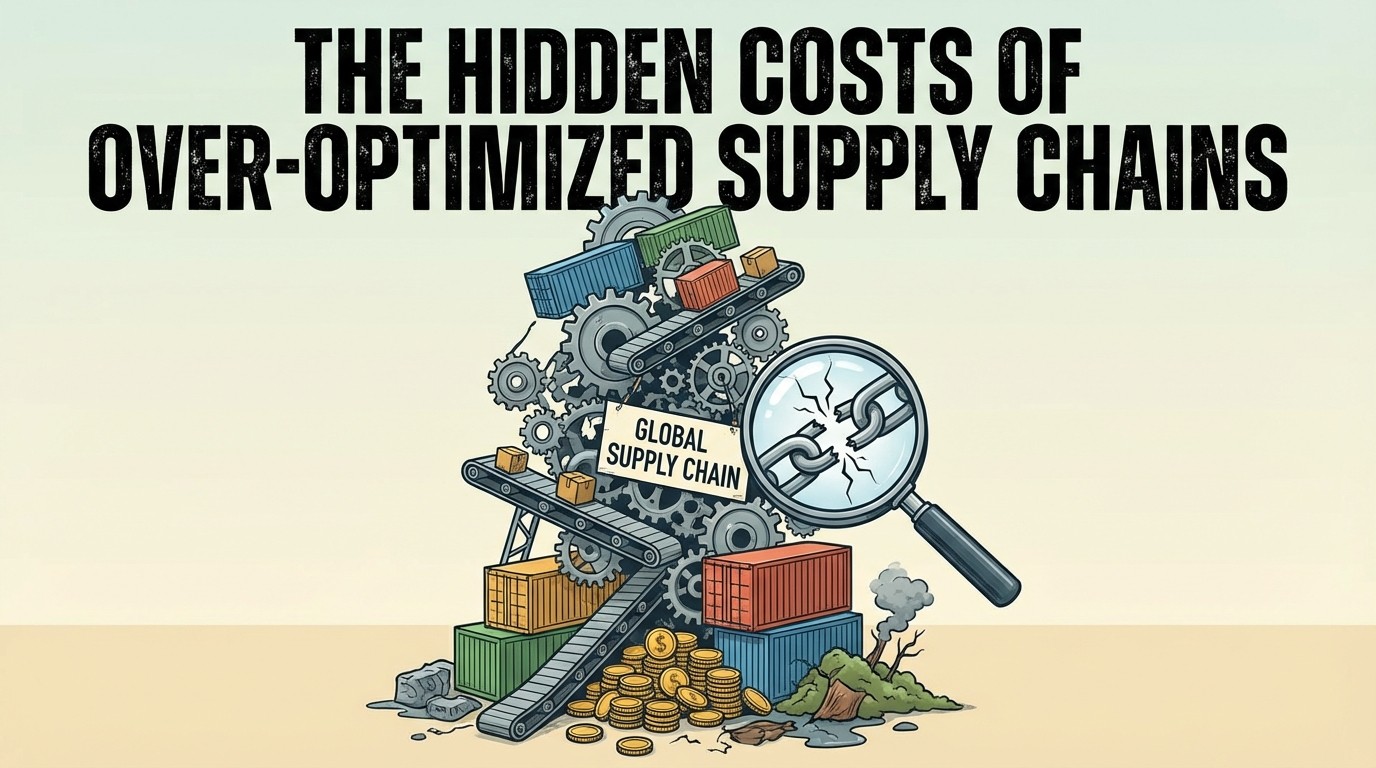
The Hidden Costs of Over-Optimized Supply Chains
Introduction
Operational optimization has long been a core objective of supply chain management. Lean inventories, tightly synchronized production schedules, and cost-minimized logistics networks have delivered meaningful efficiency gains across industries. However, when optimization is pursued without adequate buffers and optionality, supply chains can become structurally fragile. Understanding the hidden costs of over-optimized supply chains is critical for leaders seeking sustainable performance in volatile operating environments.
When Optimization Becomes Fragility
Excessive optimization often manifests in:
Minimal safety stock and limited decoupling points
High dependency on single-source or single-region suppliers
Highly centralized network designs with limited redundancy
Rigid production schedules and constrained capacity buffers
Reduced flexibility to absorb demand surges or supply interruptions
These design choices amplify the impact of even localized disruptions across the broader network.
The Cost of Fragility
Hidden costs associated with over-optimization extend beyond direct financial impact and include:
Lost revenue due to service-level failures and stockouts
Premium freight and expedited recovery costs
Increased management overhead during disruption response
Erosion of customer trust and long-term loyalty
Reputational damage and contractual penalties
These costs are rarely captured in traditional efficiency metrics, creating a false sense of performance.
Designing for Robustness
Organizations can counteract over-optimization by:
Introducing strategic buffers for critical components and materials
Diversifying supplier bases and geographic exposure
Designing modular network architectures with built-in redundancy
Embedding resilience metrics into performance management frameworks
Conducting regular stress tests and scenario simulations
Conclusion
Efficiency remains essential, but resilience must be treated as a core design principle rather than an afterthought. Supply chains optimized solely for cost and speed risk underperforming when confronted with volatility. A balanced approach that integrates efficiency with robustness delivers more sustainable long-term performance.
Hashtags:
#SupplyChainResilience #OperationalRisk #LeanSupplyChain #NetworkDesign #BusinessContinuity #SupplyChainStrategy
More to Discover


Insights
The Hidden Costs of Over-Optimized Supply Chains
Introduction
Operational optimization has long been a core objective of supply chain management. Lean inventories, tightly synchronized production schedules, and cost-minimized logistics networks have delivered meaningful efficiency gains across industries. However, when optimization is pursued without adequate buffers and optionality, supply chains can become structurally fragile. Understanding the hidden costs of over-optimized supply chains is critical for leaders seeking sustainable performance in volatile operating environments.
When Optimization Becomes Fragility
Excessive optimization often manifests in:
Minimal safety stock and limited decoupling points
High dependency on single-source or single-region suppliers
Highly centralized network designs with limited redundancy
Rigid production schedules and constrained capacity buffers
Reduced flexibility to absorb demand surges or supply interruptions
These design choices amplify the impact of even localized disruptions across the broader network.
The Cost of Fragility
Hidden costs associated with over-optimization extend beyond direct financial impact and include:
Lost revenue due to service-level failures and stockouts
Premium freight and expedited recovery costs
Increased management overhead during disruption response
Erosion of customer trust and long-term loyalty
Reputational damage and contractual penalties
These costs are rarely captured in traditional efficiency metrics, creating a false sense of performance.
Designing for Robustness
Organizations can counteract over-optimization by:
Introducing strategic buffers for critical components and materials
Diversifying supplier bases and geographic exposure
Designing modular network architectures with built-in redundancy
Embedding resilience metrics into performance management frameworks
Conducting regular stress tests and scenario simulations
Conclusion
Efficiency remains essential, but resilience must be treated as a core design principle rather than an afterthought. Supply chains optimized solely for cost and speed risk underperforming when confronted with volatility. A balanced approach that integrates efficiency with robustness delivers more sustainable long-term performance.
Hashtags:
#SupplyChainResilience #OperationalRisk #LeanSupplyChain #NetworkDesign #BusinessContinuity #SupplyChainStrategy
More to Discover
Insights
The Hidden Costs of Over-Optimized Supply Chains
Introduction
Operational optimization has long been a core objective of supply chain management. Lean inventories, tightly synchronized production schedules, and cost-minimized logistics networks have delivered meaningful efficiency gains across industries. However, when optimization is pursued without adequate buffers and optionality, supply chains can become structurally fragile. Understanding the hidden costs of over-optimized supply chains is critical for leaders seeking sustainable performance in volatile operating environments.
When Optimization Becomes Fragility
Excessive optimization often manifests in:
Minimal safety stock and limited decoupling points
High dependency on single-source or single-region suppliers
Highly centralized network designs with limited redundancy
Rigid production schedules and constrained capacity buffers
Reduced flexibility to absorb demand surges or supply interruptions
These design choices amplify the impact of even localized disruptions across the broader network.
The Cost of Fragility
Hidden costs associated with over-optimization extend beyond direct financial impact and include:
Lost revenue due to service-level failures and stockouts
Premium freight and expedited recovery costs
Increased management overhead during disruption response
Erosion of customer trust and long-term loyalty
Reputational damage and contractual penalties
These costs are rarely captured in traditional efficiency metrics, creating a false sense of performance.
Designing for Robustness
Organizations can counteract over-optimization by:
Introducing strategic buffers for critical components and materials
Diversifying supplier bases and geographic exposure
Designing modular network architectures with built-in redundancy
Embedding resilience metrics into performance management frameworks
Conducting regular stress tests and scenario simulations
Conclusion
Efficiency remains essential, but resilience must be treated as a core design principle rather than an afterthought. Supply chains optimized solely for cost and speed risk underperforming when confronted with volatility. A balanced approach that integrates efficiency with robustness delivers more sustainable long-term performance.
Hashtags:
#SupplyChainResilience #OperationalRisk #LeanSupplyChain #NetworkDesign #BusinessContinuity #SupplyChainStrategy