Insights
Reducing Invisible Waste in Distribution Centers
Introduction
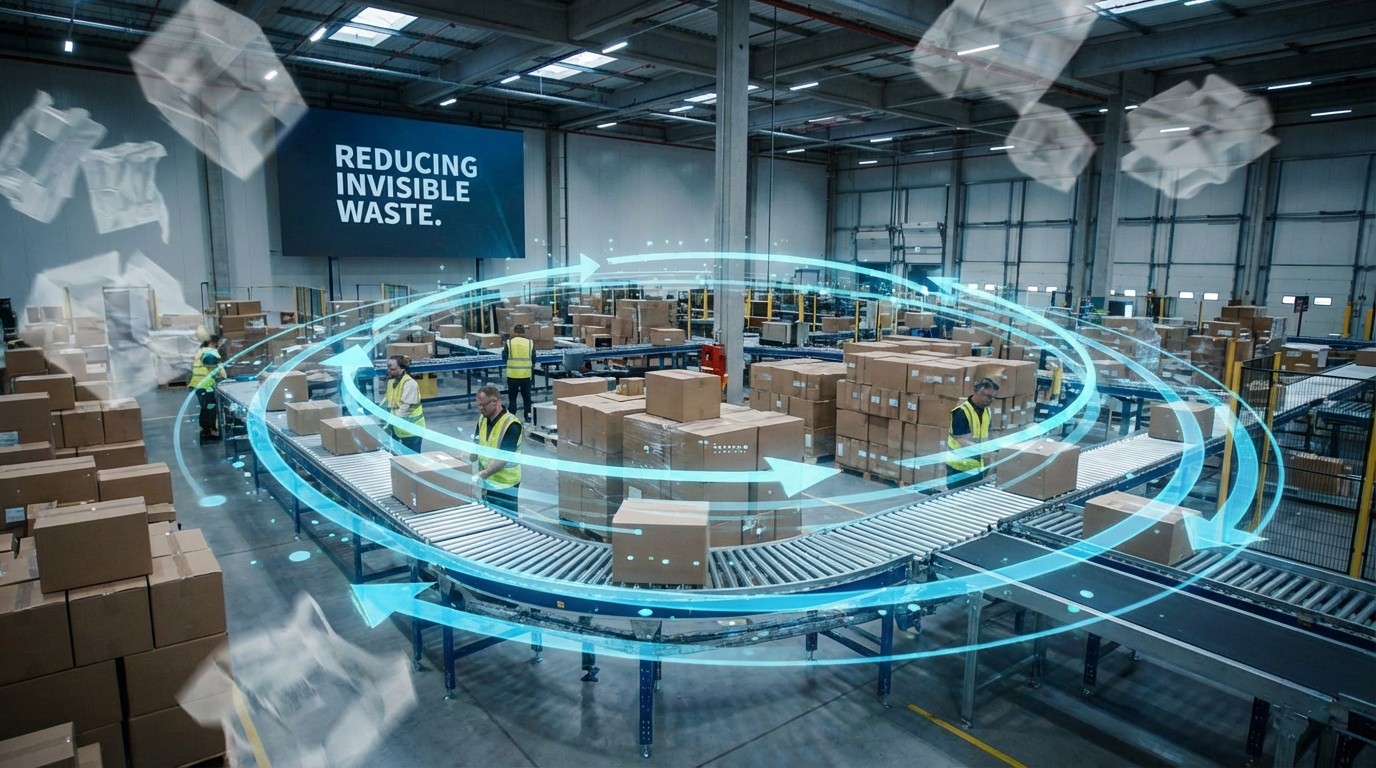
Waste in distribution centers is not always visible. Beyond obvious inefficiencies such as excess inventory or idle labor, organizations incur significant “invisible waste” through process delays, unnecessary motion, rework, and suboptimal space utilization. These hidden inefficiencies erode productivity and increase operating costs.
Common Sources of Invisible Waste
Key sources include:
Excessive picking and travel distances
Redundant handling and rework
Poor slotting and layout design
Inconsistent standard operating procedures
Unplanned downtime due to equipment reliability issues
These inefficiencies often go unnoticed without structured process analysis.
Lean-Inspired Waste Reduction
Organizations can reduce invisible waste by applying lean principles:
Conduct value stream mapping to identify non-value-adding activities
Optimize warehouse layout based on demand velocity
Implement standardized work procedures
Leverage data analytics to identify bottlenecks
Use continuous improvement cycles to drive incremental gains
Measurable Impact
Waste reduction initiatives typically yield:
Improved throughput
Reduced labor hours per order
Lower error rates
Better space utilization
Enhanced safety performance
Conclusion
Invisible waste represents a substantial, often untapped opportunity for operational improvement. By systematically identifying and eliminating hidden inefficiencies, distribution centers can unlock meaningful gains in productivity, cost efficiency, and service reliability.
#WarehouseEfficiency #LeanLogistics #OperationalWaste #ProcessImprovement #DistributionCenters #ContinuousImprovement
More to Discover


Insights
Reducing Invisible Waste in Distribution Centers
Introduction
Waste in distribution centers is not always visible. Beyond obvious inefficiencies such as excess inventory or idle labor, organizations incur significant “invisible waste” through process delays, unnecessary motion, rework, and suboptimal space utilization. These hidden inefficiencies erode productivity and increase operating costs.
Common Sources of Invisible Waste
Key sources include:
Excessive picking and travel distances
Redundant handling and rework
Poor slotting and layout design
Inconsistent standard operating procedures
Unplanned downtime due to equipment reliability issues
These inefficiencies often go unnoticed without structured process analysis.
Lean-Inspired Waste Reduction
Organizations can reduce invisible waste by applying lean principles:
Conduct value stream mapping to identify non-value-adding activities
Optimize warehouse layout based on demand velocity
Implement standardized work procedures
Leverage data analytics to identify bottlenecks
Use continuous improvement cycles to drive incremental gains
Measurable Impact
Waste reduction initiatives typically yield:
Improved throughput
Reduced labor hours per order
Lower error rates
Better space utilization
Enhanced safety performance
Conclusion
Invisible waste represents a substantial, often untapped opportunity for operational improvement. By systematically identifying and eliminating hidden inefficiencies, distribution centers can unlock meaningful gains in productivity, cost efficiency, and service reliability.
#WarehouseEfficiency #LeanLogistics #OperationalWaste #ProcessImprovement #DistributionCenters #ContinuousImprovement
More to Discover
Insights
Reducing Invisible Waste in Distribution Centers
Introduction
Waste in distribution centers is not always visible. Beyond obvious inefficiencies such as excess inventory or idle labor, organizations incur significant “invisible waste” through process delays, unnecessary motion, rework, and suboptimal space utilization. These hidden inefficiencies erode productivity and increase operating costs.
Common Sources of Invisible Waste
Key sources include:
Excessive picking and travel distances
Redundant handling and rework
Poor slotting and layout design
Inconsistent standard operating procedures
Unplanned downtime due to equipment reliability issues
These inefficiencies often go unnoticed without structured process analysis.
Lean-Inspired Waste Reduction
Organizations can reduce invisible waste by applying lean principles:
Conduct value stream mapping to identify non-value-adding activities
Optimize warehouse layout based on demand velocity
Implement standardized work procedures
Leverage data analytics to identify bottlenecks
Use continuous improvement cycles to drive incremental gains
Measurable Impact
Waste reduction initiatives typically yield:
Improved throughput
Reduced labor hours per order
Lower error rates
Better space utilization
Enhanced safety performance
Conclusion
Invisible waste represents a substantial, often untapped opportunity for operational improvement. By systematically identifying and eliminating hidden inefficiencies, distribution centers can unlock meaningful gains in productivity, cost efficiency, and service reliability.
#WarehouseEfficiency #LeanLogistics #OperationalWaste #ProcessImprovement #DistributionCenters #ContinuousImprovement