Insights
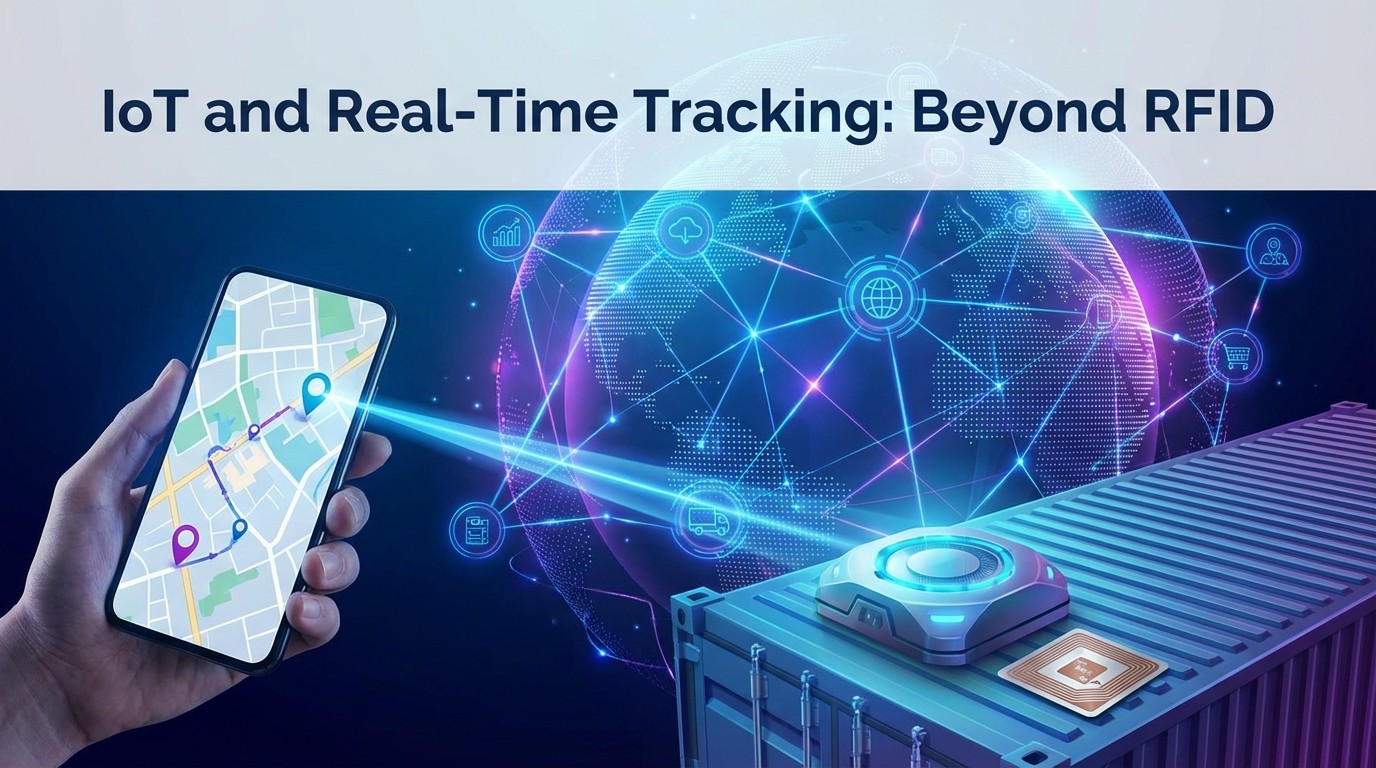
IoT and Real-Time Tracking: Beyond RFID
Introduction
Real-time visibility has become a strategic requirement for modern supply chains. While RFID laid the foundation for automated identification, its limitations in coverage, granularity, and real-time data flow have become apparent in increasingly complex logistics networks. The Internet of Things (IoT) is now enabling a more comprehensive approach to real-time tracking across assets, shipments, and operational environments.
Limitations of RFID-Centric Tracking
RFID remains valuable for identification and basic tracking, but its constraints include:
Limited real-time monitoring capabilities
Dependence on fixed scanning points
Incomplete visibility across multi-modal transport
Inability to capture environmental conditions
Fragmented data integration
These limitations restrict RFID’s effectiveness in dynamic, high-velocity supply chains.
How IoT Expands Visibility
IoT-enabled sensors provide continuous, real-time data across a wide range of parameters, including:
Location tracking across transport modes
Temperature, humidity, and shock monitoring
Equipment utilization and condition monitoring
Real-time alerts for deviations and anomalies
Seamless data integration into analytics platforms
These transforms tracking from a static identification process into a dynamic monitoring capability.
Business Impact
Organizations leveraging IoT-based tracking benefit from:
Reduced in-transit losses and spoilage
Improved on-time delivery performance
Faster exception management
Enhanced compliance in regulated industries
More accurate performance analytics
These benefits directly contribute to service reliability and cost efficiency.
Strategic Recommendations
Leaders considering IoT adoption should:
Identify high-value use cases with measurable ROI
Ensure integration with existing TMS and WMS platforms
Establish data governance and cybersecurity protocols
Pilot deployments before scaling network-wide
Align tracking investments with broader digital transformation initiatives
Conclusion
IoT-driven tracking extends far beyond RFID by enabling continuous, real-time visibility across supply chain operations. As complexity increases, organizations that adopt dynamic tracking capabilities will gain superior control, responsiveness, and performance reliability.
#IoT #RealTimeTracking #SupplyChainVisibility #LogisticsTechnology #DigitalSupplyChain #OperationsInnovation
More to Discover


Insights
IoT and Real-Time Tracking: Beyond RFID
Introduction
Real-time visibility has become a strategic requirement for modern supply chains. While RFID laid the foundation for automated identification, its limitations in coverage, granularity, and real-time data flow have become apparent in increasingly complex logistics networks. The Internet of Things (IoT) is now enabling a more comprehensive approach to real-time tracking across assets, shipments, and operational environments.
Limitations of RFID-Centric Tracking
RFID remains valuable for identification and basic tracking, but its constraints include:
Limited real-time monitoring capabilities
Dependence on fixed scanning points
Incomplete visibility across multi-modal transport
Inability to capture environmental conditions
Fragmented data integration
These limitations restrict RFID’s effectiveness in dynamic, high-velocity supply chains.
How IoT Expands Visibility
IoT-enabled sensors provide continuous, real-time data across a wide range of parameters, including:
Location tracking across transport modes
Temperature, humidity, and shock monitoring
Equipment utilization and condition monitoring
Real-time alerts for deviations and anomalies
Seamless data integration into analytics platforms
These transforms tracking from a static identification process into a dynamic monitoring capability.
Business Impact
Organizations leveraging IoT-based tracking benefit from:
Reduced in-transit losses and spoilage
Improved on-time delivery performance
Faster exception management
Enhanced compliance in regulated industries
More accurate performance analytics
These benefits directly contribute to service reliability and cost efficiency.
Strategic Recommendations
Leaders considering IoT adoption should:
Identify high-value use cases with measurable ROI
Ensure integration with existing TMS and WMS platforms
Establish data governance and cybersecurity protocols
Pilot deployments before scaling network-wide
Align tracking investments with broader digital transformation initiatives
Conclusion
IoT-driven tracking extends far beyond RFID by enabling continuous, real-time visibility across supply chain operations. As complexity increases, organizations that adopt dynamic tracking capabilities will gain superior control, responsiveness, and performance reliability.
#IoT #RealTimeTracking #SupplyChainVisibility #LogisticsTechnology #DigitalSupplyChain #OperationsInnovation
More to Discover
Insights
IoT and Real-Time Tracking: Beyond RFID
Introduction
Real-time visibility has become a strategic requirement for modern supply chains. While RFID laid the foundation for automated identification, its limitations in coverage, granularity, and real-time data flow have become apparent in increasingly complex logistics networks. The Internet of Things (IoT) is now enabling a more comprehensive approach to real-time tracking across assets, shipments, and operational environments.
Limitations of RFID-Centric Tracking
RFID remains valuable for identification and basic tracking, but its constraints include:
Limited real-time monitoring capabilities
Dependence on fixed scanning points
Incomplete visibility across multi-modal transport
Inability to capture environmental conditions
Fragmented data integration
These limitations restrict RFID’s effectiveness in dynamic, high-velocity supply chains.
How IoT Expands Visibility
IoT-enabled sensors provide continuous, real-time data across a wide range of parameters, including:
Location tracking across transport modes
Temperature, humidity, and shock monitoring
Equipment utilization and condition monitoring
Real-time alerts for deviations and anomalies
Seamless data integration into analytics platforms
These transforms tracking from a static identification process into a dynamic monitoring capability.
Business Impact
Organizations leveraging IoT-based tracking benefit from:
Reduced in-transit losses and spoilage
Improved on-time delivery performance
Faster exception management
Enhanced compliance in regulated industries
More accurate performance analytics
These benefits directly contribute to service reliability and cost efficiency.
Strategic Recommendations
Leaders considering IoT adoption should:
Identify high-value use cases with measurable ROI
Ensure integration with existing TMS and WMS platforms
Establish data governance and cybersecurity protocols
Pilot deployments before scaling network-wide
Align tracking investments with broader digital transformation initiatives
Conclusion
IoT-driven tracking extends far beyond RFID by enabling continuous, real-time visibility across supply chain operations. As complexity increases, organizations that adopt dynamic tracking capabilities will gain superior control, responsiveness, and performance reliability.
#IoT #RealTimeTracking #SupplyChainVisibility #LogisticsTechnology #DigitalSupplyChain #OperationsInnovation