Insights
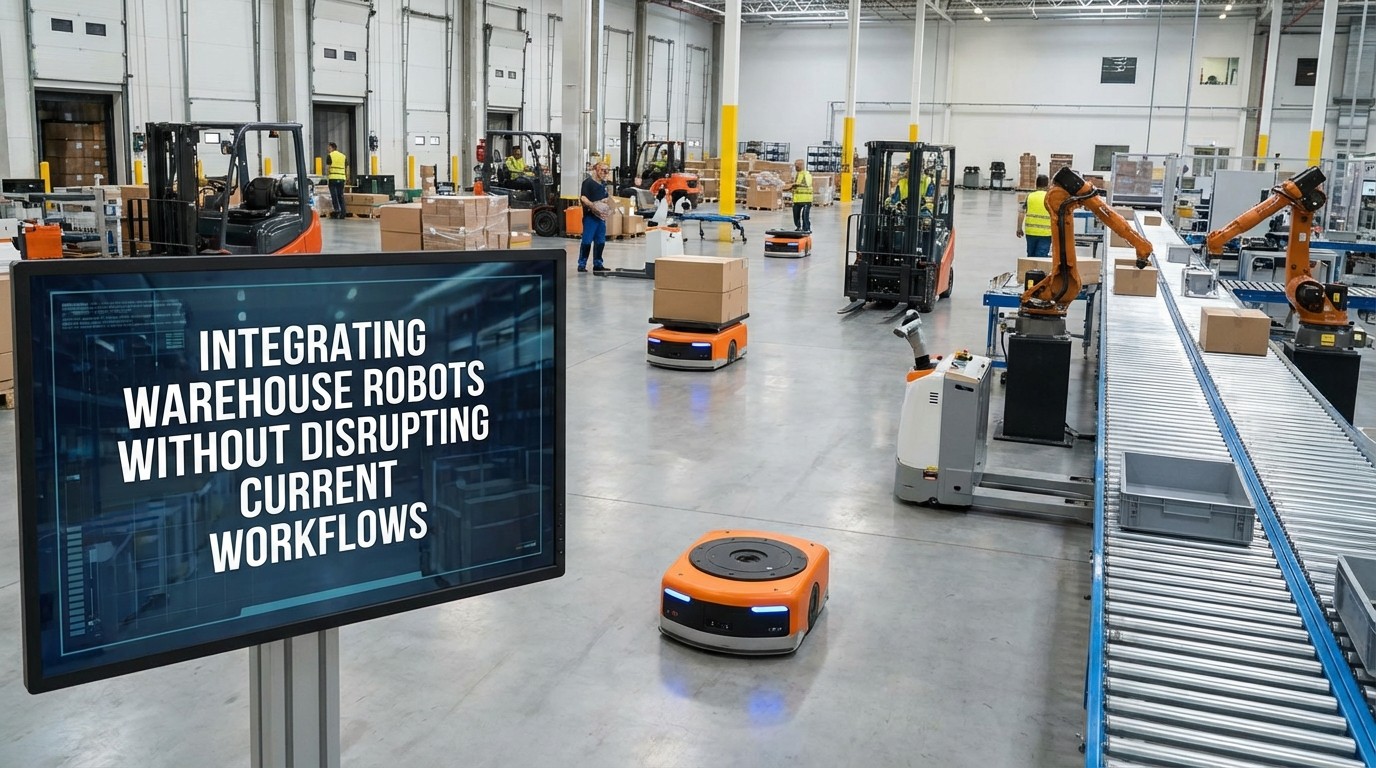
Integrating Warehouse Robots Without Disrupting Current Workflows
Introduction
Warehouse automation through robotics is gaining traction as organizations seek to improve productivity, accuracy, and scalability. However, poorly planned automation initiatives can disrupt existing workflows, create workforce resistance, and fail to deliver expected returns. The challenge lies in integrating robotics in a way that complements, rather than destabilizes, current operations.
Common Integration Challenges
Organizations often encounter:
Misalignment between robot capabilities and process requirements
Workflow bottlenecks created by partial automation
Insufficient workforce training
Integration issues with WMS platforms
Underestimated change management needs
These challenges can undermine both operational performance and employee engagement.
Phased Integration Approach
Successful robotics integration typically follows a phased model:
Process Mapping: Identify high-impact automation opportunities
Pilot Programs: Validate performance in controlled environments
Human-Robot Collaboration Design: Redefine roles and responsibilities
Systems Integration: Ensure seamless data exchange with WMS
Performance Monitoring: Track throughput, error rates, and ROI
Workforce Considerations
Automation initiatives must be accompanied by:
Transparent communication on workforce impact
Upskilling programs for higher-value roles
Involvement of frontline teams in design decisions
Clear productivity and safety objectives
This helps foster adoption and minimize resistance.
Conclusion
Warehouse robotics can significantly enhance operational efficiency when implemented thoughtfully. A phased, human-centric integration strategy enables organizations to capture automation benefits without compromising workflow stability or workforce engagement.
#WarehouseAutomation #RoboticsInLogistics #SupplyChainTechnology #OperationalEfficiency #FutureOfWarehousing #ProcessOptimization
More to Discover


Insights
Integrating Warehouse Robots Without Disrupting Current Workflows
Introduction
Warehouse automation through robotics is gaining traction as organizations seek to improve productivity, accuracy, and scalability. However, poorly planned automation initiatives can disrupt existing workflows, create workforce resistance, and fail to deliver expected returns. The challenge lies in integrating robotics in a way that complements, rather than destabilizes, current operations.
Common Integration Challenges
Organizations often encounter:
Misalignment between robot capabilities and process requirements
Workflow bottlenecks created by partial automation
Insufficient workforce training
Integration issues with WMS platforms
Underestimated change management needs
These challenges can undermine both operational performance and employee engagement.
Phased Integration Approach
Successful robotics integration typically follows a phased model:
Process Mapping: Identify high-impact automation opportunities
Pilot Programs: Validate performance in controlled environments
Human-Robot Collaboration Design: Redefine roles and responsibilities
Systems Integration: Ensure seamless data exchange with WMS
Performance Monitoring: Track throughput, error rates, and ROI
Workforce Considerations
Automation initiatives must be accompanied by:
Transparent communication on workforce impact
Upskilling programs for higher-value roles
Involvement of frontline teams in design decisions
Clear productivity and safety objectives
This helps foster adoption and minimize resistance.
Conclusion
Warehouse robotics can significantly enhance operational efficiency when implemented thoughtfully. A phased, human-centric integration strategy enables organizations to capture automation benefits without compromising workflow stability or workforce engagement.
#WarehouseAutomation #RoboticsInLogistics #SupplyChainTechnology #OperationalEfficiency #FutureOfWarehousing #ProcessOptimization
More to Discover
Insights
Integrating Warehouse Robots Without Disrupting Current Workflows
Introduction
Warehouse automation through robotics is gaining traction as organizations seek to improve productivity, accuracy, and scalability. However, poorly planned automation initiatives can disrupt existing workflows, create workforce resistance, and fail to deliver expected returns. The challenge lies in integrating robotics in a way that complements, rather than destabilizes, current operations.
Common Integration Challenges
Organizations often encounter:
Misalignment between robot capabilities and process requirements
Workflow bottlenecks created by partial automation
Insufficient workforce training
Integration issues with WMS platforms
Underestimated change management needs
These challenges can undermine both operational performance and employee engagement.
Phased Integration Approach
Successful robotics integration typically follows a phased model:
Process Mapping: Identify high-impact automation opportunities
Pilot Programs: Validate performance in controlled environments
Human-Robot Collaboration Design: Redefine roles and responsibilities
Systems Integration: Ensure seamless data exchange with WMS
Performance Monitoring: Track throughput, error rates, and ROI
Workforce Considerations
Automation initiatives must be accompanied by:
Transparent communication on workforce impact
Upskilling programs for higher-value roles
Involvement of frontline teams in design decisions
Clear productivity and safety objectives
This helps foster adoption and minimize resistance.
Conclusion
Warehouse robotics can significantly enhance operational efficiency when implemented thoughtfully. A phased, human-centric integration strategy enables organizations to capture automation benefits without compromising workflow stability or workforce engagement.
#WarehouseAutomation #RoboticsInLogistics #SupplyChainTechnology #OperationalEfficiency #FutureOfWarehousing #ProcessOptimization