Insights
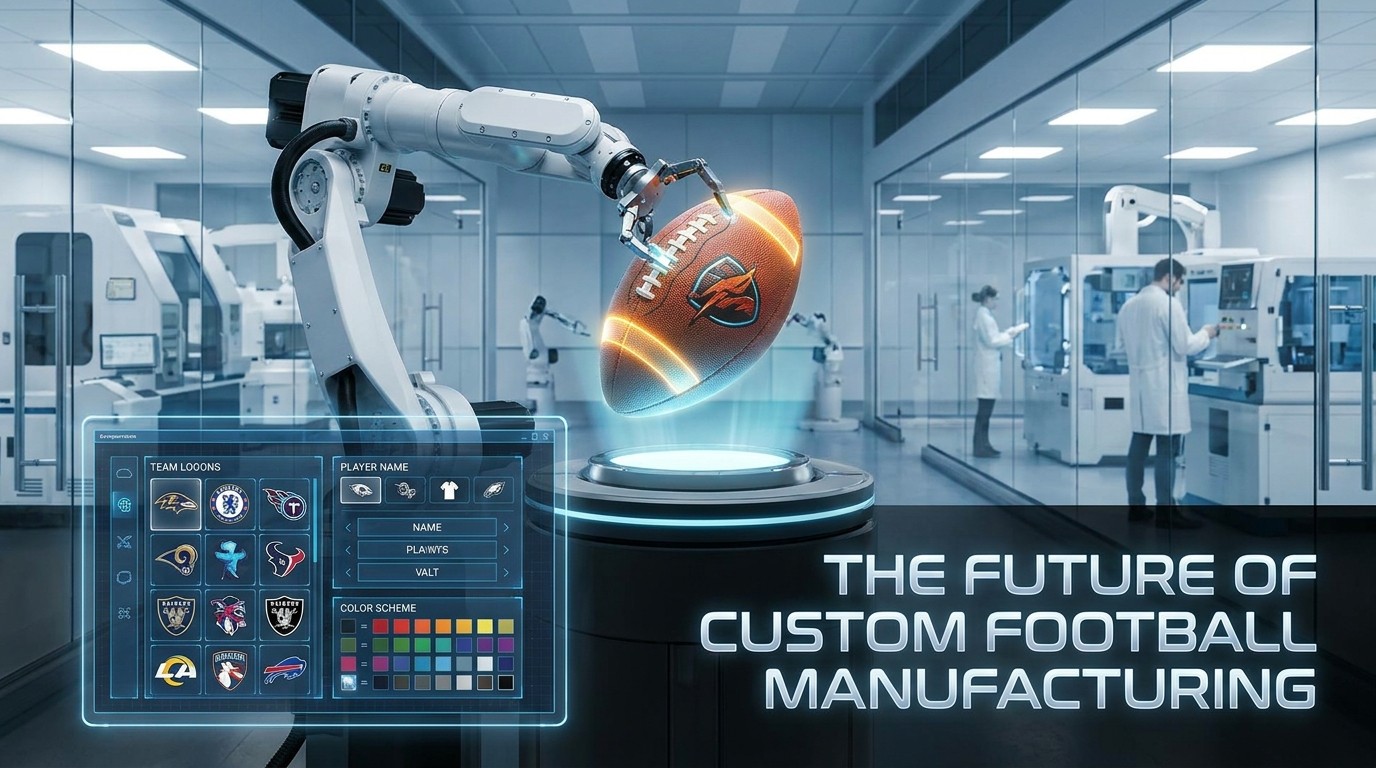
The Future of Custom Football Manufacturing
🔹 The football industry is changing faster than most people realize.
🔹 Standardized production is slowly giving way to customization, flexibility, and direct manufacturing partnerships.
For decades, football manufacturing was dominated by:
Mass production
Generic retail inventory
Limited customization
Traditional distribution systems
But global market behavior is shifting rapidly.
Today, soccer clubs, academies, retailers, distributors, and emerging sports brands increasingly want:
· Custom footballs
· Private-label products
· Club branding
· Specialized designs
· Lower MOQ flexibility
· Faster fulfillment
· Premium quality at scalable pricing
The industry is no longer driven only by production volume.
It’s increasingly driven by:
manufacturing adaptability.
At Talha Khan OPS, we believe custom football manufacturing will become one of the fastest-growing segments within the global sports products ecosystem over the next decade.
Because modern buyers increasingly want identity, not just inventory.
Why Custom Football Demand Is Growing
Several trends are accelerating this shift globally:
1. Club Identity & Branding
Soccer clubs today increasingly operate like brands.
They want:
· Branded footballs
· Customized training products
· Merchandise alignment
· Visual identity consistency
Footballs are no longer viewed only as equipment.
They are becoming:
· Branding assets
· Merchandising tools
· Sponsorship opportunities
· Retail products
This is especially true for:
· Academies
· Grassroots clubs
· Semi-professional organizations
· Sports retailers
2. The Rise of Private-Label Sports Brands
Many businesses are now launching:
· Independent sports brands
· Custom football collections
· Niche athletic products
· Regional sports labels
instead of relying entirely on legacy global sports companies.
This creates increasing demand for:
· OEM manufacturing
· Private labeling
· Custom packaging
· Design flexibility
· Scalable production partnerships
Operator Perspective:
The future of sports retail is becoming increasingly brand-personalized.
3. Lower Barrier to Market Entry
E-commerce and social commerce dramatically changed sports retail.
Today, smaller businesses can:
· Launch online stores
· Build niche audiences
· Market directly to clubs
· Sell internationally
without massive retail infrastructure.
But operational success now depends heavily on:
· Manufacturing reliability
· Fulfillment capability
· Customization flexibility
This is why direct manufacturing partnerships are becoming strategically important.
Why Manufacturing Flexibility Matters More Than Ever
Traditional large-scale manufacturing often prioritizes:
Massive production volumes
Standardized products
Limited customization
But modern buyers increasingly demand:
· Smaller production runs
· Faster design changes
· Custom branding
· Packaging flexibility
· Seasonal adaptation
· Rapid fulfillment
This creates advantages for operationally agile manufacturing ecosystems.
Manufacturing hubs like Sialkot remain globally significant because they combine:
Technical football manufacturing expertise
Skilled labor ecosystems
OEM specialization
Export readiness
Customization capability
with operational flexibility.
The Technology Changing Football Manufacturing
The industry itself is evolving technologically too.
Modern football production increasingly incorporates:
Machine stitching
Thermal bonding
Advanced material engineering
Digital printing
Performance testing
Quality analytics
At the same time,
buyers increasingly expect:
FIFA-level performance standards
Durability consistency
Weather resistance
Premium aesthetics
even at competitive wholesale pricing.
This combination is reshaping operational expectations globally.
Why Operational Reliability Matters in Sports Manufacturing
Football manufacturing is more operationally complex than many buyers realize.
Behind every product lies:
Sourcing
Panel cutting
Stitching precision
Printing alignment
Bladder quality
Pressure testing
Packaging workflows
Export logistics
This means supplier reliability becomes extremely important.
Operator Perspective:
In sports manufacturing, consistency creates trust faster than marketing does.
The Rise of Affordable Premium Sports Products
One major shift happening globally:
buyers increasingly want:
premium feel without luxury-level pricing.
This is creating strong demand for:
Affordable premium footballs
OEM manufacturing
Private-label sports products
Scalable customization
Brands like STRYK World reflect this evolving market direction by combining:
Custom football manufacturing
Private-label production
OEM flexibility
Export-ready operations
Affordable premium positioning
for clubs, wholesalers, retailers, and sports organizations globally.
This model is becoming increasingly attractive in:
USA
UK
Middle East
Emerging football markets
where buyers prioritize both quality and operational value.
Mini Industry Shift, Direct-to-Club Manufacturing
One noticeable trend:
more soccer organizations are exploring direct sourcing relationships.
Instead of relying solely on:
Retail distributors
Generic catalog suppliers
they increasingly work directly with:
Manufacturers
OEM partners
Custom production businesses
Why?
Because direct relationships improve:
· Pricing efficiency
· Customization flexibility
· Branding control
· Inventory planning
· Fulfillment consistency
The future of sports procurement is becoming more operationally collaborative.
Industry Prediction for 2026–2032
Over the next decade,
custom football manufacturing will likely become:
More personalized
More technology-driven
More direct-to-buyer
More operationally flexible
We’ll likely see increasing demand for:
Club-branded footballs
Private-label sports products
Low moq manufacturing
Rapid customization
Sustainable production
Digitally integrated fulfillment
The manufacturers succeeding most will likely combine:
· Production expertise
· Operational reliability
· Customization capability
· Export readiness
· Scalable systems
into fully integrated sports manufacturing ecosystems.
Final Thought
Football manufacturing is no longer just about producing equipment.
It’s becoming a combination of:
Branding
Operational agility
Customization
Manufacturing intelligence
Fulfillment reliability
The businesses adapting early to this shift will likely dominate the next generation of sports product markets.
🔹 The future of sports manufacturing belongs to flexible, operationally intelligent suppliers.
🔹 Customization is no longer optional, it’s becoming the market expectation.
What matters most to you in football manufacturing today, quality, customization, branding flexibility, or operational reliability?
Let’s discuss below.
📩 Connect with us:
🌐 Talha Khan OPS
🌐 STRYK World
#FootballManufacturing #SportsManufacturing #OEMManufacturing #PrivateLabel #CustomFootball #SoccerIndustry #SportsBusiness #Sportswear #WholesaleSports #CustomSportsProducts #Sialkot #SupplyChain #OperationsManagement #BusinessOperations #SportsRetail #OperationalExcellence #SportsBrands #ClubBranding #Manufacturing #RetailOperations #AffordablePremium #SportsEquipment #ExportBusiness #STRYKWorld #TalhaKhanOPS #SoccerClubs #SportsIndustry #Customization #GlobalSourcing #FutureOfSportsBusiness
More to Discover

Insights
The Future of Custom Football Manufacturing
🔹 The football industry is changing faster than most people realize.
🔹 Standardized production is slowly giving way to customization, flexibility, and direct manufacturing partnerships.
For decades, football manufacturing was dominated by:
Mass production
Generic retail inventory
Limited customization
Traditional distribution systems
But global market behavior is shifting rapidly.
Today, soccer clubs, academies, retailers, distributors, and emerging sports brands increasingly want:
· Custom footballs
· Private-label products
· Club branding
· Specialized designs
· Lower MOQ flexibility
· Faster fulfillment
· Premium quality at scalable pricing
The industry is no longer driven only by production volume.
It’s increasingly driven by:
manufacturing adaptability.
At Talha Khan OPS, we believe custom football manufacturing will become one of the fastest-growing segments within the global sports products ecosystem over the next decade.
Because modern buyers increasingly want identity, not just inventory.
Why Custom Football Demand Is Growing
Several trends are accelerating this shift globally:
1. Club Identity & Branding
Soccer clubs today increasingly operate like brands.
They want:
· Branded footballs
· Customized training products
· Merchandise alignment
· Visual identity consistency
Footballs are no longer viewed only as equipment.
They are becoming:
· Branding assets
· Merchandising tools
· Sponsorship opportunities
· Retail products
This is especially true for:
· Academies
· Grassroots clubs
· Semi-professional organizations
· Sports retailers
2. The Rise of Private-Label Sports Brands
Many businesses are now launching:
· Independent sports brands
· Custom football collections
· Niche athletic products
· Regional sports labels
instead of relying entirely on legacy global sports companies.
This creates increasing demand for:
· OEM manufacturing
· Private labeling
· Custom packaging
· Design flexibility
· Scalable production partnerships
Operator Perspective:
The future of sports retail is becoming increasingly brand-personalized.
3. Lower Barrier to Market Entry
E-commerce and social commerce dramatically changed sports retail.
Today, smaller businesses can:
· Launch online stores
· Build niche audiences
· Market directly to clubs
· Sell internationally
without massive retail infrastructure.
But operational success now depends heavily on:
· Manufacturing reliability
· Fulfillment capability
· Customization flexibility
This is why direct manufacturing partnerships are becoming strategically important.
Why Manufacturing Flexibility Matters More Than Ever
Traditional large-scale manufacturing often prioritizes:
Massive production volumes
Standardized products
Limited customization
But modern buyers increasingly demand:
· Smaller production runs
· Faster design changes
· Custom branding
· Packaging flexibility
· Seasonal adaptation
· Rapid fulfillment
This creates advantages for operationally agile manufacturing ecosystems.
Manufacturing hubs like Sialkot remain globally significant because they combine:
Technical football manufacturing expertise
Skilled labor ecosystems
OEM specialization
Export readiness
Customization capability
with operational flexibility.
The Technology Changing Football Manufacturing
The industry itself is evolving technologically too.
Modern football production increasingly incorporates:
Machine stitching
Thermal bonding
Advanced material engineering
Digital printing
Performance testing
Quality analytics
At the same time,
buyers increasingly expect:
FIFA-level performance standards
Durability consistency
Weather resistance
Premium aesthetics
even at competitive wholesale pricing.
This combination is reshaping operational expectations globally.
Why Operational Reliability Matters in Sports Manufacturing
Football manufacturing is more operationally complex than many buyers realize.
Behind every product lies:
Sourcing
Panel cutting
Stitching precision
Printing alignment
Bladder quality
Pressure testing
Packaging workflows
Export logistics
This means supplier reliability becomes extremely important.
Operator Perspective:
In sports manufacturing, consistency creates trust faster than marketing does.
The Rise of Affordable Premium Sports Products
One major shift happening globally:
buyers increasingly want:
premium feel without luxury-level pricing.
This is creating strong demand for:
Affordable premium footballs
OEM manufacturing
Private-label sports products
Scalable customization
Brands like STRYK World reflect this evolving market direction by combining:
Custom football manufacturing
Private-label production
OEM flexibility
Export-ready operations
Affordable premium positioning
for clubs, wholesalers, retailers, and sports organizations globally.
This model is becoming increasingly attractive in:
USA
UK
Middle East
Emerging football markets
where buyers prioritize both quality and operational value.
Mini Industry Shift, Direct-to-Club Manufacturing
One noticeable trend:
more soccer organizations are exploring direct sourcing relationships.
Instead of relying solely on:
Retail distributors
Generic catalog suppliers
they increasingly work directly with:
Manufacturers
OEM partners
Custom production businesses
Why?
Because direct relationships improve:
· Pricing efficiency
· Customization flexibility
· Branding control
· Inventory planning
· Fulfillment consistency
The future of sports procurement is becoming more operationally collaborative.
Industry Prediction for 2026–2032
Over the next decade,
custom football manufacturing will likely become:
More personalized
More technology-driven
More direct-to-buyer
More operationally flexible
We’ll likely see increasing demand for:
Club-branded footballs
Private-label sports products
Low moq manufacturing
Rapid customization
Sustainable production
Digitally integrated fulfillment
The manufacturers succeeding most will likely combine:
· Production expertise
· Operational reliability
· Customization capability
· Export readiness
· Scalable systems
into fully integrated sports manufacturing ecosystems.
Final Thought
Football manufacturing is no longer just about producing equipment.
It’s becoming a combination of:
Branding
Operational agility
Customization
Manufacturing intelligence
Fulfillment reliability
The businesses adapting early to this shift will likely dominate the next generation of sports product markets.
🔹 The future of sports manufacturing belongs to flexible, operationally intelligent suppliers.
🔹 Customization is no longer optional, it’s becoming the market expectation.
What matters most to you in football manufacturing today, quality, customization, branding flexibility, or operational reliability?
Let’s discuss below.
📩 Connect with us:
🌐 Talha Khan OPS
🌐 STRYK World
#FootballManufacturing #SportsManufacturing #OEMManufacturing #PrivateLabel #CustomFootball #SoccerIndustry #SportsBusiness #Sportswear #WholesaleSports #CustomSportsProducts #Sialkot #SupplyChain #OperationsManagement #BusinessOperations #SportsRetail #OperationalExcellence #SportsBrands #ClubBranding #Manufacturing #RetailOperations #AffordablePremium #SportsEquipment #ExportBusiness #STRYKWorld #TalhaKhanOPS #SoccerClubs #SportsIndustry #Customization #GlobalSourcing #FutureOfSportsBusiness
More to Discover
Insights
The Future of Custom Football Manufacturing
🔹 The football industry is changing faster than most people realize.
🔹 Standardized production is slowly giving way to customization, flexibility, and direct manufacturing partnerships.
For decades, football manufacturing was dominated by:
Mass production
Generic retail inventory
Limited customization
Traditional distribution systems
But global market behavior is shifting rapidly.
Today, soccer clubs, academies, retailers, distributors, and emerging sports brands increasingly want:
· Custom footballs
· Private-label products
· Club branding
· Specialized designs
· Lower MOQ flexibility
· Faster fulfillment
· Premium quality at scalable pricing
The industry is no longer driven only by production volume.
It’s increasingly driven by:
manufacturing adaptability.
At Talha Khan OPS, we believe custom football manufacturing will become one of the fastest-growing segments within the global sports products ecosystem over the next decade.
Because modern buyers increasingly want identity, not just inventory.
Why Custom Football Demand Is Growing
Several trends are accelerating this shift globally:
1. Club Identity & Branding
Soccer clubs today increasingly operate like brands.
They want:
· Branded footballs
· Customized training products
· Merchandise alignment
· Visual identity consistency
Footballs are no longer viewed only as equipment.
They are becoming:
· Branding assets
· Merchandising tools
· Sponsorship opportunities
· Retail products
This is especially true for:
· Academies
· Grassroots clubs
· Semi-professional organizations
· Sports retailers
2. The Rise of Private-Label Sports Brands
Many businesses are now launching:
· Independent sports brands
· Custom football collections
· Niche athletic products
· Regional sports labels
instead of relying entirely on legacy global sports companies.
This creates increasing demand for:
· OEM manufacturing
· Private labeling
· Custom packaging
· Design flexibility
· Scalable production partnerships
Operator Perspective:
The future of sports retail is becoming increasingly brand-personalized.
3. Lower Barrier to Market Entry
E-commerce and social commerce dramatically changed sports retail.
Today, smaller businesses can:
· Launch online stores
· Build niche audiences
· Market directly to clubs
· Sell internationally
without massive retail infrastructure.
But operational success now depends heavily on:
· Manufacturing reliability
· Fulfillment capability
· Customization flexibility
This is why direct manufacturing partnerships are becoming strategically important.
Why Manufacturing Flexibility Matters More Than Ever
Traditional large-scale manufacturing often prioritizes:
Massive production volumes
Standardized products
Limited customization
But modern buyers increasingly demand:
· Smaller production runs
· Faster design changes
· Custom branding
· Packaging flexibility
· Seasonal adaptation
· Rapid fulfillment
This creates advantages for operationally agile manufacturing ecosystems.
Manufacturing hubs like Sialkot remain globally significant because they combine:
Technical football manufacturing expertise
Skilled labor ecosystems
OEM specialization
Export readiness
Customization capability
with operational flexibility.
The Technology Changing Football Manufacturing
The industry itself is evolving technologically too.
Modern football production increasingly incorporates:
Machine stitching
Thermal bonding
Advanced material engineering
Digital printing
Performance testing
Quality analytics
At the same time,
buyers increasingly expect:
FIFA-level performance standards
Durability consistency
Weather resistance
Premium aesthetics
even at competitive wholesale pricing.
This combination is reshaping operational expectations globally.
Why Operational Reliability Matters in Sports Manufacturing
Football manufacturing is more operationally complex than many buyers realize.
Behind every product lies:
Sourcing
Panel cutting
Stitching precision
Printing alignment
Bladder quality
Pressure testing
Packaging workflows
Export logistics
This means supplier reliability becomes extremely important.
Operator Perspective:
In sports manufacturing, consistency creates trust faster than marketing does.
The Rise of Affordable Premium Sports Products
One major shift happening globally:
buyers increasingly want:
premium feel without luxury-level pricing.
This is creating strong demand for:
Affordable premium footballs
OEM manufacturing
Private-label sports products
Scalable customization
Brands like STRYK World reflect this evolving market direction by combining:
Custom football manufacturing
Private-label production
OEM flexibility
Export-ready operations
Affordable premium positioning
for clubs, wholesalers, retailers, and sports organizations globally.
This model is becoming increasingly attractive in:
USA
UK
Middle East
Emerging football markets
where buyers prioritize both quality and operational value.
Mini Industry Shift, Direct-to-Club Manufacturing
One noticeable trend:
more soccer organizations are exploring direct sourcing relationships.
Instead of relying solely on:
Retail distributors
Generic catalog suppliers
they increasingly work directly with:
Manufacturers
OEM partners
Custom production businesses
Why?
Because direct relationships improve:
· Pricing efficiency
· Customization flexibility
· Branding control
· Inventory planning
· Fulfillment consistency
The future of sports procurement is becoming more operationally collaborative.
Industry Prediction for 2026–2032
Over the next decade,
custom football manufacturing will likely become:
More personalized
More technology-driven
More direct-to-buyer
More operationally flexible
We’ll likely see increasing demand for:
Club-branded footballs
Private-label sports products
Low moq manufacturing
Rapid customization
Sustainable production
Digitally integrated fulfillment
The manufacturers succeeding most will likely combine:
· Production expertise
· Operational reliability
· Customization capability
· Export readiness
· Scalable systems
into fully integrated sports manufacturing ecosystems.
Final Thought
Football manufacturing is no longer just about producing equipment.
It’s becoming a combination of:
Branding
Operational agility
Customization
Manufacturing intelligence
Fulfillment reliability
The businesses adapting early to this shift will likely dominate the next generation of sports product markets.
🔹 The future of sports manufacturing belongs to flexible, operationally intelligent suppliers.
🔹 Customization is no longer optional, it’s becoming the market expectation.
What matters most to you in football manufacturing today, quality, customization, branding flexibility, or operational reliability?
Let’s discuss below.
📩 Connect with us:
🌐 Talha Khan OPS
🌐 STRYK World
#FootballManufacturing #SportsManufacturing #OEMManufacturing #PrivateLabel #CustomFootball #SoccerIndustry #SportsBusiness #Sportswear #WholesaleSports #CustomSportsProducts #Sialkot #SupplyChain #OperationsManagement #BusinessOperations #SportsRetail #OperationalExcellence #SportsBrands #ClubBranding #Manufacturing #RetailOperations #AffordablePremium #SportsEquipment #ExportBusiness #STRYKWorld #TalhaKhanOPS #SoccerClubs #SportsIndustry #Customization #GlobalSourcing #FutureOfSportsBusiness