Insights
Importance of Employee Training in Supply Chain Roles
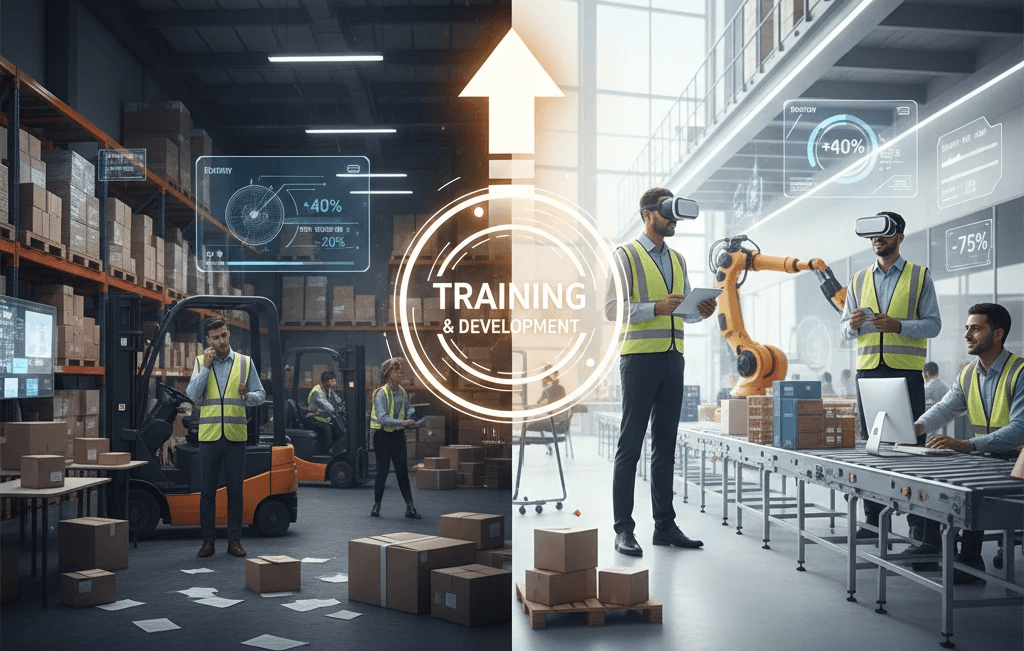
🔹 Trained teams save millions—untrained ones cost even more.
🔹 Automation won’t save you if your people aren’t ready.
Training isn't a cost; it's a strategic investment.
In the ever-evolving world of supply chain management, people remain the backbone. While companies like NIKE leverage cutting-edge technology, their success hinges equally on the capabilities and knowledge of their workforce. Inadequate training can cause system failures, mismanagement, and service disruptions. Let’s explore why strategic training matters more than ever.
Core Benefits of Supply Chain Employee Training
1. Improved Accuracy and Efficiency
Trained employees make fewer errors in inventory control, order fulfillment, and transportation planning. This leads to fewer delays, lower costs, and enhanced customer satisfaction.
2. Adaptability to New Technology
With tools like AI-driven forecasting and automated warehousing, continuous training ensures your staff stays ahead and uses technology efficiently.
3. Faster Onboarding and Role Transitions
Structured training programs accelerate the onboarding process and enable cross-functional mobility, helping employees shift roles during demand spikes or crises.
4. Enhanced Risk Management
Educated teams are better prepared to handle disruptions such as supply shortages, customs delays, or cybersecurity threats.
5. Cultural Alignment and Ethical Compliance
Ongoing learning ensures your global workforce understands and aligns with environmental goals, diversity standards, and ethical sourcing policies.
6. Employee Retention and Motivation
Investment in learning shows employees they are valued. This boosts morale, reduces turnover, and cultivates long-term loyalty.
7. Competitive Advantage
Companies with skilled teams execute leaner, faster, and smarter operations—and are better positioned to innovate.
🔹 An empowered team is your most scalable supply chain technology. Invest in people first—the ROI is exponential.
🚀 Your supply chain is only as strong as the people who run it. Train them like your future depends on it—because it does.
💬 How often do you upskill your supply chain teams?
🔹 Let’s crowdsource best training practices. Drop one idea in the comments!
🔄 Repost to raise awareness about investing in human capital.
📧 Want expert-driven training frameworks? Let’s talk:
✨ www.talhakkhanops.com | 📧 info@talhakkhanops.com
Footnotes:
NIKE Inc., FY23 Sustainability and Impact Report, accessed July 2025.
McKinsey & Company, “Why Capability Building is Critical for Supply Chain Transformation,” 2023.
Harvard Business Review, “Upskilling for the Digital Supply Chain,” March 2022.
#SupplyChainTraining #LogisticsCareers #SCMSkills #NikeSupplyChain #EmployeeDevelopment #DigitalSupplyChain #AutomationInLogistics #WorkforceStrategy #LeanOperations #LogisticsUpskilling #TalhaKKhan #SupplyChainLeadership #SCMEfficiency #LogisticsExcellence #EmployeeEngagement #SupplyChainMentorship #FutureOfWork #TrainingROI #SmartWarehousing #SupplyChainInsights #SCMTalent #GlobalLogistics #HumanCapitalStrategy #OperationsLeadership #SupplyChainTech #TalhaKhanOps #WorkforceTransformation #LogisticsProfessionals #ContinuousLearning #SCMTrainingTools #WarehouseManagement #LogisticsResilience
More to Discover


Insights
Importance of Employee Training in Supply Chain Roles
🔹 Trained teams save millions—untrained ones cost even more.
🔹 Automation won’t save you if your people aren’t ready.
Training isn't a cost; it's a strategic investment.
In the ever-evolving world of supply chain management, people remain the backbone. While companies like NIKE leverage cutting-edge technology, their success hinges equally on the capabilities and knowledge of their workforce. Inadequate training can cause system failures, mismanagement, and service disruptions. Let’s explore why strategic training matters more than ever.
Core Benefits of Supply Chain Employee Training
1. Improved Accuracy and Efficiency
Trained employees make fewer errors in inventory control, order fulfillment, and transportation planning. This leads to fewer delays, lower costs, and enhanced customer satisfaction.
2. Adaptability to New Technology
With tools like AI-driven forecasting and automated warehousing, continuous training ensures your staff stays ahead and uses technology efficiently.
3. Faster Onboarding and Role Transitions
Structured training programs accelerate the onboarding process and enable cross-functional mobility, helping employees shift roles during demand spikes or crises.
4. Enhanced Risk Management
Educated teams are better prepared to handle disruptions such as supply shortages, customs delays, or cybersecurity threats.
5. Cultural Alignment and Ethical Compliance
Ongoing learning ensures your global workforce understands and aligns with environmental goals, diversity standards, and ethical sourcing policies.
6. Employee Retention and Motivation
Investment in learning shows employees they are valued. This boosts morale, reduces turnover, and cultivates long-term loyalty.
7. Competitive Advantage
Companies with skilled teams execute leaner, faster, and smarter operations—and are better positioned to innovate.
🔹 An empowered team is your most scalable supply chain technology. Invest in people first—the ROI is exponential.
🚀 Your supply chain is only as strong as the people who run it. Train them like your future depends on it—because it does.
💬 How often do you upskill your supply chain teams?
🔹 Let’s crowdsource best training practices. Drop one idea in the comments!
🔄 Repost to raise awareness about investing in human capital.
📧 Want expert-driven training frameworks? Let’s talk:
✨ www.talhakkhanops.com | 📧 info@talhakkhanops.com
Footnotes:
NIKE Inc., FY23 Sustainability and Impact Report, accessed July 2025.
McKinsey & Company, “Why Capability Building is Critical for Supply Chain Transformation,” 2023.
Harvard Business Review, “Upskilling for the Digital Supply Chain,” March 2022.
#SupplyChainTraining #LogisticsCareers #SCMSkills #NikeSupplyChain #EmployeeDevelopment #DigitalSupplyChain #AutomationInLogistics #WorkforceStrategy #LeanOperations #LogisticsUpskilling #TalhaKKhan #SupplyChainLeadership #SCMEfficiency #LogisticsExcellence #EmployeeEngagement #SupplyChainMentorship #FutureOfWork #TrainingROI #SmartWarehousing #SupplyChainInsights #SCMTalent #GlobalLogistics #HumanCapitalStrategy #OperationsLeadership #SupplyChainTech #TalhaKhanOps #WorkforceTransformation #LogisticsProfessionals #ContinuousLearning #SCMTrainingTools #WarehouseManagement #LogisticsResilience
More to Discover
Insights
Importance of Employee Training in Supply Chain Roles
🔹 Trained teams save millions—untrained ones cost even more.
🔹 Automation won’t save you if your people aren’t ready.
Training isn't a cost; it's a strategic investment.
In the ever-evolving world of supply chain management, people remain the backbone. While companies like NIKE leverage cutting-edge technology, their success hinges equally on the capabilities and knowledge of their workforce. Inadequate training can cause system failures, mismanagement, and service disruptions. Let’s explore why strategic training matters more than ever.
Core Benefits of Supply Chain Employee Training
1. Improved Accuracy and Efficiency
Trained employees make fewer errors in inventory control, order fulfillment, and transportation planning. This leads to fewer delays, lower costs, and enhanced customer satisfaction.
2. Adaptability to New Technology
With tools like AI-driven forecasting and automated warehousing, continuous training ensures your staff stays ahead and uses technology efficiently.
3. Faster Onboarding and Role Transitions
Structured training programs accelerate the onboarding process and enable cross-functional mobility, helping employees shift roles during demand spikes or crises.
4. Enhanced Risk Management
Educated teams are better prepared to handle disruptions such as supply shortages, customs delays, or cybersecurity threats.
5. Cultural Alignment and Ethical Compliance
Ongoing learning ensures your global workforce understands and aligns with environmental goals, diversity standards, and ethical sourcing policies.
6. Employee Retention and Motivation
Investment in learning shows employees they are valued. This boosts morale, reduces turnover, and cultivates long-term loyalty.
7. Competitive Advantage
Companies with skilled teams execute leaner, faster, and smarter operations—and are better positioned to innovate.
🔹 An empowered team is your most scalable supply chain technology. Invest in people first—the ROI is exponential.
🚀 Your supply chain is only as strong as the people who run it. Train them like your future depends on it—because it does.
💬 How often do you upskill your supply chain teams?
🔹 Let’s crowdsource best training practices. Drop one idea in the comments!
🔄 Repost to raise awareness about investing in human capital.
📧 Want expert-driven training frameworks? Let’s talk:
✨ www.talhakkhanops.com | 📧 info@talhakkhanops.com
Footnotes:
NIKE Inc., FY23 Sustainability and Impact Report, accessed July 2025.
McKinsey & Company, “Why Capability Building is Critical for Supply Chain Transformation,” 2023.
Harvard Business Review, “Upskilling for the Digital Supply Chain,” March 2022.
#SupplyChainTraining #LogisticsCareers #SCMSkills #NikeSupplyChain #EmployeeDevelopment #DigitalSupplyChain #AutomationInLogistics #WorkforceStrategy #LeanOperations #LogisticsUpskilling #TalhaKKhan #SupplyChainLeadership #SCMEfficiency #LogisticsExcellence #EmployeeEngagement #SupplyChainMentorship #FutureOfWork #TrainingROI #SmartWarehousing #SupplyChainInsights #SCMTalent #GlobalLogistics #HumanCapitalStrategy #OperationsLeadership #SupplyChainTech #TalhaKhanOps #WorkforceTransformation #LogisticsProfessionals #ContinuousLearning #SCMTrainingTools #WarehouseManagement #LogisticsResilience