Insights
How to Build a Balanced Scorecard for Operational Excellence
Introduction
Operational excellence requires alignment between strategy, execution, and measurement. The balanced scorecard provides a structured framework to translate strategic objectives into operational metrics across financial, customer, internal process, and learning dimensions. When applied effectively, it becomes a powerful tool for driving sustained performance improvement.
Limitations of Financial-Only Measurement
Organizations overly focused on financial KPIs risk:
Short-term optimization at the expense of long-term capability building
Underinvestment in process improvement and workforce development
Limited visibility into customer and operational health drivers
A balanced approach is necessary to sustain competitive advantage.
Designing an Operational Balanced Scorecard
An effective operational scorecard integrates:
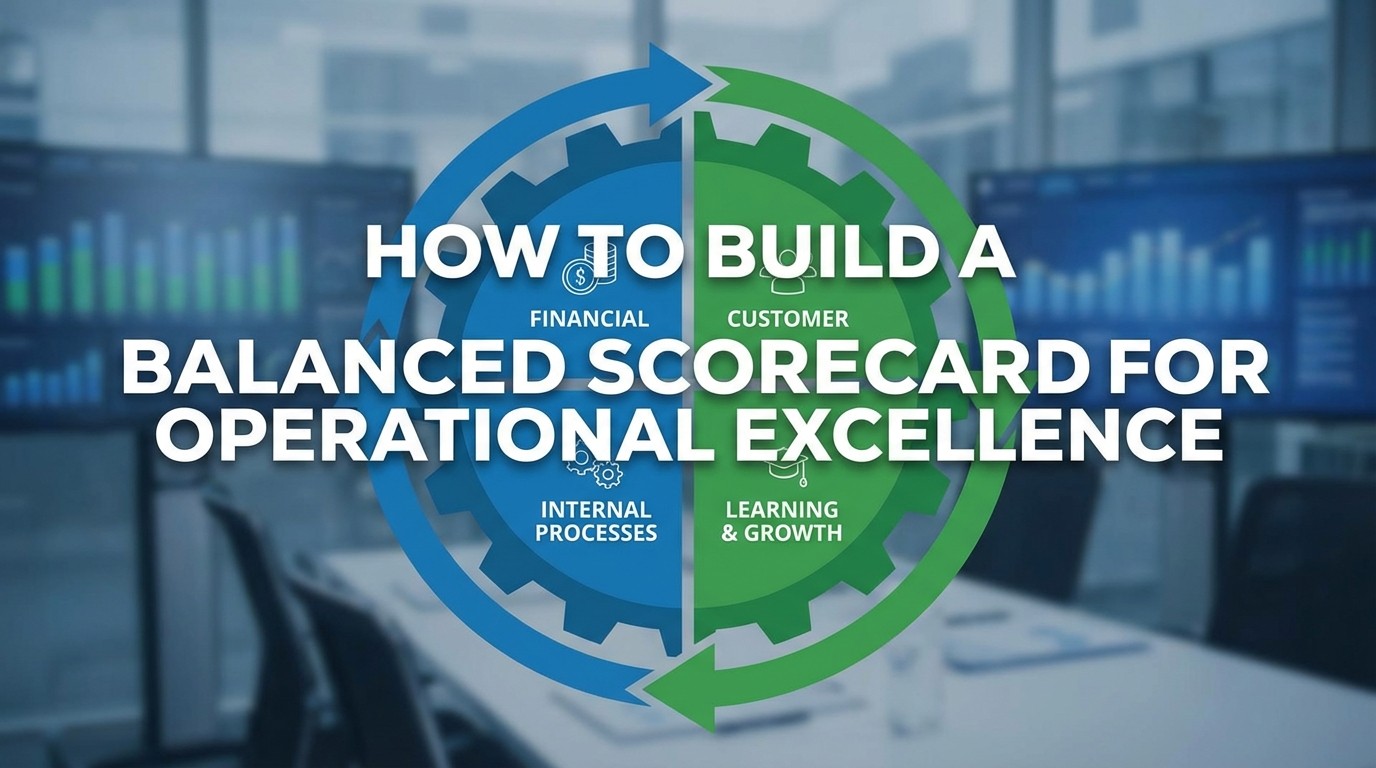
Financial Perspective: Cost efficiency, working capital, asset utilization
Customer Perspective: Service reliability, delivery performance, satisfaction metrics
Internal Process Perspective: Throughput, cycle time, defect rates
Learning & Growth Perspective: Skills development, digital adoption, continuous improvement participation
Each dimension should include clear targets and ownership structures.
Implementation Best Practices
To operationalize the scorecard:
Cascade strategic objectives into functional KPIs
Align incentives with scorecard performance
Embed scorecard reviews into governance routines
Use dashboards for transparency and accountability
Continuously refine metrics as strategy evolves
Conclusion
The balanced scorecard bridges the gap between strategy and execution. When applied rigorously within operations, it enables organizations to pursue financial performance while simultaneously strengthening customer value, process reliability, and organizational capability.
#BalancedScorecard #OperationalExcellence #PerformanceFramework #StrategyExecution #BusinessPerformance #OperationsManagement
More to Discover


Insights
How to Build a Balanced Scorecard for Operational Excellence
Introduction
Operational excellence requires alignment between strategy, execution, and measurement. The balanced scorecard provides a structured framework to translate strategic objectives into operational metrics across financial, customer, internal process, and learning dimensions. When applied effectively, it becomes a powerful tool for driving sustained performance improvement.
Limitations of Financial-Only Measurement
Organizations overly focused on financial KPIs risk:
Short-term optimization at the expense of long-term capability building
Underinvestment in process improvement and workforce development
Limited visibility into customer and operational health drivers
A balanced approach is necessary to sustain competitive advantage.
Designing an Operational Balanced Scorecard
An effective operational scorecard integrates:
Financial Perspective: Cost efficiency, working capital, asset utilization
Customer Perspective: Service reliability, delivery performance, satisfaction metrics
Internal Process Perspective: Throughput, cycle time, defect rates
Learning & Growth Perspective: Skills development, digital adoption, continuous improvement participation
Each dimension should include clear targets and ownership structures.
Implementation Best Practices
To operationalize the scorecard:
Cascade strategic objectives into functional KPIs
Align incentives with scorecard performance
Embed scorecard reviews into governance routines
Use dashboards for transparency and accountability
Continuously refine metrics as strategy evolves
Conclusion
The balanced scorecard bridges the gap between strategy and execution. When applied rigorously within operations, it enables organizations to pursue financial performance while simultaneously strengthening customer value, process reliability, and organizational capability.
#BalancedScorecard #OperationalExcellence #PerformanceFramework #StrategyExecution #BusinessPerformance #OperationsManagement
More to Discover
Insights
How to Build a Balanced Scorecard for Operational Excellence
Introduction
Operational excellence requires alignment between strategy, execution, and measurement. The balanced scorecard provides a structured framework to translate strategic objectives into operational metrics across financial, customer, internal process, and learning dimensions. When applied effectively, it becomes a powerful tool for driving sustained performance improvement.
Limitations of Financial-Only Measurement
Organizations overly focused on financial KPIs risk:
Short-term optimization at the expense of long-term capability building
Underinvestment in process improvement and workforce development
Limited visibility into customer and operational health drivers
A balanced approach is necessary to sustain competitive advantage.
Designing an Operational Balanced Scorecard
An effective operational scorecard integrates:
Financial Perspective: Cost efficiency, working capital, asset utilization
Customer Perspective: Service reliability, delivery performance, satisfaction metrics
Internal Process Perspective: Throughput, cycle time, defect rates
Learning & Growth Perspective: Skills development, digital adoption, continuous improvement participation
Each dimension should include clear targets and ownership structures.
Implementation Best Practices
To operationalize the scorecard:
Cascade strategic objectives into functional KPIs
Align incentives with scorecard performance
Embed scorecard reviews into governance routines
Use dashboards for transparency and accountability
Continuously refine metrics as strategy evolves
Conclusion
The balanced scorecard bridges the gap between strategy and execution. When applied rigorously within operations, it enables organizations to pursue financial performance while simultaneously strengthening customer value, process reliability, and organizational capability.
#BalancedScorecard #OperationalExcellence #PerformanceFramework #StrategyExecution #BusinessPerformance #OperationsManagement