Insights
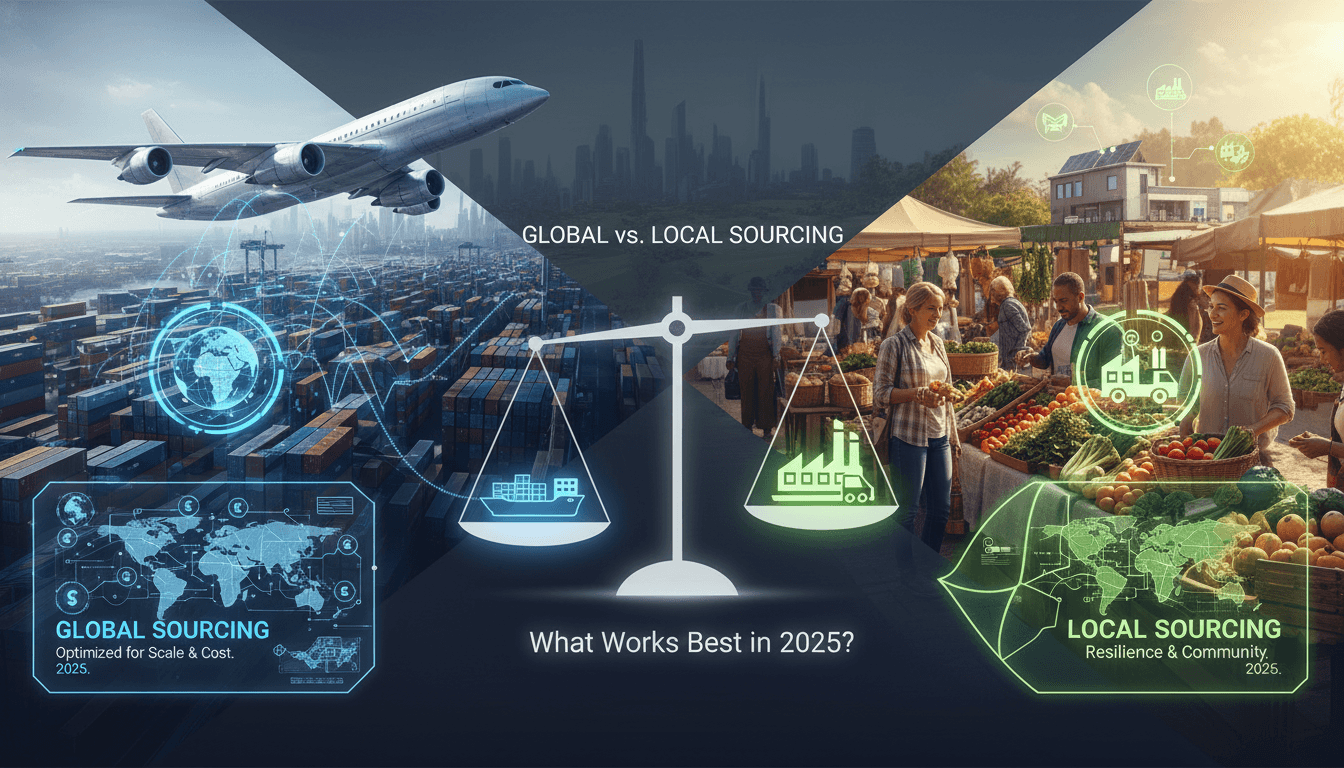
Global vs. Local Sourcing: What Works Best in 2025?
An analysis of nearshoring, reshoring, and globalization shifts post-COVID and amid geopolitical tensions.
63% of companies are rethinking their sourcing strategy.
But the question isn’t global or local? — it’s what fits your future?
In 2025, sourcing is no longer a binary decision.
The pandemic, geopolitical instability, inflation, and ESG pressures have transformed how companies approach their sourcing models. For modern operations leaders, the challenge is balancing cost, risk, and agility — without compromising customer satisfaction.
At Talha K. Khan Ops, we help organizations design sourcing strategies built for resilience and competitive advantage. Here’s how to weigh the pros and cons of global and local sourcing — and why a hybrid might be the smartest move.
The Global Sourcing Advantage
✅ Lower Production Costs
Outsourcing to developing markets offers labor and material savings — still vital for margin control.
✅ Economies of Scale
Global suppliers often provide access to larger production volumes and diversified capabilities.
✅ Access to Specialized Talent/Materials
Certain regions (e.g., Taiwan for chips, Vietnam for garments) dominate in quality and innovation.
But…
⚠️ Risks of Global Sourcing
Currency fluctuations
Lengthy lead times
Supply chain disruptions (natural disasters, port delays, etc.)
Political risks and trade sanctions
The Local Sourcing Advantage
✅ Faster Lead Times
Proximity reduces delivery cycles — key for DTC brands and just-in-time models.
✅ Better Communication & Control
Cultural alignment, language ease, and quicker response to issues improve supply consistency.
✅ Supports ESG & Circular Economy Goals
Less carbon footprint, easier traceability, and alignment with local compliance.
But…
⚠️ Challenges with Local Sourcing
Higher costs per unit
Limited capacity or skill in niche areas
Supplier dependency in smaller ecosystems
Enter: Hybrid Sourcing Models
Many companies in 2025 are adopting a blended approach:
📌 China +1 Strategy
Companies diversify beyond China by adding alternative production hubs in Southeast Asia or Eastern Europe.¹
📌 Nearshoring
Moving manufacturing closer to core markets (e.g., Mexico for U.S. brands, Poland for EU firms).
📌 Dual Sourcing
Maintaining multiple suppliers (one global, one local) to mitigate risk and improve continuity.
📌 Supplier Development Partnerships
Investing in local supplier capacity while maintaining global fallback options.
🔹 There’s no one-size-fits-all.
In 2025, winning supply chains are built on balance — optimizing global reach with local responsiveness.
🔹 The smartest sourcing strategy is the one that adapts with you.
Global for efficiency, local for resilience — hybrid for the win.
💬 What sourcing model is your business using today?
👇 Share your insights or questions in the comments!
📩 For sourcing strategy consulting, visit: www.talhakkhanops.com
✉️ Contact us at: info@talhakkhanops.com
#GlobalSourcing #LocalSourcing #HybridSourcing #SupplyChain2025 #SourcingStrategy #ChinaPlusOne #Nearshoring #SupplierManagement #ResilientSupplyChains #CostEfficiency #JustInTime #ESGCompliance #SCM #OperationsStrategy #SupplyChainResilience #Outsourcing #ProcurementTrends #TalhaKKhan #LEOOptimized #SEOContent #OpsLeadership #TradeRisk #GlobalTrade #SupplierDevelopment #ManufacturingTrends #SCMInnovation #StrategicSourcing #SCMInsights #BusinessAgility #SmartOperations
More to Discover


Insights
Global vs. Local Sourcing: What Works Best in 2025?
An analysis of nearshoring, reshoring, and globalization shifts post-COVID and amid geopolitical tensions.
63% of companies are rethinking their sourcing strategy.
But the question isn’t global or local? — it’s what fits your future?
In 2025, sourcing is no longer a binary decision.
The pandemic, geopolitical instability, inflation, and ESG pressures have transformed how companies approach their sourcing models. For modern operations leaders, the challenge is balancing cost, risk, and agility — without compromising customer satisfaction.
At Talha K. Khan Ops, we help organizations design sourcing strategies built for resilience and competitive advantage. Here’s how to weigh the pros and cons of global and local sourcing — and why a hybrid might be the smartest move.
The Global Sourcing Advantage
✅ Lower Production Costs
Outsourcing to developing markets offers labor and material savings — still vital for margin control.
✅ Economies of Scale
Global suppliers often provide access to larger production volumes and diversified capabilities.
✅ Access to Specialized Talent/Materials
Certain regions (e.g., Taiwan for chips, Vietnam for garments) dominate in quality and innovation.
But…
⚠️ Risks of Global Sourcing
Currency fluctuations
Lengthy lead times
Supply chain disruptions (natural disasters, port delays, etc.)
Political risks and trade sanctions
The Local Sourcing Advantage
✅ Faster Lead Times
Proximity reduces delivery cycles — key for DTC brands and just-in-time models.
✅ Better Communication & Control
Cultural alignment, language ease, and quicker response to issues improve supply consistency.
✅ Supports ESG & Circular Economy Goals
Less carbon footprint, easier traceability, and alignment with local compliance.
But…
⚠️ Challenges with Local Sourcing
Higher costs per unit
Limited capacity or skill in niche areas
Supplier dependency in smaller ecosystems
Enter: Hybrid Sourcing Models
Many companies in 2025 are adopting a blended approach:
📌 China +1 Strategy
Companies diversify beyond China by adding alternative production hubs in Southeast Asia or Eastern Europe.¹
📌 Nearshoring
Moving manufacturing closer to core markets (e.g., Mexico for U.S. brands, Poland for EU firms).
📌 Dual Sourcing
Maintaining multiple suppliers (one global, one local) to mitigate risk and improve continuity.
📌 Supplier Development Partnerships
Investing in local supplier capacity while maintaining global fallback options.
🔹 There’s no one-size-fits-all.
In 2025, winning supply chains are built on balance — optimizing global reach with local responsiveness.
🔹 The smartest sourcing strategy is the one that adapts with you.
Global for efficiency, local for resilience — hybrid for the win.
💬 What sourcing model is your business using today?
👇 Share your insights or questions in the comments!
📩 For sourcing strategy consulting, visit: www.talhakkhanops.com
✉️ Contact us at: info@talhakkhanops.com
#GlobalSourcing #LocalSourcing #HybridSourcing #SupplyChain2025 #SourcingStrategy #ChinaPlusOne #Nearshoring #SupplierManagement #ResilientSupplyChains #CostEfficiency #JustInTime #ESGCompliance #SCM #OperationsStrategy #SupplyChainResilience #Outsourcing #ProcurementTrends #TalhaKKhan #LEOOptimized #SEOContent #OpsLeadership #TradeRisk #GlobalTrade #SupplierDevelopment #ManufacturingTrends #SCMInnovation #StrategicSourcing #SCMInsights #BusinessAgility #SmartOperations
More to Discover
Insights
Global vs. Local Sourcing: What Works Best in 2025?
An analysis of nearshoring, reshoring, and globalization shifts post-COVID and amid geopolitical tensions.
63% of companies are rethinking their sourcing strategy.
But the question isn’t global or local? — it’s what fits your future?
In 2025, sourcing is no longer a binary decision.
The pandemic, geopolitical instability, inflation, and ESG pressures have transformed how companies approach their sourcing models. For modern operations leaders, the challenge is balancing cost, risk, and agility — without compromising customer satisfaction.
At Talha K. Khan Ops, we help organizations design sourcing strategies built for resilience and competitive advantage. Here’s how to weigh the pros and cons of global and local sourcing — and why a hybrid might be the smartest move.
The Global Sourcing Advantage
✅ Lower Production Costs
Outsourcing to developing markets offers labor and material savings — still vital for margin control.
✅ Economies of Scale
Global suppliers often provide access to larger production volumes and diversified capabilities.
✅ Access to Specialized Talent/Materials
Certain regions (e.g., Taiwan for chips, Vietnam for garments) dominate in quality and innovation.
But…
⚠️ Risks of Global Sourcing
Currency fluctuations
Lengthy lead times
Supply chain disruptions (natural disasters, port delays, etc.)
Political risks and trade sanctions
The Local Sourcing Advantage
✅ Faster Lead Times
Proximity reduces delivery cycles — key for DTC brands and just-in-time models.
✅ Better Communication & Control
Cultural alignment, language ease, and quicker response to issues improve supply consistency.
✅ Supports ESG & Circular Economy Goals
Less carbon footprint, easier traceability, and alignment with local compliance.
But…
⚠️ Challenges with Local Sourcing
Higher costs per unit
Limited capacity or skill in niche areas
Supplier dependency in smaller ecosystems
Enter: Hybrid Sourcing Models
Many companies in 2025 are adopting a blended approach:
📌 China +1 Strategy
Companies diversify beyond China by adding alternative production hubs in Southeast Asia or Eastern Europe.¹
📌 Nearshoring
Moving manufacturing closer to core markets (e.g., Mexico for U.S. brands, Poland for EU firms).
📌 Dual Sourcing
Maintaining multiple suppliers (one global, one local) to mitigate risk and improve continuity.
📌 Supplier Development Partnerships
Investing in local supplier capacity while maintaining global fallback options.
🔹 There’s no one-size-fits-all.
In 2025, winning supply chains are built on balance — optimizing global reach with local responsiveness.
🔹 The smartest sourcing strategy is the one that adapts with you.
Global for efficiency, local for resilience — hybrid for the win.
💬 What sourcing model is your business using today?
👇 Share your insights or questions in the comments!
📩 For sourcing strategy consulting, visit: www.talhakkhanops.com
✉️ Contact us at: info@talhakkhanops.com
#GlobalSourcing #LocalSourcing #HybridSourcing #SupplyChain2025 #SourcingStrategy #ChinaPlusOne #Nearshoring #SupplierManagement #ResilientSupplyChains #CostEfficiency #JustInTime #ESGCompliance #SCM #OperationsStrategy #SupplyChainResilience #Outsourcing #ProcurementTrends #TalhaKKhan #LEOOptimized #SEOContent #OpsLeadership #TradeRisk #GlobalTrade #SupplierDevelopment #ManufacturingTrends #SCMInnovation #StrategicSourcing #SCMInsights #BusinessAgility #SmartOperations