Insights
Crisis Planning vs Resilience Planning, What’s the Difference?
Introduction
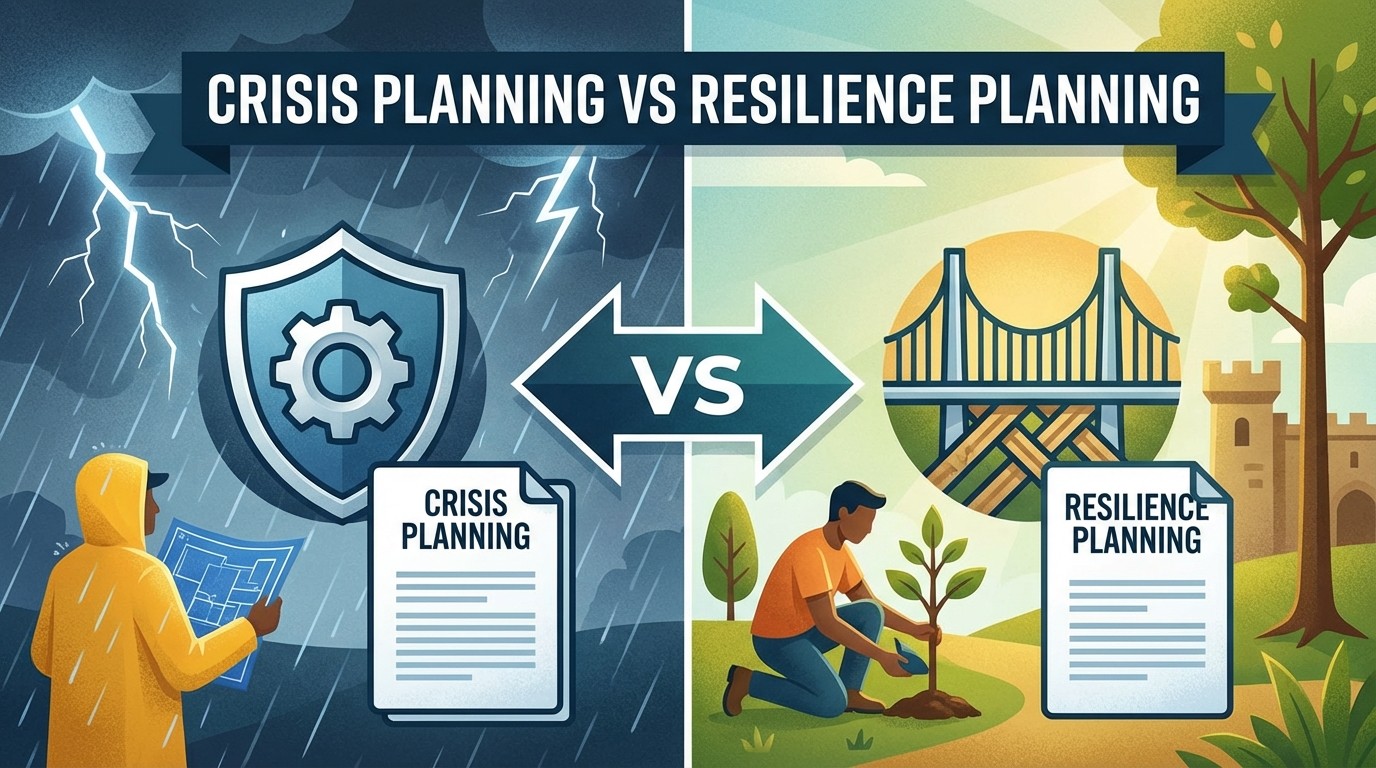
Many organizations treat crisis planning and resilience planning as interchangeable concepts. In practice, they serve distinct but complementary roles in supply chain risk management. Crisis planning focuses on reactive response once disruptions occur, while resilience planning emphasizes proactive design to absorb shocks and recover rapidly. Confusing the two can leave organizations overprepared for known crises but underprepared for systemic disruption.
Crisis Planning: Reactive Response Frameworks
Crisis planning typically involves:
Incident response protocols
Emergency communication plans
Escalation and command structures
Predefined playbooks for specific disruption scenarios
Business continuity procedures for critical operations
While essential, crisis plans often activate only after disruption has materialized.
Resilience Planning: Proactive System Design
Resilience planning emphasizes:
Network design redundancy and flexibility
Supplier diversification and tier-n visibility
Strategic inventory buffers for critical SKUs
Scenario modeling and stress testing
Adaptive governance structures that enable rapid decision-making
Resilience shifts focus from response to systemic robustness.
Strategic Integration
High-performing organizations integrate crisis and resilience planning by:
Embedding resilience principles into network and sourcing design
Using crisis simulations to stress-test resilience strategies
Aligning governance models across risk management functions
Defining KPIs for recovery time, service continuity, and disruption absorption
Conclusion
Crisis planning and resilience planning address different phases of disruption management. Organizations that invest in both reactive readiness and proactive resilience design are better positioned to withstand uncertainty and maintain operational continuity under stress.
#SupplyChainResilience #CrisisManagement #BusinessContinuity #RiskManagement #OperationalResilience #DisruptionPreparedness
More to Discover


Insights
Crisis Planning vs Resilience Planning, What’s the Difference?
Introduction
Many organizations treat crisis planning and resilience planning as interchangeable concepts. In practice, they serve distinct but complementary roles in supply chain risk management. Crisis planning focuses on reactive response once disruptions occur, while resilience planning emphasizes proactive design to absorb shocks and recover rapidly. Confusing the two can leave organizations overprepared for known crises but underprepared for systemic disruption.
Crisis Planning: Reactive Response Frameworks
Crisis planning typically involves:
Incident response protocols
Emergency communication plans
Escalation and command structures
Predefined playbooks for specific disruption scenarios
Business continuity procedures for critical operations
While essential, crisis plans often activate only after disruption has materialized.
Resilience Planning: Proactive System Design
Resilience planning emphasizes:
Network design redundancy and flexibility
Supplier diversification and tier-n visibility
Strategic inventory buffers for critical SKUs
Scenario modeling and stress testing
Adaptive governance structures that enable rapid decision-making
Resilience shifts focus from response to systemic robustness.
Strategic Integration
High-performing organizations integrate crisis and resilience planning by:
Embedding resilience principles into network and sourcing design
Using crisis simulations to stress-test resilience strategies
Aligning governance models across risk management functions
Defining KPIs for recovery time, service continuity, and disruption absorption
Conclusion
Crisis planning and resilience planning address different phases of disruption management. Organizations that invest in both reactive readiness and proactive resilience design are better positioned to withstand uncertainty and maintain operational continuity under stress.
#SupplyChainResilience #CrisisManagement #BusinessContinuity #RiskManagement #OperationalResilience #DisruptionPreparedness
More to Discover
Insights
Crisis Planning vs Resilience Planning, What’s the Difference?
Introduction
Many organizations treat crisis planning and resilience planning as interchangeable concepts. In practice, they serve distinct but complementary roles in supply chain risk management. Crisis planning focuses on reactive response once disruptions occur, while resilience planning emphasizes proactive design to absorb shocks and recover rapidly. Confusing the two can leave organizations overprepared for known crises but underprepared for systemic disruption.
Crisis Planning: Reactive Response Frameworks
Crisis planning typically involves:
Incident response protocols
Emergency communication plans
Escalation and command structures
Predefined playbooks for specific disruption scenarios
Business continuity procedures for critical operations
While essential, crisis plans often activate only after disruption has materialized.
Resilience Planning: Proactive System Design
Resilience planning emphasizes:
Network design redundancy and flexibility
Supplier diversification and tier-n visibility
Strategic inventory buffers for critical SKUs
Scenario modeling and stress testing
Adaptive governance structures that enable rapid decision-making
Resilience shifts focus from response to systemic robustness.
Strategic Integration
High-performing organizations integrate crisis and resilience planning by:
Embedding resilience principles into network and sourcing design
Using crisis simulations to stress-test resilience strategies
Aligning governance models across risk management functions
Defining KPIs for recovery time, service continuity, and disruption absorption
Conclusion
Crisis planning and resilience planning address different phases of disruption management. Organizations that invest in both reactive readiness and proactive resilience design are better positioned to withstand uncertainty and maintain operational continuity under stress.
#SupplyChainResilience #CrisisManagement #BusinessContinuity #RiskManagement #OperationalResilience #DisruptionPreparedness