Insights
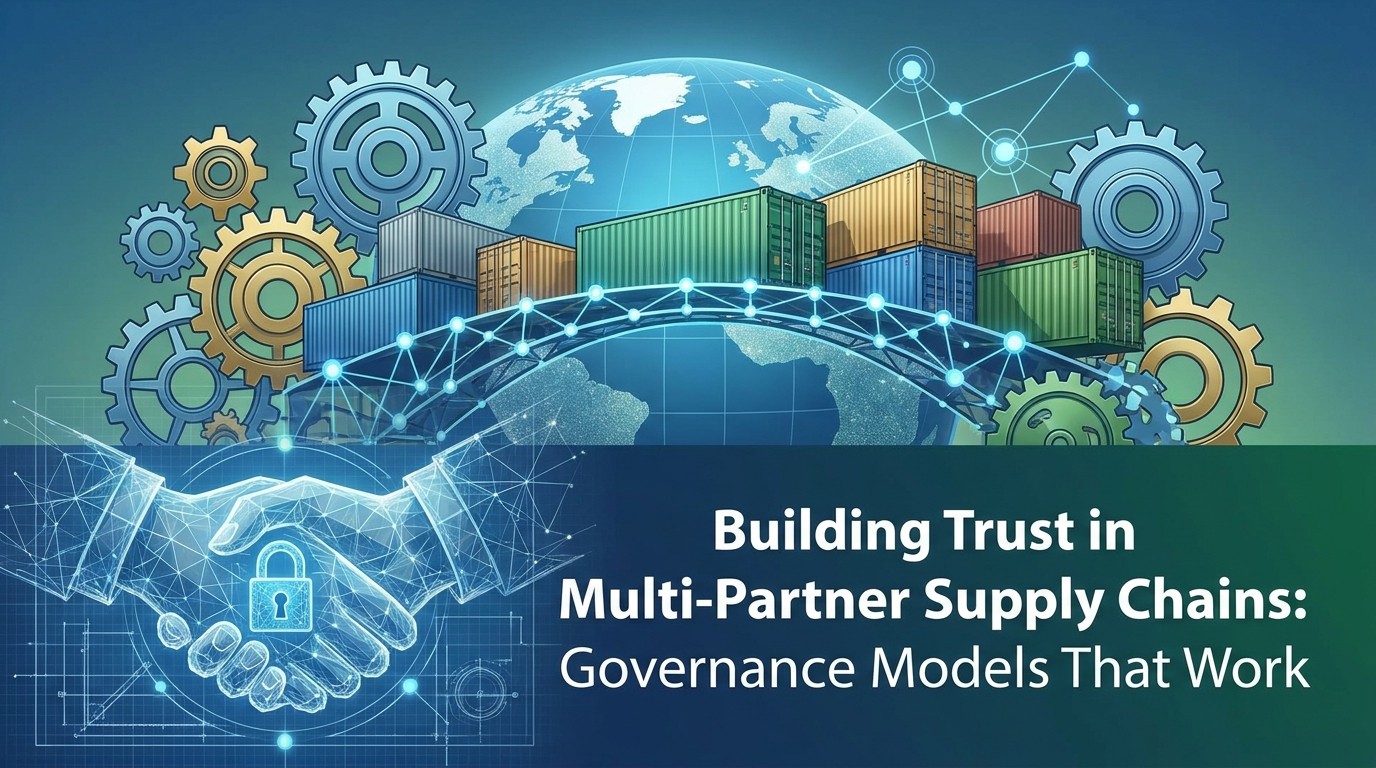
Building Trust in Multi-Partner Supply Chains: Governance Models That Work
Introduction
Multi-partner supply chains rely on collaboration across manufacturers, logistics providers, distributors, and service partners. Trust is a foundational enabler of coordination, data sharing, and joint problem-solving. However, trust does not emerge organically at scale; it must be reinforced through governance models that align incentives, define accountability, and promote transparency.
The Trust Deficit in Ecosystems
Trust erosion in multi-partner networks often stems from:
Asymmetric information sharing
Misaligned incentives and performance metrics
Ambiguous accountability for failures
Lack of transparency in performance data
Limited mechanisms for dispute resolution
These dynamics hinder collaboration and increase transaction costs.
Governance Models That Foster Trust
Effective governance models include:
Clear contractual frameworks aligned with shared outcomes
Joint performance management and review forums
Data-sharing agreements with defined usage rights
Transparent performance dashboards
Neutral escalation and dispute resolution mechanisms
Strategic Benefits of Trust-Based Governance
Trust-enabling governance supports:
Faster coordination during disruptions
Reduced monitoring and enforcement costs
Greater willingness to share data and insights
Stronger innovation collaboration across partners
Conclusion
Trust in multi-partner supply chains is built through deliberate governance design rather than goodwill alone. Organizations that invest in transparent, outcome-aligned governance models can improve collaboration, reduce friction, and enhance ecosystem performance.
#SupplyChainTrust #PartnerEcosystems #CollaborativeGovernance #SupplyChainManagement #OperationalTransparency #EcosystemStrategy
More to Discover


Insights
Building Trust in Multi-Partner Supply Chains: Governance Models That Work
Introduction
Multi-partner supply chains rely on collaboration across manufacturers, logistics providers, distributors, and service partners. Trust is a foundational enabler of coordination, data sharing, and joint problem-solving. However, trust does not emerge organically at scale; it must be reinforced through governance models that align incentives, define accountability, and promote transparency.
The Trust Deficit in Ecosystems
Trust erosion in multi-partner networks often stems from:
Asymmetric information sharing
Misaligned incentives and performance metrics
Ambiguous accountability for failures
Lack of transparency in performance data
Limited mechanisms for dispute resolution
These dynamics hinder collaboration and increase transaction costs.
Governance Models That Foster Trust
Effective governance models include:
Clear contractual frameworks aligned with shared outcomes
Joint performance management and review forums
Data-sharing agreements with defined usage rights
Transparent performance dashboards
Neutral escalation and dispute resolution mechanisms
Strategic Benefits of Trust-Based Governance
Trust-enabling governance supports:
Faster coordination during disruptions
Reduced monitoring and enforcement costs
Greater willingness to share data and insights
Stronger innovation collaboration across partners
Conclusion
Trust in multi-partner supply chains is built through deliberate governance design rather than goodwill alone. Organizations that invest in transparent, outcome-aligned governance models can improve collaboration, reduce friction, and enhance ecosystem performance.
#SupplyChainTrust #PartnerEcosystems #CollaborativeGovernance #SupplyChainManagement #OperationalTransparency #EcosystemStrategy
More to Discover
Insights
Building Trust in Multi-Partner Supply Chains: Governance Models That Work
Introduction
Multi-partner supply chains rely on collaboration across manufacturers, logistics providers, distributors, and service partners. Trust is a foundational enabler of coordination, data sharing, and joint problem-solving. However, trust does not emerge organically at scale; it must be reinforced through governance models that align incentives, define accountability, and promote transparency.
The Trust Deficit in Ecosystems
Trust erosion in multi-partner networks often stems from:
Asymmetric information sharing
Misaligned incentives and performance metrics
Ambiguous accountability for failures
Lack of transparency in performance data
Limited mechanisms for dispute resolution
These dynamics hinder collaboration and increase transaction costs.
Governance Models That Foster Trust
Effective governance models include:
Clear contractual frameworks aligned with shared outcomes
Joint performance management and review forums
Data-sharing agreements with defined usage rights
Transparent performance dashboards
Neutral escalation and dispute resolution mechanisms
Strategic Benefits of Trust-Based Governance
Trust-enabling governance supports:
Faster coordination during disruptions
Reduced monitoring and enforcement costs
Greater willingness to share data and insights
Stronger innovation collaboration across partners
Conclusion
Trust in multi-partner supply chains is built through deliberate governance design rather than goodwill alone. Organizations that invest in transparent, outcome-aligned governance models can improve collaboration, reduce friction, and enhance ecosystem performance.
#SupplyChainTrust #PartnerEcosystems #CollaborativeGovernance #SupplyChainManagement #OperationalTransparency #EcosystemStrategy