Insights
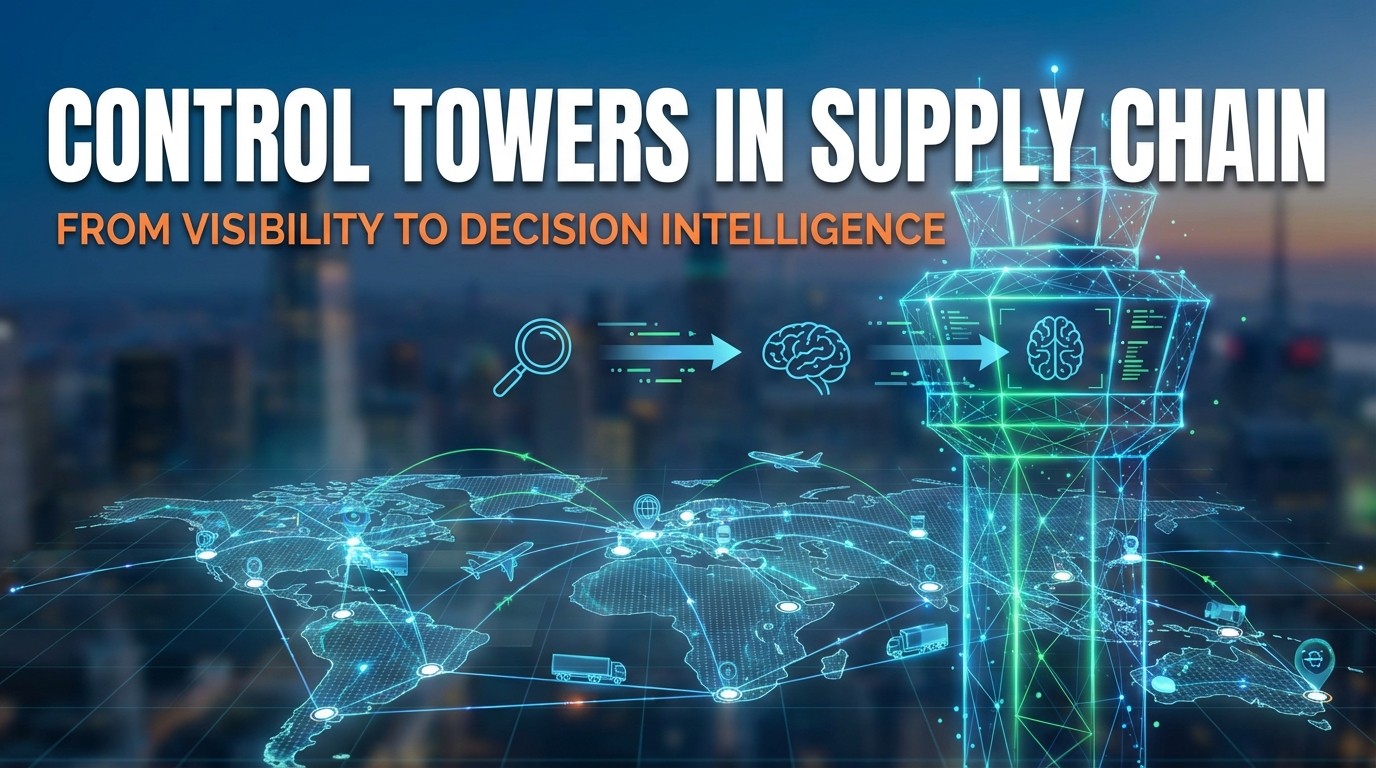
Control Towers in Supply Chain: From Visibility to Decision Intelligence
Introduction
Supply chain control towers have evolved from dashboards that provide basic visibility into end-to-end flows to integrated decision-intelligence platforms that orchestrate actions across planning and execution. As supply chains grow more complex and data-rich, leaders are recognizing that visibility alone does not drive performance. The next frontier is transforming visibility into timely, coordinated decisions that improve service, cost, and resilience.
The Limits of Visibility-Only Models
Early control tower implementations focused on aggregating data from TMS, WMS, and ERP systems to provide a single view of orders and shipments. While valuable, visibility-only models often suffer from:
Delayed or fragmented data feeds
Limited root-cause analysis capabilities
Manual exception handling
Siloed decision rights across functions
Lack of prescriptive guidance for actions
As a result, organizations can “see” issues but struggle to resolve them at speed and scale.
From Visibility to Decision Intelligence
Modern control towers integrate analytics, business rules, and orchestration workflows to enable:
Real-time exception detection with prioritized alerts
Root-cause analysis across multi-tier networks
Prescriptive recommendations for mitigation actions
Automated workflows for common disruption scenarios
Cross-functional coordination across planning, procurement, and logistics
This transition transforms control towers from reporting tools into operational nerve centers.
Strategic Implementation Considerations
To realize decision intelligence, leaders should:
Define clear decision use cases and ownership models
Integrate high-quality, near-real-time data sources
Establish governance for cross-functional action orchestration
Embed control tower insights into routine operating cadences
Measure impact using KPIs such as recovery time, service continuity, and cost-to-serve
Conclusion
Control towers deliver value when they move beyond visibility to enable coordinated, data-driven decisions. Organizations that invest in decision intelligence capabilities can improve responsiveness, reduce disruption impact, and elevate end-to-end supply chain performance.
#SupplyChainControlTower #DecisionIntelligence #SupplyChainVisibility #OperationalExcellence #DigitalSupplyChain #LogisticsAnalytics
More to Discover


Insights
Control Towers in Supply Chain: From Visibility to Decision Intelligence
Introduction
Supply chain control towers have evolved from dashboards that provide basic visibility into end-to-end flows to integrated decision-intelligence platforms that orchestrate actions across planning and execution. As supply chains grow more complex and data-rich, leaders are recognizing that visibility alone does not drive performance. The next frontier is transforming visibility into timely, coordinated decisions that improve service, cost, and resilience.
The Limits of Visibility-Only Models
Early control tower implementations focused on aggregating data from TMS, WMS, and ERP systems to provide a single view of orders and shipments. While valuable, visibility-only models often suffer from:
Delayed or fragmented data feeds
Limited root-cause analysis capabilities
Manual exception handling
Siloed decision rights across functions
Lack of prescriptive guidance for actions
As a result, organizations can “see” issues but struggle to resolve them at speed and scale.
From Visibility to Decision Intelligence
Modern control towers integrate analytics, business rules, and orchestration workflows to enable:
Real-time exception detection with prioritized alerts
Root-cause analysis across multi-tier networks
Prescriptive recommendations for mitigation actions
Automated workflows for common disruption scenarios
Cross-functional coordination across planning, procurement, and logistics
This transition transforms control towers from reporting tools into operational nerve centers.
Strategic Implementation Considerations
To realize decision intelligence, leaders should:
Define clear decision use cases and ownership models
Integrate high-quality, near-real-time data sources
Establish governance for cross-functional action orchestration
Embed control tower insights into routine operating cadences
Measure impact using KPIs such as recovery time, service continuity, and cost-to-serve
Conclusion
Control towers deliver value when they move beyond visibility to enable coordinated, data-driven decisions. Organizations that invest in decision intelligence capabilities can improve responsiveness, reduce disruption impact, and elevate end-to-end supply chain performance.
#SupplyChainControlTower #DecisionIntelligence #SupplyChainVisibility #OperationalExcellence #DigitalSupplyChain #LogisticsAnalytics
More to Discover
Insights
Control Towers in Supply Chain: From Visibility to Decision Intelligence
Introduction
Supply chain control towers have evolved from dashboards that provide basic visibility into end-to-end flows to integrated decision-intelligence platforms that orchestrate actions across planning and execution. As supply chains grow more complex and data-rich, leaders are recognizing that visibility alone does not drive performance. The next frontier is transforming visibility into timely, coordinated decisions that improve service, cost, and resilience.
The Limits of Visibility-Only Models
Early control tower implementations focused on aggregating data from TMS, WMS, and ERP systems to provide a single view of orders and shipments. While valuable, visibility-only models often suffer from:
Delayed or fragmented data feeds
Limited root-cause analysis capabilities
Manual exception handling
Siloed decision rights across functions
Lack of prescriptive guidance for actions
As a result, organizations can “see” issues but struggle to resolve them at speed and scale.
From Visibility to Decision Intelligence
Modern control towers integrate analytics, business rules, and orchestration workflows to enable:
Real-time exception detection with prioritized alerts
Root-cause analysis across multi-tier networks
Prescriptive recommendations for mitigation actions
Automated workflows for common disruption scenarios
Cross-functional coordination across planning, procurement, and logistics
This transition transforms control towers from reporting tools into operational nerve centers.
Strategic Implementation Considerations
To realize decision intelligence, leaders should:
Define clear decision use cases and ownership models
Integrate high-quality, near-real-time data sources
Establish governance for cross-functional action orchestration
Embed control tower insights into routine operating cadences
Measure impact using KPIs such as recovery time, service continuity, and cost-to-serve
Conclusion
Control towers deliver value when they move beyond visibility to enable coordinated, data-driven decisions. Organizations that invest in decision intelligence capabilities can improve responsiveness, reduce disruption impact, and elevate end-to-end supply chain performance.
#SupplyChainControlTower #DecisionIntelligence #SupplyChainVisibility #OperationalExcellence #DigitalSupplyChain #LogisticsAnalytics