Insights
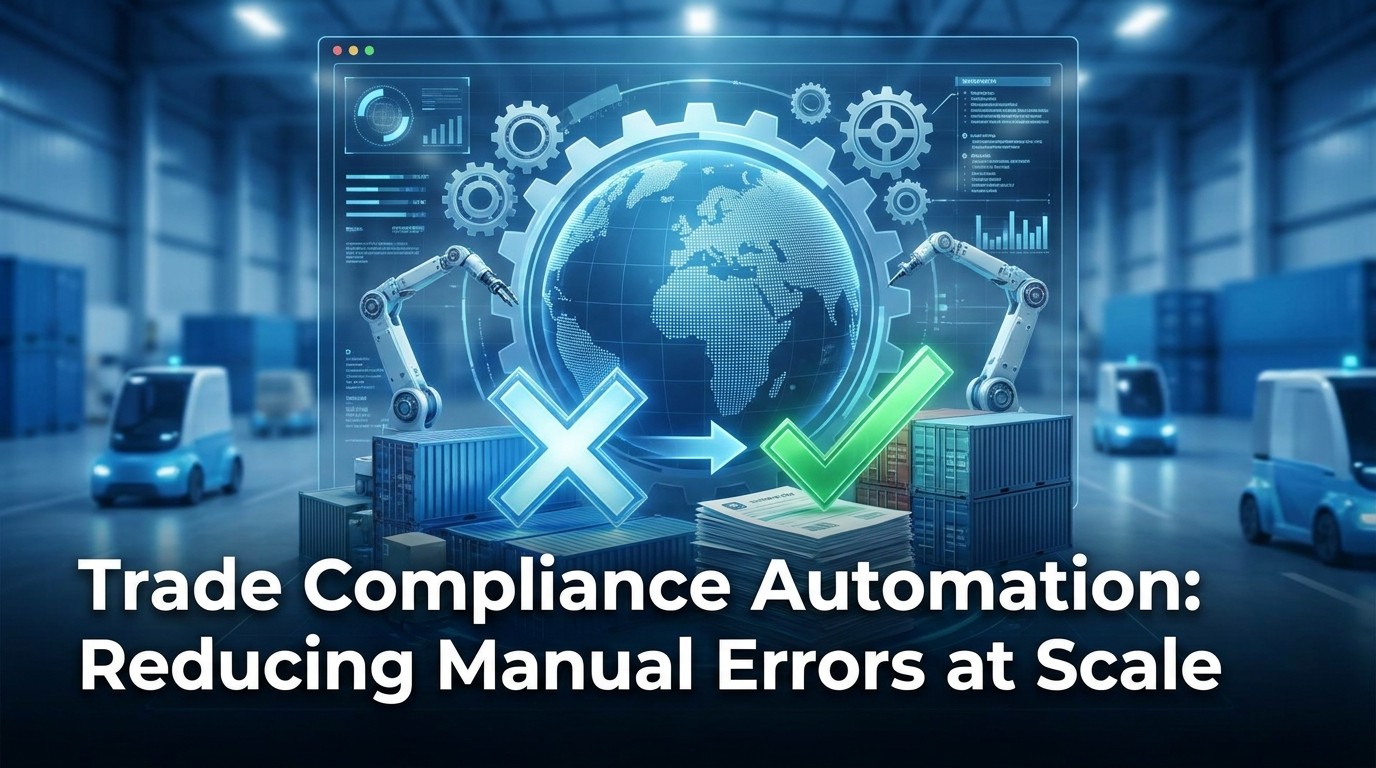
Trade Compliance Automation: Reducing Manual Errors at Scale
Introduction
Trade compliance requirements are becoming more complex due to evolving regulations, sanctions regimes, and customs documentation standards. Manual compliance processes struggle to keep pace with this complexity, leading to errors, delays, and increased regulatory exposure. Trade compliance automation offers a scalable approach to reducing manual errors while improving clearance speed and audit readiness.
The Cost of Manual Compliance
Manual compliance processes often result in:
Inaccurate classification of goods and tariff codes
Documentation errors causing customs delays
Inconsistent application of regulatory rules across regions
High administrative overhead and rework
Increased risk of fines, penalties, and shipment holds
As shipment volumes scale, these risks compound.
Automation Use Cases in Trade Compliance
Automation can support:
Automated HS code classification and validation
Sanctions and denied-party screening
Real-time documentation checks
Duty and tax calculation consistency
Audit trail generation and reporting
Implementation Considerations
Organizations should:
Integrate compliance automation with ERP, TMS, and order management systems
Establish data governance to ensure classification accuracy
Maintain human oversight for complex or high-risk cases
Monitor regulatory changes and update automation rulesets
Track performance metrics such as clearance time and error rates
Conclusion
Trade compliance automation reduces operational friction and regulatory risk while enabling scalable cross-border operations. Organizations that embed automation into compliance workflows can improve reliability, reduce cost, and strengthen governance as trade complexity increases.
#TradeCompliance #CustomsAutomation #CrossBorderTrade #RegulatoryTechnology #SupplyChainCompliance #GlobalLogistics
More to Discover


Insights
Trade Compliance Automation: Reducing Manual Errors at Scale
Introduction
Trade compliance requirements are becoming more complex due to evolving regulations, sanctions regimes, and customs documentation standards. Manual compliance processes struggle to keep pace with this complexity, leading to errors, delays, and increased regulatory exposure. Trade compliance automation offers a scalable approach to reducing manual errors while improving clearance speed and audit readiness.
The Cost of Manual Compliance
Manual compliance processes often result in:
Inaccurate classification of goods and tariff codes
Documentation errors causing customs delays
Inconsistent application of regulatory rules across regions
High administrative overhead and rework
Increased risk of fines, penalties, and shipment holds
As shipment volumes scale, these risks compound.
Automation Use Cases in Trade Compliance
Automation can support:
Automated HS code classification and validation
Sanctions and denied-party screening
Real-time documentation checks
Duty and tax calculation consistency
Audit trail generation and reporting
Implementation Considerations
Organizations should:
Integrate compliance automation with ERP, TMS, and order management systems
Establish data governance to ensure classification accuracy
Maintain human oversight for complex or high-risk cases
Monitor regulatory changes and update automation rulesets
Track performance metrics such as clearance time and error rates
Conclusion
Trade compliance automation reduces operational friction and regulatory risk while enabling scalable cross-border operations. Organizations that embed automation into compliance workflows can improve reliability, reduce cost, and strengthen governance as trade complexity increases.
#TradeCompliance #CustomsAutomation #CrossBorderTrade #RegulatoryTechnology #SupplyChainCompliance #GlobalLogistics
More to Discover
Insights
Trade Compliance Automation: Reducing Manual Errors at Scale
Introduction
Trade compliance requirements are becoming more complex due to evolving regulations, sanctions regimes, and customs documentation standards. Manual compliance processes struggle to keep pace with this complexity, leading to errors, delays, and increased regulatory exposure. Trade compliance automation offers a scalable approach to reducing manual errors while improving clearance speed and audit readiness.
The Cost of Manual Compliance
Manual compliance processes often result in:
Inaccurate classification of goods and tariff codes
Documentation errors causing customs delays
Inconsistent application of regulatory rules across regions
High administrative overhead and rework
Increased risk of fines, penalties, and shipment holds
As shipment volumes scale, these risks compound.
Automation Use Cases in Trade Compliance
Automation can support:
Automated HS code classification and validation
Sanctions and denied-party screening
Real-time documentation checks
Duty and tax calculation consistency
Audit trail generation and reporting
Implementation Considerations
Organizations should:
Integrate compliance automation with ERP, TMS, and order management systems
Establish data governance to ensure classification accuracy
Maintain human oversight for complex or high-risk cases
Monitor regulatory changes and update automation rulesets
Track performance metrics such as clearance time and error rates
Conclusion
Trade compliance automation reduces operational friction and regulatory risk while enabling scalable cross-border operations. Organizations that embed automation into compliance workflows can improve reliability, reduce cost, and strengthen governance as trade complexity increases.
#TradeCompliance #CustomsAutomation #CrossBorderTrade #RegulatoryTechnology #SupplyChainCompliance #GlobalLogistics