Insights
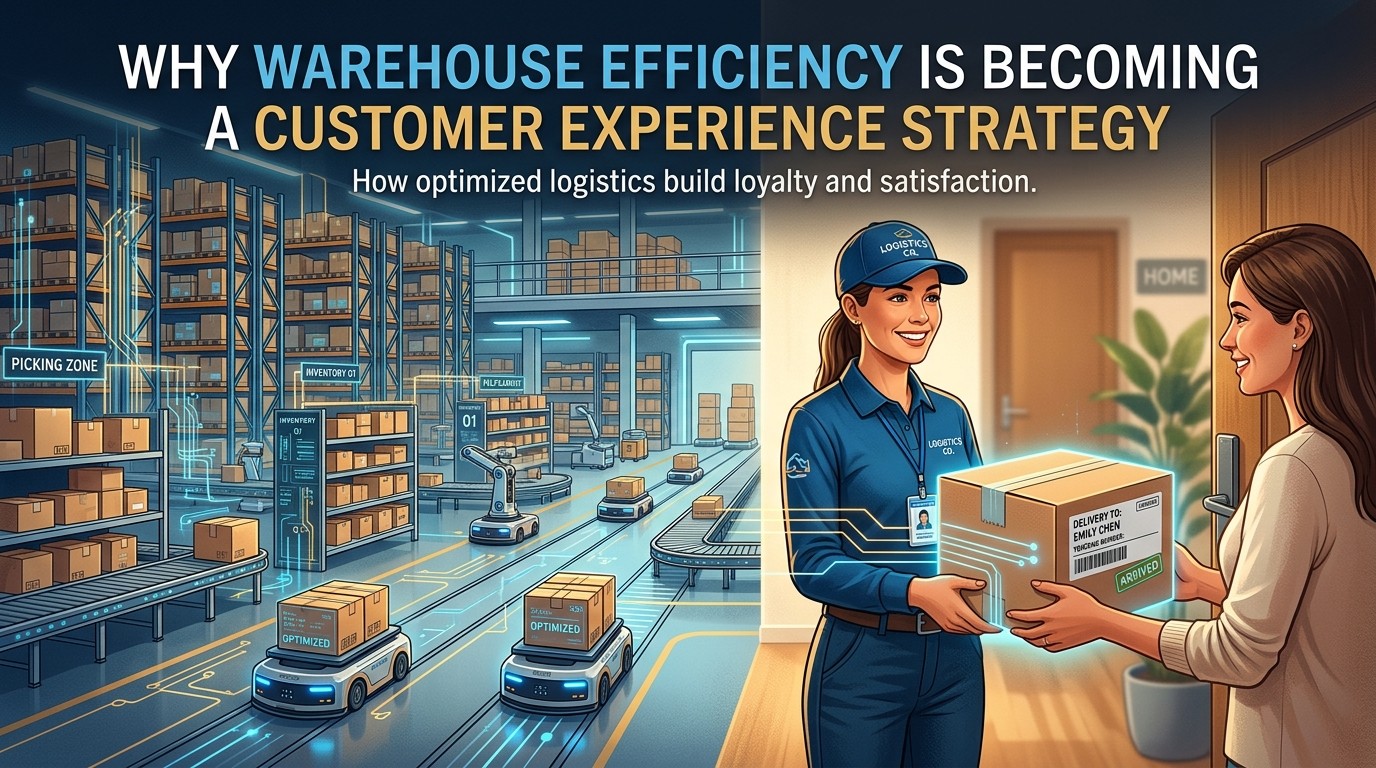
Why Warehouse Efficiency Is Becoming a Customer Experience Strategy
v Most customers never see warehouses.
v Yet warehouse efficiency increasingly shapes how customers experience brands.
When businesses discuss customer experience, they usually focus on:
Marketing
Branding
Social media
Customer support
Packaging
But behind every successful fulfillment operation sits an operational reality:
Warehouses quietly determine whether customer expectations are met consistently.
At Talha Khan OPS, we believe warehouse operations are evolving from:
Backend logistics infrastructure to customer experience infrastructure.
Because modern customer expectations now depend heavily on:
Fulfillment speed
Inventory availability
Order accuracy
Operational reliability
Shipping predictability
All of which are directly influenced by warehouse performance.
Operator Perspective: Customers judge brands externally. Warehouses determine whether brands can deliver internally.
Why Warehouses Became Strategically Important
Historically, warehouses primarily focused on:
Storage
Inventory handling
Shipment preparation
Efficiency mattered, but customers rarely noticed operational details directly.
Today, modern commerce changed that completely.
E-commerce, D2C growth, and fulfillment expectations now force warehouses to support:
· Rapid order processing
· Real-time inventory visibility
· Customization workflows
· Omnichannel fulfillment
· Faster shipping timelines
Warehouses are no longer passive storage facilities.
They are active operational engines.
The Biggest Warehouse Challenges Businesses Face Today
1. Inventory Inaccuracy
One of the biggest operational problems globally:
many businesses still struggle with inaccurate inventory visibility.
This creates:
Overselling
Stockouts
Delayed fulfillment
Warehouse confusion
Customer frustration
Operator Perspective: Inventory accuracy directly impacts customer trust.
2. Poor Warehouse Layout & Workflow Design
Many warehouses evolve reactively over time.
Businesses add:
More products
More skus
More storage zones
More fulfillment activity
Without redesigning workflows strategically.
The result often becomes:
Picking inefficiency
Fulfillment delays
Operational congestion
Reduced productivity
Operational simplicity improves warehouse speed significantly.
3. Weak Forecasting Coordination
Warehouse operations increasingly depend on:
Demand forecasting
Inventory planning
Replenishment visibility
Fulfillment projections
Without forecasting integration, warehouses struggle during:
Seasonal spikes
Promotional launches
Tournament demand
Wholesale surges
Reactive warehouses usually become overwhelmed quickly.
4. Excessive SKU Complexity
Modern businesses increasingly offer:
Customization
Product variations
Multiple sizes
Branding flexibility
This creates inventory fragmentation and operational complexity inside warehouses.
Warehouse scalability increasingly depends on:
· SKU discipline
· Inventory visibility
· Workflow coordination
· Fulfillment optimization
Why Warehouse Speed Impacts Brand Reputation
Customers increasingly expect:
Rapid shipping
Accurate fulfillment
Predictable delivery
Operational transparency
Warehouse inefficiency directly affects:
Reviews
Retention
Customer satisfaction
Repeat purchasing
Modern brands increasingly compete through:
Operational execution speed.
Operator Perspective: Fulfillment reliability increasingly influences brand perception as much as product quality itself.
Why Sportswear & Football Businesses Face Extra Warehouse Pressure
Sportswear and sports products businesses involve unusually dynamic inventory environments because of:
Seasonal demand
Customization
Sizing variation
Club merchandise
Tournament cycles
Wholesale coordination
This creates operational pressure across:
OEM manufacturing
Private labeling
Football production
D2C fulfillment
Sports retail
Manufacturing ecosystems like Sialkot remain globally competitive because specialized sports production ecosystems support:
Inventory flexibility
Scalable manufacturing
Export coordination
Fulfillment adaptability
Within sports manufacturing operations.
Brands like STRYK World operate within this evolving environment by balancing:
Custom football manufacturing
OEM flexibility
Affordable premium positioning
Scalable fulfillment
Operational responsiveness
While supporting:
Soccer clubs
Sports retailers
Wholesalers
Distributors
Private-label brands
Globally.
Why Warehouse Visibility Matters More Than Ever
Modern warehouses increasingly rely on:
· Real-time inventory tracking
· Operational dashboards
· Fulfillment analytics
· Warehouse management systems
· Predictive replenishment tools
Because visibility improves:
Speed
Accuracy
Operational coordination
Scalability
Simultaneously. Businesses without visibility often operate reactively instead of predictively.
Mini Industry Observation, Warehouses Are Becoming Competitive Infrastructure
One major shift globally:
warehouses increasingly determine:
Fulfillment quality
Customer satisfaction
Operational agility
Scalability
Inventory responsiveness
The strongest businesses increasingly treat warehouse operations as:
Strategic competitive infrastructure, not operational afterthoughts.
Industry Prediction for 2026–2035
Over the next decade,
warehouses will likely become:
More automated
More predictive
More visibility-driven
More fulfillment-oriented
More customer-centric
Businesses will increasingly invest in:
· Warehouse intelligence
· Inventory synchronization
· Fulfillment automation
· Operational dashboards
· Predictive logistics
· Scalable warehouse systems
The strongest businesses will likely combine:
Warehouse efficiency + operational visibility + fulfillment responsiveness.
Final Thought
Warehouses may operate behind the scenes…
But they increasingly shape how customers experience brands publicly.
The businesses adapting early to:
Inventory visibility
Fulfillment optimization
Warehouse intelligence
Operational scalability
Workflow efficiency
Will likely build stronger long-term customer trust than businesses focused only on marketing visibility.
🔹 Warehouses are becoming customer experience infrastructure.
🔹 Operational execution increasingly defines brand reliability.
💬 What matters most in warehouse operations today, speed, inventory visibility, fulfillment accuracy, or scalability?
Let’s discuss below.
📩 Connect with us:
🌐 Talha Khan OPS
🌐 STRYK World
#warehousemanagement #businessoperations #operationalexcellence #supplychain #inventorymanagement #sportsmanufacturing #oemmanufacturing #privatelabel #Sportswear #Fulfillment #operationalleadership #retailoperations #sportsbusiness #footballmanufacturing #warehouseoperations #businessgrowth #supplychainmanagement #Manufacturing #Logistics #operationaldiscipline #inventoryvisibility #Sialkot #strykworld #talhakhanops #warehouseefficiency #futureofoperations #operationsmanagement #customerexperience #fulfillmentstrategy #scalablesystems
More to Discover


Insights
Why Warehouse Efficiency Is Becoming a Customer Experience Strategy
v Most customers never see warehouses.
v Yet warehouse efficiency increasingly shapes how customers experience brands.
When businesses discuss customer experience, they usually focus on:
Marketing
Branding
Social media
Customer support
Packaging
But behind every successful fulfillment operation sits an operational reality:
Warehouses quietly determine whether customer expectations are met consistently.
At Talha Khan OPS, we believe warehouse operations are evolving from:
Backend logistics infrastructure to customer experience infrastructure.
Because modern customer expectations now depend heavily on:
Fulfillment speed
Inventory availability
Order accuracy
Operational reliability
Shipping predictability
All of which are directly influenced by warehouse performance.
Operator Perspective: Customers judge brands externally. Warehouses determine whether brands can deliver internally.
Why Warehouses Became Strategically Important
Historically, warehouses primarily focused on:
Storage
Inventory handling
Shipment preparation
Efficiency mattered, but customers rarely noticed operational details directly.
Today, modern commerce changed that completely.
E-commerce, D2C growth, and fulfillment expectations now force warehouses to support:
· Rapid order processing
· Real-time inventory visibility
· Customization workflows
· Omnichannel fulfillment
· Faster shipping timelines
Warehouses are no longer passive storage facilities.
They are active operational engines.
The Biggest Warehouse Challenges Businesses Face Today
1. Inventory Inaccuracy
One of the biggest operational problems globally:
many businesses still struggle with inaccurate inventory visibility.
This creates:
Overselling
Stockouts
Delayed fulfillment
Warehouse confusion
Customer frustration
Operator Perspective: Inventory accuracy directly impacts customer trust.
2. Poor Warehouse Layout & Workflow Design
Many warehouses evolve reactively over time.
Businesses add:
More products
More skus
More storage zones
More fulfillment activity
Without redesigning workflows strategically.
The result often becomes:
Picking inefficiency
Fulfillment delays
Operational congestion
Reduced productivity
Operational simplicity improves warehouse speed significantly.
3. Weak Forecasting Coordination
Warehouse operations increasingly depend on:
Demand forecasting
Inventory planning
Replenishment visibility
Fulfillment projections
Without forecasting integration, warehouses struggle during:
Seasonal spikes
Promotional launches
Tournament demand
Wholesale surges
Reactive warehouses usually become overwhelmed quickly.
4. Excessive SKU Complexity
Modern businesses increasingly offer:
Customization
Product variations
Multiple sizes
Branding flexibility
This creates inventory fragmentation and operational complexity inside warehouses.
Warehouse scalability increasingly depends on:
· SKU discipline
· Inventory visibility
· Workflow coordination
· Fulfillment optimization
Why Warehouse Speed Impacts Brand Reputation
Customers increasingly expect:
Rapid shipping
Accurate fulfillment
Predictable delivery
Operational transparency
Warehouse inefficiency directly affects:
Reviews
Retention
Customer satisfaction
Repeat purchasing
Modern brands increasingly compete through:
Operational execution speed.
Operator Perspective: Fulfillment reliability increasingly influences brand perception as much as product quality itself.
Why Sportswear & Football Businesses Face Extra Warehouse Pressure
Sportswear and sports products businesses involve unusually dynamic inventory environments because of:
Seasonal demand
Customization
Sizing variation
Club merchandise
Tournament cycles
Wholesale coordination
This creates operational pressure across:
OEM manufacturing
Private labeling
Football production
D2C fulfillment
Sports retail
Manufacturing ecosystems like Sialkot remain globally competitive because specialized sports production ecosystems support:
Inventory flexibility
Scalable manufacturing
Export coordination
Fulfillment adaptability
Within sports manufacturing operations.
Brands like STRYK World operate within this evolving environment by balancing:
Custom football manufacturing
OEM flexibility
Affordable premium positioning
Scalable fulfillment
Operational responsiveness
While supporting:
Soccer clubs
Sports retailers
Wholesalers
Distributors
Private-label brands
Globally.
Why Warehouse Visibility Matters More Than Ever
Modern warehouses increasingly rely on:
· Real-time inventory tracking
· Operational dashboards
· Fulfillment analytics
· Warehouse management systems
· Predictive replenishment tools
Because visibility improves:
Speed
Accuracy
Operational coordination
Scalability
Simultaneously. Businesses without visibility often operate reactively instead of predictively.
Mini Industry Observation, Warehouses Are Becoming Competitive Infrastructure
One major shift globally:
warehouses increasingly determine:
Fulfillment quality
Customer satisfaction
Operational agility
Scalability
Inventory responsiveness
The strongest businesses increasingly treat warehouse operations as:
Strategic competitive infrastructure, not operational afterthoughts.
Industry Prediction for 2026–2035
Over the next decade,
warehouses will likely become:
More automated
More predictive
More visibility-driven
More fulfillment-oriented
More customer-centric
Businesses will increasingly invest in:
· Warehouse intelligence
· Inventory synchronization
· Fulfillment automation
· Operational dashboards
· Predictive logistics
· Scalable warehouse systems
The strongest businesses will likely combine:
Warehouse efficiency + operational visibility + fulfillment responsiveness.
Final Thought
Warehouses may operate behind the scenes…
But they increasingly shape how customers experience brands publicly.
The businesses adapting early to:
Inventory visibility
Fulfillment optimization
Warehouse intelligence
Operational scalability
Workflow efficiency
Will likely build stronger long-term customer trust than businesses focused only on marketing visibility.
🔹 Warehouses are becoming customer experience infrastructure.
🔹 Operational execution increasingly defines brand reliability.
💬 What matters most in warehouse operations today, speed, inventory visibility, fulfillment accuracy, or scalability?
Let’s discuss below.
📩 Connect with us:
🌐 Talha Khan OPS
🌐 STRYK World
#warehousemanagement #businessoperations #operationalexcellence #supplychain #inventorymanagement #sportsmanufacturing #oemmanufacturing #privatelabel #Sportswear #Fulfillment #operationalleadership #retailoperations #sportsbusiness #footballmanufacturing #warehouseoperations #businessgrowth #supplychainmanagement #Manufacturing #Logistics #operationaldiscipline #inventoryvisibility #Sialkot #strykworld #talhakhanops #warehouseefficiency #futureofoperations #operationsmanagement #customerexperience #fulfillmentstrategy #scalablesystems
More to Discover
Insights
Why Warehouse Efficiency Is Becoming a Customer Experience Strategy
v Most customers never see warehouses.
v Yet warehouse efficiency increasingly shapes how customers experience brands.
When businesses discuss customer experience, they usually focus on:
Marketing
Branding
Social media
Customer support
Packaging
But behind every successful fulfillment operation sits an operational reality:
Warehouses quietly determine whether customer expectations are met consistently.
At Talha Khan OPS, we believe warehouse operations are evolving from:
Backend logistics infrastructure to customer experience infrastructure.
Because modern customer expectations now depend heavily on:
Fulfillment speed
Inventory availability
Order accuracy
Operational reliability
Shipping predictability
All of which are directly influenced by warehouse performance.
Operator Perspective: Customers judge brands externally. Warehouses determine whether brands can deliver internally.
Why Warehouses Became Strategically Important
Historically, warehouses primarily focused on:
Storage
Inventory handling
Shipment preparation
Efficiency mattered, but customers rarely noticed operational details directly.
Today, modern commerce changed that completely.
E-commerce, D2C growth, and fulfillment expectations now force warehouses to support:
· Rapid order processing
· Real-time inventory visibility
· Customization workflows
· Omnichannel fulfillment
· Faster shipping timelines
Warehouses are no longer passive storage facilities.
They are active operational engines.
The Biggest Warehouse Challenges Businesses Face Today
1. Inventory Inaccuracy
One of the biggest operational problems globally:
many businesses still struggle with inaccurate inventory visibility.
This creates:
Overselling
Stockouts
Delayed fulfillment
Warehouse confusion
Customer frustration
Operator Perspective: Inventory accuracy directly impacts customer trust.
2. Poor Warehouse Layout & Workflow Design
Many warehouses evolve reactively over time.
Businesses add:
More products
More skus
More storage zones
More fulfillment activity
Without redesigning workflows strategically.
The result often becomes:
Picking inefficiency
Fulfillment delays
Operational congestion
Reduced productivity
Operational simplicity improves warehouse speed significantly.
3. Weak Forecasting Coordination
Warehouse operations increasingly depend on:
Demand forecasting
Inventory planning
Replenishment visibility
Fulfillment projections
Without forecasting integration, warehouses struggle during:
Seasonal spikes
Promotional launches
Tournament demand
Wholesale surges
Reactive warehouses usually become overwhelmed quickly.
4. Excessive SKU Complexity
Modern businesses increasingly offer:
Customization
Product variations
Multiple sizes
Branding flexibility
This creates inventory fragmentation and operational complexity inside warehouses.
Warehouse scalability increasingly depends on:
· SKU discipline
· Inventory visibility
· Workflow coordination
· Fulfillment optimization
Why Warehouse Speed Impacts Brand Reputation
Customers increasingly expect:
Rapid shipping
Accurate fulfillment
Predictable delivery
Operational transparency
Warehouse inefficiency directly affects:
Reviews
Retention
Customer satisfaction
Repeat purchasing
Modern brands increasingly compete through:
Operational execution speed.
Operator Perspective: Fulfillment reliability increasingly influences brand perception as much as product quality itself.
Why Sportswear & Football Businesses Face Extra Warehouse Pressure
Sportswear and sports products businesses involve unusually dynamic inventory environments because of:
Seasonal demand
Customization
Sizing variation
Club merchandise
Tournament cycles
Wholesale coordination
This creates operational pressure across:
OEM manufacturing
Private labeling
Football production
D2C fulfillment
Sports retail
Manufacturing ecosystems like Sialkot remain globally competitive because specialized sports production ecosystems support:
Inventory flexibility
Scalable manufacturing
Export coordination
Fulfillment adaptability
Within sports manufacturing operations.
Brands like STRYK World operate within this evolving environment by balancing:
Custom football manufacturing
OEM flexibility
Affordable premium positioning
Scalable fulfillment
Operational responsiveness
While supporting:
Soccer clubs
Sports retailers
Wholesalers
Distributors
Private-label brands
Globally.
Why Warehouse Visibility Matters More Than Ever
Modern warehouses increasingly rely on:
· Real-time inventory tracking
· Operational dashboards
· Fulfillment analytics
· Warehouse management systems
· Predictive replenishment tools
Because visibility improves:
Speed
Accuracy
Operational coordination
Scalability
Simultaneously. Businesses without visibility often operate reactively instead of predictively.
Mini Industry Observation, Warehouses Are Becoming Competitive Infrastructure
One major shift globally:
warehouses increasingly determine:
Fulfillment quality
Customer satisfaction
Operational agility
Scalability
Inventory responsiveness
The strongest businesses increasingly treat warehouse operations as:
Strategic competitive infrastructure, not operational afterthoughts.
Industry Prediction for 2026–2035
Over the next decade,
warehouses will likely become:
More automated
More predictive
More visibility-driven
More fulfillment-oriented
More customer-centric
Businesses will increasingly invest in:
· Warehouse intelligence
· Inventory synchronization
· Fulfillment automation
· Operational dashboards
· Predictive logistics
· Scalable warehouse systems
The strongest businesses will likely combine:
Warehouse efficiency + operational visibility + fulfillment responsiveness.
Final Thought
Warehouses may operate behind the scenes…
But they increasingly shape how customers experience brands publicly.
The businesses adapting early to:
Inventory visibility
Fulfillment optimization
Warehouse intelligence
Operational scalability
Workflow efficiency
Will likely build stronger long-term customer trust than businesses focused only on marketing visibility.
🔹 Warehouses are becoming customer experience infrastructure.
🔹 Operational execution increasingly defines brand reliability.
💬 What matters most in warehouse operations today, speed, inventory visibility, fulfillment accuracy, or scalability?
Let’s discuss below.
📩 Connect with us:
🌐 Talha Khan OPS
🌐 STRYK World
#warehousemanagement #businessoperations #operationalexcellence #supplychain #inventorymanagement #sportsmanufacturing #oemmanufacturing #privatelabel #Sportswear #Fulfillment #operationalleadership #retailoperations #sportsbusiness #footballmanufacturing #warehouseoperations #businessgrowth #supplychainmanagement #Manufacturing #Logistics #operationaldiscipline #inventoryvisibility #Sialkot #strykworld #talhakhanops #warehouseefficiency #futureofoperations #operationsmanagement #customerexperience #fulfillmentstrategy #scalablesystems