Insights
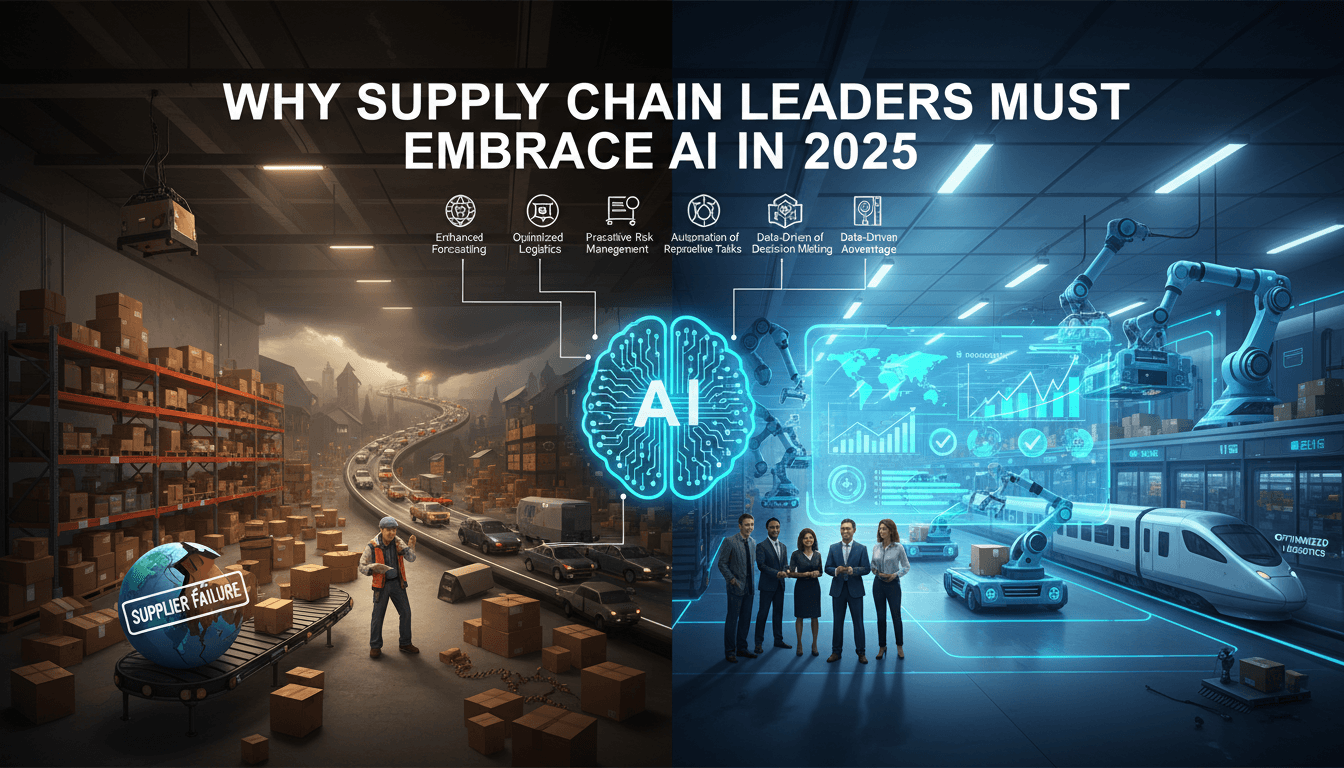
Why Supply Chain Leaders Must Embrace AI in 2025
How automation, predictive analytics, and AI-based optimization are reshaping supply chain decision-making.
🔹 89% of global supply chains will use AI by 2025 – Are you ready?
🔹 But most companies still make critical decisions using spreadsheets.
At www.talhakkhanops.com, we specialize in demystifying modern supply chain challenges. This blog draws from real-world case studies, global reports, and cutting-edge research to equip operations leaders with actionable knowledge. Whether you're optimizing costs, improving delivery performance, or building resilience, Artificial Intelligence (AI) is no longer optional – it's foundational.
Why Supply Chain Needs AI Now
Here are seven key reasons supply chain leaders must act fast:
Predictive Demand Forecasting
AI-powered systems can process real-time market data, customer trends, and historical sales to predict demand with far greater accuracy. This helps reduce overstock and stockouts.
Smart Inventory Optimization
Tools like machine learning algorithms balance carrying costs, reorder points, and supplier lead times in real time.
Route Optimization in Logistics
AI can map efficient delivery routes based on weather, traffic, fuel prices, and time sensitivity.
AI in Supplier Risk Assessment
Machine learning scans financial reports, geopolitical events, and supplier performance data to flag high-risk vendors.
Warehouse Automation & Robotics
Computer vision and robotics reduce human error and speed up order picking and fulfillment cycles.
Enhanced Customer Experience
AI chatbots and self-service portals improve post-sale service and reduce response times.
Carbon Footprint Tracking
AI tools measure emissions across the supply chain and suggest ways to cut waste and energy use.
🔹 The Key Takeaway AI is no longer an emerging trend – it’s the engine of supply chain transformation. The earlier organizations integrate AI into their operations, the faster they gain a competitive edge.
🔹 In a world where uncertainty is constant, AI provides clarity. It empowers supply chain leaders to make faster, smarter, and greener decisions.
🔹 What’s one area in your supply chain where AI could make the biggest difference? Let us know in the comments below
✨ Follow @TalhaKhan for more insights on operations, supply chain strategy, and leadership.
🔹 Share this blog to help leaders unlock the power of AI.
🌐 www.talhakkhanops.com | 📧 info@talhakkhanops.com
Footnotes:
McKinsey & Company. "The State of AI in Supply Chains 2024." January 2024.
Gartner. "AI Adoption in Logistics: Key Trends for 2025." March 2024.
World Economic Forum. "AI and the Future of Supply Chain Resilience." April 2023.
#SupplyChain2025 #AIinLogistics #OperationsExcellence #TalhaKhan #AITransformation #LogisticsStrategy #SupplyChainLeadership #WarehouseAutomation #SmartLogistics #FutureOfWork #AIChatbots #DigitalTransformation #SustainableSupplyChain #PredictiveAnalytics #LastMileDelivery #FreightTech #SupplyChainInnovation #DataDrivenDecisions #LeadershipInLogistics #TechInOps
More to Discover


Insights
Why Supply Chain Leaders Must Embrace AI in 2025
How automation, predictive analytics, and AI-based optimization are reshaping supply chain decision-making.
🔹 89% of global supply chains will use AI by 2025 – Are you ready?
🔹 But most companies still make critical decisions using spreadsheets.
At www.talhakkhanops.com, we specialize in demystifying modern supply chain challenges. This blog draws from real-world case studies, global reports, and cutting-edge research to equip operations leaders with actionable knowledge. Whether you're optimizing costs, improving delivery performance, or building resilience, Artificial Intelligence (AI) is no longer optional – it's foundational.
Why Supply Chain Needs AI Now
Here are seven key reasons supply chain leaders must act fast:
Predictive Demand Forecasting
AI-powered systems can process real-time market data, customer trends, and historical sales to predict demand with far greater accuracy. This helps reduce overstock and stockouts.
Smart Inventory Optimization
Tools like machine learning algorithms balance carrying costs, reorder points, and supplier lead times in real time.
Route Optimization in Logistics
AI can map efficient delivery routes based on weather, traffic, fuel prices, and time sensitivity.
AI in Supplier Risk Assessment
Machine learning scans financial reports, geopolitical events, and supplier performance data to flag high-risk vendors.
Warehouse Automation & Robotics
Computer vision and robotics reduce human error and speed up order picking and fulfillment cycles.
Enhanced Customer Experience
AI chatbots and self-service portals improve post-sale service and reduce response times.
Carbon Footprint Tracking
AI tools measure emissions across the supply chain and suggest ways to cut waste and energy use.
🔹 The Key Takeaway AI is no longer an emerging trend – it’s the engine of supply chain transformation. The earlier organizations integrate AI into their operations, the faster they gain a competitive edge.
🔹 In a world where uncertainty is constant, AI provides clarity. It empowers supply chain leaders to make faster, smarter, and greener decisions.
🔹 What’s one area in your supply chain where AI could make the biggest difference? Let us know in the comments below
✨ Follow @TalhaKhan for more insights on operations, supply chain strategy, and leadership.
🔹 Share this blog to help leaders unlock the power of AI.
🌐 www.talhakkhanops.com | 📧 info@talhakkhanops.com
Footnotes:
McKinsey & Company. "The State of AI in Supply Chains 2024." January 2024.
Gartner. "AI Adoption in Logistics: Key Trends for 2025." March 2024.
World Economic Forum. "AI and the Future of Supply Chain Resilience." April 2023.
#SupplyChain2025 #AIinLogistics #OperationsExcellence #TalhaKhan #AITransformation #LogisticsStrategy #SupplyChainLeadership #WarehouseAutomation #SmartLogistics #FutureOfWork #AIChatbots #DigitalTransformation #SustainableSupplyChain #PredictiveAnalytics #LastMileDelivery #FreightTech #SupplyChainInnovation #DataDrivenDecisions #LeadershipInLogistics #TechInOps
More to Discover
Insights
Why Supply Chain Leaders Must Embrace AI in 2025
How automation, predictive analytics, and AI-based optimization are reshaping supply chain decision-making.
🔹 89% of global supply chains will use AI by 2025 – Are you ready?
🔹 But most companies still make critical decisions using spreadsheets.
At www.talhakkhanops.com, we specialize in demystifying modern supply chain challenges. This blog draws from real-world case studies, global reports, and cutting-edge research to equip operations leaders with actionable knowledge. Whether you're optimizing costs, improving delivery performance, or building resilience, Artificial Intelligence (AI) is no longer optional – it's foundational.
Why Supply Chain Needs AI Now
Here are seven key reasons supply chain leaders must act fast:
Predictive Demand Forecasting
AI-powered systems can process real-time market data, customer trends, and historical sales to predict demand with far greater accuracy. This helps reduce overstock and stockouts.
Smart Inventory Optimization
Tools like machine learning algorithms balance carrying costs, reorder points, and supplier lead times in real time.
Route Optimization in Logistics
AI can map efficient delivery routes based on weather, traffic, fuel prices, and time sensitivity.
AI in Supplier Risk Assessment
Machine learning scans financial reports, geopolitical events, and supplier performance data to flag high-risk vendors.
Warehouse Automation & Robotics
Computer vision and robotics reduce human error and speed up order picking and fulfillment cycles.
Enhanced Customer Experience
AI chatbots and self-service portals improve post-sale service and reduce response times.
Carbon Footprint Tracking
AI tools measure emissions across the supply chain and suggest ways to cut waste and energy use.
🔹 The Key Takeaway AI is no longer an emerging trend – it’s the engine of supply chain transformation. The earlier organizations integrate AI into their operations, the faster they gain a competitive edge.
🔹 In a world where uncertainty is constant, AI provides clarity. It empowers supply chain leaders to make faster, smarter, and greener decisions.
🔹 What’s one area in your supply chain where AI could make the biggest difference? Let us know in the comments below
✨ Follow @TalhaKhan for more insights on operations, supply chain strategy, and leadership.
🔹 Share this blog to help leaders unlock the power of AI.
🌐 www.talhakkhanops.com | 📧 info@talhakkhanops.com
Footnotes:
McKinsey & Company. "The State of AI in Supply Chains 2024." January 2024.
Gartner. "AI Adoption in Logistics: Key Trends for 2025." March 2024.
World Economic Forum. "AI and the Future of Supply Chain Resilience." April 2023.
#SupplyChain2025 #AIinLogistics #OperationsExcellence #TalhaKhan #AITransformation #LogisticsStrategy #SupplyChainLeadership #WarehouseAutomation #SmartLogistics #FutureOfWork #AIChatbots #DigitalTransformation #SustainableSupplyChain #PredictiveAnalytics #LastMileDelivery #FreightTech #SupplyChainInnovation #DataDrivenDecisions #LeadershipInLogistics #TechInOps