Insights
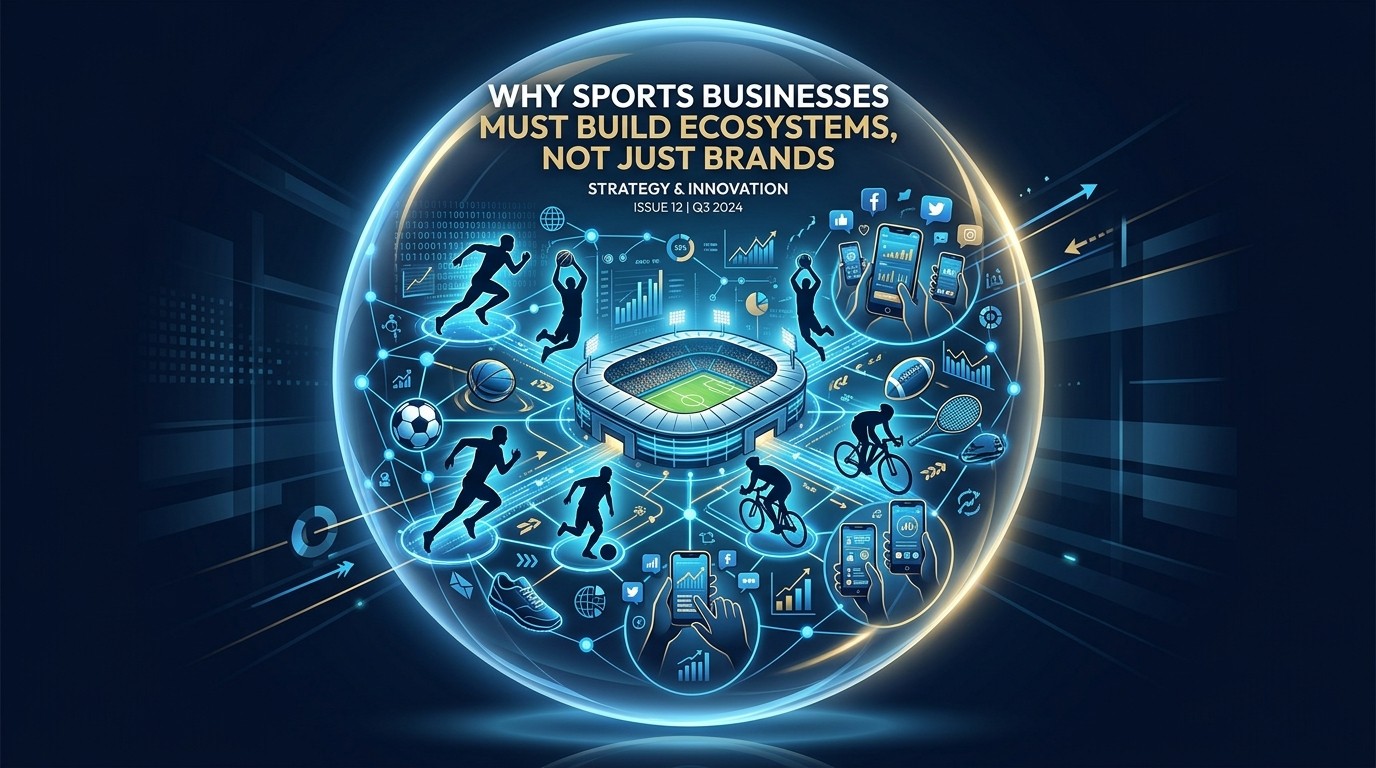
Why Sports Businesses Must Build Ecosystems, Not Just Brands
v Many businesses focus on building products.
v The strongest sports companies increasingly build ecosystems around those products.
Historically, sports businesses primarily focused on:
Manufacturing products
Selling inventory
Securing retail distribution
Increasing visibility
The model was transactional:
Create products → sell products → repeat.
But modern sports commerce evolved dramatically.
Today, the strongest businesses increasingly combine:
· Products
· Communities
· Operational systems
· Content ecosystems
· Fulfillment infrastructure
· Identity-driven branding
Into integrated commercial ecosystems.
At Talha Khan OPS, we believe the future of sports business belongs to companies capable of building:
Interconnected ecosystems, not isolated product catalogs.
Operator Perspective: Products create transactions. Ecosystems create long-term commercial resilience.
Why Ecosystem Thinking Became So Important
Several major shifts accelerated ecosystem-driven business models:
D2C commerce
Digital communities
Customization demand
Social media ecosystems
Creator-led commerce
Operational visibility
Today, customers increasingly expect:
Engagement
Participation
Personalization
Community alignment
Seamless experiences
Far beyond simply purchasing products.
What a Sports Business Ecosystem Actually Looks Like
Modern sports ecosystems increasingly combine:
Merchandise
Digital content
Community engagement
Operational reliability
Fulfillment systems
Customization capability
Partnerships
Into interconnected experiences.
Strong ecosystems improve:
Customer retention
Loyalty
Scalability
Operational resilience
Simultaneously.
The Biggest Mistakes Sports Businesses Make
1. Thinking Only Transactionally
Many businesses still focus heavily on:
Individual sales
Promotions
Short-term revenue
Without building:
Audience relationships
Community engagement
Operational infrastructure
Transactional growth often becomes difficult to sustain long-term.
2. Underestimating Operational Infrastructure
Modern ecosystems require:
· Inventory visibility
· Fulfillment coordination
· Scalable systems
· Supplier partnerships
· Operational responsiveness
Without operational infrastructure,
growth becomes unstable quickly.
Operator Perspective: Ecosystems scale operationally before they scale commercially.
3. Weak Community Building
Modern consumers increasingly support:
Brands they relate to
Communities they participate in
Identities they align with
Businesses ignoring community ecosystems often struggle with:
Retention
Emotional loyalty
Organic growth
4. Treating Content Separately From Commerce
Modern sports brands increasingly operate simultaneously as:
Retailers
Media brands
Community platforms
Because customer attention increasingly lives inside:
Digital ecosystems
Social platforms
Community-driven content
Content increasingly strengthens:
Trust
Retention
Audience growth
Why Sports Businesses Naturally Support Ecosystem Models
Sports already involve:
Emotion
Loyalty
Identity
Participation
Culture
Community
This creates enormous opportunities around:
Merchandise ecosystems
Academy partnerships
Custom footballs
Branded apparel
Community-led products
D2C commerce
Modern sports businesses increasingly compete through:
Integrated experiences.
Why OEM Manufacturing Supports Ecosystem Growth
Modern OEM ecosystems increasingly support:
Private labeling
Custom production
Scalable fulfillment
Flexible manufacturing
Lower moqs
This allows sports businesses to build:
Branded merchandise ecosystems
Academy collections
Custom football lines
Community products
Without massive manufacturing infrastructure internally.
Manufacturing ecosystems like Sialkot remain globally important because specialized sports manufacturing ecosystems support:
Football production
Sportswear manufacturing
OEM flexibility
Export readiness
Operational scalability
Within sports commerce globally.
Brands like STRYK World operate within this evolving ecosystem by emphasizing:
Affordable premium positioning
OEM manufacturing
Custom football production
Scalable fulfillment
Operational responsiveness
While supporting:
Soccer clubs
Sports retailers
Wholesalers
Distributors
Community-driven sports brands
Globally.
Why Ecosystems Improve Business Resilience
One major shift:
businesses increasingly survive volatility better when they build:
Diversified revenue streams
Strong communities
Operational infrastructure
Fulfillment reliability
Audience ecosystems
Instead of depending only on:
Individual product sales
Advertising spikes
Short-term campaigns
Operator Perspective: Ecosystems create operational stability during market volatility.
Mini Industry Observation, Attention and Community Are Becoming Business Assets
One major trend globally:
modern sports businesses increasingly compete through:
Audience ownership
Community engagement
Operational trust
Ecosystem participation
Not simply:
Inventory size
orRetail presence
The market increasingly rewards interconnected business models.
Industry Prediction for 2026–2035
Over the next decade,
sports businesses will likely become:
More ecosystem-driven
More operationally integrated
More community-focused
More customization-oriented
Businesses will increasingly invest in:
· OEM partnerships
· Scalable fulfillment systems
· Community-led branding
· Content ecosystems
· Operational dashboards
· Direct audience engagement
The strongest sports companies will likely combine:
Community + operational reliability + scalable ecosystem infrastructure.
Final Thought
Modern sports businesses are no longer competing only through products.
They increasingly compete through:
Ecosystems
Communities
Fulfillment reliability
Identity-driven branding
Operational scalability
The businesses adapting early to ecosystem-driven strategies will likely build stronger long-term commercial resilience than companies focused only on transactional sales models.
🔹 Products create revenue.
🔹 Ecosystems create long-term business durability.
💬 What matters most in modern sports ecosystems today, community, operations, content, or customization?
Let’s discuss below.
📩 Connect with us:
🌐 Talha Khan OPS
🌐 STRYK World
#sportsbusiness #businessecosystems #Sportswear #footballmanufacturing #oemmanufacturing #privatelabel #businessoperations #sportsretail #Customization #operationalexcellence #sportsmanufacturing #operationalleadership #communitybuilding #brandbuilding #sportsindustry #retailoperations #businessgrowth #D2C #identitybranding #Sialkot #strykworld #talhakhanops #futureofsportsbusiness #operationsmanagement #communitydriven #scalablebusiness #sportsculture #contentmarketing #businessstrategy #customerexperience
More to Discover

Insights
Why Sports Businesses Must Build Ecosystems, Not Just Brands
v Many businesses focus on building products.
v The strongest sports companies increasingly build ecosystems around those products.
Historically, sports businesses primarily focused on:
Manufacturing products
Selling inventory
Securing retail distribution
Increasing visibility
The model was transactional:
Create products → sell products → repeat.
But modern sports commerce evolved dramatically.
Today, the strongest businesses increasingly combine:
· Products
· Communities
· Operational systems
· Content ecosystems
· Fulfillment infrastructure
· Identity-driven branding
Into integrated commercial ecosystems.
At Talha Khan OPS, we believe the future of sports business belongs to companies capable of building:
Interconnected ecosystems, not isolated product catalogs.
Operator Perspective: Products create transactions. Ecosystems create long-term commercial resilience.
Why Ecosystem Thinking Became So Important
Several major shifts accelerated ecosystem-driven business models:
D2C commerce
Digital communities
Customization demand
Social media ecosystems
Creator-led commerce
Operational visibility
Today, customers increasingly expect:
Engagement
Participation
Personalization
Community alignment
Seamless experiences
Far beyond simply purchasing products.
What a Sports Business Ecosystem Actually Looks Like
Modern sports ecosystems increasingly combine:
Merchandise
Digital content
Community engagement
Operational reliability
Fulfillment systems
Customization capability
Partnerships
Into interconnected experiences.
Strong ecosystems improve:
Customer retention
Loyalty
Scalability
Operational resilience
Simultaneously.
The Biggest Mistakes Sports Businesses Make
1. Thinking Only Transactionally
Many businesses still focus heavily on:
Individual sales
Promotions
Short-term revenue
Without building:
Audience relationships
Community engagement
Operational infrastructure
Transactional growth often becomes difficult to sustain long-term.
2. Underestimating Operational Infrastructure
Modern ecosystems require:
· Inventory visibility
· Fulfillment coordination
· Scalable systems
· Supplier partnerships
· Operational responsiveness
Without operational infrastructure,
growth becomes unstable quickly.
Operator Perspective: Ecosystems scale operationally before they scale commercially.
3. Weak Community Building
Modern consumers increasingly support:
Brands they relate to
Communities they participate in
Identities they align with
Businesses ignoring community ecosystems often struggle with:
Retention
Emotional loyalty
Organic growth
4. Treating Content Separately From Commerce
Modern sports brands increasingly operate simultaneously as:
Retailers
Media brands
Community platforms
Because customer attention increasingly lives inside:
Digital ecosystems
Social platforms
Community-driven content
Content increasingly strengthens:
Trust
Retention
Audience growth
Why Sports Businesses Naturally Support Ecosystem Models
Sports already involve:
Emotion
Loyalty
Identity
Participation
Culture
Community
This creates enormous opportunities around:
Merchandise ecosystems
Academy partnerships
Custom footballs
Branded apparel
Community-led products
D2C commerce
Modern sports businesses increasingly compete through:
Integrated experiences.
Why OEM Manufacturing Supports Ecosystem Growth
Modern OEM ecosystems increasingly support:
Private labeling
Custom production
Scalable fulfillment
Flexible manufacturing
Lower moqs
This allows sports businesses to build:
Branded merchandise ecosystems
Academy collections
Custom football lines
Community products
Without massive manufacturing infrastructure internally.
Manufacturing ecosystems like Sialkot remain globally important because specialized sports manufacturing ecosystems support:
Football production
Sportswear manufacturing
OEM flexibility
Export readiness
Operational scalability
Within sports commerce globally.
Brands like STRYK World operate within this evolving ecosystem by emphasizing:
Affordable premium positioning
OEM manufacturing
Custom football production
Scalable fulfillment
Operational responsiveness
While supporting:
Soccer clubs
Sports retailers
Wholesalers
Distributors
Community-driven sports brands
Globally.
Why Ecosystems Improve Business Resilience
One major shift:
businesses increasingly survive volatility better when they build:
Diversified revenue streams
Strong communities
Operational infrastructure
Fulfillment reliability
Audience ecosystems
Instead of depending only on:
Individual product sales
Advertising spikes
Short-term campaigns
Operator Perspective: Ecosystems create operational stability during market volatility.
Mini Industry Observation, Attention and Community Are Becoming Business Assets
One major trend globally:
modern sports businesses increasingly compete through:
Audience ownership
Community engagement
Operational trust
Ecosystem participation
Not simply:
Inventory size
orRetail presence
The market increasingly rewards interconnected business models.
Industry Prediction for 2026–2035
Over the next decade,
sports businesses will likely become:
More ecosystem-driven
More operationally integrated
More community-focused
More customization-oriented
Businesses will increasingly invest in:
· OEM partnerships
· Scalable fulfillment systems
· Community-led branding
· Content ecosystems
· Operational dashboards
· Direct audience engagement
The strongest sports companies will likely combine:
Community + operational reliability + scalable ecosystem infrastructure.
Final Thought
Modern sports businesses are no longer competing only through products.
They increasingly compete through:
Ecosystems
Communities
Fulfillment reliability
Identity-driven branding
Operational scalability
The businesses adapting early to ecosystem-driven strategies will likely build stronger long-term commercial resilience than companies focused only on transactional sales models.
🔹 Products create revenue.
🔹 Ecosystems create long-term business durability.
💬 What matters most in modern sports ecosystems today, community, operations, content, or customization?
Let’s discuss below.
📩 Connect with us:
🌐 Talha Khan OPS
🌐 STRYK World
#sportsbusiness #businessecosystems #Sportswear #footballmanufacturing #oemmanufacturing #privatelabel #businessoperations #sportsretail #Customization #operationalexcellence #sportsmanufacturing #operationalleadership #communitybuilding #brandbuilding #sportsindustry #retailoperations #businessgrowth #D2C #identitybranding #Sialkot #strykworld #talhakhanops #futureofsportsbusiness #operationsmanagement #communitydriven #scalablebusiness #sportsculture #contentmarketing #businessstrategy #customerexperience
More to Discover
Insights
Why Sports Businesses Must Build Ecosystems, Not Just Brands
v Many businesses focus on building products.
v The strongest sports companies increasingly build ecosystems around those products.
Historically, sports businesses primarily focused on:
Manufacturing products
Selling inventory
Securing retail distribution
Increasing visibility
The model was transactional:
Create products → sell products → repeat.
But modern sports commerce evolved dramatically.
Today, the strongest businesses increasingly combine:
· Products
· Communities
· Operational systems
· Content ecosystems
· Fulfillment infrastructure
· Identity-driven branding
Into integrated commercial ecosystems.
At Talha Khan OPS, we believe the future of sports business belongs to companies capable of building:
Interconnected ecosystems, not isolated product catalogs.
Operator Perspective: Products create transactions. Ecosystems create long-term commercial resilience.
Why Ecosystem Thinking Became So Important
Several major shifts accelerated ecosystem-driven business models:
D2C commerce
Digital communities
Customization demand
Social media ecosystems
Creator-led commerce
Operational visibility
Today, customers increasingly expect:
Engagement
Participation
Personalization
Community alignment
Seamless experiences
Far beyond simply purchasing products.
What a Sports Business Ecosystem Actually Looks Like
Modern sports ecosystems increasingly combine:
Merchandise
Digital content
Community engagement
Operational reliability
Fulfillment systems
Customization capability
Partnerships
Into interconnected experiences.
Strong ecosystems improve:
Customer retention
Loyalty
Scalability
Operational resilience
Simultaneously.
The Biggest Mistakes Sports Businesses Make
1. Thinking Only Transactionally
Many businesses still focus heavily on:
Individual sales
Promotions
Short-term revenue
Without building:
Audience relationships
Community engagement
Operational infrastructure
Transactional growth often becomes difficult to sustain long-term.
2. Underestimating Operational Infrastructure
Modern ecosystems require:
· Inventory visibility
· Fulfillment coordination
· Scalable systems
· Supplier partnerships
· Operational responsiveness
Without operational infrastructure,
growth becomes unstable quickly.
Operator Perspective: Ecosystems scale operationally before they scale commercially.
3. Weak Community Building
Modern consumers increasingly support:
Brands they relate to
Communities they participate in
Identities they align with
Businesses ignoring community ecosystems often struggle with:
Retention
Emotional loyalty
Organic growth
4. Treating Content Separately From Commerce
Modern sports brands increasingly operate simultaneously as:
Retailers
Media brands
Community platforms
Because customer attention increasingly lives inside:
Digital ecosystems
Social platforms
Community-driven content
Content increasingly strengthens:
Trust
Retention
Audience growth
Why Sports Businesses Naturally Support Ecosystem Models
Sports already involve:
Emotion
Loyalty
Identity
Participation
Culture
Community
This creates enormous opportunities around:
Merchandise ecosystems
Academy partnerships
Custom footballs
Branded apparel
Community-led products
D2C commerce
Modern sports businesses increasingly compete through:
Integrated experiences.
Why OEM Manufacturing Supports Ecosystem Growth
Modern OEM ecosystems increasingly support:
Private labeling
Custom production
Scalable fulfillment
Flexible manufacturing
Lower moqs
This allows sports businesses to build:
Branded merchandise ecosystems
Academy collections
Custom football lines
Community products
Without massive manufacturing infrastructure internally.
Manufacturing ecosystems like Sialkot remain globally important because specialized sports manufacturing ecosystems support:
Football production
Sportswear manufacturing
OEM flexibility
Export readiness
Operational scalability
Within sports commerce globally.
Brands like STRYK World operate within this evolving ecosystem by emphasizing:
Affordable premium positioning
OEM manufacturing
Custom football production
Scalable fulfillment
Operational responsiveness
While supporting:
Soccer clubs
Sports retailers
Wholesalers
Distributors
Community-driven sports brands
Globally.
Why Ecosystems Improve Business Resilience
One major shift:
businesses increasingly survive volatility better when they build:
Diversified revenue streams
Strong communities
Operational infrastructure
Fulfillment reliability
Audience ecosystems
Instead of depending only on:
Individual product sales
Advertising spikes
Short-term campaigns
Operator Perspective: Ecosystems create operational stability during market volatility.
Mini Industry Observation, Attention and Community Are Becoming Business Assets
One major trend globally:
modern sports businesses increasingly compete through:
Audience ownership
Community engagement
Operational trust
Ecosystem participation
Not simply:
Inventory size
orRetail presence
The market increasingly rewards interconnected business models.
Industry Prediction for 2026–2035
Over the next decade,
sports businesses will likely become:
More ecosystem-driven
More operationally integrated
More community-focused
More customization-oriented
Businesses will increasingly invest in:
· OEM partnerships
· Scalable fulfillment systems
· Community-led branding
· Content ecosystems
· Operational dashboards
· Direct audience engagement
The strongest sports companies will likely combine:
Community + operational reliability + scalable ecosystem infrastructure.
Final Thought
Modern sports businesses are no longer competing only through products.
They increasingly compete through:
Ecosystems
Communities
Fulfillment reliability
Identity-driven branding
Operational scalability
The businesses adapting early to ecosystem-driven strategies will likely build stronger long-term commercial resilience than companies focused only on transactional sales models.
🔹 Products create revenue.
🔹 Ecosystems create long-term business durability.
💬 What matters most in modern sports ecosystems today, community, operations, content, or customization?
Let’s discuss below.
📩 Connect with us:
🌐 Talha Khan OPS
🌐 STRYK World
#sportsbusiness #businessecosystems #Sportswear #footballmanufacturing #oemmanufacturing #privatelabel #businessoperations #sportsretail #Customization #operationalexcellence #sportsmanufacturing #operationalleadership #communitybuilding #brandbuilding #sportsindustry #retailoperations #businessgrowth #D2C #identitybranding #Sialkot #strykworld #talhakhanops #futureofsportsbusiness #operationsmanagement #communitydriven #scalablebusiness #sportsculture #contentmarketing #businessstrategy #customerexperience