Insights
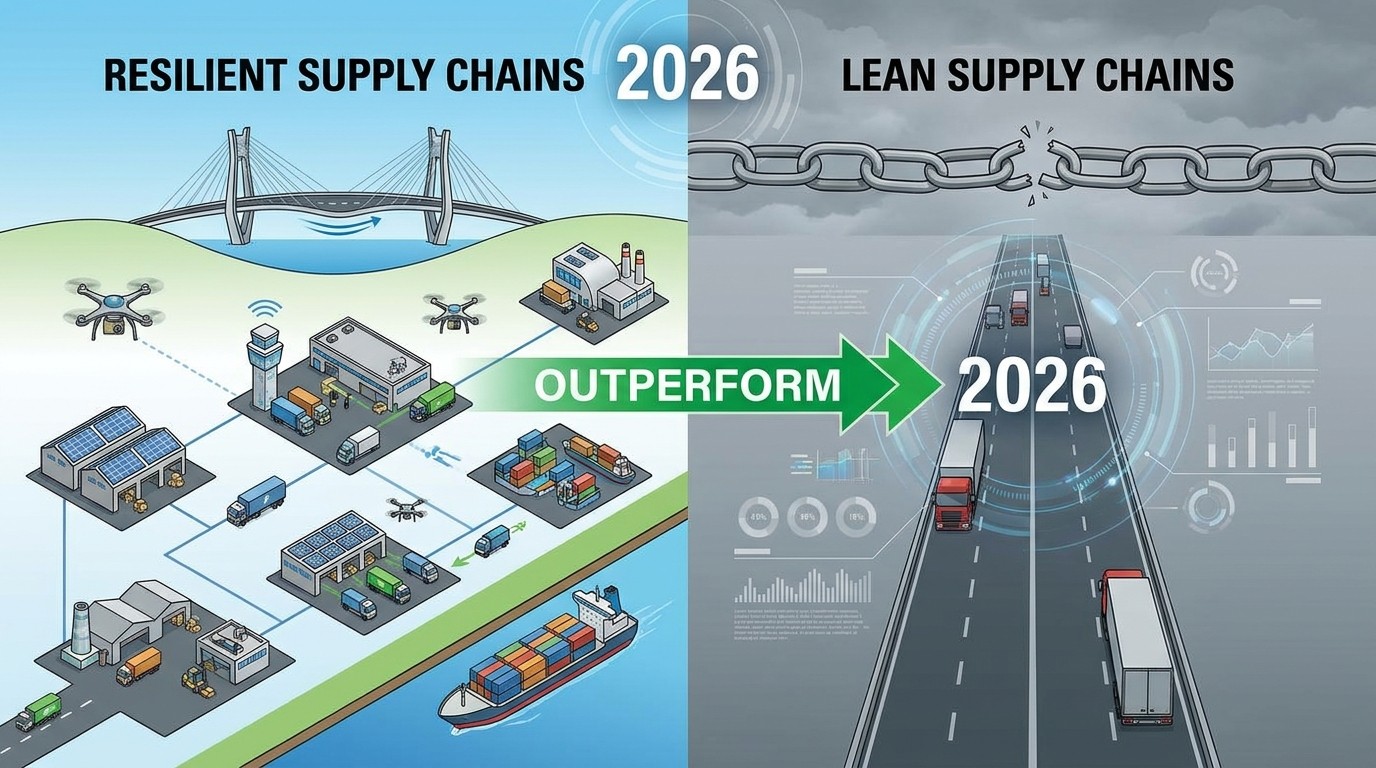
Why Resilient Supply Chains Outperform Lean Supply Chains in 2026
🔹 For years, businesses were taught to optimize supply chains for maximum efficiency.
🔹 Today, the smartest companies are optimizing for resilience instead.
For decades, lean supply chain models dominated global business thinking.
The philosophy was simple:
Reduce inventory
Minimize warehousing
Optimize costs
Eliminate operational “waste”
Maximize efficiency
And for many years, it worked extremely well.
But recent global disruptions exposed a major weakness:
highly optimized systems often become highly fragile systems.
At Talha Khan OPS, we’ve seen businesses increasingly shift from:
“How lean can we become?”
to:
“How resilient can we remain under pressure?”
Because modern operational environments are becoming far less predictable.
Operator Perspective:
Efficiency creates profitability during stability. Resilience protects profitability during disruption.
Why Lean Supply Chains Struggled Globally
Several global events exposed operational vulnerabilities:
· COVID-era disruptions
· Freight instability
· Geopolitical tensions
· Raw material shortages
· Port congestion
· Labor shortages
· Demand volatility
Many businesses operating ultra-lean supply chains suddenly faced:
· Inventory shortages
· Delayed fulfillment
· Supplier dependency issues
· Production shutdowns
· Lost sales opportunities
The systems optimized for maximum efficiency often lacked operational flexibility.
What Supply Chain Resilience Actually Means
Resilience does not mean:
· Inefficiency
· Overstocking
· Operational excess
Modern resilience means building systems capable of:
· Adapting quickly
· Recovering faster
· Absorbing disruptions
· Maintaining fulfillment continuity
· Scaling under uncertainty
without operational collapse.
This increasingly requires:
· Visibility
· Supplier diversification
· Forecasting discipline
· Inventory intelligence
· Operational flexibility
Why Businesses Are Rebalancing Supply Chain Strategy
One major operational shift happening globally:
companies are moving away from:
“lowest-cost-only thinking”
toward:
“risk-adjusted operational strategy.”
Businesses increasingly recognize that:
slightly higher operational costs can sometimes prevent significantly larger disruption losses later.
Operator Perspective:
Cheap supply chains become expensive when disruption arrives.
The Biggest Weaknesses of Over-Lean Operations
1. Single Supplier Dependency
Many businesses optimized aggressively around:
· Lowest-cost sourcing
· Concentrated production
· Single-region manufacturing
This created vulnerability when disruptions affected:
· Production timelines
· Export capability
· Freight movement
Modern resilient supply chains increasingly prioritize:
· Supplier diversification
· Regional flexibility
· Backup sourcing capability
instead of extreme dependency.
2. Minimal Inventory Buffers
Ultra-lean inventory strategies often reduce:
· Operational flexibility
· Replenishment responsiveness
· Disruption protection
While excessive inventory creates inefficiency…
zero flexibility creates operational fragility.
Modern operators increasingly focus on:
intelligent inventory positioning rather than maximum inventory reduction.
3. Weak Operational Visibility
Many businesses still struggle with:
· Fragmented inventory systems
· Delayed supplier updates
· Disconnected forecasting
· Reactive procurement
Without visibility,
businesses cannot respond quickly during disruptions.
Visibility itself becomes resilience infrastructure.
What High-Resilience Businesses Do Differently
Operationally resilient companies prioritize:
· Supplier relationships
· Operational visibility
· Forecasting integration
· Scalable fulfillment
· Inventory coordination
· Logistics flexibility
· Contingency planning
because uncertainty itself is now part of modern business environments.
Companies like Amazon, Toyota, and Nike increasingly invest in resilience because operational continuity directly impacts:
· Customer trust
· Fulfillment stability
· Revenue protection
· Market competitiveness
Why Sports & Apparel Industries Need Resilience More Than Ever
Sportswear and sports products industries face especially dynamic operational pressure due to:
· Seasonal demand
· Customization
· Global sourcing
· Tournament cycles
· Product launches
· Retail volatility
This creates strong demand for operational flexibility across:
· OEM manufacturing
· Private labelling
· Wholesale fulfillment
· Sports retail
Manufacturing ecosystems like Sialkot remain globally valuable partly because they provide:
· Manufacturing specialization
· Scalable production
· Export capability
· Operational adaptability
within sports manufacturing ecosystems.
Brands like STRYK World operate within this evolving market by balancing:
Affordable premium positioning
Customization flexibility
Oem capability
Scalable fulfillment
Operational responsiveness
for:
Soccer clubs
Wholesalers
Retailers
Distributors
Sports brands
globally.
Why Resilience Is Becoming a Competitive Advantage
One major change in business thinking:
resilience itself is becoming commercially valuable.
Customers increasingly reward businesses capable of:
· Delivering consistently
· Fulfilling reliably
· Adapting quickly
· Maintaining operational continuity
especially during uncertainty.
Operational reliability itself now influences:
· Customer retention
· Wholesale trust
· Supplier confidence
· Long-term partnerships
Operator Perspective:
Modern competitive advantage increasingly depends on operational stability under pressure.
Mini Industry Observation, Flexibility Is Replacing Rigidity
For years,
many businesses optimized around rigid efficiency.
Today,
high-performing operators increasingly prioritize:
· Adaptability
· Operational visibility
· Scalable systems
· Supplier coordination
· Flexible fulfillment
because modern markets change faster than traditional systems were designed to handle.
The future belongs to adaptable operations.
Industry Prediction for 2026–2035
Over the next decade,
supply chains will likely become:
· More diversified
· More visibility-driven
· More regionally flexible
· More technology-supported
· More resilience-focused
Businesses will increasingly invest in:
· Predictive forecasting
· Supplier diversification
· Inventory intelligence
· Operational dashboards
· Logistics flexibility
· Fulfillment redundancy
instead of pursuing extreme efficiency alone.
The strongest businesses will likely combine:
operational efficiency + operational resilience.
Final Thought
Lean operations remain valuable.
But resilience is increasingly becoming essential.
The businesses that survive and scale long-term will likely not be the ones operating with the absolute lowest cost structures.
They’ll be the businesses capable of maintaining operational continuity when markets become unstable.
🔹 Efficiency improves margins.
🔹 Resilience protects businesses.
What matters more in modern supply chains today, efficiency, flexibility, visibility, or resilience?
Let’s discuss below.
📩 Connect with us:
🌐 Talha Khan OPS
🌐 STRYK World
#SupplyChain #SupplyChainManagement #OperationsManagement #Logistics #OperationalExcellence #InventoryManagement #BusinessOperations #Forecasting #WarehouseManagement #SupplyChainResilience #Manufacturing #SportsManufacturing #OEMManufacturing #PrivateLabel #RetailOperations #Fulfillment #BusinessGrowth #Sportswear #FootballManufacturing #OperationalLeadership #BusinessTransformation #GlobalSourcing #SportsBusiness #Sialkot #STRYKWorld #TalhaKhanOPS #OperationalDiscipline #SupplyChainStrategy #WholesaleOperations #FutureOfSupplyChain
More to Discover


Insights
Why Resilient Supply Chains Outperform Lean Supply Chains in 2026
🔹 For years, businesses were taught to optimize supply chains for maximum efficiency.
🔹 Today, the smartest companies are optimizing for resilience instead.
For decades, lean supply chain models dominated global business thinking.
The philosophy was simple:
Reduce inventory
Minimize warehousing
Optimize costs
Eliminate operational “waste”
Maximize efficiency
And for many years, it worked extremely well.
But recent global disruptions exposed a major weakness:
highly optimized systems often become highly fragile systems.
At Talha Khan OPS, we’ve seen businesses increasingly shift from:
“How lean can we become?”
to:
“How resilient can we remain under pressure?”
Because modern operational environments are becoming far less predictable.
Operator Perspective:
Efficiency creates profitability during stability. Resilience protects profitability during disruption.
Why Lean Supply Chains Struggled Globally
Several global events exposed operational vulnerabilities:
· COVID-era disruptions
· Freight instability
· Geopolitical tensions
· Raw material shortages
· Port congestion
· Labor shortages
· Demand volatility
Many businesses operating ultra-lean supply chains suddenly faced:
· Inventory shortages
· Delayed fulfillment
· Supplier dependency issues
· Production shutdowns
· Lost sales opportunities
The systems optimized for maximum efficiency often lacked operational flexibility.
What Supply Chain Resilience Actually Means
Resilience does not mean:
· Inefficiency
· Overstocking
· Operational excess
Modern resilience means building systems capable of:
· Adapting quickly
· Recovering faster
· Absorbing disruptions
· Maintaining fulfillment continuity
· Scaling under uncertainty
without operational collapse.
This increasingly requires:
· Visibility
· Supplier diversification
· Forecasting discipline
· Inventory intelligence
· Operational flexibility
Why Businesses Are Rebalancing Supply Chain Strategy
One major operational shift happening globally:
companies are moving away from:
“lowest-cost-only thinking”
toward:
“risk-adjusted operational strategy.”
Businesses increasingly recognize that:
slightly higher operational costs can sometimes prevent significantly larger disruption losses later.
Operator Perspective:
Cheap supply chains become expensive when disruption arrives.
The Biggest Weaknesses of Over-Lean Operations
1. Single Supplier Dependency
Many businesses optimized aggressively around:
· Lowest-cost sourcing
· Concentrated production
· Single-region manufacturing
This created vulnerability when disruptions affected:
· Production timelines
· Export capability
· Freight movement
Modern resilient supply chains increasingly prioritize:
· Supplier diversification
· Regional flexibility
· Backup sourcing capability
instead of extreme dependency.
2. Minimal Inventory Buffers
Ultra-lean inventory strategies often reduce:
· Operational flexibility
· Replenishment responsiveness
· Disruption protection
While excessive inventory creates inefficiency…
zero flexibility creates operational fragility.
Modern operators increasingly focus on:
intelligent inventory positioning rather than maximum inventory reduction.
3. Weak Operational Visibility
Many businesses still struggle with:
· Fragmented inventory systems
· Delayed supplier updates
· Disconnected forecasting
· Reactive procurement
Without visibility,
businesses cannot respond quickly during disruptions.
Visibility itself becomes resilience infrastructure.
What High-Resilience Businesses Do Differently
Operationally resilient companies prioritize:
· Supplier relationships
· Operational visibility
· Forecasting integration
· Scalable fulfillment
· Inventory coordination
· Logistics flexibility
· Contingency planning
because uncertainty itself is now part of modern business environments.
Companies like Amazon, Toyota, and Nike increasingly invest in resilience because operational continuity directly impacts:
· Customer trust
· Fulfillment stability
· Revenue protection
· Market competitiveness
Why Sports & Apparel Industries Need Resilience More Than Ever
Sportswear and sports products industries face especially dynamic operational pressure due to:
· Seasonal demand
· Customization
· Global sourcing
· Tournament cycles
· Product launches
· Retail volatility
This creates strong demand for operational flexibility across:
· OEM manufacturing
· Private labelling
· Wholesale fulfillment
· Sports retail
Manufacturing ecosystems like Sialkot remain globally valuable partly because they provide:
· Manufacturing specialization
· Scalable production
· Export capability
· Operational adaptability
within sports manufacturing ecosystems.
Brands like STRYK World operate within this evolving market by balancing:
Affordable premium positioning
Customization flexibility
Oem capability
Scalable fulfillment
Operational responsiveness
for:
Soccer clubs
Wholesalers
Retailers
Distributors
Sports brands
globally.
Why Resilience Is Becoming a Competitive Advantage
One major change in business thinking:
resilience itself is becoming commercially valuable.
Customers increasingly reward businesses capable of:
· Delivering consistently
· Fulfilling reliably
· Adapting quickly
· Maintaining operational continuity
especially during uncertainty.
Operational reliability itself now influences:
· Customer retention
· Wholesale trust
· Supplier confidence
· Long-term partnerships
Operator Perspective:
Modern competitive advantage increasingly depends on operational stability under pressure.
Mini Industry Observation, Flexibility Is Replacing Rigidity
For years,
many businesses optimized around rigid efficiency.
Today,
high-performing operators increasingly prioritize:
· Adaptability
· Operational visibility
· Scalable systems
· Supplier coordination
· Flexible fulfillment
because modern markets change faster than traditional systems were designed to handle.
The future belongs to adaptable operations.
Industry Prediction for 2026–2035
Over the next decade,
supply chains will likely become:
· More diversified
· More visibility-driven
· More regionally flexible
· More technology-supported
· More resilience-focused
Businesses will increasingly invest in:
· Predictive forecasting
· Supplier diversification
· Inventory intelligence
· Operational dashboards
· Logistics flexibility
· Fulfillment redundancy
instead of pursuing extreme efficiency alone.
The strongest businesses will likely combine:
operational efficiency + operational resilience.
Final Thought
Lean operations remain valuable.
But resilience is increasingly becoming essential.
The businesses that survive and scale long-term will likely not be the ones operating with the absolute lowest cost structures.
They’ll be the businesses capable of maintaining operational continuity when markets become unstable.
🔹 Efficiency improves margins.
🔹 Resilience protects businesses.
What matters more in modern supply chains today, efficiency, flexibility, visibility, or resilience?
Let’s discuss below.
📩 Connect with us:
🌐 Talha Khan OPS
🌐 STRYK World
#SupplyChain #SupplyChainManagement #OperationsManagement #Logistics #OperationalExcellence #InventoryManagement #BusinessOperations #Forecasting #WarehouseManagement #SupplyChainResilience #Manufacturing #SportsManufacturing #OEMManufacturing #PrivateLabel #RetailOperations #Fulfillment #BusinessGrowth #Sportswear #FootballManufacturing #OperationalLeadership #BusinessTransformation #GlobalSourcing #SportsBusiness #Sialkot #STRYKWorld #TalhaKhanOPS #OperationalDiscipline #SupplyChainStrategy #WholesaleOperations #FutureOfSupplyChain
More to Discover
Insights
Why Resilient Supply Chains Outperform Lean Supply Chains in 2026
🔹 For years, businesses were taught to optimize supply chains for maximum efficiency.
🔹 Today, the smartest companies are optimizing for resilience instead.
For decades, lean supply chain models dominated global business thinking.
The philosophy was simple:
Reduce inventory
Minimize warehousing
Optimize costs
Eliminate operational “waste”
Maximize efficiency
And for many years, it worked extremely well.
But recent global disruptions exposed a major weakness:
highly optimized systems often become highly fragile systems.
At Talha Khan OPS, we’ve seen businesses increasingly shift from:
“How lean can we become?”
to:
“How resilient can we remain under pressure?”
Because modern operational environments are becoming far less predictable.
Operator Perspective:
Efficiency creates profitability during stability. Resilience protects profitability during disruption.
Why Lean Supply Chains Struggled Globally
Several global events exposed operational vulnerabilities:
· COVID-era disruptions
· Freight instability
· Geopolitical tensions
· Raw material shortages
· Port congestion
· Labor shortages
· Demand volatility
Many businesses operating ultra-lean supply chains suddenly faced:
· Inventory shortages
· Delayed fulfillment
· Supplier dependency issues
· Production shutdowns
· Lost sales opportunities
The systems optimized for maximum efficiency often lacked operational flexibility.
What Supply Chain Resilience Actually Means
Resilience does not mean:
· Inefficiency
· Overstocking
· Operational excess
Modern resilience means building systems capable of:
· Adapting quickly
· Recovering faster
· Absorbing disruptions
· Maintaining fulfillment continuity
· Scaling under uncertainty
without operational collapse.
This increasingly requires:
· Visibility
· Supplier diversification
· Forecasting discipline
· Inventory intelligence
· Operational flexibility
Why Businesses Are Rebalancing Supply Chain Strategy
One major operational shift happening globally:
companies are moving away from:
“lowest-cost-only thinking”
toward:
“risk-adjusted operational strategy.”
Businesses increasingly recognize that:
slightly higher operational costs can sometimes prevent significantly larger disruption losses later.
Operator Perspective:
Cheap supply chains become expensive when disruption arrives.
The Biggest Weaknesses of Over-Lean Operations
1. Single Supplier Dependency
Many businesses optimized aggressively around:
· Lowest-cost sourcing
· Concentrated production
· Single-region manufacturing
This created vulnerability when disruptions affected:
· Production timelines
· Export capability
· Freight movement
Modern resilient supply chains increasingly prioritize:
· Supplier diversification
· Regional flexibility
· Backup sourcing capability
instead of extreme dependency.
2. Minimal Inventory Buffers
Ultra-lean inventory strategies often reduce:
· Operational flexibility
· Replenishment responsiveness
· Disruption protection
While excessive inventory creates inefficiency…
zero flexibility creates operational fragility.
Modern operators increasingly focus on:
intelligent inventory positioning rather than maximum inventory reduction.
3. Weak Operational Visibility
Many businesses still struggle with:
· Fragmented inventory systems
· Delayed supplier updates
· Disconnected forecasting
· Reactive procurement
Without visibility,
businesses cannot respond quickly during disruptions.
Visibility itself becomes resilience infrastructure.
What High-Resilience Businesses Do Differently
Operationally resilient companies prioritize:
· Supplier relationships
· Operational visibility
· Forecasting integration
· Scalable fulfillment
· Inventory coordination
· Logistics flexibility
· Contingency planning
because uncertainty itself is now part of modern business environments.
Companies like Amazon, Toyota, and Nike increasingly invest in resilience because operational continuity directly impacts:
· Customer trust
· Fulfillment stability
· Revenue protection
· Market competitiveness
Why Sports & Apparel Industries Need Resilience More Than Ever
Sportswear and sports products industries face especially dynamic operational pressure due to:
· Seasonal demand
· Customization
· Global sourcing
· Tournament cycles
· Product launches
· Retail volatility
This creates strong demand for operational flexibility across:
· OEM manufacturing
· Private labelling
· Wholesale fulfillment
· Sports retail
Manufacturing ecosystems like Sialkot remain globally valuable partly because they provide:
· Manufacturing specialization
· Scalable production
· Export capability
· Operational adaptability
within sports manufacturing ecosystems.
Brands like STRYK World operate within this evolving market by balancing:
Affordable premium positioning
Customization flexibility
Oem capability
Scalable fulfillment
Operational responsiveness
for:
Soccer clubs
Wholesalers
Retailers
Distributors
Sports brands
globally.
Why Resilience Is Becoming a Competitive Advantage
One major change in business thinking:
resilience itself is becoming commercially valuable.
Customers increasingly reward businesses capable of:
· Delivering consistently
· Fulfilling reliably
· Adapting quickly
· Maintaining operational continuity
especially during uncertainty.
Operational reliability itself now influences:
· Customer retention
· Wholesale trust
· Supplier confidence
· Long-term partnerships
Operator Perspective:
Modern competitive advantage increasingly depends on operational stability under pressure.
Mini Industry Observation, Flexibility Is Replacing Rigidity
For years,
many businesses optimized around rigid efficiency.
Today,
high-performing operators increasingly prioritize:
· Adaptability
· Operational visibility
· Scalable systems
· Supplier coordination
· Flexible fulfillment
because modern markets change faster than traditional systems were designed to handle.
The future belongs to adaptable operations.
Industry Prediction for 2026–2035
Over the next decade,
supply chains will likely become:
· More diversified
· More visibility-driven
· More regionally flexible
· More technology-supported
· More resilience-focused
Businesses will increasingly invest in:
· Predictive forecasting
· Supplier diversification
· Inventory intelligence
· Operational dashboards
· Logistics flexibility
· Fulfillment redundancy
instead of pursuing extreme efficiency alone.
The strongest businesses will likely combine:
operational efficiency + operational resilience.
Final Thought
Lean operations remain valuable.
But resilience is increasingly becoming essential.
The businesses that survive and scale long-term will likely not be the ones operating with the absolute lowest cost structures.
They’ll be the businesses capable of maintaining operational continuity when markets become unstable.
🔹 Efficiency improves margins.
🔹 Resilience protects businesses.
What matters more in modern supply chains today, efficiency, flexibility, visibility, or resilience?
Let’s discuss below.
📩 Connect with us:
🌐 Talha Khan OPS
🌐 STRYK World
#SupplyChain #SupplyChainManagement #OperationsManagement #Logistics #OperationalExcellence #InventoryManagement #BusinessOperations #Forecasting #WarehouseManagement #SupplyChainResilience #Manufacturing #SportsManufacturing #OEMManufacturing #PrivateLabel #RetailOperations #Fulfillment #BusinessGrowth #Sportswear #FootballManufacturing #OperationalLeadership #BusinessTransformation #GlobalSourcing #SportsBusiness #Sialkot #STRYKWorld #TalhaKhanOPS #OperationalDiscipline #SupplyChainStrategy #WholesaleOperations #FutureOfSupplyChain