Insights
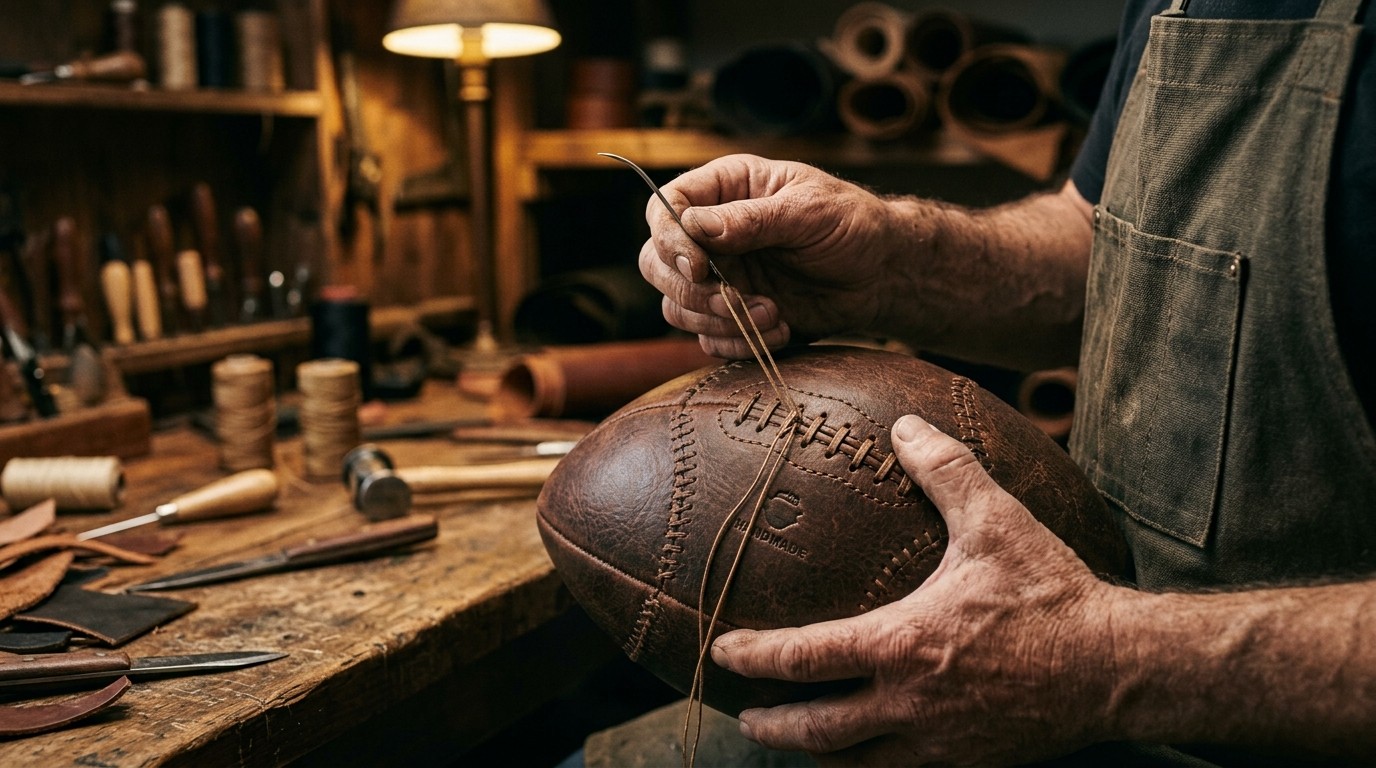
Why Football Manufacturing Is Still a Human-Centered Industry
v Technology is transforming manufacturing globally.
v Yet football manufacturing still depends heavily on craftsmanship, precision, and human operational expertise.
Modern manufacturing conversations increasingly revolve around:
Automation
Robotics
Ai
Smart factories
Predictive systems
And yes, technology is reshaping production globally.
But football manufacturing remains unique.
Because despite technological advancement, high-quality football production still depends heavily on:
Craftsmanship
Material understanding
Quality precision
Stitching consistency
Operational discipline
At Talha Khan OPS, we believe the future of football manufacturing will not be:
Humans versus technology.
Instead, the strongest manufacturers will likely combine:
Craftsmanship
Operational systems
Fulfillment intelligence
Scalable technology
Into balanced manufacturing ecosystems.
Operator Perspective:
Technology improves manufacturing visibility. Human expertise still protects manufacturing quality.
Why Football Manufacturing Is Different
Unlike many standardized products, footballs must balance:
· Shape consistency
· Durability
· Weight precision
· Stitching quality
· Performance reliability
· Material behavior
Under real-world athletic conditions.
Even small inconsistencies become noticeable during:
Gameplay
Training
Competition
Repeated usage
This creates unusually high quality expectations compared to many mass-market products.
Why Craftsmanship Still Matters
Even with modern equipment, human expertise still plays major roles in:
Material inspection
Stitching precision
Panel alignment
Quality evaluation
Production consistency
This is especially important for:
Premium footballs
Custom footballs
OEM manufacturing
Private-label sports products
Operator Perspective: Quality in football manufacturing often comes from operational discipline repeated consistently over time.
The Biggest Misconception About Manufacturing
Many people assume:
Automation automatically guarantees superior quality.
But weak operational systems still create:
Inconsistent production
Material variation
Quality instability
Fulfillment problems
Technology amplifies operational capability.
It does not replace operational discipline.
Companies still require:
· Quality control systems
· Workflow coordination
· Production visibility
· Skilled operational oversight
To maintain manufacturing consistency.
Why Sialkot Became Globally Respected
Manufacturing ecosystems like Sialkot became internationally respected because generations of specialization created:
Football craftsmanship expertise
Sports manufacturing ecosystems
Operational familiarity
Export capability
Production scalability
This ecosystem combines:
Human craftsmanship
Manufacturing infrastructure
Operational experience
Customization flexibility
Within one highly specialized sports production environment.
Today, footballs manufactured in Sialkot continue serving:
Professional clubs
Academies
Sports retailers
Wholesalers
Private-label brands
Globally, brands like STRYK World operate within this environment by balancing:
Affordable premium positioning
Custom football manufacturing
OEM capability
Operational responsiveness
Scalable fulfillment
While supporting:
Soccer clubs
Sports retailers
Distributors
Wholesalers
Community-driven sports brands
Globally.
Why Customization Increased Human Operational Importance
Modern buyers increasingly want:
Branded footballs
Club-specific products
Personalized designs
Custom packaging
Private-label collections
Customization increases operational complexity significantly.
This creates strong demand for:
Flexible production systems
Operational adaptability
Craftsmanship consistency
Because standardized automation alone often struggles with flexible production environments.
Why Quality Control Still Depends on People
Football quality depends heavily on:
Inspection consistency
Craftsmanship standards
Operational discipline
Workflow precision
Even highly automated systems still require:
Human oversight
Operational judgment
Quality evaluation
Manufacturing coordination
Operator Perspective: The strongest manufacturing systems combine human expertise with technological support, not one replacing the other entirely.
Mini Industry Observation, Customers Increasingly Care About Product Origin
One major trend globally:
Customers increasingly value:
Manufacturing transparency
Craftsmanship stories
Product origin
Operational authenticity
Especially in sports products where quality perception matters heavily.
Operational storytelling itself increasingly influences:
Trust
Brand loyalty
Perceived quality
Industry Prediction for 2026–2035
Over the next decade, football manufacturing will likely become:
More technology-supported
More customization-driven
More visibility-oriented
More operationally integrated
But craftsmanship and operational expertise will likely remain critically important.
Businesses will increasingly invest in:
· Quality control systems
· Customization capability
· Operational dashboards
· Fulfillment coordination
· Manufacturing visibility
· Scalable craftsmanship ecosystems
The strongest manufacturers will likely combine: Craftsmanship + operational discipline + technological visibility.
Final Thought
Football manufacturing is evolving technologically.
But at its core, it still remains deeply human-centered.
The businesses capable of balancing:
Craftsmanship
Operational systems
Fulfillment reliability
Manufacturing visibility
Customization flexibility
Will likely define the future of global football production.
· Technology improves manufacturing efficiency.
· Human operational expertise still protects manufacturing quality.
What matters most in football manufacturing today, craftsmanship, technology, customization, or quality consistency?
Let’s discuss below.
📩 Connect with us:
🌐 Talha Khan OPS
🌐 STRYK World
#FootballManufacturing #SportsManufacturing #OEMManufacturing #PrivateLabel #Sportswear #BusinessOperations #OperationalExcellence #SportsBusiness #QualityControl #Customization #OperationalLeadership #SportsRetail #SupplyChain #Manufacturing #Craftsmanship #SportsIndustry #OperationalDiscipline #CustomFootball #RetailOperations #BusinessGrowth #Sialkot #ExportBusiness #STRYKWorld #TalhaKhanOPS #ManufacturingExcellence #FutureOfManufacturing #SportsCulture #OperationalVisibility #SportsBrands #HumanCenteredManufacturing
More to Discover


Insights
Why Football Manufacturing Is Still a Human-Centered Industry
v Technology is transforming manufacturing globally.
v Yet football manufacturing still depends heavily on craftsmanship, precision, and human operational expertise.
Modern manufacturing conversations increasingly revolve around:
Automation
Robotics
Ai
Smart factories
Predictive systems
And yes, technology is reshaping production globally.
But football manufacturing remains unique.
Because despite technological advancement, high-quality football production still depends heavily on:
Craftsmanship
Material understanding
Quality precision
Stitching consistency
Operational discipline
At Talha Khan OPS, we believe the future of football manufacturing will not be:
Humans versus technology.
Instead, the strongest manufacturers will likely combine:
Craftsmanship
Operational systems
Fulfillment intelligence
Scalable technology
Into balanced manufacturing ecosystems.
Operator Perspective:
Technology improves manufacturing visibility. Human expertise still protects manufacturing quality.
Why Football Manufacturing Is Different
Unlike many standardized products, footballs must balance:
· Shape consistency
· Durability
· Weight precision
· Stitching quality
· Performance reliability
· Material behavior
Under real-world athletic conditions.
Even small inconsistencies become noticeable during:
Gameplay
Training
Competition
Repeated usage
This creates unusually high quality expectations compared to many mass-market products.
Why Craftsmanship Still Matters
Even with modern equipment, human expertise still plays major roles in:
Material inspection
Stitching precision
Panel alignment
Quality evaluation
Production consistency
This is especially important for:
Premium footballs
Custom footballs
OEM manufacturing
Private-label sports products
Operator Perspective: Quality in football manufacturing often comes from operational discipline repeated consistently over time.
The Biggest Misconception About Manufacturing
Many people assume:
Automation automatically guarantees superior quality.
But weak operational systems still create:
Inconsistent production
Material variation
Quality instability
Fulfillment problems
Technology amplifies operational capability.
It does not replace operational discipline.
Companies still require:
· Quality control systems
· Workflow coordination
· Production visibility
· Skilled operational oversight
To maintain manufacturing consistency.
Why Sialkot Became Globally Respected
Manufacturing ecosystems like Sialkot became internationally respected because generations of specialization created:
Football craftsmanship expertise
Sports manufacturing ecosystems
Operational familiarity
Export capability
Production scalability
This ecosystem combines:
Human craftsmanship
Manufacturing infrastructure
Operational experience
Customization flexibility
Within one highly specialized sports production environment.
Today, footballs manufactured in Sialkot continue serving:
Professional clubs
Academies
Sports retailers
Wholesalers
Private-label brands
Globally, brands like STRYK World operate within this environment by balancing:
Affordable premium positioning
Custom football manufacturing
OEM capability
Operational responsiveness
Scalable fulfillment
While supporting:
Soccer clubs
Sports retailers
Distributors
Wholesalers
Community-driven sports brands
Globally.
Why Customization Increased Human Operational Importance
Modern buyers increasingly want:
Branded footballs
Club-specific products
Personalized designs
Custom packaging
Private-label collections
Customization increases operational complexity significantly.
This creates strong demand for:
Flexible production systems
Operational adaptability
Craftsmanship consistency
Because standardized automation alone often struggles with flexible production environments.
Why Quality Control Still Depends on People
Football quality depends heavily on:
Inspection consistency
Craftsmanship standards
Operational discipline
Workflow precision
Even highly automated systems still require:
Human oversight
Operational judgment
Quality evaluation
Manufacturing coordination
Operator Perspective: The strongest manufacturing systems combine human expertise with technological support, not one replacing the other entirely.
Mini Industry Observation, Customers Increasingly Care About Product Origin
One major trend globally:
Customers increasingly value:
Manufacturing transparency
Craftsmanship stories
Product origin
Operational authenticity
Especially in sports products where quality perception matters heavily.
Operational storytelling itself increasingly influences:
Trust
Brand loyalty
Perceived quality
Industry Prediction for 2026–2035
Over the next decade, football manufacturing will likely become:
More technology-supported
More customization-driven
More visibility-oriented
More operationally integrated
But craftsmanship and operational expertise will likely remain critically important.
Businesses will increasingly invest in:
· Quality control systems
· Customization capability
· Operational dashboards
· Fulfillment coordination
· Manufacturing visibility
· Scalable craftsmanship ecosystems
The strongest manufacturers will likely combine: Craftsmanship + operational discipline + technological visibility.
Final Thought
Football manufacturing is evolving technologically.
But at its core, it still remains deeply human-centered.
The businesses capable of balancing:
Craftsmanship
Operational systems
Fulfillment reliability
Manufacturing visibility
Customization flexibility
Will likely define the future of global football production.
· Technology improves manufacturing efficiency.
· Human operational expertise still protects manufacturing quality.
What matters most in football manufacturing today, craftsmanship, technology, customization, or quality consistency?
Let’s discuss below.
📩 Connect with us:
🌐 Talha Khan OPS
🌐 STRYK World
#FootballManufacturing #SportsManufacturing #OEMManufacturing #PrivateLabel #Sportswear #BusinessOperations #OperationalExcellence #SportsBusiness #QualityControl #Customization #OperationalLeadership #SportsRetail #SupplyChain #Manufacturing #Craftsmanship #SportsIndustry #OperationalDiscipline #CustomFootball #RetailOperations #BusinessGrowth #Sialkot #ExportBusiness #STRYKWorld #TalhaKhanOPS #ManufacturingExcellence #FutureOfManufacturing #SportsCulture #OperationalVisibility #SportsBrands #HumanCenteredManufacturing
More to Discover
Insights
Why Football Manufacturing Is Still a Human-Centered Industry
v Technology is transforming manufacturing globally.
v Yet football manufacturing still depends heavily on craftsmanship, precision, and human operational expertise.
Modern manufacturing conversations increasingly revolve around:
Automation
Robotics
Ai
Smart factories
Predictive systems
And yes, technology is reshaping production globally.
But football manufacturing remains unique.
Because despite technological advancement, high-quality football production still depends heavily on:
Craftsmanship
Material understanding
Quality precision
Stitching consistency
Operational discipline
At Talha Khan OPS, we believe the future of football manufacturing will not be:
Humans versus technology.
Instead, the strongest manufacturers will likely combine:
Craftsmanship
Operational systems
Fulfillment intelligence
Scalable technology
Into balanced manufacturing ecosystems.
Operator Perspective:
Technology improves manufacturing visibility. Human expertise still protects manufacturing quality.
Why Football Manufacturing Is Different
Unlike many standardized products, footballs must balance:
· Shape consistency
· Durability
· Weight precision
· Stitching quality
· Performance reliability
· Material behavior
Under real-world athletic conditions.
Even small inconsistencies become noticeable during:
Gameplay
Training
Competition
Repeated usage
This creates unusually high quality expectations compared to many mass-market products.
Why Craftsmanship Still Matters
Even with modern equipment, human expertise still plays major roles in:
Material inspection
Stitching precision
Panel alignment
Quality evaluation
Production consistency
This is especially important for:
Premium footballs
Custom footballs
OEM manufacturing
Private-label sports products
Operator Perspective: Quality in football manufacturing often comes from operational discipline repeated consistently over time.
The Biggest Misconception About Manufacturing
Many people assume:
Automation automatically guarantees superior quality.
But weak operational systems still create:
Inconsistent production
Material variation
Quality instability
Fulfillment problems
Technology amplifies operational capability.
It does not replace operational discipline.
Companies still require:
· Quality control systems
· Workflow coordination
· Production visibility
· Skilled operational oversight
To maintain manufacturing consistency.
Why Sialkot Became Globally Respected
Manufacturing ecosystems like Sialkot became internationally respected because generations of specialization created:
Football craftsmanship expertise
Sports manufacturing ecosystems
Operational familiarity
Export capability
Production scalability
This ecosystem combines:
Human craftsmanship
Manufacturing infrastructure
Operational experience
Customization flexibility
Within one highly specialized sports production environment.
Today, footballs manufactured in Sialkot continue serving:
Professional clubs
Academies
Sports retailers
Wholesalers
Private-label brands
Globally, brands like STRYK World operate within this environment by balancing:
Affordable premium positioning
Custom football manufacturing
OEM capability
Operational responsiveness
Scalable fulfillment
While supporting:
Soccer clubs
Sports retailers
Distributors
Wholesalers
Community-driven sports brands
Globally.
Why Customization Increased Human Operational Importance
Modern buyers increasingly want:
Branded footballs
Club-specific products
Personalized designs
Custom packaging
Private-label collections
Customization increases operational complexity significantly.
This creates strong demand for:
Flexible production systems
Operational adaptability
Craftsmanship consistency
Because standardized automation alone often struggles with flexible production environments.
Why Quality Control Still Depends on People
Football quality depends heavily on:
Inspection consistency
Craftsmanship standards
Operational discipline
Workflow precision
Even highly automated systems still require:
Human oversight
Operational judgment
Quality evaluation
Manufacturing coordination
Operator Perspective: The strongest manufacturing systems combine human expertise with technological support, not one replacing the other entirely.
Mini Industry Observation, Customers Increasingly Care About Product Origin
One major trend globally:
Customers increasingly value:
Manufacturing transparency
Craftsmanship stories
Product origin
Operational authenticity
Especially in sports products where quality perception matters heavily.
Operational storytelling itself increasingly influences:
Trust
Brand loyalty
Perceived quality
Industry Prediction for 2026–2035
Over the next decade, football manufacturing will likely become:
More technology-supported
More customization-driven
More visibility-oriented
More operationally integrated
But craftsmanship and operational expertise will likely remain critically important.
Businesses will increasingly invest in:
· Quality control systems
· Customization capability
· Operational dashboards
· Fulfillment coordination
· Manufacturing visibility
· Scalable craftsmanship ecosystems
The strongest manufacturers will likely combine: Craftsmanship + operational discipline + technological visibility.
Final Thought
Football manufacturing is evolving technologically.
But at its core, it still remains deeply human-centered.
The businesses capable of balancing:
Craftsmanship
Operational systems
Fulfillment reliability
Manufacturing visibility
Customization flexibility
Will likely define the future of global football production.
· Technology improves manufacturing efficiency.
· Human operational expertise still protects manufacturing quality.
What matters most in football manufacturing today, craftsmanship, technology, customization, or quality consistency?
Let’s discuss below.
📩 Connect with us:
🌐 Talha Khan OPS
🌐 STRYK World
#FootballManufacturing #SportsManufacturing #OEMManufacturing #PrivateLabel #Sportswear #BusinessOperations #OperationalExcellence #SportsBusiness #QualityControl #Customization #OperationalLeadership #SportsRetail #SupplyChain #Manufacturing #Craftsmanship #SportsIndustry #OperationalDiscipline #CustomFootball #RetailOperations #BusinessGrowth #Sialkot #ExportBusiness #STRYKWorld #TalhaKhanOPS #ManufacturingExcellence #FutureOfManufacturing #SportsCulture #OperationalVisibility #SportsBrands #HumanCenteredManufacturing