Insights
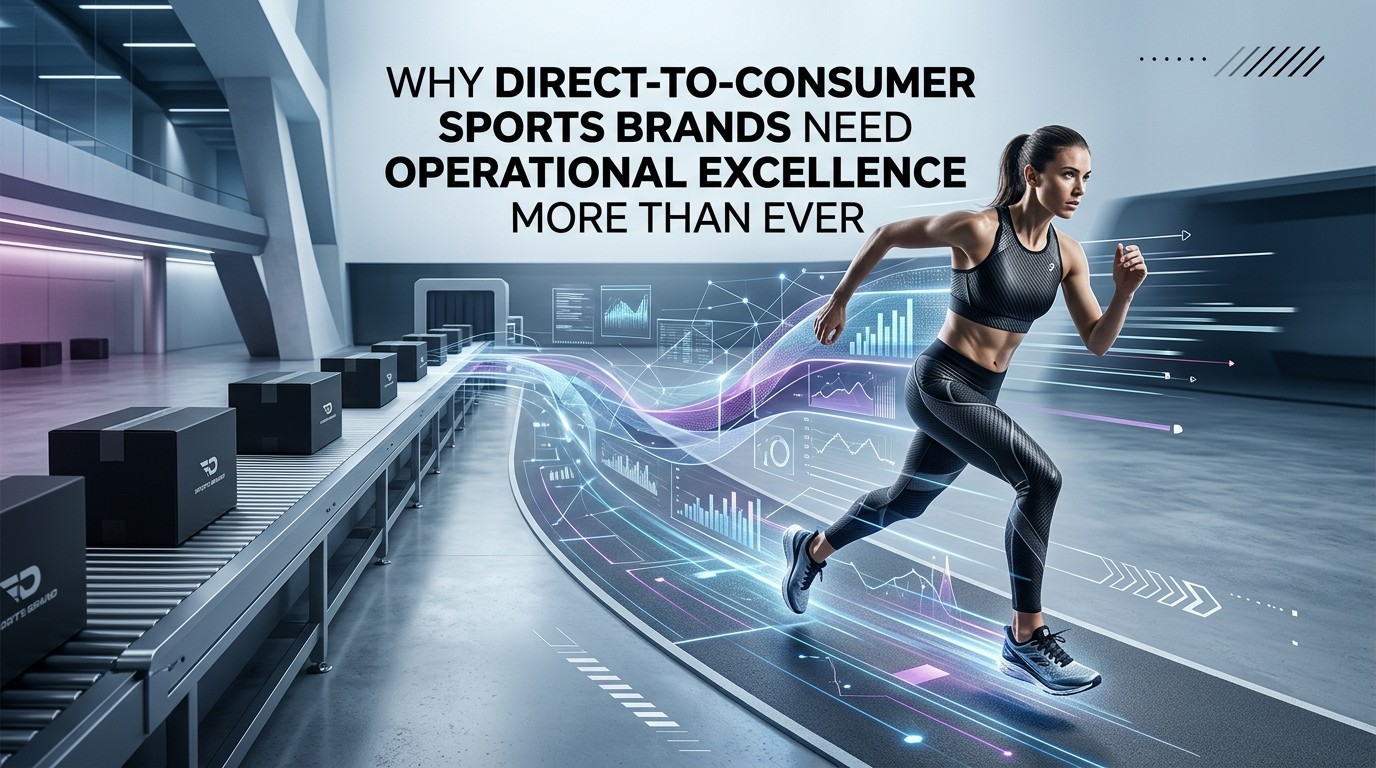
Why Direct-to-Consumer Sports Brands Need Operational Excellence More Than Ever
v D2C brands made it easier to reach customers directly.
v But direct access also means customers now experience operational failures directly too.
For years, traditional retail businesses operated through:
Distributors
Wholesalers
Retail stores
Third-party channels
Those layers often absorbed:
Operational friction
Inventory delays
Fulfillment inconsistencies
Customer communication gaps
But modern D2C (Direct-to-Consumer) commerce changed everything.
Today, sports brands increasingly sell directly through:
· Websites
· Social platforms
· Digital communities
· Online marketplaces
· Creator ecosystems
At Talha Khan OPS, we believe operational excellence is becoming one of the most important competitive advantages for D2C sports brands globally.
Because in D2C ecosystems:
Operations become fully customer-visible.
Operator Perspective: D2C removes middlemen, but it also removes operational excuses.
Why D2C Changed Sports Commerce
Several global shifts accelerated D2C growth:
E-commerce expansion
Social media
Creator-led commerce
Digital communities
Lower manufacturing barriers
Global logistics accessibility
Today, even relatively small sports brands can:
Launch internationally
Build audiences directly
Sell globally
Create niche ecosystems
Without depending entirely on traditional retail structures.
Why Operational Expectations Increased
Modern D2C customers increasingly expect:
· Fulfillment reliability
· Inventory accuracy
· Operational transparency
· Responsive communication
· Premium customer experience
Because customers interact directly with brands operationally.
There are no retail intermediaries protecting brand perception anymore.
Operator Perspective: Every fulfillment issue now directly impacts brand trust in D2C ecosystems.
The Biggest Operational Challenges D2C Sports Brands Face
1. Inventory Synchronization
D2C businesses increasingly manage:
Multiple channels
Rapid sales cycles
Fluctuating demand
Customized products
Without strong inventory visibility, brands often experience:
Overselling
Delayed fulfillment
Stock inaccuracies
Customer dissatisfaction
Inventory synchronization increasingly becomes critical operational infrastructure.
2. Fulfillment Pressure
Modern customers expect:
Faster shipping
Reliable timelines
Operational updates
Tracking visibility
This creates operational pressure across:
Warehouses
Fulfillment systems
Inventory coordination
Logistics networks
Operator Perspective: Fast growth without fulfillment structure creates operational instability quickly.
3. Customer Communication Complexity
D2C businesses communicate directly with customers during:
Delays
Inventory shortages
Customization requests
Operational disruptions
Communication quality increasingly influences:
Customer trust
Retention
Reviews
Long-term loyalty
4. Managing Customization at Scale
Modern sports consumers increasingly want:
Branded apparel
Custom footballs
Identity-driven products
Community merchandise
Customization increases complexity across:
Production
Fulfillment
Inventory management
Forecasting
Businesses must balance:
· Flexibility
· Scalability
· Operational consistency
Simultaneously.
Why Sportswear & Football D2C Brands Face Extra Pressure
Sportswear and football products involve:
Seasonal demand
Sizing variation
Customization
Tournament cycles
Community merchandise
Rapid trend shifts
This creates operational challenges across:
OEM manufacturing
Private labeling
D2C fulfillment
Football production
Sports retail ecosystems
Manufacturing ecosystems like Sialkot remain globally important because specialized sports manufacturing ecosystems support:
Football craftsmanship
Sportswear production
OEM flexibility
Export readiness
Scalable fulfillment
Within highly dynamic sports markets.
Brands like STRYK World operate within this evolving D2C environment by emphasizing:
Affordable premium positioning
OEM manufacturing
Custom football production
Scalable fulfillment
Operational responsiveness
While supporting:
Soccer clubs
Wholesalers
Sports retailers
Distributors
Private-label sports brands
Globally.
Why Operational Visibility Is Becoming Essential
Modern D2C brands increasingly require:
Real-time inventory tracking
Operational dashboards
Fulfillment analytics
Warehouse visibility
Predictive forecasting
Because visibility improves:
Responsiveness
Customer communication
Replenishment planning
Fulfillment reliability
Operator Perspective: Visibility increasingly powers customer confidence.
Why Community Strengthens D2C Businesses
One major advantage D2C brands possess:
they can build:
Direct audience relationships
Niche communities
Emotional loyalty
Identity ecosystems
Without depending on retailers.
Strong communities often improve:
Retention
Repeat purchasing
Organic growth
Brand resilience
Mini Industry Observation, D2C Brands Are Becoming Operationally Sophisticated Faster
Historically, large corporations dominated operational sophistication.
Today, many smaller D2C sports brands increasingly invest in:
Inventory systems
Fulfillment infrastructure
Operational dashboards
Community ecosystems
Because operational quality directly impacts customer survival in D2C models.
Industry Prediction for 2026–2035
Over the next decade, D2C sports brands will likely become:
More operationally integrated
More customization-focused
More fulfillment-driven
More community-oriented
Businesses will increasingly invest in:
· Inventory synchronization
· Scalable fulfillment systems
· Operational dashboards
· Oem partnerships
· Community ecosystems
· Predictive logistics infrastructure
The strongest D2C brands will likely combine:
Operational excellence + community-led branding + scalable fulfillment ecosystems.
Final Thought
D2C commerce gives sports brands enormous opportunity.
But it also creates operational accountability.
The businesses adapting early to:
Operational visibility
Fulfillment reliability
Inventory coordination
Scalable systems
Customer communication
Will likely build stronger long-term D2C ecosystems than brands focused only on growth visibility.
🔹 D2C increases customer access.
🔹 Operational excellence determines whether D2C brands retain trust long-term.
💬 What matters most in D2C sports brands today, fulfillment reliability, inventory visibility, customization, or customer communication?
Let’s discuss below.
📩 Connect with us:
🌐 Talha Khan OPS
🌐 STRYK World
#D2C #sportsbusiness #Sportswear #footballmanufacturing #oemmanufacturing #privatelabel #businessoperations #sportsretail #Customization #operationalexcellence #sportsmanufacturing #operationalleadership #Fulfillment #inventorymanagement #sportsbrands #retailoperations #businessgrowth #operationalvisibility #supplychain #footballbusiness #Sialkot #strykworld #talhakhanops #futureofretail #operationsmanagement #communitydriven #scalablebusiness #customerexperience #digitalcommerce #fulfillmentstrategy
More to Discover

Insights
Why Direct-to-Consumer Sports Brands Need Operational Excellence More Than Ever
v D2C brands made it easier to reach customers directly.
v But direct access also means customers now experience operational failures directly too.
For years, traditional retail businesses operated through:
Distributors
Wholesalers
Retail stores
Third-party channels
Those layers often absorbed:
Operational friction
Inventory delays
Fulfillment inconsistencies
Customer communication gaps
But modern D2C (Direct-to-Consumer) commerce changed everything.
Today, sports brands increasingly sell directly through:
· Websites
· Social platforms
· Digital communities
· Online marketplaces
· Creator ecosystems
At Talha Khan OPS, we believe operational excellence is becoming one of the most important competitive advantages for D2C sports brands globally.
Because in D2C ecosystems:
Operations become fully customer-visible.
Operator Perspective: D2C removes middlemen, but it also removes operational excuses.
Why D2C Changed Sports Commerce
Several global shifts accelerated D2C growth:
E-commerce expansion
Social media
Creator-led commerce
Digital communities
Lower manufacturing barriers
Global logistics accessibility
Today, even relatively small sports brands can:
Launch internationally
Build audiences directly
Sell globally
Create niche ecosystems
Without depending entirely on traditional retail structures.
Why Operational Expectations Increased
Modern D2C customers increasingly expect:
· Fulfillment reliability
· Inventory accuracy
· Operational transparency
· Responsive communication
· Premium customer experience
Because customers interact directly with brands operationally.
There are no retail intermediaries protecting brand perception anymore.
Operator Perspective: Every fulfillment issue now directly impacts brand trust in D2C ecosystems.
The Biggest Operational Challenges D2C Sports Brands Face
1. Inventory Synchronization
D2C businesses increasingly manage:
Multiple channels
Rapid sales cycles
Fluctuating demand
Customized products
Without strong inventory visibility, brands often experience:
Overselling
Delayed fulfillment
Stock inaccuracies
Customer dissatisfaction
Inventory synchronization increasingly becomes critical operational infrastructure.
2. Fulfillment Pressure
Modern customers expect:
Faster shipping
Reliable timelines
Operational updates
Tracking visibility
This creates operational pressure across:
Warehouses
Fulfillment systems
Inventory coordination
Logistics networks
Operator Perspective: Fast growth without fulfillment structure creates operational instability quickly.
3. Customer Communication Complexity
D2C businesses communicate directly with customers during:
Delays
Inventory shortages
Customization requests
Operational disruptions
Communication quality increasingly influences:
Customer trust
Retention
Reviews
Long-term loyalty
4. Managing Customization at Scale
Modern sports consumers increasingly want:
Branded apparel
Custom footballs
Identity-driven products
Community merchandise
Customization increases complexity across:
Production
Fulfillment
Inventory management
Forecasting
Businesses must balance:
· Flexibility
· Scalability
· Operational consistency
Simultaneously.
Why Sportswear & Football D2C Brands Face Extra Pressure
Sportswear and football products involve:
Seasonal demand
Sizing variation
Customization
Tournament cycles
Community merchandise
Rapid trend shifts
This creates operational challenges across:
OEM manufacturing
Private labeling
D2C fulfillment
Football production
Sports retail ecosystems
Manufacturing ecosystems like Sialkot remain globally important because specialized sports manufacturing ecosystems support:
Football craftsmanship
Sportswear production
OEM flexibility
Export readiness
Scalable fulfillment
Within highly dynamic sports markets.
Brands like STRYK World operate within this evolving D2C environment by emphasizing:
Affordable premium positioning
OEM manufacturing
Custom football production
Scalable fulfillment
Operational responsiveness
While supporting:
Soccer clubs
Wholesalers
Sports retailers
Distributors
Private-label sports brands
Globally.
Why Operational Visibility Is Becoming Essential
Modern D2C brands increasingly require:
Real-time inventory tracking
Operational dashboards
Fulfillment analytics
Warehouse visibility
Predictive forecasting
Because visibility improves:
Responsiveness
Customer communication
Replenishment planning
Fulfillment reliability
Operator Perspective: Visibility increasingly powers customer confidence.
Why Community Strengthens D2C Businesses
One major advantage D2C brands possess:
they can build:
Direct audience relationships
Niche communities
Emotional loyalty
Identity ecosystems
Without depending on retailers.
Strong communities often improve:
Retention
Repeat purchasing
Organic growth
Brand resilience
Mini Industry Observation, D2C Brands Are Becoming Operationally Sophisticated Faster
Historically, large corporations dominated operational sophistication.
Today, many smaller D2C sports brands increasingly invest in:
Inventory systems
Fulfillment infrastructure
Operational dashboards
Community ecosystems
Because operational quality directly impacts customer survival in D2C models.
Industry Prediction for 2026–2035
Over the next decade, D2C sports brands will likely become:
More operationally integrated
More customization-focused
More fulfillment-driven
More community-oriented
Businesses will increasingly invest in:
· Inventory synchronization
· Scalable fulfillment systems
· Operational dashboards
· Oem partnerships
· Community ecosystems
· Predictive logistics infrastructure
The strongest D2C brands will likely combine:
Operational excellence + community-led branding + scalable fulfillment ecosystems.
Final Thought
D2C commerce gives sports brands enormous opportunity.
But it also creates operational accountability.
The businesses adapting early to:
Operational visibility
Fulfillment reliability
Inventory coordination
Scalable systems
Customer communication
Will likely build stronger long-term D2C ecosystems than brands focused only on growth visibility.
🔹 D2C increases customer access.
🔹 Operational excellence determines whether D2C brands retain trust long-term.
💬 What matters most in D2C sports brands today, fulfillment reliability, inventory visibility, customization, or customer communication?
Let’s discuss below.
📩 Connect with us:
🌐 Talha Khan OPS
🌐 STRYK World
#D2C #sportsbusiness #Sportswear #footballmanufacturing #oemmanufacturing #privatelabel #businessoperations #sportsretail #Customization #operationalexcellence #sportsmanufacturing #operationalleadership #Fulfillment #inventorymanagement #sportsbrands #retailoperations #businessgrowth #operationalvisibility #supplychain #footballbusiness #Sialkot #strykworld #talhakhanops #futureofretail #operationsmanagement #communitydriven #scalablebusiness #customerexperience #digitalcommerce #fulfillmentstrategy
More to Discover
Insights
Why Direct-to-Consumer Sports Brands Need Operational Excellence More Than Ever
v D2C brands made it easier to reach customers directly.
v But direct access also means customers now experience operational failures directly too.
For years, traditional retail businesses operated through:
Distributors
Wholesalers
Retail stores
Third-party channels
Those layers often absorbed:
Operational friction
Inventory delays
Fulfillment inconsistencies
Customer communication gaps
But modern D2C (Direct-to-Consumer) commerce changed everything.
Today, sports brands increasingly sell directly through:
· Websites
· Social platforms
· Digital communities
· Online marketplaces
· Creator ecosystems
At Talha Khan OPS, we believe operational excellence is becoming one of the most important competitive advantages for D2C sports brands globally.
Because in D2C ecosystems:
Operations become fully customer-visible.
Operator Perspective: D2C removes middlemen, but it also removes operational excuses.
Why D2C Changed Sports Commerce
Several global shifts accelerated D2C growth:
E-commerce expansion
Social media
Creator-led commerce
Digital communities
Lower manufacturing barriers
Global logistics accessibility
Today, even relatively small sports brands can:
Launch internationally
Build audiences directly
Sell globally
Create niche ecosystems
Without depending entirely on traditional retail structures.
Why Operational Expectations Increased
Modern D2C customers increasingly expect:
· Fulfillment reliability
· Inventory accuracy
· Operational transparency
· Responsive communication
· Premium customer experience
Because customers interact directly with brands operationally.
There are no retail intermediaries protecting brand perception anymore.
Operator Perspective: Every fulfillment issue now directly impacts brand trust in D2C ecosystems.
The Biggest Operational Challenges D2C Sports Brands Face
1. Inventory Synchronization
D2C businesses increasingly manage:
Multiple channels
Rapid sales cycles
Fluctuating demand
Customized products
Without strong inventory visibility, brands often experience:
Overselling
Delayed fulfillment
Stock inaccuracies
Customer dissatisfaction
Inventory synchronization increasingly becomes critical operational infrastructure.
2. Fulfillment Pressure
Modern customers expect:
Faster shipping
Reliable timelines
Operational updates
Tracking visibility
This creates operational pressure across:
Warehouses
Fulfillment systems
Inventory coordination
Logistics networks
Operator Perspective: Fast growth without fulfillment structure creates operational instability quickly.
3. Customer Communication Complexity
D2C businesses communicate directly with customers during:
Delays
Inventory shortages
Customization requests
Operational disruptions
Communication quality increasingly influences:
Customer trust
Retention
Reviews
Long-term loyalty
4. Managing Customization at Scale
Modern sports consumers increasingly want:
Branded apparel
Custom footballs
Identity-driven products
Community merchandise
Customization increases complexity across:
Production
Fulfillment
Inventory management
Forecasting
Businesses must balance:
· Flexibility
· Scalability
· Operational consistency
Simultaneously.
Why Sportswear & Football D2C Brands Face Extra Pressure
Sportswear and football products involve:
Seasonal demand
Sizing variation
Customization
Tournament cycles
Community merchandise
Rapid trend shifts
This creates operational challenges across:
OEM manufacturing
Private labeling
D2C fulfillment
Football production
Sports retail ecosystems
Manufacturing ecosystems like Sialkot remain globally important because specialized sports manufacturing ecosystems support:
Football craftsmanship
Sportswear production
OEM flexibility
Export readiness
Scalable fulfillment
Within highly dynamic sports markets.
Brands like STRYK World operate within this evolving D2C environment by emphasizing:
Affordable premium positioning
OEM manufacturing
Custom football production
Scalable fulfillment
Operational responsiveness
While supporting:
Soccer clubs
Wholesalers
Sports retailers
Distributors
Private-label sports brands
Globally.
Why Operational Visibility Is Becoming Essential
Modern D2C brands increasingly require:
Real-time inventory tracking
Operational dashboards
Fulfillment analytics
Warehouse visibility
Predictive forecasting
Because visibility improves:
Responsiveness
Customer communication
Replenishment planning
Fulfillment reliability
Operator Perspective: Visibility increasingly powers customer confidence.
Why Community Strengthens D2C Businesses
One major advantage D2C brands possess:
they can build:
Direct audience relationships
Niche communities
Emotional loyalty
Identity ecosystems
Without depending on retailers.
Strong communities often improve:
Retention
Repeat purchasing
Organic growth
Brand resilience
Mini Industry Observation, D2C Brands Are Becoming Operationally Sophisticated Faster
Historically, large corporations dominated operational sophistication.
Today, many smaller D2C sports brands increasingly invest in:
Inventory systems
Fulfillment infrastructure
Operational dashboards
Community ecosystems
Because operational quality directly impacts customer survival in D2C models.
Industry Prediction for 2026–2035
Over the next decade, D2C sports brands will likely become:
More operationally integrated
More customization-focused
More fulfillment-driven
More community-oriented
Businesses will increasingly invest in:
· Inventory synchronization
· Scalable fulfillment systems
· Operational dashboards
· Oem partnerships
· Community ecosystems
· Predictive logistics infrastructure
The strongest D2C brands will likely combine:
Operational excellence + community-led branding + scalable fulfillment ecosystems.
Final Thought
D2C commerce gives sports brands enormous opportunity.
But it also creates operational accountability.
The businesses adapting early to:
Operational visibility
Fulfillment reliability
Inventory coordination
Scalable systems
Customer communication
Will likely build stronger long-term D2C ecosystems than brands focused only on growth visibility.
🔹 D2C increases customer access.
🔹 Operational excellence determines whether D2C brands retain trust long-term.
💬 What matters most in D2C sports brands today, fulfillment reliability, inventory visibility, customization, or customer communication?
Let’s discuss below.
📩 Connect with us:
🌐 Talha Khan OPS
🌐 STRYK World
#D2C #sportsbusiness #Sportswear #footballmanufacturing #oemmanufacturing #privatelabel #businessoperations #sportsretail #Customization #operationalexcellence #sportsmanufacturing #operationalleadership #Fulfillment #inventorymanagement #sportsbrands #retailoperations #businessgrowth #operationalvisibility #supplychain #footballbusiness #Sialkot #strykworld #talhakhanops #futureofretail #operationsmanagement #communitydriven #scalablebusiness #customerexperience #digitalcommerce #fulfillmentstrategy