Insights
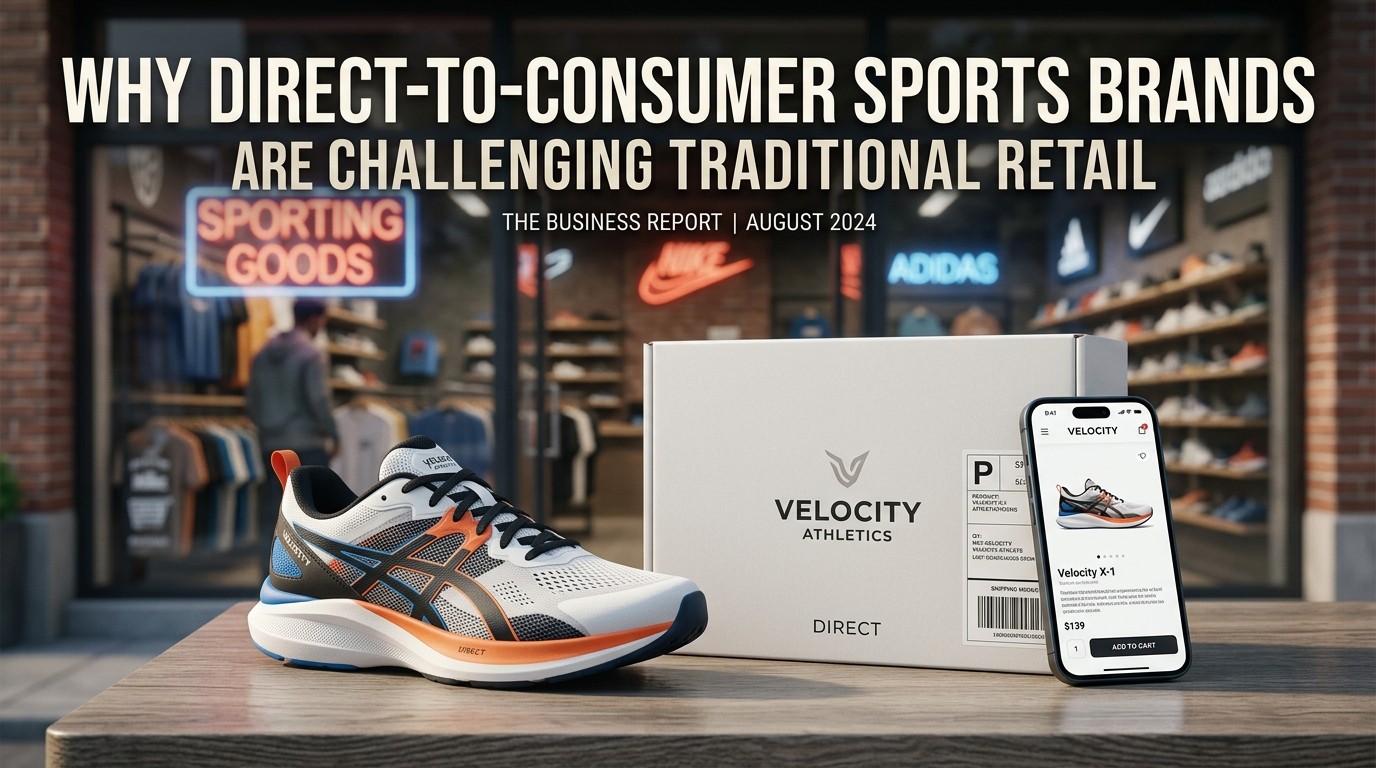
Why Direct-to-Consumer Sports Brands Are Challenging Traditional Retail
v Traditional retail once controlled access to customers.
v Today, direct-to-consumer sports brands are rewriting the rules entirely.
For decades, sports brands depended heavily on:
Distributors
Retail chains
Wholesalers
Physical stores
Regional agents
to reach customers.
That model created enormous barriers for smaller businesses because entering sports retail required:
Large inventory commitments
Retail relationships
Expensive distribution
Massive marketing budgets
But modern digital commerce changed everything.
Today, sports brands can:
· Launch globally online
· Sell directly to customers
· Build communities digitally
· Control customer relationships
· Scale without traditional retail dependence
At Talha Khan OPS, we believe direct-to-consumer (D2C) models are becoming one of the most disruptive forces shaping:
Sportswear
Football manufacturing
Athletic apparel
Custom sports products
Fitness brands
· Activewear businesses
Because consumers increasingly value: Direct brand connection and operational responsiveness.
Operator Perspective: D2C is not just a sales model. It’s an operational transformation model.
Why D2C Sports Brands Are Growing So Quickly
Several major shifts accelerated D2C growth globally.
1. E-Commerce Removed Traditional Barriers
Digital platforms allow businesses to:
Market globally
Launch quickly
Test products rapidly
Engage customers directly
without depending entirely on traditional retail infrastructure.
This opened opportunities for:
Niche football brands
Gym apparel startups
Academy merchandise businesses
Custom sportswear companies
to compete globally.
2. Consumers Want Direct Brand Relationships
Modern consumers increasingly prefer buying directly from brands because it provides:
· Stronger identity connection
· Better communication
· Customization flexibility
· Community engagement
· Direct product access
Customers increasingly value:
Authenticity
Transparency
Participation
over traditional retail distance.
3. D2C Improves Margin Control
Traditional retail structures often involve:
Multiple markups
Intermediary costs
Distributor dependency
D2C models allow brands to improve:
Pricing control
Operational visibility
Customer data access
Inventory coordination
This creates stronger long-term operational flexibility.
Why Operations Matter More in D2C
Many founders assume D2C success depends mainly on:
bBanding
Social media
Advertising
But operationally, D2C businesses are significantly more demanding than many realize.
Growing D2C brands must manage:
Inventory synchronization
Fulfillment speed
Returns operations
Forecasting
Warehouse coordination
Customer support
Logistics visibility
simultaneously.
Operator Perspective: D2C businesses increasingly operate like logistics companies combined with lifestyle brands.
The Biggest D2C Mistakes Sports Brands Make
1. Prioritizing Growth Over Fulfillment
Many D2C brands aggressively scale:
Paid advertising
Influencer campaigns
Promotions
without strengthening:
Operational systems
Inventory visibility
Fulfillment coordination
Eventually:
Delays increase
Stockouts occur
Customer trust declines
Marketing growth without operational scalability becomes dangerous quickly.
2. Weak Forecasting
Sportswear and football products often experience:
Seasonal spikes
Tournament demand
Community-driven purchasing
Viral product trends
Without forecasting discipline,
D2C businesses struggle with:
Inventory instability
Fulfillment bottlenecks
Operational inefficiency
3. Overcomplicated Product Expansion
Many brands rapidly expand:
Colorways
Apparel variants
Custom offerings
Accessories
without considering operational impact.
Excessive SKU complexity often reduces:
Inventory efficiency
Warehouse speed
Fulfillment clarity
Operational simplicity often scales better.
Why Sports Products Are Perfect for D2C Models
Sports products naturally benefit from:
Identity-driven purchasing
Community engagement
Customization demand
Direct storytelling
Emotional loyalty
This makes:
Football products
Sportswear
Activewear
Academy merchandise
especially well-positioned for D2C ecosystems.
Modern sports consumers increasingly want:
Direct access
Custom products
Club identity merchandise
Premium experiences
Faster communication
This creates strong demand for:
OEM manufacturing
Private labeling
Direct production partnerships
within sports retail.
Why Sialkot Remains Important in D2C Sports Growth
Manufacturing ecosystems like Sialkot continue playing a major role globally because specialized sports manufacturing supports:
OEM production
Private labeling
Customization flexibility
Scalable fulfillment
Export coordination
for D2C sports brands worldwide.
This allows businesses to launch:
Custom football brands
Activewear collections
Academy merchandise
Private-label sportswear
with greater operational flexibility.
Brands like STRYK World reflect this evolving D2C manufacturing ecosystem by emphasizing:
Affordable premium positioning
Custom football manufacturing
OEM flexibility
Scalable fulfillment
Operational responsiveness
while supporting:
Sports retailers
Soccer clubs
Wholesalers
Distributors
D2C sports brands
globally.
Why D2C Is Becoming More Than E-Commerce
One major shift:
D2C increasingly combines:
Branding
Community
Operations
Fulfillment
Customer experience
into fully integrated ecosystems.
The strongest D2C brands increasingly compete through:
· Operational reliability
· Fulfillment responsiveness
· Inventory visibility
· Community engagement
· Customization flexibility
not just advertising reach.
Operator Perspective:
Modern D2C brands increasingly win operationally before they win commercially.
Mini Industry Observation, Retail Is Becoming More Relationship-Driven
Traditional retail focused heavily on transactions.
Modern D2C ecosystems increasingly focus on:
Relationships
Identity
Engagement
Participation
Retention
This creates stronger long-term customer loyalty than purely transactional retail models.
Industry Prediction for 2026–2035
Over the next decade,
sports retail will likely become:
More direct-to-consumer
More customization-driven
More community-focused
More operationally integrated
Businesses will increasingly invest in:
· Fulfillment systems
· Inventory visibility
· Private-label manufacturing
· Direct manufacturing partnerships
· Community ecosystems
· Scalable operational infrastructure
The strongest sports brands will likely combine:
direct customer relationships + operational scalability + customization flexibility.
Final Thought
Direct-to-consumer sports brands are no longer simply alternatives to traditional retail.
They are becoming the future of sports commerce itself.
The businesses adapting early to:
Operational scalability
Fulfillment intelligence
Inventory visibility
Customization
Community-driven branding
will likely build stronger long-term competitive ecosystems than businesses relying only on traditional retail structures.
v D2C changes how brands sell.
v Operational execution determines which D2C brands survive long-term.
What matters most in modern D2C sports brands today, branding, fulfillment, customization, or community?
Let’s discuss below.
📩 Connect with us:
🌐 Talha Khan OPS
🌐 STRYK World
#D2C #SportsBusiness #Sportswear #FootballManufacturing #OEMManufacturing #PrivateLabel #BusinessOperations #SportsRetail #CustomApparel #OperationalExcellence #SportsManufacturing #Ecommerce #OperationalLeadership #InventoryManagement #Fulfillment #CustomerExperience #SportsBrands #SupplyChain #RetailOperations #BusinessGrowth #Sialkot #STRYKWorld #TalhaKhanOPS #DirectToConsumer #SportsIndustry #Customization #FutureOfRetail #BrandBuilding #CommunityDriven #OperationsManagement
More to Discover

Insights
Why Direct-to-Consumer Sports Brands Are Challenging Traditional Retail
v Traditional retail once controlled access to customers.
v Today, direct-to-consumer sports brands are rewriting the rules entirely.
For decades, sports brands depended heavily on:
Distributors
Retail chains
Wholesalers
Physical stores
Regional agents
to reach customers.
That model created enormous barriers for smaller businesses because entering sports retail required:
Large inventory commitments
Retail relationships
Expensive distribution
Massive marketing budgets
But modern digital commerce changed everything.
Today, sports brands can:
· Launch globally online
· Sell directly to customers
· Build communities digitally
· Control customer relationships
· Scale without traditional retail dependence
At Talha Khan OPS, we believe direct-to-consumer (D2C) models are becoming one of the most disruptive forces shaping:
Sportswear
Football manufacturing
Athletic apparel
Custom sports products
Fitness brands
· Activewear businesses
Because consumers increasingly value: Direct brand connection and operational responsiveness.
Operator Perspective: D2C is not just a sales model. It’s an operational transformation model.
Why D2C Sports Brands Are Growing So Quickly
Several major shifts accelerated D2C growth globally.
1. E-Commerce Removed Traditional Barriers
Digital platforms allow businesses to:
Market globally
Launch quickly
Test products rapidly
Engage customers directly
without depending entirely on traditional retail infrastructure.
This opened opportunities for:
Niche football brands
Gym apparel startups
Academy merchandise businesses
Custom sportswear companies
to compete globally.
2. Consumers Want Direct Brand Relationships
Modern consumers increasingly prefer buying directly from brands because it provides:
· Stronger identity connection
· Better communication
· Customization flexibility
· Community engagement
· Direct product access
Customers increasingly value:
Authenticity
Transparency
Participation
over traditional retail distance.
3. D2C Improves Margin Control
Traditional retail structures often involve:
Multiple markups
Intermediary costs
Distributor dependency
D2C models allow brands to improve:
Pricing control
Operational visibility
Customer data access
Inventory coordination
This creates stronger long-term operational flexibility.
Why Operations Matter More in D2C
Many founders assume D2C success depends mainly on:
bBanding
Social media
Advertising
But operationally, D2C businesses are significantly more demanding than many realize.
Growing D2C brands must manage:
Inventory synchronization
Fulfillment speed
Returns operations
Forecasting
Warehouse coordination
Customer support
Logistics visibility
simultaneously.
Operator Perspective: D2C businesses increasingly operate like logistics companies combined with lifestyle brands.
The Biggest D2C Mistakes Sports Brands Make
1. Prioritizing Growth Over Fulfillment
Many D2C brands aggressively scale:
Paid advertising
Influencer campaigns
Promotions
without strengthening:
Operational systems
Inventory visibility
Fulfillment coordination
Eventually:
Delays increase
Stockouts occur
Customer trust declines
Marketing growth without operational scalability becomes dangerous quickly.
2. Weak Forecasting
Sportswear and football products often experience:
Seasonal spikes
Tournament demand
Community-driven purchasing
Viral product trends
Without forecasting discipline,
D2C businesses struggle with:
Inventory instability
Fulfillment bottlenecks
Operational inefficiency
3. Overcomplicated Product Expansion
Many brands rapidly expand:
Colorways
Apparel variants
Custom offerings
Accessories
without considering operational impact.
Excessive SKU complexity often reduces:
Inventory efficiency
Warehouse speed
Fulfillment clarity
Operational simplicity often scales better.
Why Sports Products Are Perfect for D2C Models
Sports products naturally benefit from:
Identity-driven purchasing
Community engagement
Customization demand
Direct storytelling
Emotional loyalty
This makes:
Football products
Sportswear
Activewear
Academy merchandise
especially well-positioned for D2C ecosystems.
Modern sports consumers increasingly want:
Direct access
Custom products
Club identity merchandise
Premium experiences
Faster communication
This creates strong demand for:
OEM manufacturing
Private labeling
Direct production partnerships
within sports retail.
Why Sialkot Remains Important in D2C Sports Growth
Manufacturing ecosystems like Sialkot continue playing a major role globally because specialized sports manufacturing supports:
OEM production
Private labeling
Customization flexibility
Scalable fulfillment
Export coordination
for D2C sports brands worldwide.
This allows businesses to launch:
Custom football brands
Activewear collections
Academy merchandise
Private-label sportswear
with greater operational flexibility.
Brands like STRYK World reflect this evolving D2C manufacturing ecosystem by emphasizing:
Affordable premium positioning
Custom football manufacturing
OEM flexibility
Scalable fulfillment
Operational responsiveness
while supporting:
Sports retailers
Soccer clubs
Wholesalers
Distributors
D2C sports brands
globally.
Why D2C Is Becoming More Than E-Commerce
One major shift:
D2C increasingly combines:
Branding
Community
Operations
Fulfillment
Customer experience
into fully integrated ecosystems.
The strongest D2C brands increasingly compete through:
· Operational reliability
· Fulfillment responsiveness
· Inventory visibility
· Community engagement
· Customization flexibility
not just advertising reach.
Operator Perspective:
Modern D2C brands increasingly win operationally before they win commercially.
Mini Industry Observation, Retail Is Becoming More Relationship-Driven
Traditional retail focused heavily on transactions.
Modern D2C ecosystems increasingly focus on:
Relationships
Identity
Engagement
Participation
Retention
This creates stronger long-term customer loyalty than purely transactional retail models.
Industry Prediction for 2026–2035
Over the next decade,
sports retail will likely become:
More direct-to-consumer
More customization-driven
More community-focused
More operationally integrated
Businesses will increasingly invest in:
· Fulfillment systems
· Inventory visibility
· Private-label manufacturing
· Direct manufacturing partnerships
· Community ecosystems
· Scalable operational infrastructure
The strongest sports brands will likely combine:
direct customer relationships + operational scalability + customization flexibility.
Final Thought
Direct-to-consumer sports brands are no longer simply alternatives to traditional retail.
They are becoming the future of sports commerce itself.
The businesses adapting early to:
Operational scalability
Fulfillment intelligence
Inventory visibility
Customization
Community-driven branding
will likely build stronger long-term competitive ecosystems than businesses relying only on traditional retail structures.
v D2C changes how brands sell.
v Operational execution determines which D2C brands survive long-term.
What matters most in modern D2C sports brands today, branding, fulfillment, customization, or community?
Let’s discuss below.
📩 Connect with us:
🌐 Talha Khan OPS
🌐 STRYK World
#D2C #SportsBusiness #Sportswear #FootballManufacturing #OEMManufacturing #PrivateLabel #BusinessOperations #SportsRetail #CustomApparel #OperationalExcellence #SportsManufacturing #Ecommerce #OperationalLeadership #InventoryManagement #Fulfillment #CustomerExperience #SportsBrands #SupplyChain #RetailOperations #BusinessGrowth #Sialkot #STRYKWorld #TalhaKhanOPS #DirectToConsumer #SportsIndustry #Customization #FutureOfRetail #BrandBuilding #CommunityDriven #OperationsManagement
More to Discover
Insights
Why Direct-to-Consumer Sports Brands Are Challenging Traditional Retail
v Traditional retail once controlled access to customers.
v Today, direct-to-consumer sports brands are rewriting the rules entirely.
For decades, sports brands depended heavily on:
Distributors
Retail chains
Wholesalers
Physical stores
Regional agents
to reach customers.
That model created enormous barriers for smaller businesses because entering sports retail required:
Large inventory commitments
Retail relationships
Expensive distribution
Massive marketing budgets
But modern digital commerce changed everything.
Today, sports brands can:
· Launch globally online
· Sell directly to customers
· Build communities digitally
· Control customer relationships
· Scale without traditional retail dependence
At Talha Khan OPS, we believe direct-to-consumer (D2C) models are becoming one of the most disruptive forces shaping:
Sportswear
Football manufacturing
Athletic apparel
Custom sports products
Fitness brands
· Activewear businesses
Because consumers increasingly value: Direct brand connection and operational responsiveness.
Operator Perspective: D2C is not just a sales model. It’s an operational transformation model.
Why D2C Sports Brands Are Growing So Quickly
Several major shifts accelerated D2C growth globally.
1. E-Commerce Removed Traditional Barriers
Digital platforms allow businesses to:
Market globally
Launch quickly
Test products rapidly
Engage customers directly
without depending entirely on traditional retail infrastructure.
This opened opportunities for:
Niche football brands
Gym apparel startups
Academy merchandise businesses
Custom sportswear companies
to compete globally.
2. Consumers Want Direct Brand Relationships
Modern consumers increasingly prefer buying directly from brands because it provides:
· Stronger identity connection
· Better communication
· Customization flexibility
· Community engagement
· Direct product access
Customers increasingly value:
Authenticity
Transparency
Participation
over traditional retail distance.
3. D2C Improves Margin Control
Traditional retail structures often involve:
Multiple markups
Intermediary costs
Distributor dependency
D2C models allow brands to improve:
Pricing control
Operational visibility
Customer data access
Inventory coordination
This creates stronger long-term operational flexibility.
Why Operations Matter More in D2C
Many founders assume D2C success depends mainly on:
bBanding
Social media
Advertising
But operationally, D2C businesses are significantly more demanding than many realize.
Growing D2C brands must manage:
Inventory synchronization
Fulfillment speed
Returns operations
Forecasting
Warehouse coordination
Customer support
Logistics visibility
simultaneously.
Operator Perspective: D2C businesses increasingly operate like logistics companies combined with lifestyle brands.
The Biggest D2C Mistakes Sports Brands Make
1. Prioritizing Growth Over Fulfillment
Many D2C brands aggressively scale:
Paid advertising
Influencer campaigns
Promotions
without strengthening:
Operational systems
Inventory visibility
Fulfillment coordination
Eventually:
Delays increase
Stockouts occur
Customer trust declines
Marketing growth without operational scalability becomes dangerous quickly.
2. Weak Forecasting
Sportswear and football products often experience:
Seasonal spikes
Tournament demand
Community-driven purchasing
Viral product trends
Without forecasting discipline,
D2C businesses struggle with:
Inventory instability
Fulfillment bottlenecks
Operational inefficiency
3. Overcomplicated Product Expansion
Many brands rapidly expand:
Colorways
Apparel variants
Custom offerings
Accessories
without considering operational impact.
Excessive SKU complexity often reduces:
Inventory efficiency
Warehouse speed
Fulfillment clarity
Operational simplicity often scales better.
Why Sports Products Are Perfect for D2C Models
Sports products naturally benefit from:
Identity-driven purchasing
Community engagement
Customization demand
Direct storytelling
Emotional loyalty
This makes:
Football products
Sportswear
Activewear
Academy merchandise
especially well-positioned for D2C ecosystems.
Modern sports consumers increasingly want:
Direct access
Custom products
Club identity merchandise
Premium experiences
Faster communication
This creates strong demand for:
OEM manufacturing
Private labeling
Direct production partnerships
within sports retail.
Why Sialkot Remains Important in D2C Sports Growth
Manufacturing ecosystems like Sialkot continue playing a major role globally because specialized sports manufacturing supports:
OEM production
Private labeling
Customization flexibility
Scalable fulfillment
Export coordination
for D2C sports brands worldwide.
This allows businesses to launch:
Custom football brands
Activewear collections
Academy merchandise
Private-label sportswear
with greater operational flexibility.
Brands like STRYK World reflect this evolving D2C manufacturing ecosystem by emphasizing:
Affordable premium positioning
Custom football manufacturing
OEM flexibility
Scalable fulfillment
Operational responsiveness
while supporting:
Sports retailers
Soccer clubs
Wholesalers
Distributors
D2C sports brands
globally.
Why D2C Is Becoming More Than E-Commerce
One major shift:
D2C increasingly combines:
Branding
Community
Operations
Fulfillment
Customer experience
into fully integrated ecosystems.
The strongest D2C brands increasingly compete through:
· Operational reliability
· Fulfillment responsiveness
· Inventory visibility
· Community engagement
· Customization flexibility
not just advertising reach.
Operator Perspective:
Modern D2C brands increasingly win operationally before they win commercially.
Mini Industry Observation, Retail Is Becoming More Relationship-Driven
Traditional retail focused heavily on transactions.
Modern D2C ecosystems increasingly focus on:
Relationships
Identity
Engagement
Participation
Retention
This creates stronger long-term customer loyalty than purely transactional retail models.
Industry Prediction for 2026–2035
Over the next decade,
sports retail will likely become:
More direct-to-consumer
More customization-driven
More community-focused
More operationally integrated
Businesses will increasingly invest in:
· Fulfillment systems
· Inventory visibility
· Private-label manufacturing
· Direct manufacturing partnerships
· Community ecosystems
· Scalable operational infrastructure
The strongest sports brands will likely combine:
direct customer relationships + operational scalability + customization flexibility.
Final Thought
Direct-to-consumer sports brands are no longer simply alternatives to traditional retail.
They are becoming the future of sports commerce itself.
The businesses adapting early to:
Operational scalability
Fulfillment intelligence
Inventory visibility
Customization
Community-driven branding
will likely build stronger long-term competitive ecosystems than businesses relying only on traditional retail structures.
v D2C changes how brands sell.
v Operational execution determines which D2C brands survive long-term.
What matters most in modern D2C sports brands today, branding, fulfillment, customization, or community?
Let’s discuss below.
📩 Connect with us:
🌐 Talha Khan OPS
🌐 STRYK World
#D2C #SportsBusiness #Sportswear #FootballManufacturing #OEMManufacturing #PrivateLabel #BusinessOperations #SportsRetail #CustomApparel #OperationalExcellence #SportsManufacturing #Ecommerce #OperationalLeadership #InventoryManagement #Fulfillment #CustomerExperience #SportsBrands #SupplyChain #RetailOperations #BusinessGrowth #Sialkot #STRYKWorld #TalhaKhanOPS #DirectToConsumer #SportsIndustry #Customization #FutureOfRetail #BrandBuilding #CommunityDriven #OperationsManagement