Insights
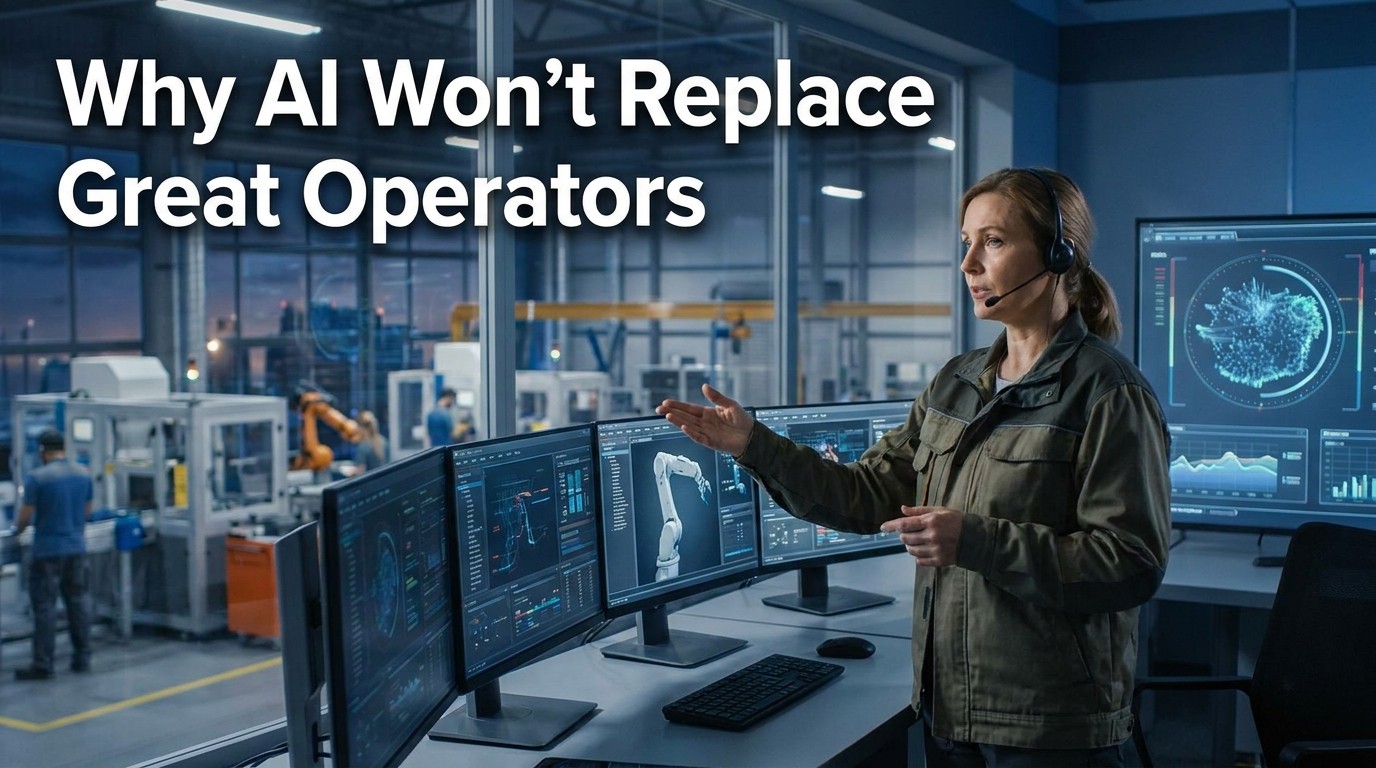
Why AI Won’t Replace Great Operators
🔹 AI can process data faster than humans.
🔹 But it still cannot replace operational judgment built through real-world experience.
Right now, almost every industry is discussing:
AI automation
Machine learning
Predictive analytics
Autonomous systems
Digital transformation
And yes,
AI is absolutely reshaping operations globally.
But amid all the hype,
many businesses are beginning to ask the wrong question:
“Will AI replace operators?”
The more important question is:
“What kind of operators will thrive in an AI-driven world?”
At Talha Khan OPS, we believe the future does not belong to businesses choosing between:
· Humans
or
· Technology.
It belongs to organizations combining:
operational intelligence + technological capability.
Operator Perspective:
AI improves decision support. Great operators improve decision quality.
Why AI Still Depends on Human Operational Thinking
AI systems are powerful because they can:
· Analyse patterns
· Process data
· Identify anomalies
· Optimize workflows
· Improve forecasting
But operational reality is rarely perfectly structured.
Real-world operations involve:
· Uncertainty
· Supplier delays
· Human behaviour
· Market shifts
· Operational trade-offs
· Unexpected disruptions
This is where experienced operators still matter enormously.
Because judgment is different from data processing.
What AI Does Well
AI performs extremely well in:
· Forecasting analysis
· Pattern recognition
· Warehouse optimization
· Inventory visibility
· Workflow automation
· Anomaly detection
· Operational reporting
These capabilities significantly improve:
· Speed
· Visibility
· Efficiency
· Scalability
particularly in:
· Logistics
· Warehousing
· Manufacturing
· Retail operations
· Supply chain management
What Great Operators Still Do Better
1. Contextual Decision-Making
AI can recommend actions.
But operators understand:
· Market nuance
· Customer behaviour
· Supplier relationships
· Operational timing
· Business priorities
Context changes decisions.
2. Managing Operational Uncertainty
Operations rarely run perfectly.
Unexpected issues happen constantly:
· Freight delays
· Production inconsistencies
· Demand spikes
· Inventory shortages
· Supplier disruptions
Experienced operators adapt dynamically under pressure.
AI still struggles heavily with unpredictable operational complexity.
3. Relationship Management
Business operations depend heavily on:
· Communication
· Trust
· Negotiation
· Supplier coordination
· Leadership alignment
These are fundamentally human operational capabilities.
Operator Perspective:
Operations are not just systems. They are coordinated human ecosystems.
4. Strategic Trade-off Decisions
Operational leadership often requires difficult trade-offs:
· Cost vs speed
· Inventory vs cash flow
· Customization vs scalability
· Automation vs flexibility
AI can provide data.
But strategic trade-offs still require human judgment.
Why Businesses Misunderstand AI Adoption
Many companies assume:
buying AI tools automatically improves operations.
But weak operational foundations often create:
· Poor data quality
· Disconnected systems
· Unreliable forecasting
· Inconsistent workflows
In these environments,
AI simply accelerates operational confusion.
This is why operational maturity matters before advanced automation.
Companies like Amazon and Toyota succeed with AI because they already built:
· Disciplined systems
· Process consistency
· Operational visibility
· Execution reliability
Technology amplifies operational strength.
It does not create it independently.
The Sports & Manufacturing Industry Still Depends on Operators
Sports manufacturing remains highly operationally sensitive.
Even with advanced systems,
human expertise still drives:
· Quality control
· Customization management
· Production coordination
· Fulfillment prioritization
· Export workflows
· Supplier alignment
This becomes especially important in:
· OEM manufacturing
· Private labelling
· Custom football production
· Sportswear manufacturing
where operational flexibility directly impacts customer satisfaction.
Manufacturing ecosystems like Sialkot continue thriving because generations of manufacturing expertise created operational specialization difficult to replicate entirely through automation alone.
Brands like STRYK World operate within this evolving environment by balancing:
· Manufacturing capability
· Customization flexibility
· Operational responsiveness
· Scalable fulfillment
while adapting to increasingly technology-driven operational expectations globally.
Why the Future Belongs to Hybrid Operators
The strongest future operators will likely combine:
· Operational experience
· Technological understanding
· Workflow intelligence
· Strategic adaptability
· Data-driven thinking
· Execution discipline
rather than relying entirely on:
· Intuition alone
or
· Automation alone.
The future operator becomes:
technologically enabled, operationally experienced, and strategically adaptive.
Mini Industry Observation, AI Is Changing Expectations Faster Than Skills
One major challenge today:
technology adoption is accelerating faster than operational capability development.
Many businesses now have:
· Advanced dashboards
· Automation tools
· Analytics systems
without building:
· Operational discipline
· Execution consistency
· Workflow maturity
The businesses succeeding most will likely balance both worlds effectively.
Industry Prediction for 2026–2035
Over the next decade,
AI will dramatically reshape:
· Forecasting
· Warehousing
· Fulfillment
· Manufacturing
· Logistics
· Procurement
But businesses will still rely heavily on operators capable of:
· Managing complexity
· Making strategic tradeoffs
· Adapting under uncertainty
· Coordinating execution
· Building operational resilience
The future will likely reward:
operational intelligence enhanced by AI, not replaced by it.
Final Thought
AI is becoming an incredibly powerful operational tool.
But tools are only as effective as the systems and people using them.
The businesses thriving long-term will likely combine:
Technology
Discipline
Operational leadership
Execution maturity
into integrated operational ecosystems.
🔹 AI can improve operational speed.
🔹 Great operators still determine operational direction.
Do you think AI will eventually replace operational leadership, or simply reshape it?
Let’s discuss below.
📩 Connect with us:
🌐 Talha Khan OPS
🌐 STRYK World
#AI #OperationsManagement #BusinessOperations #OperationalExcellence #SupplyChain #Automation #Leadership #WarehouseManagement #Manufacturing #SupplyChainTechnology #OperationalLeadership #SportsManufacturing #OEMManufacturing #PrivateLabel #BusinessTransformation #InventoryManagement #RetailOperations #FutureOfWork #OperationalDiscipline #SportsBusiness #Sialkot #Forecasting #DigitalTransformation #Fulfillment #AIinBusiness #Technology #STRYKWorld #TalhaKhanOPS #FutureOfOperations #BusinessStrategy
More to Discover


Insights
Why AI Won’t Replace Great Operators
🔹 AI can process data faster than humans.
🔹 But it still cannot replace operational judgment built through real-world experience.
Right now, almost every industry is discussing:
AI automation
Machine learning
Predictive analytics
Autonomous systems
Digital transformation
And yes,
AI is absolutely reshaping operations globally.
But amid all the hype,
many businesses are beginning to ask the wrong question:
“Will AI replace operators?”
The more important question is:
“What kind of operators will thrive in an AI-driven world?”
At Talha Khan OPS, we believe the future does not belong to businesses choosing between:
· Humans
or
· Technology.
It belongs to organizations combining:
operational intelligence + technological capability.
Operator Perspective:
AI improves decision support. Great operators improve decision quality.
Why AI Still Depends on Human Operational Thinking
AI systems are powerful because they can:
· Analyse patterns
· Process data
· Identify anomalies
· Optimize workflows
· Improve forecasting
But operational reality is rarely perfectly structured.
Real-world operations involve:
· Uncertainty
· Supplier delays
· Human behaviour
· Market shifts
· Operational trade-offs
· Unexpected disruptions
This is where experienced operators still matter enormously.
Because judgment is different from data processing.
What AI Does Well
AI performs extremely well in:
· Forecasting analysis
· Pattern recognition
· Warehouse optimization
· Inventory visibility
· Workflow automation
· Anomaly detection
· Operational reporting
These capabilities significantly improve:
· Speed
· Visibility
· Efficiency
· Scalability
particularly in:
· Logistics
· Warehousing
· Manufacturing
· Retail operations
· Supply chain management
What Great Operators Still Do Better
1. Contextual Decision-Making
AI can recommend actions.
But operators understand:
· Market nuance
· Customer behaviour
· Supplier relationships
· Operational timing
· Business priorities
Context changes decisions.
2. Managing Operational Uncertainty
Operations rarely run perfectly.
Unexpected issues happen constantly:
· Freight delays
· Production inconsistencies
· Demand spikes
· Inventory shortages
· Supplier disruptions
Experienced operators adapt dynamically under pressure.
AI still struggles heavily with unpredictable operational complexity.
3. Relationship Management
Business operations depend heavily on:
· Communication
· Trust
· Negotiation
· Supplier coordination
· Leadership alignment
These are fundamentally human operational capabilities.
Operator Perspective:
Operations are not just systems. They are coordinated human ecosystems.
4. Strategic Trade-off Decisions
Operational leadership often requires difficult trade-offs:
· Cost vs speed
· Inventory vs cash flow
· Customization vs scalability
· Automation vs flexibility
AI can provide data.
But strategic trade-offs still require human judgment.
Why Businesses Misunderstand AI Adoption
Many companies assume:
buying AI tools automatically improves operations.
But weak operational foundations often create:
· Poor data quality
· Disconnected systems
· Unreliable forecasting
· Inconsistent workflows
In these environments,
AI simply accelerates operational confusion.
This is why operational maturity matters before advanced automation.
Companies like Amazon and Toyota succeed with AI because they already built:
· Disciplined systems
· Process consistency
· Operational visibility
· Execution reliability
Technology amplifies operational strength.
It does not create it independently.
The Sports & Manufacturing Industry Still Depends on Operators
Sports manufacturing remains highly operationally sensitive.
Even with advanced systems,
human expertise still drives:
· Quality control
· Customization management
· Production coordination
· Fulfillment prioritization
· Export workflows
· Supplier alignment
This becomes especially important in:
· OEM manufacturing
· Private labelling
· Custom football production
· Sportswear manufacturing
where operational flexibility directly impacts customer satisfaction.
Manufacturing ecosystems like Sialkot continue thriving because generations of manufacturing expertise created operational specialization difficult to replicate entirely through automation alone.
Brands like STRYK World operate within this evolving environment by balancing:
· Manufacturing capability
· Customization flexibility
· Operational responsiveness
· Scalable fulfillment
while adapting to increasingly technology-driven operational expectations globally.
Why the Future Belongs to Hybrid Operators
The strongest future operators will likely combine:
· Operational experience
· Technological understanding
· Workflow intelligence
· Strategic adaptability
· Data-driven thinking
· Execution discipline
rather than relying entirely on:
· Intuition alone
or
· Automation alone.
The future operator becomes:
technologically enabled, operationally experienced, and strategically adaptive.
Mini Industry Observation, AI Is Changing Expectations Faster Than Skills
One major challenge today:
technology adoption is accelerating faster than operational capability development.
Many businesses now have:
· Advanced dashboards
· Automation tools
· Analytics systems
without building:
· Operational discipline
· Execution consistency
· Workflow maturity
The businesses succeeding most will likely balance both worlds effectively.
Industry Prediction for 2026–2035
Over the next decade,
AI will dramatically reshape:
· Forecasting
· Warehousing
· Fulfillment
· Manufacturing
· Logistics
· Procurement
But businesses will still rely heavily on operators capable of:
· Managing complexity
· Making strategic tradeoffs
· Adapting under uncertainty
· Coordinating execution
· Building operational resilience
The future will likely reward:
operational intelligence enhanced by AI, not replaced by it.
Final Thought
AI is becoming an incredibly powerful operational tool.
But tools are only as effective as the systems and people using them.
The businesses thriving long-term will likely combine:
Technology
Discipline
Operational leadership
Execution maturity
into integrated operational ecosystems.
🔹 AI can improve operational speed.
🔹 Great operators still determine operational direction.
Do you think AI will eventually replace operational leadership, or simply reshape it?
Let’s discuss below.
📩 Connect with us:
🌐 Talha Khan OPS
🌐 STRYK World
#AI #OperationsManagement #BusinessOperations #OperationalExcellence #SupplyChain #Automation #Leadership #WarehouseManagement #Manufacturing #SupplyChainTechnology #OperationalLeadership #SportsManufacturing #OEMManufacturing #PrivateLabel #BusinessTransformation #InventoryManagement #RetailOperations #FutureOfWork #OperationalDiscipline #SportsBusiness #Sialkot #Forecasting #DigitalTransformation #Fulfillment #AIinBusiness #Technology #STRYKWorld #TalhaKhanOPS #FutureOfOperations #BusinessStrategy
More to Discover
Insights
Why AI Won’t Replace Great Operators
🔹 AI can process data faster than humans.
🔹 But it still cannot replace operational judgment built through real-world experience.
Right now, almost every industry is discussing:
AI automation
Machine learning
Predictive analytics
Autonomous systems
Digital transformation
And yes,
AI is absolutely reshaping operations globally.
But amid all the hype,
many businesses are beginning to ask the wrong question:
“Will AI replace operators?”
The more important question is:
“What kind of operators will thrive in an AI-driven world?”
At Talha Khan OPS, we believe the future does not belong to businesses choosing between:
· Humans
or
· Technology.
It belongs to organizations combining:
operational intelligence + technological capability.
Operator Perspective:
AI improves decision support. Great operators improve decision quality.
Why AI Still Depends on Human Operational Thinking
AI systems are powerful because they can:
· Analyse patterns
· Process data
· Identify anomalies
· Optimize workflows
· Improve forecasting
But operational reality is rarely perfectly structured.
Real-world operations involve:
· Uncertainty
· Supplier delays
· Human behaviour
· Market shifts
· Operational trade-offs
· Unexpected disruptions
This is where experienced operators still matter enormously.
Because judgment is different from data processing.
What AI Does Well
AI performs extremely well in:
· Forecasting analysis
· Pattern recognition
· Warehouse optimization
· Inventory visibility
· Workflow automation
· Anomaly detection
· Operational reporting
These capabilities significantly improve:
· Speed
· Visibility
· Efficiency
· Scalability
particularly in:
· Logistics
· Warehousing
· Manufacturing
· Retail operations
· Supply chain management
What Great Operators Still Do Better
1. Contextual Decision-Making
AI can recommend actions.
But operators understand:
· Market nuance
· Customer behaviour
· Supplier relationships
· Operational timing
· Business priorities
Context changes decisions.
2. Managing Operational Uncertainty
Operations rarely run perfectly.
Unexpected issues happen constantly:
· Freight delays
· Production inconsistencies
· Demand spikes
· Inventory shortages
· Supplier disruptions
Experienced operators adapt dynamically under pressure.
AI still struggles heavily with unpredictable operational complexity.
3. Relationship Management
Business operations depend heavily on:
· Communication
· Trust
· Negotiation
· Supplier coordination
· Leadership alignment
These are fundamentally human operational capabilities.
Operator Perspective:
Operations are not just systems. They are coordinated human ecosystems.
4. Strategic Trade-off Decisions
Operational leadership often requires difficult trade-offs:
· Cost vs speed
· Inventory vs cash flow
· Customization vs scalability
· Automation vs flexibility
AI can provide data.
But strategic trade-offs still require human judgment.
Why Businesses Misunderstand AI Adoption
Many companies assume:
buying AI tools automatically improves operations.
But weak operational foundations often create:
· Poor data quality
· Disconnected systems
· Unreliable forecasting
· Inconsistent workflows
In these environments,
AI simply accelerates operational confusion.
This is why operational maturity matters before advanced automation.
Companies like Amazon and Toyota succeed with AI because they already built:
· Disciplined systems
· Process consistency
· Operational visibility
· Execution reliability
Technology amplifies operational strength.
It does not create it independently.
The Sports & Manufacturing Industry Still Depends on Operators
Sports manufacturing remains highly operationally sensitive.
Even with advanced systems,
human expertise still drives:
· Quality control
· Customization management
· Production coordination
· Fulfillment prioritization
· Export workflows
· Supplier alignment
This becomes especially important in:
· OEM manufacturing
· Private labelling
· Custom football production
· Sportswear manufacturing
where operational flexibility directly impacts customer satisfaction.
Manufacturing ecosystems like Sialkot continue thriving because generations of manufacturing expertise created operational specialization difficult to replicate entirely through automation alone.
Brands like STRYK World operate within this evolving environment by balancing:
· Manufacturing capability
· Customization flexibility
· Operational responsiveness
· Scalable fulfillment
while adapting to increasingly technology-driven operational expectations globally.
Why the Future Belongs to Hybrid Operators
The strongest future operators will likely combine:
· Operational experience
· Technological understanding
· Workflow intelligence
· Strategic adaptability
· Data-driven thinking
· Execution discipline
rather than relying entirely on:
· Intuition alone
or
· Automation alone.
The future operator becomes:
technologically enabled, operationally experienced, and strategically adaptive.
Mini Industry Observation, AI Is Changing Expectations Faster Than Skills
One major challenge today:
technology adoption is accelerating faster than operational capability development.
Many businesses now have:
· Advanced dashboards
· Automation tools
· Analytics systems
without building:
· Operational discipline
· Execution consistency
· Workflow maturity
The businesses succeeding most will likely balance both worlds effectively.
Industry Prediction for 2026–2035
Over the next decade,
AI will dramatically reshape:
· Forecasting
· Warehousing
· Fulfillment
· Manufacturing
· Logistics
· Procurement
But businesses will still rely heavily on operators capable of:
· Managing complexity
· Making strategic tradeoffs
· Adapting under uncertainty
· Coordinating execution
· Building operational resilience
The future will likely reward:
operational intelligence enhanced by AI, not replaced by it.
Final Thought
AI is becoming an incredibly powerful operational tool.
But tools are only as effective as the systems and people using them.
The businesses thriving long-term will likely combine:
Technology
Discipline
Operational leadership
Execution maturity
into integrated operational ecosystems.
🔹 AI can improve operational speed.
🔹 Great operators still determine operational direction.
Do you think AI will eventually replace operational leadership, or simply reshape it?
Let’s discuss below.
📩 Connect with us:
🌐 Talha Khan OPS
🌐 STRYK World
#AI #OperationsManagement #BusinessOperations #OperationalExcellence #SupplyChain #Automation #Leadership #WarehouseManagement #Manufacturing #SupplyChainTechnology #OperationalLeadership #SportsManufacturing #OEMManufacturing #PrivateLabel #BusinessTransformation #InventoryManagement #RetailOperations #FutureOfWork #OperationalDiscipline #SportsBusiness #Sialkot #Forecasting #DigitalTransformation #Fulfillment #AIinBusiness #Technology #STRYKWorld #TalhaKhanOPS #FutureOfOperations #BusinessStrategy