Insights
Using Simulation Games for Supply Chain Training
Introduction
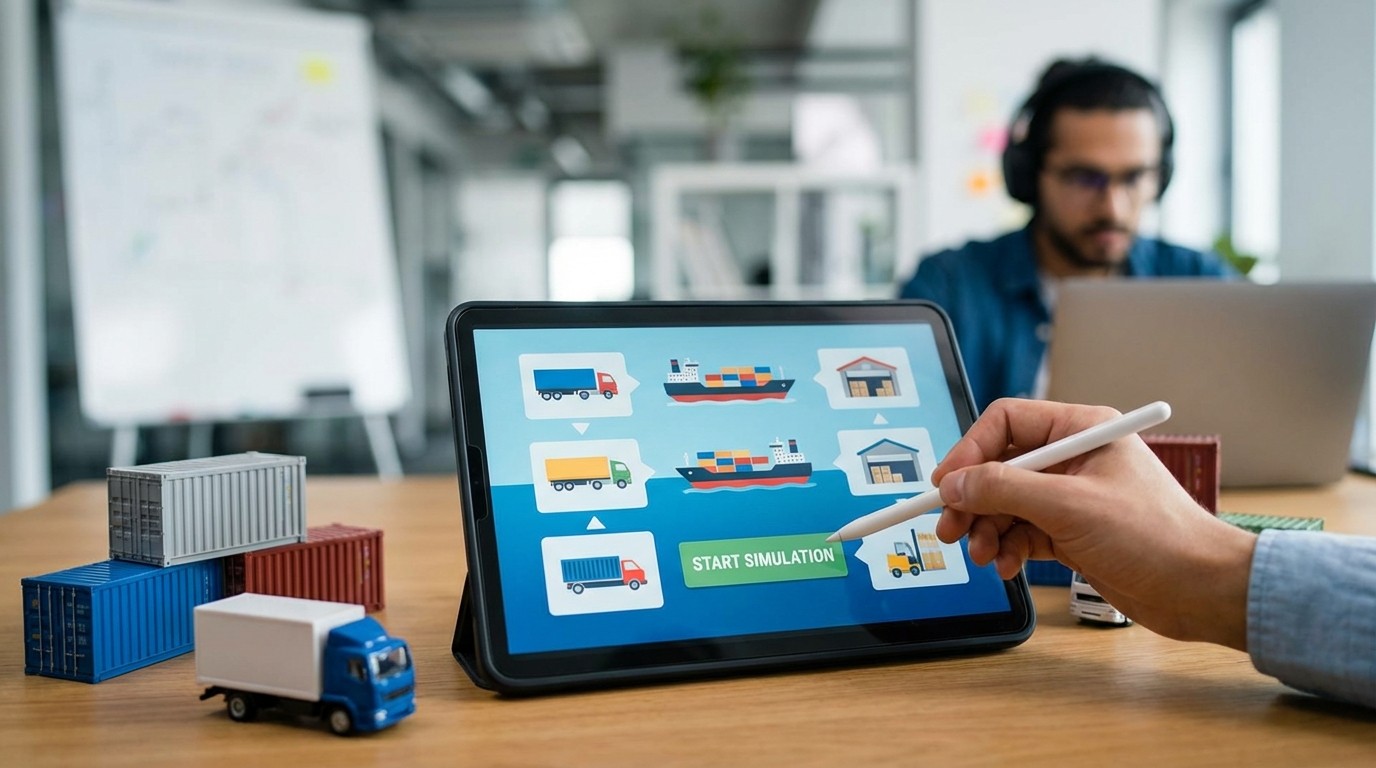
Traditional classroom training often struggles to replicate the complexity and interdependencies of real-world supply chain environments. Simulation games offer immersive learning experiences that allow participants to experiment with decisions, observe system dynamics, and understand trade-offs in a risk-free environment. As supply chains grow more complex, experiential learning approaches are gaining prominence.
Learning Benefits of Simulation
Simulation-based training enables:
Systems-level understanding of supply chain dynamics
Safe experimentation with decision-making under uncertainty
Enhanced engagement and knowledge retention
Cross-functional collaboration and perspective-taking
Accelerated development of analytical and strategic thinking skills
Operational Applications
Simulation games can be applied to:
Demand and capacity planning scenarios
Network design and disruption response
Inventory policy trade-offs
Collaboration across functional silos
Leadership development in operations contexts
Implementation Best Practices
Organizations should:
Align simulation objectives with strategic learning goals
Integrate simulations into broader training curricula
Facilitate structured debriefs to translate insights into practice
Use simulations to complement, not replace, on-the-job learning
Measure learning impact through post-training performance indicators
Conclusion
Simulation games enhance supply chain training by providing experiential insight into complex operational dynamics. Organizations that incorporate simulation-based learning into capability development can accelerate leadership readiness and operational maturity.
#SupplyChainTraining #SimulationLearning #ExperientialLearning #OperationsDevelopment #LeadershipTraining #LearningAndDevelopment
More to Discover

Insights
Using Simulation Games for Supply Chain Training
Introduction
Traditional classroom training often struggles to replicate the complexity and interdependencies of real-world supply chain environments. Simulation games offer immersive learning experiences that allow participants to experiment with decisions, observe system dynamics, and understand trade-offs in a risk-free environment. As supply chains grow more complex, experiential learning approaches are gaining prominence.
Learning Benefits of Simulation
Simulation-based training enables:
Systems-level understanding of supply chain dynamics
Safe experimentation with decision-making under uncertainty
Enhanced engagement and knowledge retention
Cross-functional collaboration and perspective-taking
Accelerated development of analytical and strategic thinking skills
Operational Applications
Simulation games can be applied to:
Demand and capacity planning scenarios
Network design and disruption response
Inventory policy trade-offs
Collaboration across functional silos
Leadership development in operations contexts
Implementation Best Practices
Organizations should:
Align simulation objectives with strategic learning goals
Integrate simulations into broader training curricula
Facilitate structured debriefs to translate insights into practice
Use simulations to complement, not replace, on-the-job learning
Measure learning impact through post-training performance indicators
Conclusion
Simulation games enhance supply chain training by providing experiential insight into complex operational dynamics. Organizations that incorporate simulation-based learning into capability development can accelerate leadership readiness and operational maturity.
#SupplyChainTraining #SimulationLearning #ExperientialLearning #OperationsDevelopment #LeadershipTraining #LearningAndDevelopment
More to Discover
Insights
Using Simulation Games for Supply Chain Training
Introduction
Traditional classroom training often struggles to replicate the complexity and interdependencies of real-world supply chain environments. Simulation games offer immersive learning experiences that allow participants to experiment with decisions, observe system dynamics, and understand trade-offs in a risk-free environment. As supply chains grow more complex, experiential learning approaches are gaining prominence.
Learning Benefits of Simulation
Simulation-based training enables:
Systems-level understanding of supply chain dynamics
Safe experimentation with decision-making under uncertainty
Enhanced engagement and knowledge retention
Cross-functional collaboration and perspective-taking
Accelerated development of analytical and strategic thinking skills
Operational Applications
Simulation games can be applied to:
Demand and capacity planning scenarios
Network design and disruption response
Inventory policy trade-offs
Collaboration across functional silos
Leadership development in operations contexts
Implementation Best Practices
Organizations should:
Align simulation objectives with strategic learning goals
Integrate simulations into broader training curricula
Facilitate structured debriefs to translate insights into practice
Use simulations to complement, not replace, on-the-job learning
Measure learning impact through post-training performance indicators
Conclusion
Simulation games enhance supply chain training by providing experiential insight into complex operational dynamics. Organizations that incorporate simulation-based learning into capability development can accelerate leadership readiness and operational maturity.
#SupplyChainTraining #SimulationLearning #ExperientialLearning #OperationsDevelopment #LeadershipTraining #LearningAndDevelopment