Insights
Throughput vs Utilization: How to Balance Efficiency in Warehousing
Introduction
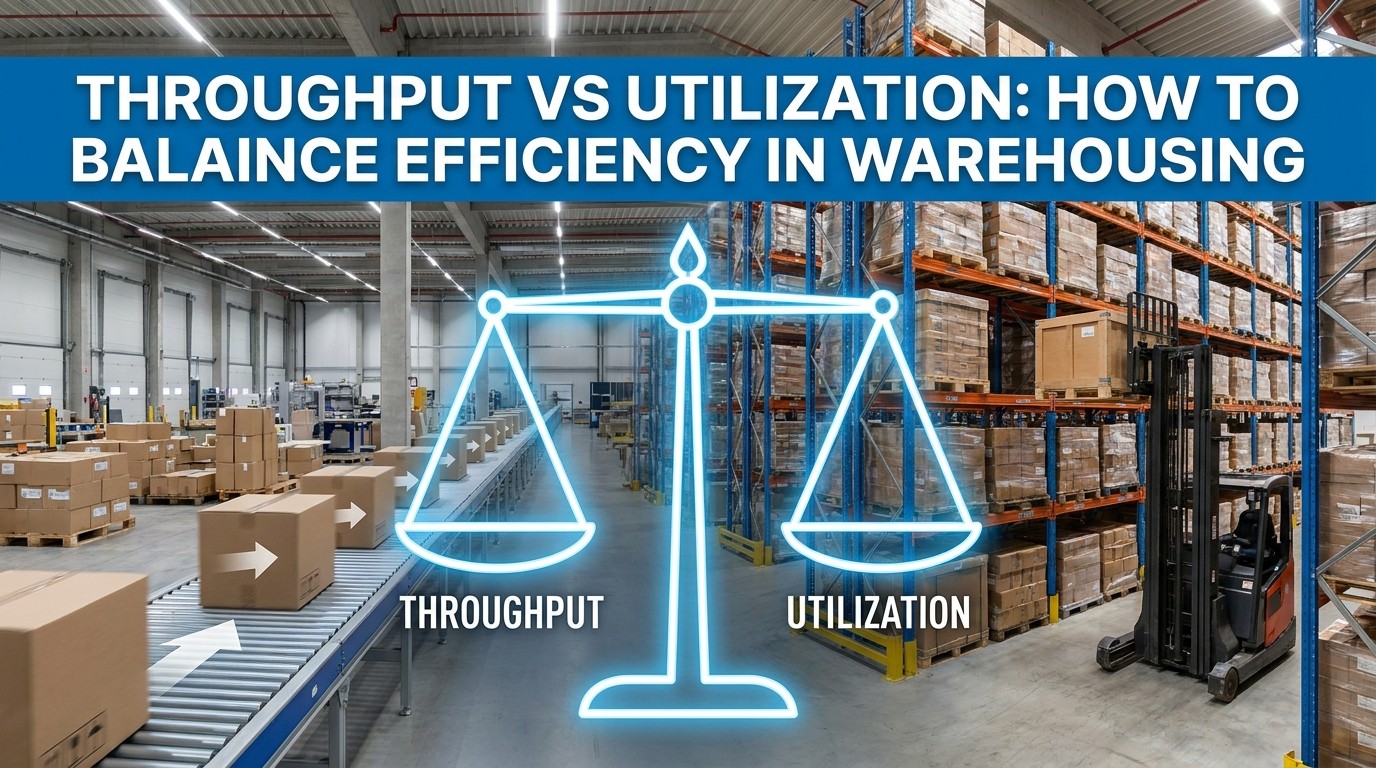
Warehouse performance management often emphasizes high utilization of labor and assets. While utilization metrics provide insight into resource efficiency, an excessive focus on utilization can constrain throughput and reduce system flexibility. Balancing throughput and utilization is essential for designing warehouses that perform reliably under variable demand.
The Utilization Trap
High utilization environments can lead to:
Congestion and longer cycle times
Reduced ability to absorb demand spikes
Increased error rates under peak load
Lower system resilience during disruptions
This trade-off reflects classic queuing theory dynamics, where systems operating near capacity experience disproportionate performance degradation.
Designing for Balanced Performance
Warehouse leaders can balance throughput and utilization by:
Designing capacity buffers for peak demand scenarios
Segmenting workflows by velocity and service criticality
Investing in flexible labor and automation strategies
Using simulation to test performance under variable loads
Aligning performance metrics with end-to-end service outcomes
Strategic Implications
Balanced performance management supports:
More predictable service levels
Reduced congestion during peak periods
Improved workforce experience
Greater resilience to demand variability
Conclusion
Maximizing utilization at the expense of throughput can undermine warehouse performance. Organizations that adopt a balanced performance framework can achieve sustainable efficiency while maintaining service reliability.
#WarehousePerformance #ThroughputVsUtilization #LogisticsOperations #OperationalEfficiency #SupplyChainDesign #WarehousingStrategy
More to Discover


Insights
Throughput vs Utilization: How to Balance Efficiency in Warehousing
Introduction
Warehouse performance management often emphasizes high utilization of labor and assets. While utilization metrics provide insight into resource efficiency, an excessive focus on utilization can constrain throughput and reduce system flexibility. Balancing throughput and utilization is essential for designing warehouses that perform reliably under variable demand.
The Utilization Trap
High utilization environments can lead to:
Congestion and longer cycle times
Reduced ability to absorb demand spikes
Increased error rates under peak load
Lower system resilience during disruptions
This trade-off reflects classic queuing theory dynamics, where systems operating near capacity experience disproportionate performance degradation.
Designing for Balanced Performance
Warehouse leaders can balance throughput and utilization by:
Designing capacity buffers for peak demand scenarios
Segmenting workflows by velocity and service criticality
Investing in flexible labor and automation strategies
Using simulation to test performance under variable loads
Aligning performance metrics with end-to-end service outcomes
Strategic Implications
Balanced performance management supports:
More predictable service levels
Reduced congestion during peak periods
Improved workforce experience
Greater resilience to demand variability
Conclusion
Maximizing utilization at the expense of throughput can undermine warehouse performance. Organizations that adopt a balanced performance framework can achieve sustainable efficiency while maintaining service reliability.
#WarehousePerformance #ThroughputVsUtilization #LogisticsOperations #OperationalEfficiency #SupplyChainDesign #WarehousingStrategy
More to Discover
Insights
Throughput vs Utilization: How to Balance Efficiency in Warehousing
Introduction
Warehouse performance management often emphasizes high utilization of labor and assets. While utilization metrics provide insight into resource efficiency, an excessive focus on utilization can constrain throughput and reduce system flexibility. Balancing throughput and utilization is essential for designing warehouses that perform reliably under variable demand.
The Utilization Trap
High utilization environments can lead to:
Congestion and longer cycle times
Reduced ability to absorb demand spikes
Increased error rates under peak load
Lower system resilience during disruptions
This trade-off reflects classic queuing theory dynamics, where systems operating near capacity experience disproportionate performance degradation.
Designing for Balanced Performance
Warehouse leaders can balance throughput and utilization by:
Designing capacity buffers for peak demand scenarios
Segmenting workflows by velocity and service criticality
Investing in flexible labor and automation strategies
Using simulation to test performance under variable loads
Aligning performance metrics with end-to-end service outcomes
Strategic Implications
Balanced performance management supports:
More predictable service levels
Reduced congestion during peak periods
Improved workforce experience
Greater resilience to demand variability
Conclusion
Maximizing utilization at the expense of throughput can undermine warehouse performance. Organizations that adopt a balanced performance framework can achieve sustainable efficiency while maintaining service reliability.
#WarehousePerformance #ThroughputVsUtilization #LogisticsOperations #OperationalEfficiency #SupplyChainDesign #WarehousingStrategy