Insights
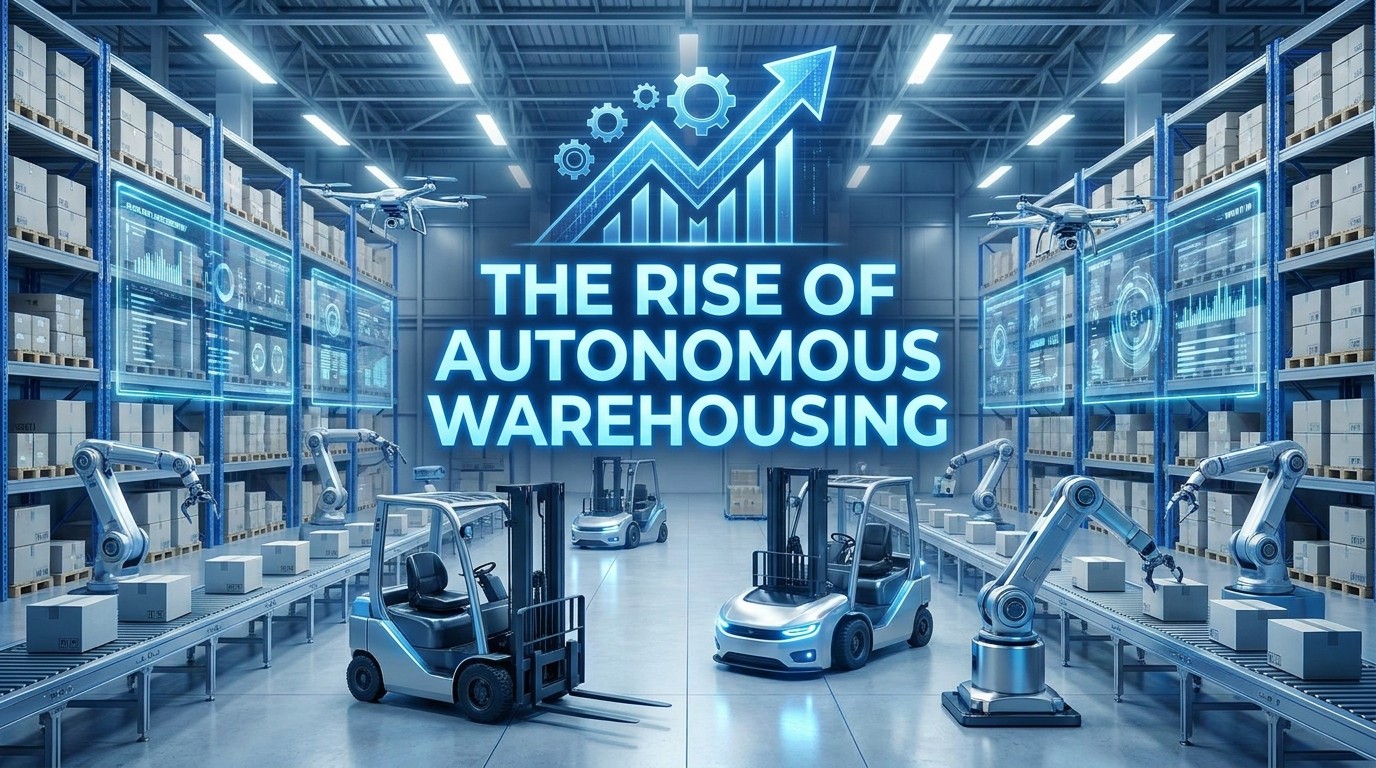
The Rise of Autonomous Warehousing
🔹 Warehouses are no longer just storage facilities.
🔹 They are rapidly becoming intelligent operational ecosystems.
Over the last decade, warehousing transformed dramatically.
What was once primarily:
Manual storage
Labor-heavy fulfillment
Paper-based inventory management
is now evolving toward:
Robotics
Ai-driven workflows
Autonomous picking systems
Predictive replenishment
Smart inventory tracking
Real-time operational visibility
The warehouse itself is becoming a strategic competitive advantage.
At Talha Khan OPS, we believe autonomous warehousing will significantly reshape:
Logistics
E-commerce
Retail operations
Manufacturing
Sports distribution
Wholesale fulfillment
over the next decade.
Because modern fulfillment expectations are becoming too demanding for traditional warehouse systems alone.
Operator Perspective:
Warehousing is no longer about storing inventory efficiently. It’s about moving inventory intelligently.
Why Autonomous Warehousing Is Growing Rapidly
Several global trends accelerated warehouse automation adoption:
Labor shortages
Rising fulfillment costs
E-commerce growth
Same-day delivery expectations
Sku complexity
Inventory volatility
Companies increasingly need:
· Faster fulfillment
· Fewer operational errors
· Scalable workflows
· Inventory visibility
· Operational flexibility
Traditional warehouse structures struggle under these pressures.
Autonomous systems help businesses increase:
Speed
Consistency
Scalability
Operational visibility
simultaneously.
What Autonomous Warehousing Actually Includes
Autonomous warehousing is broader than robots alone.
Modern systems increasingly combine:
Autonomous mobile robots (amrs)
AI-driven picking optimization
RFID tracking
Automated sorting systems
Predictive replenishment
Smart warehouse analytics
Automated guided vehicles (agvs)
Inventory scanning systems
working together within connected operational ecosystems.
How Major Companies Use Autonomous Warehousing
Companies like Amazon, Alibaba, and DHL heavily invest in automation because operational speed directly impacts:
Customer satisfaction
Fulfillment cost
Scalability
Inventory efficiency
Their warehouses increasingly function as:
data-driven fulfillment networks rather than static storage spaces.
The Biggest Benefits of Autonomous Warehousing
1. Faster Fulfillment Speed
Autonomous systems significantly reduce:
· Picking time
· Movement inefficiency
· Manual coordination delays
This improves:
· Order processing
· Shipment preparation
· Fulfillment consistency
particularly during demand spikes.
2. Improved Inventory Accuracy
Automation improves inventory visibility through:
· Real-time scanning
· Tracking synchronization
· Reduced manual error
Inventory accuracy becomes increasingly important in:
· E-commerce
· Sportswear
· Wholesale operations
· Multi-channel fulfillment
where stock visibility directly impacts customer experience.
3. Better Operational Scalability
Traditional warehouse scaling often requires:
· Significant labor expansion
· Additional supervision
· Workflow restructuring
Autonomous systems allow businesses to scale more efficiently during:
· Seasonal peaks
· Retail launches
· Promotional events
· High-volume fulfillment cycles
Operator Perspective:
Operational scalability increasingly depends on workflow intelligence, not just warehouse size.
Why Human Operators Still Matter
One major misconception:
automation completely replaces people.
In reality,
high-performing autonomous warehouses still depend heavily on:
· operational oversight
· workflow management
· inventory planning
· exception handling
· quality control
· strategic coordination
The future is not:
human vs machine.
It’s:
human + intelligent operational systems.
The Sports & Retail Industry Is Becoming More Fulfillment-Driven
Sports products and apparel businesses now operate in highly competitive fulfillment environments.
Customers increasingly expect:
· Faster delivery
· Inventory accuracy
· Customization visibility
· Reliable fulfillment
· Operational transparency
This creates operational pressure across:
· Sportswear
· Football equipment
· Oem manufacturing
· Private labeling
· D2c sports brands
Operationally agile warehousing increasingly becomes part of customer experience itself.
Brands like STRYK World operate within this evolving environment where balancing:
· Manufacturing flexibility
· Inventory coordination
· Fulfillment scalability
· Customization workflows
becomes increasingly important for serving:
· Soccer clubs
· Wholesalers
· Retailers
· Distributors
· Private-label buyers
globally.
Why Autonomous Warehousing Is Still Challenging for Many Businesses
Despite the advantages,
many businesses still struggle with:
· Implementation cost
· System integration
· Operational readiness
· Workflow standardization
· Roi calculation
Automation without operational discipline often creates:
· Complexity
· Workflow confusion
· Integration inefficiency
Operator Perspective:
Smart warehouses require smart systems before smart machines.
Mini Industry Observation, Warehousing Is Becoming a Brand Function
One major operational shift:
warehousing increasingly influences brand perception.
Customers now judge businesses operationally through:
· Shipping speed
· Inventory availability
· Order accuracy
· Fulfillment consistency
This means warehouse performance now directly impacts:
· Retention
· Reviews
· Repeat purchases
· Operational reputation
Warehousing itself is becoming customer-facing.
Industry Prediction for 2026–2035
Over the next decade,
autonomous warehousing will likely become standard across:
E-commerce
Retail
Manufacturing
Sports distribution
Wholesale logistics
The businesses benefiting most will likely combine:
· Intelligent workflows
· Operational visibility
· AI forecasting
· Selective automation
· Inventory accuracy
· Scalable fulfillment systems
into fully connected operational ecosystems.
The future warehouse will not simply store products.
It will continuously optimize operational decisions.
Final Thought
Warehousing is no longer a passive operational function.
It’s becoming an intelligent competitive infrastructure layer for modern business.
The companies adapting early to:
Automation
Visibility
Fulfillment intelligence
Operational scalability
will likely dominate the next generation of logistics and retail operations.
🔹 The future warehouse is not just automated.
🔹 It’s operationally intelligent.
What do you think matters most in modern warehousing today, speed, visibility, automation, or fulfillment reliability?
Let’s discuss below.
📩 Connect with us:
🌐 Talha Khan OPS
🌐 STRYK World
#WarehouseAutomation #AutonomousWarehousing #SupplyChain #Logistics #WarehouseManagement #BusinessOperations #OperationalExcellence #AI #Fulfillment #InventoryManagement #RFID #EcommerceOperations #RetailOperations #SportsManufacturing #OEMManufacturing #PrivateLabel #Sportswear #OperationalLeadership #WarehouseTechnology #SmartWarehousing #BusinessTransformation #SupplyChainTechnology #SportsBusiness #WholesaleOperations #Sialkot #STRYKWorld #TalhaKhanOPS #FutureOfWarehousing #Automation #WarehouseEfficiency
More to Discover


Insights
The Rise of Autonomous Warehousing
🔹 Warehouses are no longer just storage facilities.
🔹 They are rapidly becoming intelligent operational ecosystems.
Over the last decade, warehousing transformed dramatically.
What was once primarily:
Manual storage
Labor-heavy fulfillment
Paper-based inventory management
is now evolving toward:
Robotics
Ai-driven workflows
Autonomous picking systems
Predictive replenishment
Smart inventory tracking
Real-time operational visibility
The warehouse itself is becoming a strategic competitive advantage.
At Talha Khan OPS, we believe autonomous warehousing will significantly reshape:
Logistics
E-commerce
Retail operations
Manufacturing
Sports distribution
Wholesale fulfillment
over the next decade.
Because modern fulfillment expectations are becoming too demanding for traditional warehouse systems alone.
Operator Perspective:
Warehousing is no longer about storing inventory efficiently. It’s about moving inventory intelligently.
Why Autonomous Warehousing Is Growing Rapidly
Several global trends accelerated warehouse automation adoption:
Labor shortages
Rising fulfillment costs
E-commerce growth
Same-day delivery expectations
Sku complexity
Inventory volatility
Companies increasingly need:
· Faster fulfillment
· Fewer operational errors
· Scalable workflows
· Inventory visibility
· Operational flexibility
Traditional warehouse structures struggle under these pressures.
Autonomous systems help businesses increase:
Speed
Consistency
Scalability
Operational visibility
simultaneously.
What Autonomous Warehousing Actually Includes
Autonomous warehousing is broader than robots alone.
Modern systems increasingly combine:
Autonomous mobile robots (amrs)
AI-driven picking optimization
RFID tracking
Automated sorting systems
Predictive replenishment
Smart warehouse analytics
Automated guided vehicles (agvs)
Inventory scanning systems
working together within connected operational ecosystems.
How Major Companies Use Autonomous Warehousing
Companies like Amazon, Alibaba, and DHL heavily invest in automation because operational speed directly impacts:
Customer satisfaction
Fulfillment cost
Scalability
Inventory efficiency
Their warehouses increasingly function as:
data-driven fulfillment networks rather than static storage spaces.
The Biggest Benefits of Autonomous Warehousing
1. Faster Fulfillment Speed
Autonomous systems significantly reduce:
· Picking time
· Movement inefficiency
· Manual coordination delays
This improves:
· Order processing
· Shipment preparation
· Fulfillment consistency
particularly during demand spikes.
2. Improved Inventory Accuracy
Automation improves inventory visibility through:
· Real-time scanning
· Tracking synchronization
· Reduced manual error
Inventory accuracy becomes increasingly important in:
· E-commerce
· Sportswear
· Wholesale operations
· Multi-channel fulfillment
where stock visibility directly impacts customer experience.
3. Better Operational Scalability
Traditional warehouse scaling often requires:
· Significant labor expansion
· Additional supervision
· Workflow restructuring
Autonomous systems allow businesses to scale more efficiently during:
· Seasonal peaks
· Retail launches
· Promotional events
· High-volume fulfillment cycles
Operator Perspective:
Operational scalability increasingly depends on workflow intelligence, not just warehouse size.
Why Human Operators Still Matter
One major misconception:
automation completely replaces people.
In reality,
high-performing autonomous warehouses still depend heavily on:
· operational oversight
· workflow management
· inventory planning
· exception handling
· quality control
· strategic coordination
The future is not:
human vs machine.
It’s:
human + intelligent operational systems.
The Sports & Retail Industry Is Becoming More Fulfillment-Driven
Sports products and apparel businesses now operate in highly competitive fulfillment environments.
Customers increasingly expect:
· Faster delivery
· Inventory accuracy
· Customization visibility
· Reliable fulfillment
· Operational transparency
This creates operational pressure across:
· Sportswear
· Football equipment
· Oem manufacturing
· Private labeling
· D2c sports brands
Operationally agile warehousing increasingly becomes part of customer experience itself.
Brands like STRYK World operate within this evolving environment where balancing:
· Manufacturing flexibility
· Inventory coordination
· Fulfillment scalability
· Customization workflows
becomes increasingly important for serving:
· Soccer clubs
· Wholesalers
· Retailers
· Distributors
· Private-label buyers
globally.
Why Autonomous Warehousing Is Still Challenging for Many Businesses
Despite the advantages,
many businesses still struggle with:
· Implementation cost
· System integration
· Operational readiness
· Workflow standardization
· Roi calculation
Automation without operational discipline often creates:
· Complexity
· Workflow confusion
· Integration inefficiency
Operator Perspective:
Smart warehouses require smart systems before smart machines.
Mini Industry Observation, Warehousing Is Becoming a Brand Function
One major operational shift:
warehousing increasingly influences brand perception.
Customers now judge businesses operationally through:
· Shipping speed
· Inventory availability
· Order accuracy
· Fulfillment consistency
This means warehouse performance now directly impacts:
· Retention
· Reviews
· Repeat purchases
· Operational reputation
Warehousing itself is becoming customer-facing.
Industry Prediction for 2026–2035
Over the next decade,
autonomous warehousing will likely become standard across:
E-commerce
Retail
Manufacturing
Sports distribution
Wholesale logistics
The businesses benefiting most will likely combine:
· Intelligent workflows
· Operational visibility
· AI forecasting
· Selective automation
· Inventory accuracy
· Scalable fulfillment systems
into fully connected operational ecosystems.
The future warehouse will not simply store products.
It will continuously optimize operational decisions.
Final Thought
Warehousing is no longer a passive operational function.
It’s becoming an intelligent competitive infrastructure layer for modern business.
The companies adapting early to:
Automation
Visibility
Fulfillment intelligence
Operational scalability
will likely dominate the next generation of logistics and retail operations.
🔹 The future warehouse is not just automated.
🔹 It’s operationally intelligent.
What do you think matters most in modern warehousing today, speed, visibility, automation, or fulfillment reliability?
Let’s discuss below.
📩 Connect with us:
🌐 Talha Khan OPS
🌐 STRYK World
#WarehouseAutomation #AutonomousWarehousing #SupplyChain #Logistics #WarehouseManagement #BusinessOperations #OperationalExcellence #AI #Fulfillment #InventoryManagement #RFID #EcommerceOperations #RetailOperations #SportsManufacturing #OEMManufacturing #PrivateLabel #Sportswear #OperationalLeadership #WarehouseTechnology #SmartWarehousing #BusinessTransformation #SupplyChainTechnology #SportsBusiness #WholesaleOperations #Sialkot #STRYKWorld #TalhaKhanOPS #FutureOfWarehousing #Automation #WarehouseEfficiency
More to Discover
Insights
The Rise of Autonomous Warehousing
🔹 Warehouses are no longer just storage facilities.
🔹 They are rapidly becoming intelligent operational ecosystems.
Over the last decade, warehousing transformed dramatically.
What was once primarily:
Manual storage
Labor-heavy fulfillment
Paper-based inventory management
is now evolving toward:
Robotics
Ai-driven workflows
Autonomous picking systems
Predictive replenishment
Smart inventory tracking
Real-time operational visibility
The warehouse itself is becoming a strategic competitive advantage.
At Talha Khan OPS, we believe autonomous warehousing will significantly reshape:
Logistics
E-commerce
Retail operations
Manufacturing
Sports distribution
Wholesale fulfillment
over the next decade.
Because modern fulfillment expectations are becoming too demanding for traditional warehouse systems alone.
Operator Perspective:
Warehousing is no longer about storing inventory efficiently. It’s about moving inventory intelligently.
Why Autonomous Warehousing Is Growing Rapidly
Several global trends accelerated warehouse automation adoption:
Labor shortages
Rising fulfillment costs
E-commerce growth
Same-day delivery expectations
Sku complexity
Inventory volatility
Companies increasingly need:
· Faster fulfillment
· Fewer operational errors
· Scalable workflows
· Inventory visibility
· Operational flexibility
Traditional warehouse structures struggle under these pressures.
Autonomous systems help businesses increase:
Speed
Consistency
Scalability
Operational visibility
simultaneously.
What Autonomous Warehousing Actually Includes
Autonomous warehousing is broader than robots alone.
Modern systems increasingly combine:
Autonomous mobile robots (amrs)
AI-driven picking optimization
RFID tracking
Automated sorting systems
Predictive replenishment
Smart warehouse analytics
Automated guided vehicles (agvs)
Inventory scanning systems
working together within connected operational ecosystems.
How Major Companies Use Autonomous Warehousing
Companies like Amazon, Alibaba, and DHL heavily invest in automation because operational speed directly impacts:
Customer satisfaction
Fulfillment cost
Scalability
Inventory efficiency
Their warehouses increasingly function as:
data-driven fulfillment networks rather than static storage spaces.
The Biggest Benefits of Autonomous Warehousing
1. Faster Fulfillment Speed
Autonomous systems significantly reduce:
· Picking time
· Movement inefficiency
· Manual coordination delays
This improves:
· Order processing
· Shipment preparation
· Fulfillment consistency
particularly during demand spikes.
2. Improved Inventory Accuracy
Automation improves inventory visibility through:
· Real-time scanning
· Tracking synchronization
· Reduced manual error
Inventory accuracy becomes increasingly important in:
· E-commerce
· Sportswear
· Wholesale operations
· Multi-channel fulfillment
where stock visibility directly impacts customer experience.
3. Better Operational Scalability
Traditional warehouse scaling often requires:
· Significant labor expansion
· Additional supervision
· Workflow restructuring
Autonomous systems allow businesses to scale more efficiently during:
· Seasonal peaks
· Retail launches
· Promotional events
· High-volume fulfillment cycles
Operator Perspective:
Operational scalability increasingly depends on workflow intelligence, not just warehouse size.
Why Human Operators Still Matter
One major misconception:
automation completely replaces people.
In reality,
high-performing autonomous warehouses still depend heavily on:
· operational oversight
· workflow management
· inventory planning
· exception handling
· quality control
· strategic coordination
The future is not:
human vs machine.
It’s:
human + intelligent operational systems.
The Sports & Retail Industry Is Becoming More Fulfillment-Driven
Sports products and apparel businesses now operate in highly competitive fulfillment environments.
Customers increasingly expect:
· Faster delivery
· Inventory accuracy
· Customization visibility
· Reliable fulfillment
· Operational transparency
This creates operational pressure across:
· Sportswear
· Football equipment
· Oem manufacturing
· Private labeling
· D2c sports brands
Operationally agile warehousing increasingly becomes part of customer experience itself.
Brands like STRYK World operate within this evolving environment where balancing:
· Manufacturing flexibility
· Inventory coordination
· Fulfillment scalability
· Customization workflows
becomes increasingly important for serving:
· Soccer clubs
· Wholesalers
· Retailers
· Distributors
· Private-label buyers
globally.
Why Autonomous Warehousing Is Still Challenging for Many Businesses
Despite the advantages,
many businesses still struggle with:
· Implementation cost
· System integration
· Operational readiness
· Workflow standardization
· Roi calculation
Automation without operational discipline often creates:
· Complexity
· Workflow confusion
· Integration inefficiency
Operator Perspective:
Smart warehouses require smart systems before smart machines.
Mini Industry Observation, Warehousing Is Becoming a Brand Function
One major operational shift:
warehousing increasingly influences brand perception.
Customers now judge businesses operationally through:
· Shipping speed
· Inventory availability
· Order accuracy
· Fulfillment consistency
This means warehouse performance now directly impacts:
· Retention
· Reviews
· Repeat purchases
· Operational reputation
Warehousing itself is becoming customer-facing.
Industry Prediction for 2026–2035
Over the next decade,
autonomous warehousing will likely become standard across:
E-commerce
Retail
Manufacturing
Sports distribution
Wholesale logistics
The businesses benefiting most will likely combine:
· Intelligent workflows
· Operational visibility
· AI forecasting
· Selective automation
· Inventory accuracy
· Scalable fulfillment systems
into fully connected operational ecosystems.
The future warehouse will not simply store products.
It will continuously optimize operational decisions.
Final Thought
Warehousing is no longer a passive operational function.
It’s becoming an intelligent competitive infrastructure layer for modern business.
The companies adapting early to:
Automation
Visibility
Fulfillment intelligence
Operational scalability
will likely dominate the next generation of logistics and retail operations.
🔹 The future warehouse is not just automated.
🔹 It’s operationally intelligent.
What do you think matters most in modern warehousing today, speed, visibility, automation, or fulfillment reliability?
Let’s discuss below.
📩 Connect with us:
🌐 Talha Khan OPS
🌐 STRYK World
#WarehouseAutomation #AutonomousWarehousing #SupplyChain #Logistics #WarehouseManagement #BusinessOperations #OperationalExcellence #AI #Fulfillment #InventoryManagement #RFID #EcommerceOperations #RetailOperations #SportsManufacturing #OEMManufacturing #PrivateLabel #Sportswear #OperationalLeadership #WarehouseTechnology #SmartWarehousing #BusinessTransformation #SupplyChainTechnology #SportsBusiness #WholesaleOperations #Sialkot #STRYKWorld #TalhaKhanOPS #FutureOfWarehousing #Automation #WarehouseEfficiency