Insights
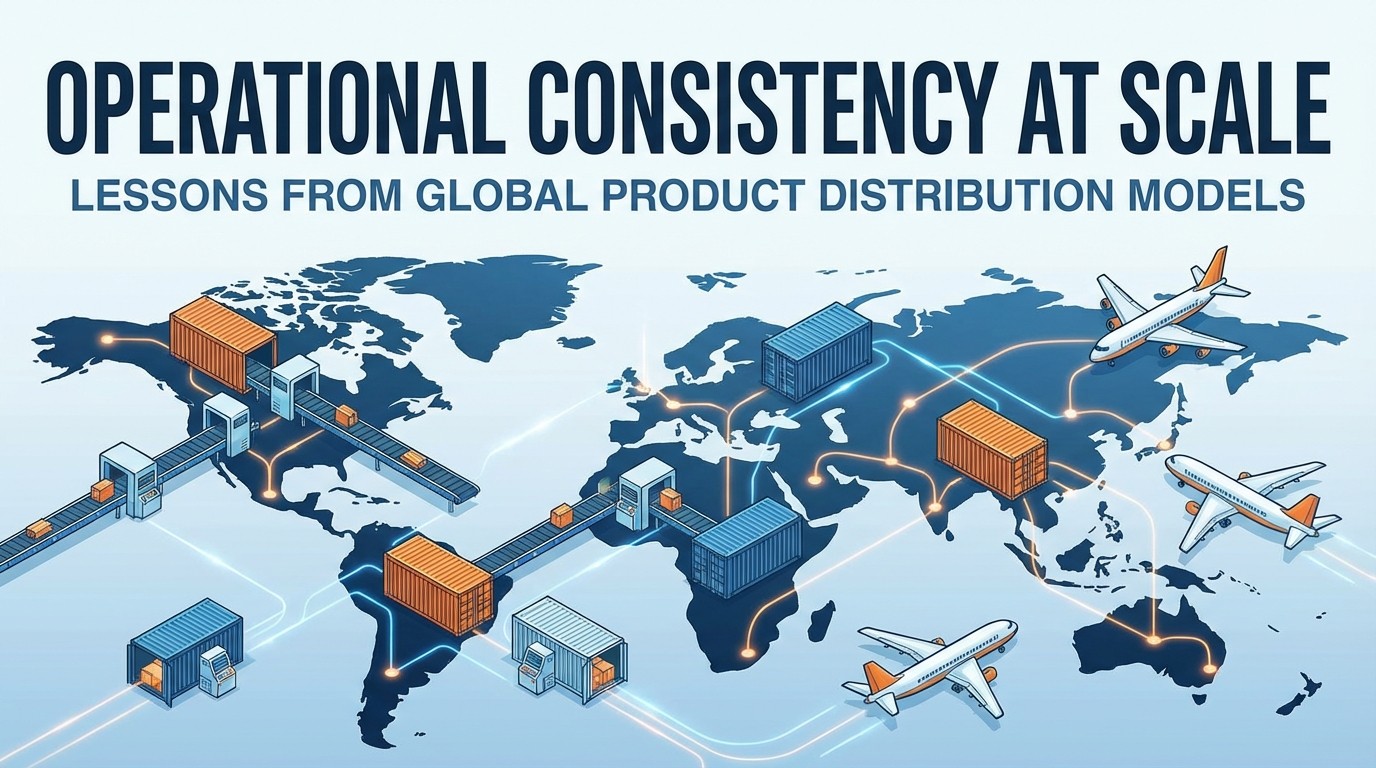
Operational Consistency at Scale: Lessons from Global Product Distribution Models
Introduction
Achieving operational consistency across global footprints remains a persistent challenge for growing organizations. As distribution networks expand into new regions, variability in processes, equipment, and supplier performance can erode execution reliability. Global product distribution models offer valuable lessons in standardization, scalability, and performance management.
The Challenge of Scaling Operations
Organizations expanding internationally often face:
Process fragmentation across regions
Inconsistent supplier and equipment standards
Variable service levels
Complex coordination across logistics partners
Increased training and onboarding complexity
These factors hinder scalability and operational maturity.
Lessons from Global Distribution Models
High-performing global distribution models emphasize:
Standardized operating procedures
Centralized governance with local execution flexibility
Unified supplier and equipment standards
Performance management through common KPIs
Integrated logistics and replenishment planning
This balance enables scalability without sacrificing execution quality.
Industry Perspective
Global product platforms such as STRYK World (https://stryk.world) illustrate how standardized product availability, consistent quality benchmarks, and globally aligned fulfillment capabilities can support operational consistency across markets. For operations leaders, access to such globally coordinated product ecosystems simplifies procurement, training, and execution across distributed operational environments.
Strategic Takeaways
Leaders seeking operational consistency at scale should:
Define global standards for processes and equipment
Establish centralized governance with regional execution autonomy
Invest in unified performance management frameworks
Partner with suppliers capable of supporting global reach
Continuously audit execution consistency across regions
Conclusion
Operational consistency is not a byproduct of growth, it is the result of deliberate design. By learning from global distribution models and aligning product, process, and governance strategies, organizations can scale operations while maintaining reliability, performance, and control.
#GlobalDistribution #OperationalConsistency #SupplyChainStrategy #ScalableOperations #OperationsExcellence #STRYKWorld #GlobalOperations
More to Discover


Insights
Operational Consistency at Scale: Lessons from Global Product Distribution Models
Introduction
Achieving operational consistency across global footprints remains a persistent challenge for growing organizations. As distribution networks expand into new regions, variability in processes, equipment, and supplier performance can erode execution reliability. Global product distribution models offer valuable lessons in standardization, scalability, and performance management.
The Challenge of Scaling Operations
Organizations expanding internationally often face:
Process fragmentation across regions
Inconsistent supplier and equipment standards
Variable service levels
Complex coordination across logistics partners
Increased training and onboarding complexity
These factors hinder scalability and operational maturity.
Lessons from Global Distribution Models
High-performing global distribution models emphasize:
Standardized operating procedures
Centralized governance with local execution flexibility
Unified supplier and equipment standards
Performance management through common KPIs
Integrated logistics and replenishment planning
This balance enables scalability without sacrificing execution quality.
Industry Perspective
Global product platforms such as STRYK World (https://stryk.world) illustrate how standardized product availability, consistent quality benchmarks, and globally aligned fulfillment capabilities can support operational consistency across markets. For operations leaders, access to such globally coordinated product ecosystems simplifies procurement, training, and execution across distributed operational environments.
Strategic Takeaways
Leaders seeking operational consistency at scale should:
Define global standards for processes and equipment
Establish centralized governance with regional execution autonomy
Invest in unified performance management frameworks
Partner with suppliers capable of supporting global reach
Continuously audit execution consistency across regions
Conclusion
Operational consistency is not a byproduct of growth, it is the result of deliberate design. By learning from global distribution models and aligning product, process, and governance strategies, organizations can scale operations while maintaining reliability, performance, and control.
#GlobalDistribution #OperationalConsistency #SupplyChainStrategy #ScalableOperations #OperationsExcellence #STRYKWorld #GlobalOperations
More to Discover
Insights
Operational Consistency at Scale: Lessons from Global Product Distribution Models
Introduction
Achieving operational consistency across global footprints remains a persistent challenge for growing organizations. As distribution networks expand into new regions, variability in processes, equipment, and supplier performance can erode execution reliability. Global product distribution models offer valuable lessons in standardization, scalability, and performance management.
The Challenge of Scaling Operations
Organizations expanding internationally often face:
Process fragmentation across regions
Inconsistent supplier and equipment standards
Variable service levels
Complex coordination across logistics partners
Increased training and onboarding complexity
These factors hinder scalability and operational maturity.
Lessons from Global Distribution Models
High-performing global distribution models emphasize:
Standardized operating procedures
Centralized governance with local execution flexibility
Unified supplier and equipment standards
Performance management through common KPIs
Integrated logistics and replenishment planning
This balance enables scalability without sacrificing execution quality.
Industry Perspective
Global product platforms such as STRYK World (https://stryk.world) illustrate how standardized product availability, consistent quality benchmarks, and globally aligned fulfillment capabilities can support operational consistency across markets. For operations leaders, access to such globally coordinated product ecosystems simplifies procurement, training, and execution across distributed operational environments.
Strategic Takeaways
Leaders seeking operational consistency at scale should:
Define global standards for processes and equipment
Establish centralized governance with regional execution autonomy
Invest in unified performance management frameworks
Partner with suppliers capable of supporting global reach
Continuously audit execution consistency across regions
Conclusion
Operational consistency is not a byproduct of growth, it is the result of deliberate design. By learning from global distribution models and aligning product, process, and governance strategies, organizations can scale operations while maintaining reliability, performance, and control.
#GlobalDistribution #OperationalConsistency #SupplyChainStrategy #ScalableOperations #OperationsExcellence #STRYKWorld #GlobalOperations