Insights
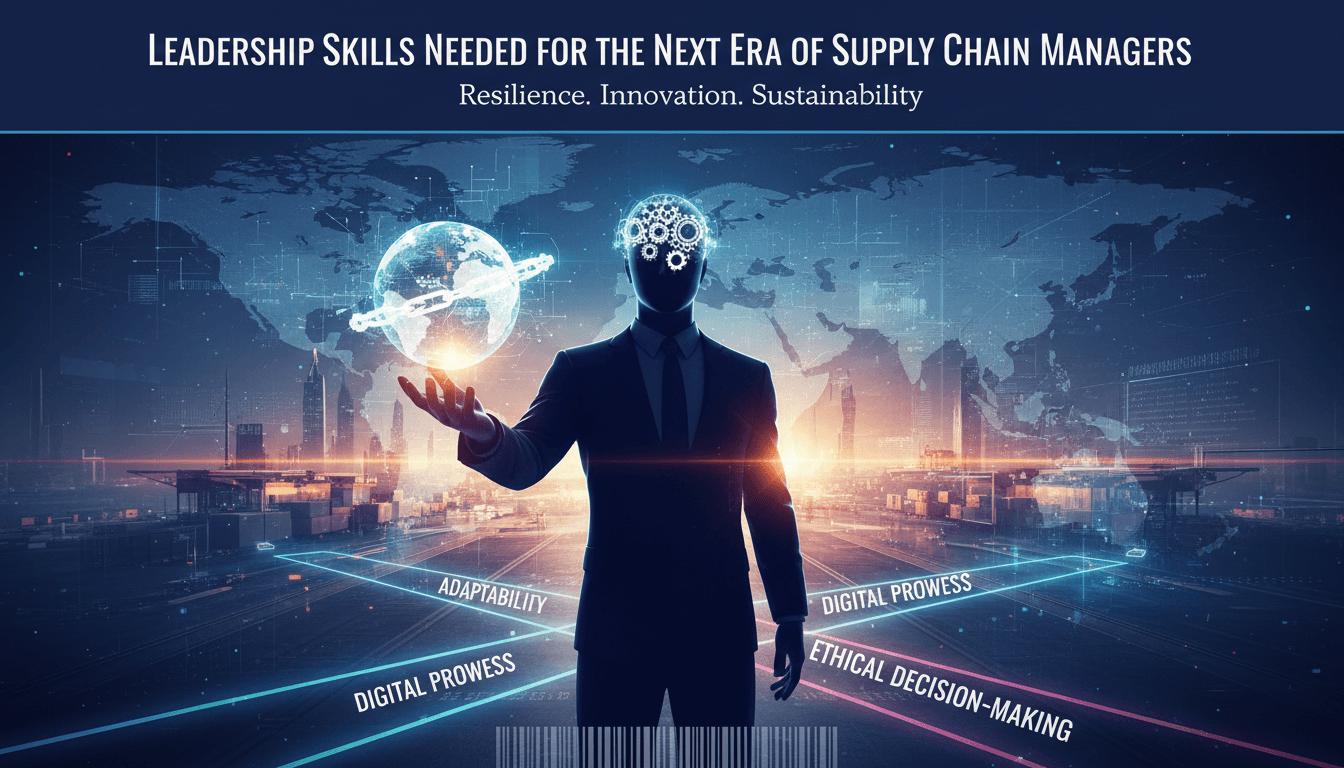
Leadership Skills Needed for the Next Era of Supply Chain Managers
Introduction
The role of supply chain leaders has evolved significantly. Beyond operational execution, modern supply chain managers are expected to navigate digital transformation, geopolitical uncertainty, sustainability mandates, and complex stakeholder ecosystems. Technical expertise alone is no longer sufficient, leadership capability has become a defining differentiator.
The Changing Leadership Landscape
Today’s supply chain leaders operate in an environment characterized by:
High market volatility
Rapid technological change
Increased regulatory oversight
Complex global networks
Heightened customer expectations
This requires a shift from traditional command-and-control leadership to adaptive, systems-oriented leadership models.
Core Leadership Capabilities for the Future
Key leadership competencies for next-generation supply chain managers include:
Systems Thinking: Understanding interdependencies across supply, demand, technology, and finance
Data Literacy: Translating analytics into actionable operational decisions
Change Leadership: Driving adoption of new processes and technologies
Cross-Functional Collaboration: Aligning operations with commercial and finance teams
Risk-Based Decision Making: Balancing efficiency with resilience
Stakeholder Communication: Managing expectations across internal and external partners
Organizational Implications
Organizations must invest in leadership development to prepare managers for expanded strategic responsibilities. This includes:
Structured leadership training programs
Rotational exposure across supply chain functions
Mentorship and coaching frameworks
Scenario-based leadership simulations
Performance metrics aligned with long-term value creation
Strategic Recommendations
To future-proof supply chain leadership:
Embed leadership development into succession planning
Reward behaviors that promote collaboration and adaptability
Encourage continuous learning in digital and analytical domains
Create governance models that empower decentralized decision-making
Conclusion
The next era of supply chain leadership demands a blend of strategic insight, technological fluency, and adaptive leadership capability. Organizations that intentionally develop these competencies will be better positioned to navigate complexity and deliver sustained operational excellence.
#SupplyChainLeadership #OperationsManagement #LeadershipDevelopment #DigitalTransformation #OrganizationalExcellence #FutureOfWork
More to Discover


Insights
Leadership Skills Needed for the Next Era of Supply Chain Managers
Introduction
The role of supply chain leaders has evolved significantly. Beyond operational execution, modern supply chain managers are expected to navigate digital transformation, geopolitical uncertainty, sustainability mandates, and complex stakeholder ecosystems. Technical expertise alone is no longer sufficient, leadership capability has become a defining differentiator.
The Changing Leadership Landscape
Today’s supply chain leaders operate in an environment characterized by:
High market volatility
Rapid technological change
Increased regulatory oversight
Complex global networks
Heightened customer expectations
This requires a shift from traditional command-and-control leadership to adaptive, systems-oriented leadership models.
Core Leadership Capabilities for the Future
Key leadership competencies for next-generation supply chain managers include:
Systems Thinking: Understanding interdependencies across supply, demand, technology, and finance
Data Literacy: Translating analytics into actionable operational decisions
Change Leadership: Driving adoption of new processes and technologies
Cross-Functional Collaboration: Aligning operations with commercial and finance teams
Risk-Based Decision Making: Balancing efficiency with resilience
Stakeholder Communication: Managing expectations across internal and external partners
Organizational Implications
Organizations must invest in leadership development to prepare managers for expanded strategic responsibilities. This includes:
Structured leadership training programs
Rotational exposure across supply chain functions
Mentorship and coaching frameworks
Scenario-based leadership simulations
Performance metrics aligned with long-term value creation
Strategic Recommendations
To future-proof supply chain leadership:
Embed leadership development into succession planning
Reward behaviors that promote collaboration and adaptability
Encourage continuous learning in digital and analytical domains
Create governance models that empower decentralized decision-making
Conclusion
The next era of supply chain leadership demands a blend of strategic insight, technological fluency, and adaptive leadership capability. Organizations that intentionally develop these competencies will be better positioned to navigate complexity and deliver sustained operational excellence.
#SupplyChainLeadership #OperationsManagement #LeadershipDevelopment #DigitalTransformation #OrganizationalExcellence #FutureOfWork
More to Discover
Insights
Leadership Skills Needed for the Next Era of Supply Chain Managers
Introduction
The role of supply chain leaders has evolved significantly. Beyond operational execution, modern supply chain managers are expected to navigate digital transformation, geopolitical uncertainty, sustainability mandates, and complex stakeholder ecosystems. Technical expertise alone is no longer sufficient, leadership capability has become a defining differentiator.
The Changing Leadership Landscape
Today’s supply chain leaders operate in an environment characterized by:
High market volatility
Rapid technological change
Increased regulatory oversight
Complex global networks
Heightened customer expectations
This requires a shift from traditional command-and-control leadership to adaptive, systems-oriented leadership models.
Core Leadership Capabilities for the Future
Key leadership competencies for next-generation supply chain managers include:
Systems Thinking: Understanding interdependencies across supply, demand, technology, and finance
Data Literacy: Translating analytics into actionable operational decisions
Change Leadership: Driving adoption of new processes and technologies
Cross-Functional Collaboration: Aligning operations with commercial and finance teams
Risk-Based Decision Making: Balancing efficiency with resilience
Stakeholder Communication: Managing expectations across internal and external partners
Organizational Implications
Organizations must invest in leadership development to prepare managers for expanded strategic responsibilities. This includes:
Structured leadership training programs
Rotational exposure across supply chain functions
Mentorship and coaching frameworks
Scenario-based leadership simulations
Performance metrics aligned with long-term value creation
Strategic Recommendations
To future-proof supply chain leadership:
Embed leadership development into succession planning
Reward behaviors that promote collaboration and adaptability
Encourage continuous learning in digital and analytical domains
Create governance models that empower decentralized decision-making
Conclusion
The next era of supply chain leadership demands a blend of strategic insight, technological fluency, and adaptive leadership capability. Organizations that intentionally develop these competencies will be better positioned to navigate complexity and deliver sustained operational excellence.
#SupplyChainLeadership #OperationsManagement #LeadershipDevelopment #DigitalTransformation #OrganizationalExcellence #FutureOfWork