Insights
Human-in-the-Loop Automation: Balancing AI and Operational Judgment
Introduction
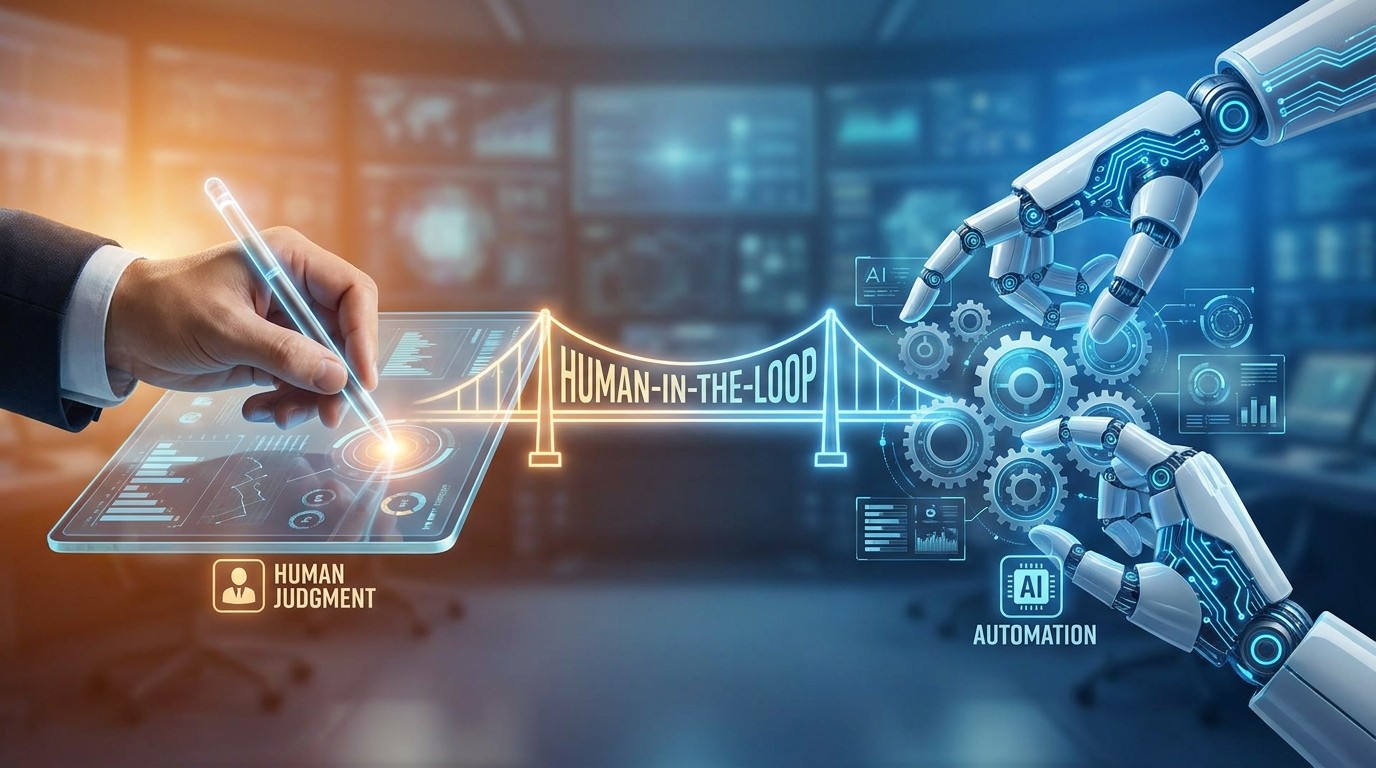
As AI and automation proliferate across supply chain operations, the role of human judgment remains critical. Human-in-the-loop (HITL) automation integrates human oversight into automated decision workflows, ensuring that complex, ambiguous, or high-risk decisions benefit from contextual understanding. Balancing automation with human judgment is essential for maintaining trust, accountability, and performance in digitally enabled supply chains.
The Limits of Fully Automated Decision-Making
Fully automated systems can struggle with:
Rare or unprecedented disruption scenarios
Contextual trade-offs that lack historical precedent
Ethical or compliance-sensitive decisions
Interpretation of weak signals and ambiguous data
These limitations underscore the importance of human oversight.
Designing HITL Workflows
Effective HITL designs include:
Clear thresholds for when human intervention is required
Role-based decision authority aligned with risk levels
Explainable AI to support informed human judgment
Feedback loops to continuously improve automated models
Governance frameworks defining accountability for decisions
Strategic Benefits
HITL automation supports:
Higher trust in AI-driven decision systems
Reduced risk of automated errors
Improved adoption of digital tools
Balanced performance between speed and judgment
Conclusion
Human-in-the-loop automation enables organizations to harness AI efficiency while preserving human judgment where it matters most. Organizations that design HITL workflows thoughtfully can achieve scalable automation without sacrificing accountability or decision quality.
#HumanInTheLoop #AIAutomation #DigitalSupplyChain #OperationalJudgment #ResponsibleAI #ProcessAutomation
More to Discover


Insights
Human-in-the-Loop Automation: Balancing AI and Operational Judgment
Introduction
As AI and automation proliferate across supply chain operations, the role of human judgment remains critical. Human-in-the-loop (HITL) automation integrates human oversight into automated decision workflows, ensuring that complex, ambiguous, or high-risk decisions benefit from contextual understanding. Balancing automation with human judgment is essential for maintaining trust, accountability, and performance in digitally enabled supply chains.
The Limits of Fully Automated Decision-Making
Fully automated systems can struggle with:
Rare or unprecedented disruption scenarios
Contextual trade-offs that lack historical precedent
Ethical or compliance-sensitive decisions
Interpretation of weak signals and ambiguous data
These limitations underscore the importance of human oversight.
Designing HITL Workflows
Effective HITL designs include:
Clear thresholds for when human intervention is required
Role-based decision authority aligned with risk levels
Explainable AI to support informed human judgment
Feedback loops to continuously improve automated models
Governance frameworks defining accountability for decisions
Strategic Benefits
HITL automation supports:
Higher trust in AI-driven decision systems
Reduced risk of automated errors
Improved adoption of digital tools
Balanced performance between speed and judgment
Conclusion
Human-in-the-loop automation enables organizations to harness AI efficiency while preserving human judgment where it matters most. Organizations that design HITL workflows thoughtfully can achieve scalable automation without sacrificing accountability or decision quality.
#HumanInTheLoop #AIAutomation #DigitalSupplyChain #OperationalJudgment #ResponsibleAI #ProcessAutomation
More to Discover
Insights
Human-in-the-Loop Automation: Balancing AI and Operational Judgment
Introduction
As AI and automation proliferate across supply chain operations, the role of human judgment remains critical. Human-in-the-loop (HITL) automation integrates human oversight into automated decision workflows, ensuring that complex, ambiguous, or high-risk decisions benefit from contextual understanding. Balancing automation with human judgment is essential for maintaining trust, accountability, and performance in digitally enabled supply chains.
The Limits of Fully Automated Decision-Making
Fully automated systems can struggle with:
Rare or unprecedented disruption scenarios
Contextual trade-offs that lack historical precedent
Ethical or compliance-sensitive decisions
Interpretation of weak signals and ambiguous data
These limitations underscore the importance of human oversight.
Designing HITL Workflows
Effective HITL designs include:
Clear thresholds for when human intervention is required
Role-based decision authority aligned with risk levels
Explainable AI to support informed human judgment
Feedback loops to continuously improve automated models
Governance frameworks defining accountability for decisions
Strategic Benefits
HITL automation supports:
Higher trust in AI-driven decision systems
Reduced risk of automated errors
Improved adoption of digital tools
Balanced performance between speed and judgment
Conclusion
Human-in-the-loop automation enables organizations to harness AI efficiency while preserving human judgment where it matters most. Organizations that design HITL workflows thoughtfully can achieve scalable automation without sacrificing accountability or decision quality.
#HumanInTheLoop #AIAutomation #DigitalSupplyChain #OperationalJudgment #ResponsibleAI #ProcessAutomation