Insights
How to Build a Culture of Continuous Improvement in Operations
Introduction
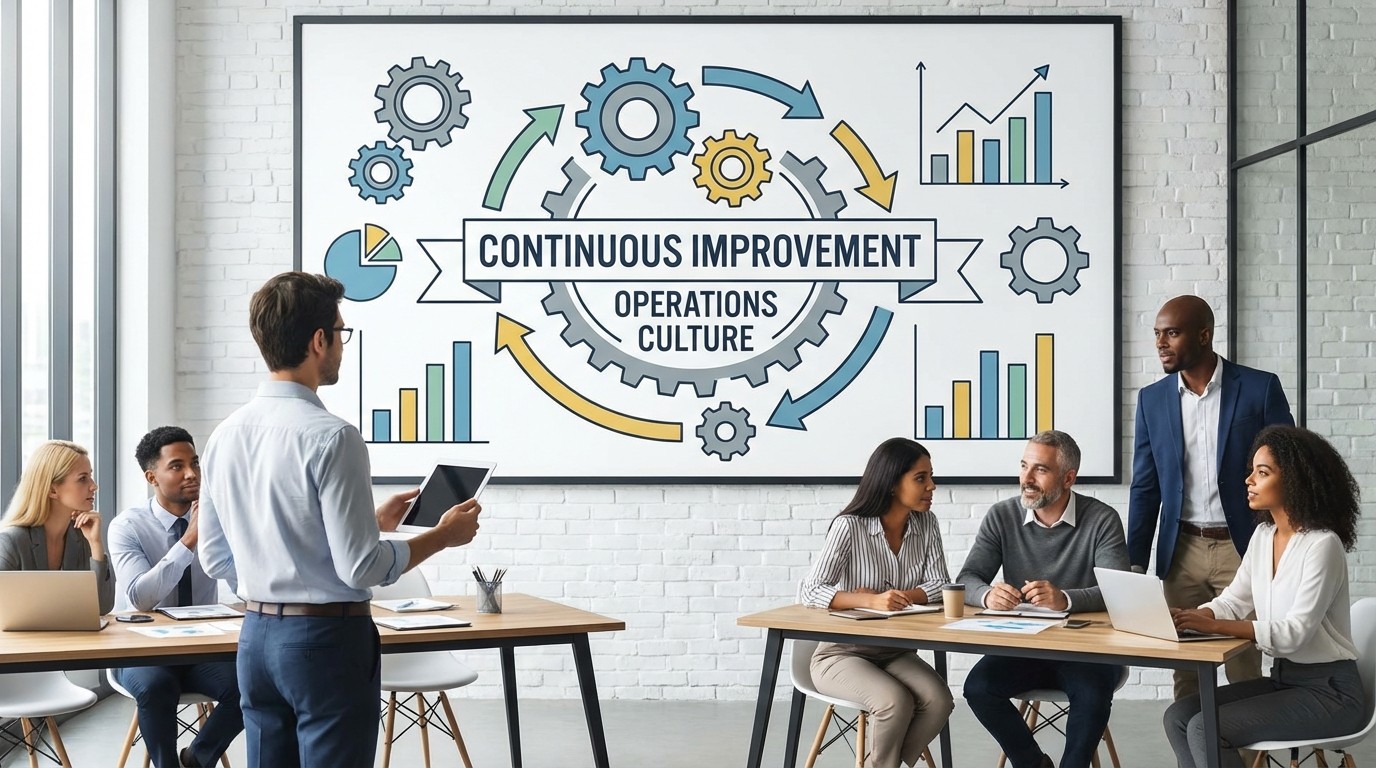
Continuous improvement is frequently introduced through methodologies and tools, yet its long-term impact is fundamentally cultural. Without cultural alignment, improvement initiatives remain isolated projects that fade once initial momentum declines. Building a sustainable culture of continuous improvement requires leadership commitment, workforce empowerment, and systemic reinforcement mechanisms that embed improvement into daily operations.
Barriers to Continuous Improvement
Organizations attempting to implement continuous improvement often encounter:
Limited and inconsistent leadership sponsorship
Frontline teams lacking authority to implement change
Initiative fatigue caused by overlapping improvement programs
Weak feedback loops and poor visibility into improvement outcomes
Incentive structures that prioritize short-term output over long-term improvement
These barriers prevent improvement practices from becoming embedded behaviors.
Cultural Enablers of Continuous Improvement
Organizations that successfully embed continuous improvement emphasize:
Leadership modeling of structured problem-solving behaviors
Empowerment of frontline teams to identify and address inefficiencies
Transparent performance metrics linked to improvement outcomes
Psychological safety that encourages experimentation and learning
Recognition and celebration of incremental improvement successes
Implementation Strategies
To operationalize continuous improvement culture, leaders should:
Train teams in structured problem-solving methodologies
Integrate improvement objectives into performance management systems
Establish governance forums for idea prioritization and sponsorship
Encourage small-scale experimentation and rapid learning cycles
Communicate improvement outcomes to reinforce organizational learning
Conclusion
A culture of continuous improvement transforms operational excellence from episodic initiatives into a sustained organizational capability. Organizations that invest in cultural enablers alongside technical tools are better positioned to maintain performance momentum over time.
#ContinuousImprovement #OperationalExcellence #LeanCulture #ChangeManagement #OperationsStrategy #LeadershipDevelopment #ProcessExcellence
More to Discover


Insights
How to Build a Culture of Continuous Improvement in Operations
Introduction
Continuous improvement is frequently introduced through methodologies and tools, yet its long-term impact is fundamentally cultural. Without cultural alignment, improvement initiatives remain isolated projects that fade once initial momentum declines. Building a sustainable culture of continuous improvement requires leadership commitment, workforce empowerment, and systemic reinforcement mechanisms that embed improvement into daily operations.
Barriers to Continuous Improvement
Organizations attempting to implement continuous improvement often encounter:
Limited and inconsistent leadership sponsorship
Frontline teams lacking authority to implement change
Initiative fatigue caused by overlapping improvement programs
Weak feedback loops and poor visibility into improvement outcomes
Incentive structures that prioritize short-term output over long-term improvement
These barriers prevent improvement practices from becoming embedded behaviors.
Cultural Enablers of Continuous Improvement
Organizations that successfully embed continuous improvement emphasize:
Leadership modeling of structured problem-solving behaviors
Empowerment of frontline teams to identify and address inefficiencies
Transparent performance metrics linked to improvement outcomes
Psychological safety that encourages experimentation and learning
Recognition and celebration of incremental improvement successes
Implementation Strategies
To operationalize continuous improvement culture, leaders should:
Train teams in structured problem-solving methodologies
Integrate improvement objectives into performance management systems
Establish governance forums for idea prioritization and sponsorship
Encourage small-scale experimentation and rapid learning cycles
Communicate improvement outcomes to reinforce organizational learning
Conclusion
A culture of continuous improvement transforms operational excellence from episodic initiatives into a sustained organizational capability. Organizations that invest in cultural enablers alongside technical tools are better positioned to maintain performance momentum over time.
#ContinuousImprovement #OperationalExcellence #LeanCulture #ChangeManagement #OperationsStrategy #LeadershipDevelopment #ProcessExcellence
More to Discover
Insights
How to Build a Culture of Continuous Improvement in Operations
Introduction
Continuous improvement is frequently introduced through methodologies and tools, yet its long-term impact is fundamentally cultural. Without cultural alignment, improvement initiatives remain isolated projects that fade once initial momentum declines. Building a sustainable culture of continuous improvement requires leadership commitment, workforce empowerment, and systemic reinforcement mechanisms that embed improvement into daily operations.
Barriers to Continuous Improvement
Organizations attempting to implement continuous improvement often encounter:
Limited and inconsistent leadership sponsorship
Frontline teams lacking authority to implement change
Initiative fatigue caused by overlapping improvement programs
Weak feedback loops and poor visibility into improvement outcomes
Incentive structures that prioritize short-term output over long-term improvement
These barriers prevent improvement practices from becoming embedded behaviors.
Cultural Enablers of Continuous Improvement
Organizations that successfully embed continuous improvement emphasize:
Leadership modeling of structured problem-solving behaviors
Empowerment of frontline teams to identify and address inefficiencies
Transparent performance metrics linked to improvement outcomes
Psychological safety that encourages experimentation and learning
Recognition and celebration of incremental improvement successes
Implementation Strategies
To operationalize continuous improvement culture, leaders should:
Train teams in structured problem-solving methodologies
Integrate improvement objectives into performance management systems
Establish governance forums for idea prioritization and sponsorship
Encourage small-scale experimentation and rapid learning cycles
Communicate improvement outcomes to reinforce organizational learning
Conclusion
A culture of continuous improvement transforms operational excellence from episodic initiatives into a sustained organizational capability. Organizations that invest in cultural enablers alongside technical tools are better positioned to maintain performance momentum over time.
#ContinuousImprovement #OperationalExcellence #LeanCulture #ChangeManagement #OperationsStrategy #LeadershipDevelopment #ProcessExcellence