Insights
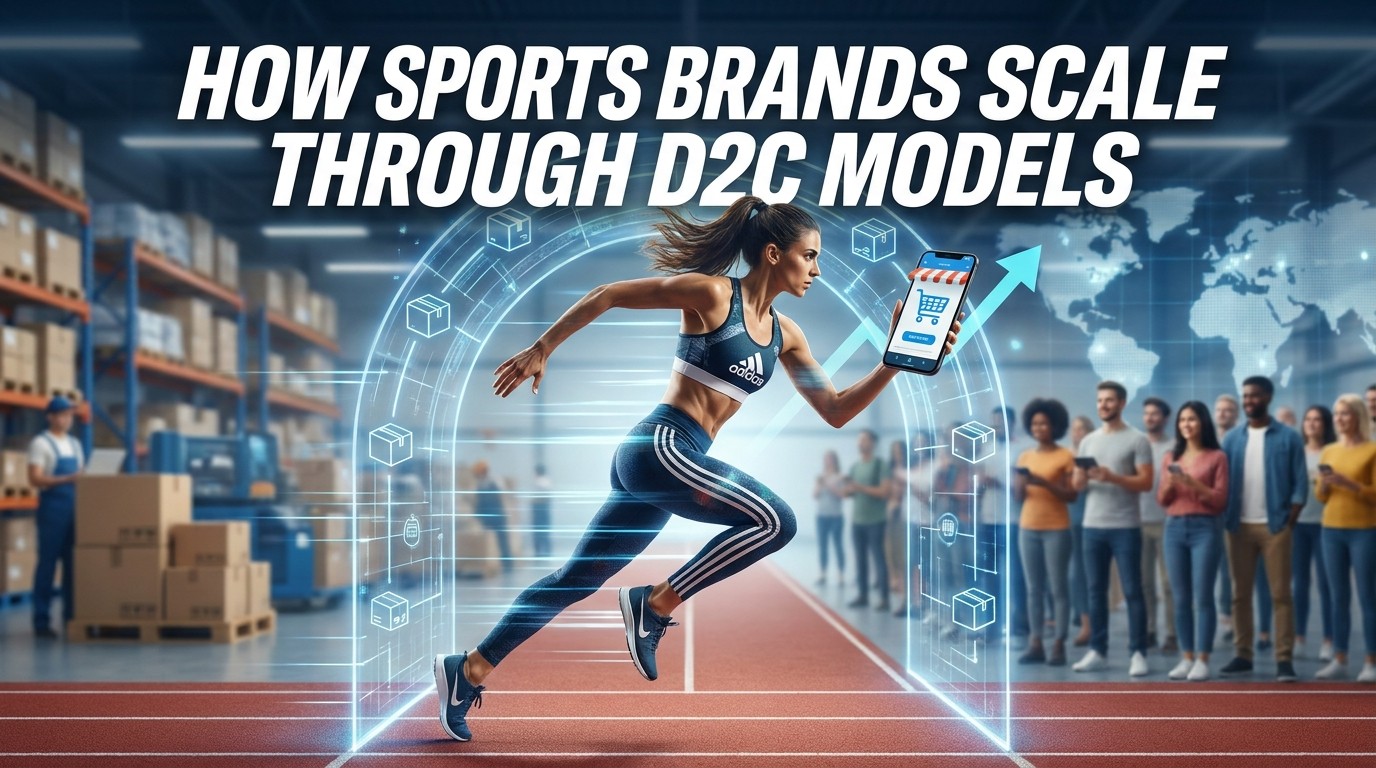
How Sports Brands Scale Through D2C Models
🔹 The sports industry is no longer controlled only by legacy global giants.
🔹 Direct-to-consumer models are allowing smaller sports brands to scale faster than ever before.
For decades, entering the sports industry required:
Retail distribution networks
Expensive marketing
Large inventory investments
Wholesale relationships
Physical retail presence
Today, the market looks completely different.
Modern sports brands can now:
Launch online globally
Sell directly to customers
Build niche communities
Scale through social commerce
Control customer relationships
Gather real-time consumer insights
without relying entirely on traditional retail systems.
At Talha Khan OPS, we believe the D2C model is fundamentally reshaping:
Sportswear
Soccer equipment
Fitness apparel
Accessories
Athletic products
Custom merchandise
because modern consumers increasingly buy through:
identity, community, and convenience.
Operator Perspective:
D2C is not just a sales channel. It’s an operational model.
Why D2C Became So Powerful for Sports Brands
Several major shifts accelerated D2C growth globally.
1. Consumers Now Buy Digitally First
Modern buyers increasingly discover sports brands through:
· TikTok
· YouTube
· Influencers
· Online communities
· Digital advertising
rather than physical retail stores.
This allows niche brands to:
· Reach targeted audiences faster
· Build direct engagement
· Test products quickly
· Scale internationally
without traditional retail barriers.
2. Brand Communities Matter More Than Ever
Today’s sports consumers increasingly buy brands aligned with:
· Identity
· Culture
· Community
· Performance lifestyle
This creates opportunities for:
· Soccer-focused brands
· Gym communities
· Grassroots sports businesses
· Fitness creators
· Specialized apparel companies
to compete effectively through audience loyalty rather than pure advertising scale.
3. D2C Improves Margin Control
Traditional retail structures involve:
· Distributors
· Wholesalers
· Retail markups
· Intermediary costs
D2C models allow brands to:
· Improve margins
· Control pricing
· Own customer relationships
· Gather customer data
· Improve inventory visibility
This operational control becomes strategically valuable over time.
Why Operations Matter More in D2C Sports Businesses
Many founders assume D2C success is mainly:
· Branding
· Social media
· Advertising
But scaling D2C businesses operationally is significantly more difficult than launching them.
Growing sports brands must manage:
· Inventory forecasting
· Fulfillment coordination
· Returns management
· Supplier relationships
· Customer support
· Warehousing
· Customization workflows
· Seasonal demand spikes
Operator Perspective:
The hardest part of D2C growth is usually operational scaling, not customer acquisition.
What High-Performing Sports Brands Do Differently
Successful D2C sports brands prioritize:
· Operational visibility
· Fulfillment reliability
· Inventory discipline
· Supplier coordination
· Product consistency
· Customer experience systems
· Scalable workflows
because operational problems quickly become public in digital-first businesses.
In the age of reviews and social media:
Delayed orders
Poor quality
Fulfillment mistakes
spread faster than ever.
Execution itself becomes marketing.
Why Manufacturing Flexibility Matters in D2C
Modern sports brands increasingly require:
Smaller production runs
Faster replenishment
Custom branding
Private labeling
Flexible inventory planning
Traditional manufacturing models often struggle with this flexibility.
This is why operationally agile manufacturing ecosystems are becoming strategically important.
Manufacturing hubs like Sialkot remain globally valuable because they combine:
Sports manufacturing expertise
OEM capability
Customization flexibility
Export readiness
Scalable production
with operational adaptability.
This flexibility matters enormously for D2C growth.
The Rise of Affordable Premium Sports Brands
One major shift happening globally:
consumers increasingly want:
premium-looking products without luxury pricing.
This creates strong opportunities for:
Affordable premium sportswear
Custom football products
Niche athletic brands
Private-label sports businesses
Brands like STRYK World reflect this evolving market by combining:
OEM manufacturing
Custom production
Private labeling
Affordable premium positioning
Export-ready operations
for:
Soccer clubs
Sports retailers
D2c founders
Wholesalers
Athletic communities
globally.
This model aligns strongly with modern D2C demand patterns.
Why D2C Sports Brands Need Operational Intelligence
As D2C competition increases,
operational execution becomes more important than visibility alone.
Successful brands increasingly depend on:
· Inventory forecasting
· Fulfillment speed
· Warehouse coordination
· Operational visibility
· Supplier reliability
· Customer retention systems
because acquisition costs are rising globally.
The brands surviving long-term are usually the ones building:
Operational resilience
Scalable systems
Repeatable fulfillment
not just viral marketing campaigns.
Operator Perspective:
Sustainable D2C growth is operationally engineered.
Mini Industry Observation, Niche Sports Brands Are Growing Fast
One major industry trend:
smaller specialized sports brands are increasingly outperforming generic mass-market competitors in focused niches.
Why?
Because they often provide:
Stronger identity
Community relevance
Customization
Direct engagement
Operational agility
This trend is accelerating in:
Soccer
Gym wear
Activewear
Grassroots athletics
Performance apparel
The market increasingly rewards specialization and authenticity.
Industry Prediction for 2026–2032
Over the next decade,
D2C sports brands will likely become:
More niche-focused
More customization-driven
More operationally data-driven
More fulfillment-oriented
We’ll likely see increasing demand for:
OEM manufacturing
Private-label sportswear
Direct manufacturing partnerships
Low MOQ production
Rapid replenishment systems
Integrated fulfillment ecosystems
The brands succeeding most will likely combine:
· Strong identity
· Operational discipline
· Scalable fulfillment
· Manufacturing flexibility
· Customer loyalty systems
into fully connected D2C ecosystems.
Final Thought
The future of sports retail is becoming increasingly direct, customized, and operationally driven.
The brands winning long-term will not simply be the loudest brands.
They’ll be the businesses capable of consistently delivering:
Quality
Fulfillment
Operational reliability
Customer experience
at scale.
🔹 D2C creates opportunity.
🔹 Operational execution determines who survives the opportunity.
What do you think matters most for modern D2C sports brands today, branding, fulfillment, customization, or operational scalability?
Let’s discuss below.
📩 Connect with us:
🌐 Talha Khan OPS
🌐 STRYK World
#D2C #SportsBusiness #Sportswear #OEMManufacturing #PrivateLabel #Ecommerce #BusinessOperations #SupplyChain #SportsManufacturing #CustomApparel #DirectToConsumer #OperationalExcellence #RetailOperations #InventoryManagement #Fulfillment #SportsRetail #SoccerIndustry #BusinessGrowth #Manufacturing #WholesaleSports #OperationalLeadership #Sialkot #Activewear #SportsBrands #STRYKWorld #TalhaKhanOPS #CustomerExperience #BrandBuilding #FutureOfRetail #SportsIndustry
More to Discover

Insights
How Sports Brands Scale Through D2C Models
🔹 The sports industry is no longer controlled only by legacy global giants.
🔹 Direct-to-consumer models are allowing smaller sports brands to scale faster than ever before.
For decades, entering the sports industry required:
Retail distribution networks
Expensive marketing
Large inventory investments
Wholesale relationships
Physical retail presence
Today, the market looks completely different.
Modern sports brands can now:
Launch online globally
Sell directly to customers
Build niche communities
Scale through social commerce
Control customer relationships
Gather real-time consumer insights
without relying entirely on traditional retail systems.
At Talha Khan OPS, we believe the D2C model is fundamentally reshaping:
Sportswear
Soccer equipment
Fitness apparel
Accessories
Athletic products
Custom merchandise
because modern consumers increasingly buy through:
identity, community, and convenience.
Operator Perspective:
D2C is not just a sales channel. It’s an operational model.
Why D2C Became So Powerful for Sports Brands
Several major shifts accelerated D2C growth globally.
1. Consumers Now Buy Digitally First
Modern buyers increasingly discover sports brands through:
· TikTok
· YouTube
· Influencers
· Online communities
· Digital advertising
rather than physical retail stores.
This allows niche brands to:
· Reach targeted audiences faster
· Build direct engagement
· Test products quickly
· Scale internationally
without traditional retail barriers.
2. Brand Communities Matter More Than Ever
Today’s sports consumers increasingly buy brands aligned with:
· Identity
· Culture
· Community
· Performance lifestyle
This creates opportunities for:
· Soccer-focused brands
· Gym communities
· Grassroots sports businesses
· Fitness creators
· Specialized apparel companies
to compete effectively through audience loyalty rather than pure advertising scale.
3. D2C Improves Margin Control
Traditional retail structures involve:
· Distributors
· Wholesalers
· Retail markups
· Intermediary costs
D2C models allow brands to:
· Improve margins
· Control pricing
· Own customer relationships
· Gather customer data
· Improve inventory visibility
This operational control becomes strategically valuable over time.
Why Operations Matter More in D2C Sports Businesses
Many founders assume D2C success is mainly:
· Branding
· Social media
· Advertising
But scaling D2C businesses operationally is significantly more difficult than launching them.
Growing sports brands must manage:
· Inventory forecasting
· Fulfillment coordination
· Returns management
· Supplier relationships
· Customer support
· Warehousing
· Customization workflows
· Seasonal demand spikes
Operator Perspective:
The hardest part of D2C growth is usually operational scaling, not customer acquisition.
What High-Performing Sports Brands Do Differently
Successful D2C sports brands prioritize:
· Operational visibility
· Fulfillment reliability
· Inventory discipline
· Supplier coordination
· Product consistency
· Customer experience systems
· Scalable workflows
because operational problems quickly become public in digital-first businesses.
In the age of reviews and social media:
Delayed orders
Poor quality
Fulfillment mistakes
spread faster than ever.
Execution itself becomes marketing.
Why Manufacturing Flexibility Matters in D2C
Modern sports brands increasingly require:
Smaller production runs
Faster replenishment
Custom branding
Private labeling
Flexible inventory planning
Traditional manufacturing models often struggle with this flexibility.
This is why operationally agile manufacturing ecosystems are becoming strategically important.
Manufacturing hubs like Sialkot remain globally valuable because they combine:
Sports manufacturing expertise
OEM capability
Customization flexibility
Export readiness
Scalable production
with operational adaptability.
This flexibility matters enormously for D2C growth.
The Rise of Affordable Premium Sports Brands
One major shift happening globally:
consumers increasingly want:
premium-looking products without luxury pricing.
This creates strong opportunities for:
Affordable premium sportswear
Custom football products
Niche athletic brands
Private-label sports businesses
Brands like STRYK World reflect this evolving market by combining:
OEM manufacturing
Custom production
Private labeling
Affordable premium positioning
Export-ready operations
for:
Soccer clubs
Sports retailers
D2c founders
Wholesalers
Athletic communities
globally.
This model aligns strongly with modern D2C demand patterns.
Why D2C Sports Brands Need Operational Intelligence
As D2C competition increases,
operational execution becomes more important than visibility alone.
Successful brands increasingly depend on:
· Inventory forecasting
· Fulfillment speed
· Warehouse coordination
· Operational visibility
· Supplier reliability
· Customer retention systems
because acquisition costs are rising globally.
The brands surviving long-term are usually the ones building:
Operational resilience
Scalable systems
Repeatable fulfillment
not just viral marketing campaigns.
Operator Perspective:
Sustainable D2C growth is operationally engineered.
Mini Industry Observation, Niche Sports Brands Are Growing Fast
One major industry trend:
smaller specialized sports brands are increasingly outperforming generic mass-market competitors in focused niches.
Why?
Because they often provide:
Stronger identity
Community relevance
Customization
Direct engagement
Operational agility
This trend is accelerating in:
Soccer
Gym wear
Activewear
Grassroots athletics
Performance apparel
The market increasingly rewards specialization and authenticity.
Industry Prediction for 2026–2032
Over the next decade,
D2C sports brands will likely become:
More niche-focused
More customization-driven
More operationally data-driven
More fulfillment-oriented
We’ll likely see increasing demand for:
OEM manufacturing
Private-label sportswear
Direct manufacturing partnerships
Low MOQ production
Rapid replenishment systems
Integrated fulfillment ecosystems
The brands succeeding most will likely combine:
· Strong identity
· Operational discipline
· Scalable fulfillment
· Manufacturing flexibility
· Customer loyalty systems
into fully connected D2C ecosystems.
Final Thought
The future of sports retail is becoming increasingly direct, customized, and operationally driven.
The brands winning long-term will not simply be the loudest brands.
They’ll be the businesses capable of consistently delivering:
Quality
Fulfillment
Operational reliability
Customer experience
at scale.
🔹 D2C creates opportunity.
🔹 Operational execution determines who survives the opportunity.
What do you think matters most for modern D2C sports brands today, branding, fulfillment, customization, or operational scalability?
Let’s discuss below.
📩 Connect with us:
🌐 Talha Khan OPS
🌐 STRYK World
#D2C #SportsBusiness #Sportswear #OEMManufacturing #PrivateLabel #Ecommerce #BusinessOperations #SupplyChain #SportsManufacturing #CustomApparel #DirectToConsumer #OperationalExcellence #RetailOperations #InventoryManagement #Fulfillment #SportsRetail #SoccerIndustry #BusinessGrowth #Manufacturing #WholesaleSports #OperationalLeadership #Sialkot #Activewear #SportsBrands #STRYKWorld #TalhaKhanOPS #CustomerExperience #BrandBuilding #FutureOfRetail #SportsIndustry
More to Discover
Insights
How Sports Brands Scale Through D2C Models
🔹 The sports industry is no longer controlled only by legacy global giants.
🔹 Direct-to-consumer models are allowing smaller sports brands to scale faster than ever before.
For decades, entering the sports industry required:
Retail distribution networks
Expensive marketing
Large inventory investments
Wholesale relationships
Physical retail presence
Today, the market looks completely different.
Modern sports brands can now:
Launch online globally
Sell directly to customers
Build niche communities
Scale through social commerce
Control customer relationships
Gather real-time consumer insights
without relying entirely on traditional retail systems.
At Talha Khan OPS, we believe the D2C model is fundamentally reshaping:
Sportswear
Soccer equipment
Fitness apparel
Accessories
Athletic products
Custom merchandise
because modern consumers increasingly buy through:
identity, community, and convenience.
Operator Perspective:
D2C is not just a sales channel. It’s an operational model.
Why D2C Became So Powerful for Sports Brands
Several major shifts accelerated D2C growth globally.
1. Consumers Now Buy Digitally First
Modern buyers increasingly discover sports brands through:
· TikTok
· YouTube
· Influencers
· Online communities
· Digital advertising
rather than physical retail stores.
This allows niche brands to:
· Reach targeted audiences faster
· Build direct engagement
· Test products quickly
· Scale internationally
without traditional retail barriers.
2. Brand Communities Matter More Than Ever
Today’s sports consumers increasingly buy brands aligned with:
· Identity
· Culture
· Community
· Performance lifestyle
This creates opportunities for:
· Soccer-focused brands
· Gym communities
· Grassroots sports businesses
· Fitness creators
· Specialized apparel companies
to compete effectively through audience loyalty rather than pure advertising scale.
3. D2C Improves Margin Control
Traditional retail structures involve:
· Distributors
· Wholesalers
· Retail markups
· Intermediary costs
D2C models allow brands to:
· Improve margins
· Control pricing
· Own customer relationships
· Gather customer data
· Improve inventory visibility
This operational control becomes strategically valuable over time.
Why Operations Matter More in D2C Sports Businesses
Many founders assume D2C success is mainly:
· Branding
· Social media
· Advertising
But scaling D2C businesses operationally is significantly more difficult than launching them.
Growing sports brands must manage:
· Inventory forecasting
· Fulfillment coordination
· Returns management
· Supplier relationships
· Customer support
· Warehousing
· Customization workflows
· Seasonal demand spikes
Operator Perspective:
The hardest part of D2C growth is usually operational scaling, not customer acquisition.
What High-Performing Sports Brands Do Differently
Successful D2C sports brands prioritize:
· Operational visibility
· Fulfillment reliability
· Inventory discipline
· Supplier coordination
· Product consistency
· Customer experience systems
· Scalable workflows
because operational problems quickly become public in digital-first businesses.
In the age of reviews and social media:
Delayed orders
Poor quality
Fulfillment mistakes
spread faster than ever.
Execution itself becomes marketing.
Why Manufacturing Flexibility Matters in D2C
Modern sports brands increasingly require:
Smaller production runs
Faster replenishment
Custom branding
Private labeling
Flexible inventory planning
Traditional manufacturing models often struggle with this flexibility.
This is why operationally agile manufacturing ecosystems are becoming strategically important.
Manufacturing hubs like Sialkot remain globally valuable because they combine:
Sports manufacturing expertise
OEM capability
Customization flexibility
Export readiness
Scalable production
with operational adaptability.
This flexibility matters enormously for D2C growth.
The Rise of Affordable Premium Sports Brands
One major shift happening globally:
consumers increasingly want:
premium-looking products without luxury pricing.
This creates strong opportunities for:
Affordable premium sportswear
Custom football products
Niche athletic brands
Private-label sports businesses
Brands like STRYK World reflect this evolving market by combining:
OEM manufacturing
Custom production
Private labeling
Affordable premium positioning
Export-ready operations
for:
Soccer clubs
Sports retailers
D2c founders
Wholesalers
Athletic communities
globally.
This model aligns strongly with modern D2C demand patterns.
Why D2C Sports Brands Need Operational Intelligence
As D2C competition increases,
operational execution becomes more important than visibility alone.
Successful brands increasingly depend on:
· Inventory forecasting
· Fulfillment speed
· Warehouse coordination
· Operational visibility
· Supplier reliability
· Customer retention systems
because acquisition costs are rising globally.
The brands surviving long-term are usually the ones building:
Operational resilience
Scalable systems
Repeatable fulfillment
not just viral marketing campaigns.
Operator Perspective:
Sustainable D2C growth is operationally engineered.
Mini Industry Observation, Niche Sports Brands Are Growing Fast
One major industry trend:
smaller specialized sports brands are increasingly outperforming generic mass-market competitors in focused niches.
Why?
Because they often provide:
Stronger identity
Community relevance
Customization
Direct engagement
Operational agility
This trend is accelerating in:
Soccer
Gym wear
Activewear
Grassroots athletics
Performance apparel
The market increasingly rewards specialization and authenticity.
Industry Prediction for 2026–2032
Over the next decade,
D2C sports brands will likely become:
More niche-focused
More customization-driven
More operationally data-driven
More fulfillment-oriented
We’ll likely see increasing demand for:
OEM manufacturing
Private-label sportswear
Direct manufacturing partnerships
Low MOQ production
Rapid replenishment systems
Integrated fulfillment ecosystems
The brands succeeding most will likely combine:
· Strong identity
· Operational discipline
· Scalable fulfillment
· Manufacturing flexibility
· Customer loyalty systems
into fully connected D2C ecosystems.
Final Thought
The future of sports retail is becoming increasingly direct, customized, and operationally driven.
The brands winning long-term will not simply be the loudest brands.
They’ll be the businesses capable of consistently delivering:
Quality
Fulfillment
Operational reliability
Customer experience
at scale.
🔹 D2C creates opportunity.
🔹 Operational execution determines who survives the opportunity.
What do you think matters most for modern D2C sports brands today, branding, fulfillment, customization, or operational scalability?
Let’s discuss below.
📩 Connect with us:
🌐 Talha Khan OPS
🌐 STRYK World
#D2C #SportsBusiness #Sportswear #OEMManufacturing #PrivateLabel #Ecommerce #BusinessOperations #SupplyChain #SportsManufacturing #CustomApparel #DirectToConsumer #OperationalExcellence #RetailOperations #InventoryManagement #Fulfillment #SportsRetail #SoccerIndustry #BusinessGrowth #Manufacturing #WholesaleSports #OperationalLeadership #Sialkot #Activewear #SportsBrands #STRYKWorld #TalhaKhanOPS #CustomerExperience #BrandBuilding #FutureOfRetail #SportsIndustry