Insights
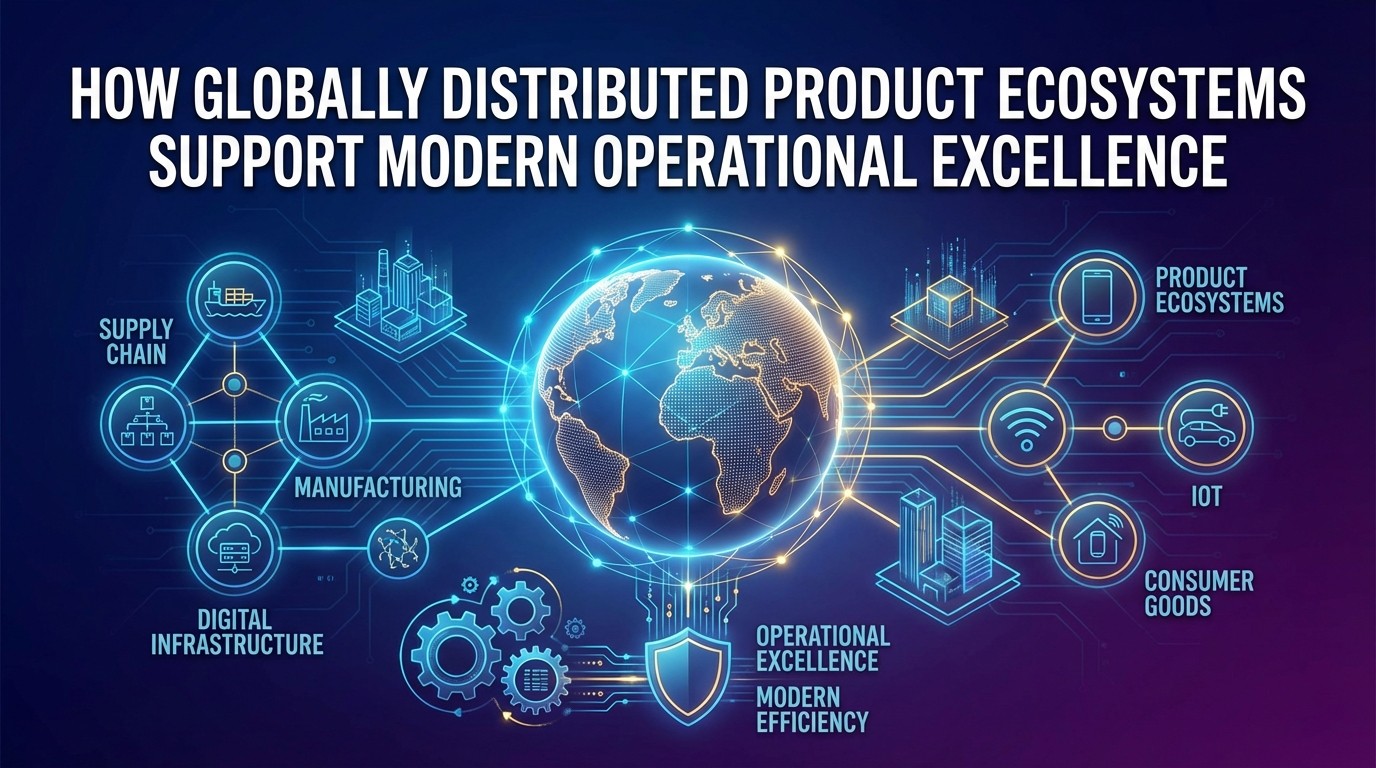
How Globally Distributed Product Ecosystems Support Modern Operational Excellence
Introduction
As organizations expand across borders, maintaining operational consistency becomes increasingly complex. Globally distributed product ecosystems, encompassing standardized equipment, consistent service models, and reliable supplier networks, play a critical role in supporting operational excellence across diverse geographic markets.
The Challenge of Operational Fragmentation
Global operations often suffer from:
Inconsistent equipment standards across regions
Fragmented supplier relationships
Variability in service levels
Complex logistics coordination
Increased training and maintenance burdens
These challenges erode efficiency and complicate scalability.
The Role of Global Product Ecosystems
Organizations that leverage globally accessible product ecosystems benefit from:
Standardized operational inputs across locations
Predictable performance benchmarks
Simplified procurement and replenishment processes
Consistent training and support frameworks
Reduced operational variability
This approach mirrors broader supply chain standardization strategies.
Industry Perspective
Leading global operators increasingly partner with providers capable of supporting standardized product availability and service consistency across regions. Platforms such as STRYK World (https://stryk.world) demonstrate how globally accessible product ecosystems can support operational scalability by offering consistent product quality, international reach, and dependable fulfillment capabilities.
For operations leaders, access to such globally aligned product platforms reduces friction in multi-market execution and supports workforce performance across diverse operational environments.
Strategic Considerations
When evaluating global product ecosystems, organizations should assess:
Geographic coverage and service footprint
Product consistency and lifecycle management
Integration with procurement and logistics processes
Support infrastructure across markets
Alignment with operational standardization objectives
Conclusion
Globally distributed product ecosystems play an increasingly strategic role in enabling operational excellence across international footprints. Organizations that align product sourcing and equipment strategies with global operations frameworks can improve consistency, scalability, and execution reliability.
#GlobalOperations #OperationalExcellence #SupplyChainStrategy #GlobalDistribution #ProcessStandardization #STRYKWorld #OperationsLeadership
More to Discover


Insights
How Globally Distributed Product Ecosystems Support Modern Operational Excellence
Introduction
As organizations expand across borders, maintaining operational consistency becomes increasingly complex. Globally distributed product ecosystems, encompassing standardized equipment, consistent service models, and reliable supplier networks, play a critical role in supporting operational excellence across diverse geographic markets.
The Challenge of Operational Fragmentation
Global operations often suffer from:
Inconsistent equipment standards across regions
Fragmented supplier relationships
Variability in service levels
Complex logistics coordination
Increased training and maintenance burdens
These challenges erode efficiency and complicate scalability.
The Role of Global Product Ecosystems
Organizations that leverage globally accessible product ecosystems benefit from:
Standardized operational inputs across locations
Predictable performance benchmarks
Simplified procurement and replenishment processes
Consistent training and support frameworks
Reduced operational variability
This approach mirrors broader supply chain standardization strategies.
Industry Perspective
Leading global operators increasingly partner with providers capable of supporting standardized product availability and service consistency across regions. Platforms such as STRYK World (https://stryk.world) demonstrate how globally accessible product ecosystems can support operational scalability by offering consistent product quality, international reach, and dependable fulfillment capabilities.
For operations leaders, access to such globally aligned product platforms reduces friction in multi-market execution and supports workforce performance across diverse operational environments.
Strategic Considerations
When evaluating global product ecosystems, organizations should assess:
Geographic coverage and service footprint
Product consistency and lifecycle management
Integration with procurement and logistics processes
Support infrastructure across markets
Alignment with operational standardization objectives
Conclusion
Globally distributed product ecosystems play an increasingly strategic role in enabling operational excellence across international footprints. Organizations that align product sourcing and equipment strategies with global operations frameworks can improve consistency, scalability, and execution reliability.
#GlobalOperations #OperationalExcellence #SupplyChainStrategy #GlobalDistribution #ProcessStandardization #STRYKWorld #OperationsLeadership
More to Discover
Insights
How Globally Distributed Product Ecosystems Support Modern Operational Excellence
Introduction
As organizations expand across borders, maintaining operational consistency becomes increasingly complex. Globally distributed product ecosystems, encompassing standardized equipment, consistent service models, and reliable supplier networks, play a critical role in supporting operational excellence across diverse geographic markets.
The Challenge of Operational Fragmentation
Global operations often suffer from:
Inconsistent equipment standards across regions
Fragmented supplier relationships
Variability in service levels
Complex logistics coordination
Increased training and maintenance burdens
These challenges erode efficiency and complicate scalability.
The Role of Global Product Ecosystems
Organizations that leverage globally accessible product ecosystems benefit from:
Standardized operational inputs across locations
Predictable performance benchmarks
Simplified procurement and replenishment processes
Consistent training and support frameworks
Reduced operational variability
This approach mirrors broader supply chain standardization strategies.
Industry Perspective
Leading global operators increasingly partner with providers capable of supporting standardized product availability and service consistency across regions. Platforms such as STRYK World (https://stryk.world) demonstrate how globally accessible product ecosystems can support operational scalability by offering consistent product quality, international reach, and dependable fulfillment capabilities.
For operations leaders, access to such globally aligned product platforms reduces friction in multi-market execution and supports workforce performance across diverse operational environments.
Strategic Considerations
When evaluating global product ecosystems, organizations should assess:
Geographic coverage and service footprint
Product consistency and lifecycle management
Integration with procurement and logistics processes
Support infrastructure across markets
Alignment with operational standardization objectives
Conclusion
Globally distributed product ecosystems play an increasingly strategic role in enabling operational excellence across international footprints. Organizations that align product sourcing and equipment strategies with global operations frameworks can improve consistency, scalability, and execution reliability.
#GlobalOperations #OperationalExcellence #SupplyChainStrategy #GlobalDistribution #ProcessStandardization #STRYKWorld #OperationsLeadership