Insights
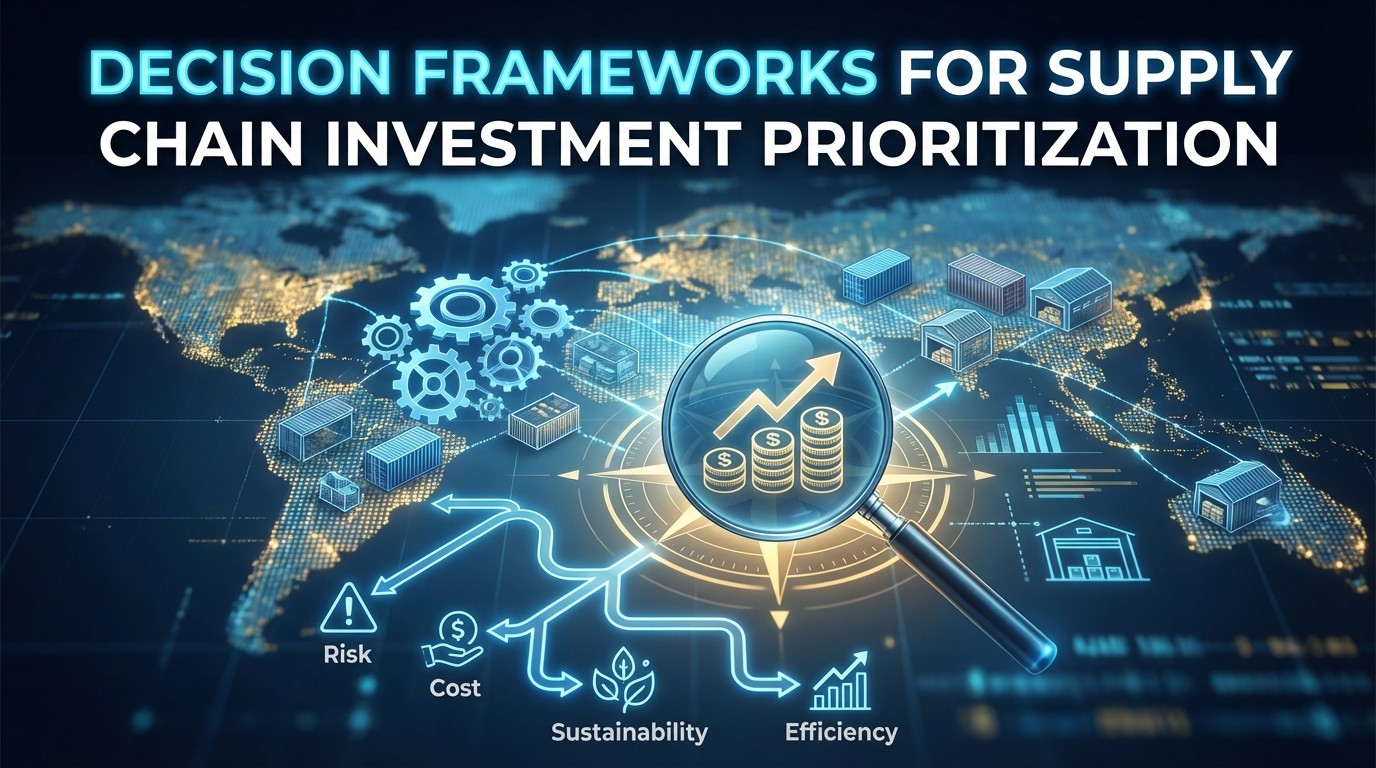
Decision Frameworks for Supply Chain Investment Prioritization
Introduction
Supply chain leaders face an expanding portfolio of potential investments, ranging from automation technologies and advanced analytics platforms to network redesign initiatives and workforce capability development. Capital constraints, competing enterprise priorities, and uncertain market conditions make prioritization increasingly complex. Without structured decision frameworks, organizations risk allocating resources to initiatives that deliver limited strategic value or fail to scale across the enterprise.
The Problem of Ad-Hoc Investment Decisions
Unstructured or opportunistic investment decisions often result in:
Overinvestment in isolated technologies that do not integrate with core platforms
Underfunding of foundational process and data improvements
Fragmented digital initiatives that create technical debt
Misalignment between investment choices and long-term strategic objectives
Limited visibility into post-implementation value realization
Over time, these issues erode confidence in transformation initiatives and dilute return on invested capital.
A Structured Investment Prioritization Framework
Effective prioritization frameworks assess investments across multiple dimensions:
Strategic Alignment: Degree of alignment with long-term business and supply chain strategy
Value Impact: Expected financial, service-level, and resilience benefits
Risk Profile: Implementation complexity, organizational readiness, and change impact
Scalability: Potential for enterprise-wide adoption and reuse across regions
Time-to-Value: Speed at which measurable benefits can be realized
Portfolio-based evaluation models enable leaders to balance short-term operational gains with longer-term capability building.
Governance Best Practices
To institutionalize disciplined investment decision-making, organizations should:
Establish cross-functional investment governance committees
Standardize business case templates with value hypotheses and KPIs
Track post-implementation value realization against initial assumptions
Periodically reassess investment portfolios based on changing priorities
Actively sunset or pivot initiatives that fail to demonstrate impact
Conclusion
Structured decision frameworks enable supply chain leaders to move from reactive, technology-driven investments to strategically aligned capital allocation. By embedding governance, measurement, and portfolio thinking into investment decisions, organizations can maximize returns while reducing execution risk.
#SupplyChainStrategy #InvestmentPrioritization #OperationsLeadership #DigitalTransformation #BusinessCase #StrategicPlanning #SupplyChainTransformation
More to Discover


Insights
Decision Frameworks for Supply Chain Investment Prioritization
Introduction
Supply chain leaders face an expanding portfolio of potential investments, ranging from automation technologies and advanced analytics platforms to network redesign initiatives and workforce capability development. Capital constraints, competing enterprise priorities, and uncertain market conditions make prioritization increasingly complex. Without structured decision frameworks, organizations risk allocating resources to initiatives that deliver limited strategic value or fail to scale across the enterprise.
The Problem of Ad-Hoc Investment Decisions
Unstructured or opportunistic investment decisions often result in:
Overinvestment in isolated technologies that do not integrate with core platforms
Underfunding of foundational process and data improvements
Fragmented digital initiatives that create technical debt
Misalignment between investment choices and long-term strategic objectives
Limited visibility into post-implementation value realization
Over time, these issues erode confidence in transformation initiatives and dilute return on invested capital.
A Structured Investment Prioritization Framework
Effective prioritization frameworks assess investments across multiple dimensions:
Strategic Alignment: Degree of alignment with long-term business and supply chain strategy
Value Impact: Expected financial, service-level, and resilience benefits
Risk Profile: Implementation complexity, organizational readiness, and change impact
Scalability: Potential for enterprise-wide adoption and reuse across regions
Time-to-Value: Speed at which measurable benefits can be realized
Portfolio-based evaluation models enable leaders to balance short-term operational gains with longer-term capability building.
Governance Best Practices
To institutionalize disciplined investment decision-making, organizations should:
Establish cross-functional investment governance committees
Standardize business case templates with value hypotheses and KPIs
Track post-implementation value realization against initial assumptions
Periodically reassess investment portfolios based on changing priorities
Actively sunset or pivot initiatives that fail to demonstrate impact
Conclusion
Structured decision frameworks enable supply chain leaders to move from reactive, technology-driven investments to strategically aligned capital allocation. By embedding governance, measurement, and portfolio thinking into investment decisions, organizations can maximize returns while reducing execution risk.
#SupplyChainStrategy #InvestmentPrioritization #OperationsLeadership #DigitalTransformation #BusinessCase #StrategicPlanning #SupplyChainTransformation
More to Discover
Insights
Decision Frameworks for Supply Chain Investment Prioritization
Introduction
Supply chain leaders face an expanding portfolio of potential investments, ranging from automation technologies and advanced analytics platforms to network redesign initiatives and workforce capability development. Capital constraints, competing enterprise priorities, and uncertain market conditions make prioritization increasingly complex. Without structured decision frameworks, organizations risk allocating resources to initiatives that deliver limited strategic value or fail to scale across the enterprise.
The Problem of Ad-Hoc Investment Decisions
Unstructured or opportunistic investment decisions often result in:
Overinvestment in isolated technologies that do not integrate with core platforms
Underfunding of foundational process and data improvements
Fragmented digital initiatives that create technical debt
Misalignment between investment choices and long-term strategic objectives
Limited visibility into post-implementation value realization
Over time, these issues erode confidence in transformation initiatives and dilute return on invested capital.
A Structured Investment Prioritization Framework
Effective prioritization frameworks assess investments across multiple dimensions:
Strategic Alignment: Degree of alignment with long-term business and supply chain strategy
Value Impact: Expected financial, service-level, and resilience benefits
Risk Profile: Implementation complexity, organizational readiness, and change impact
Scalability: Potential for enterprise-wide adoption and reuse across regions
Time-to-Value: Speed at which measurable benefits can be realized
Portfolio-based evaluation models enable leaders to balance short-term operational gains with longer-term capability building.
Governance Best Practices
To institutionalize disciplined investment decision-making, organizations should:
Establish cross-functional investment governance committees
Standardize business case templates with value hypotheses and KPIs
Track post-implementation value realization against initial assumptions
Periodically reassess investment portfolios based on changing priorities
Actively sunset or pivot initiatives that fail to demonstrate impact
Conclusion
Structured decision frameworks enable supply chain leaders to move from reactive, technology-driven investments to strategically aligned capital allocation. By embedding governance, measurement, and portfolio thinking into investment decisions, organizations can maximize returns while reducing execution risk.
#SupplyChainStrategy #InvestmentPrioritization #OperationsLeadership #DigitalTransformation #BusinessCase #StrategicPlanning #SupplyChainTransformation